
生物制造

Search documents
免费领取!《2025中国合成生物制造产业发展白皮书》
synbio新材料· 2026-01-14 06:32
由药融圈&Synbio深波联合发起,药融圈产业研究院精心编纂的 《2025中国合成生物制造产业发 展白皮书》 (以下简称《研究报告》),已于8月1日 在Synbio China 第三届中国合成生物学"科 学家+企业家+投资家"博览会正式发布! 本白皮书介绍了生物制造的发展现状及趋势,分析了生物制造的产业链和重点应用方向, 并精选 出中国生物制造产业10大链主企业,整理了15家上市公司合成生物学布局方向以及20大热门品种 ,同时探讨了生物制造面临的挑战,最终提出了针对性的政策建议,供业内参考 。 领取方式: 关注本公众号,扫码添加下方微信获取 添加请备注:单位+职位+姓名 封面一览 Synthetic Biology 深波 1 251 息息与人脉精准链接平台 2025中国合成生物 制造产业发展白皮书 近年来,生物制造的热度居高不下,作为新兴的战略性领域,生物制造因其创新性和对传 统生产方式的颠覆性,被视为新的增长点,有助于推动产业结构优化和经济模式的转变。 China's synthetic biomanufacturing industry Development White Paper 目录 一、 凯赛生物 ...


关于科技、消费、就业、收入……来21财经@国务院,提建议!
2 1 Shi Ji Jing Ji Bao Dao· 2026-01-14 05:50
Group 1: Industry Development - Suggestions for the transformation and upgrading of traditional industries, focusing on future industries such as quantum technology, biomanufacturing, brain-computer interfaces, embodied intelligence, and 6G communication [2] - Discussion on the shortcomings in institutional supply for technological innovation and the integration of education and technology talent development [2] Group 2: Consumption and Investment - Exploration of new consumption scenarios and services, with a focus on enhancing quality services in elderly care, childcare, and housekeeping [4] - Strategies to better stimulate private investment and the concept of "investing in people" [5] Group 3: Business Environment - Recommendations for better supporting the development of small and medium-sized enterprises and individual businesses, including clearing corporate debts and addressing issues of internal competition and low-price competition [6] Group 4: Economic and Financial Policies - Suggestions for fiscal and monetary policies to promote the healthy development of stock, bond, and foreign exchange markets [8] Group 5: Foreign Trade and Investment - Policies to support enterprises going global, including the development of free trade pilot zones, internationalization of the Renminbi, and cross-border e-commerce [10][11] Group 6: Rural Revitalization - Policies to support income growth for rural residents and improvements in housing, education, healthcare, and employment for those moving from rural to urban areas [12] Group 7: Employment and Income Distribution - Recommendations for improving the income distribution system, including adjustments to the minimum wage standard and measures for wealth accumulation and redistribution [17][18] - Discussion on policies and services to support flexible employment, migrant workers, and new employment forms [21] Group 8: Education and Social Security - Insights on children's enrollment and educational pathways, as well as suggestions for enhancing vocational and higher education [20] - Recommendations for social security coverage for flexible workers, elderly individuals, and vulnerable groups [21] Group 9: Housing and Healthcare - Suggestions for stabilizing the real estate market, optimizing housing supply, and addressing housing loan rates and public fund withdrawals [23][24] - Recommendations for improving the medical security system, including drug procurement and tiered diagnosis and treatment [24] Group 10: Green Development - Experiences with green and low-carbon living, along with suggestions for pollution prevention and ecosystem optimization [26]
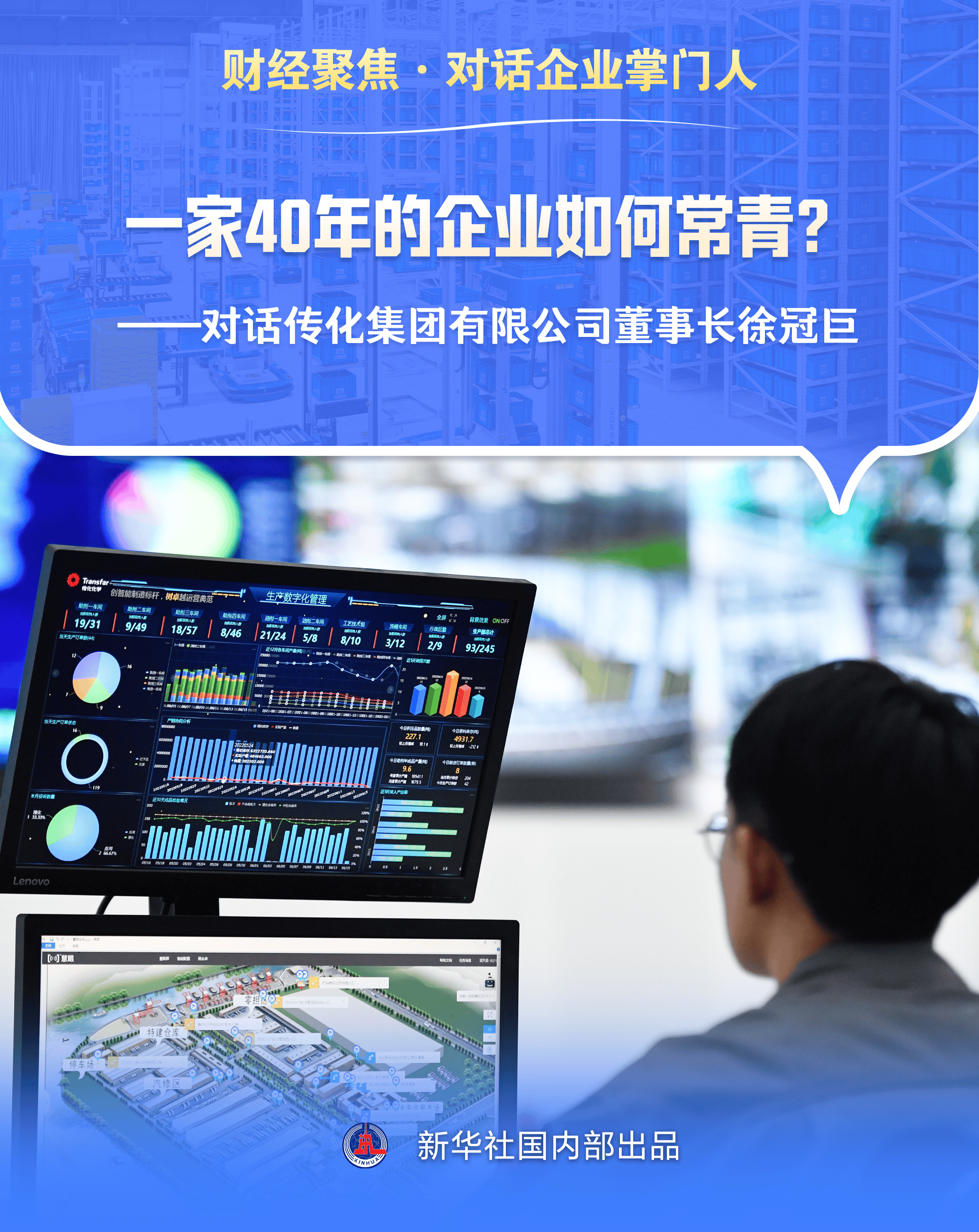
财经聚焦·对话企业掌门人|一家40年的企业如何常青?——对话传化集团有限公司董事长徐冠巨
Sou Hu Cai Jing· 2026-01-14 04:22
Core Viewpoint - Transfar Group has been recognized for its technological strength and industrialization capabilities, marking its growth as a leading private enterprise in China with a focus on high-quality development and innovation in various sectors [7][8]. Group 1: Company Overview - Transfar Group, founded in 1986, has become one of China's top 500 enterprises, with a diverse business portfolio including functional chemicals, new materials, logistics, technology parks, and agriculture [7]. - The company offers over 8,000 products, serving more than 20 industries such as textiles, papermaking, semiconductors, and new energy [7]. Group 2: Financial Performance - In the period from January to November 2025, Transfar Group achieved a total revenue of 129.805 billion yuan, reflecting a year-on-year growth of 5.29% [8]. Group 3: Strategic Focus - The company emphasizes product innovation, platform innovation, and industrial ecosystem innovation rather than merely pursuing scale and volume growth [8]. - Transfar Group prioritizes three key elements for high-quality development: talent, technology, and management, with a strong focus on continuous investment in innovation [9]. Group 4: Technological Advancements - The company has developed its proprietary AI model, "Transfar Xiaozhi," and is implementing AI systems across 58 scenarios in 12 major fields, including manufacturing, logistics, chemicals, and agriculture [14]. - Transfar has established a global presence, with products sold in over 130 countries and regions, and overseas sales accounting for 25% of its manufacturing output [18]. Group 5: Social Responsibility - Transfar Group actively engages in rural revitalization and social responsibility, exemplified by the establishment of the Xie Jing'an Transfar Agricultural Innovation Village, which has fostered nearly 50 agricultural innovation enterprises and generated significant economic benefits for local communities [19][21].

李乐成接受央视《新闻联播》采访:锻造新动能新优势 扎实推进新型工业化
Yang Shi Xin Wen· 2026-01-14 01:27
Core Viewpoint - The Ministry of Industry and Information Technology aims to promote high-quality economic development and implement key initiatives for the "14th Five-Year Plan" period, focusing on technological and industrial innovation integration [1][2] Group 1: Industrial and Technological Development - The Ministry plans to enhance the safety and controllability of industrial and supply chains while maintaining a reasonable proportion of manufacturing [1] - Key emerging industries such as integrated circuits, new materials, and aerospace will be developed, with a focus on bio-manufacturing, embodied intelligence, and 6G as new economic growth points [1] - Traditional industries will undergo revitalization through targeted upgrades in sectors like metallurgy, chemicals, textiles, and machinery, with initiatives like "Artificial Intelligence +" to promote smart and green manufacturing [1] Group 2: Industrial Growth and Digital Transformation - Key industries and regions account for 80% of the total industrial output, forming the backbone of the industrial economy [2] - The Ministry has established over 7,000 advanced and 500 excellent smart factories, with industrial internet applications covering all 41 industrial categories and over 8,000 5G factories nationwide [2] - By 2025, the core industrial internet industry is expected to exceed 1.6 trillion yuan, driving an increase in industrial added value of approximately 2.5 trillion yuan, with leading 5G factories reducing average operating costs by 19% [2] - An "Industrial Data Foundation Action" will be launched to focus on data collection and utilization in key manufacturing sectors, aiming to build high-quality industry data sets and enhance digital transformation across enterprises [2]
生物制造的底层逻辑与产业链分析(附100佳核心企业)
材料汇· 2026-01-13 11:56
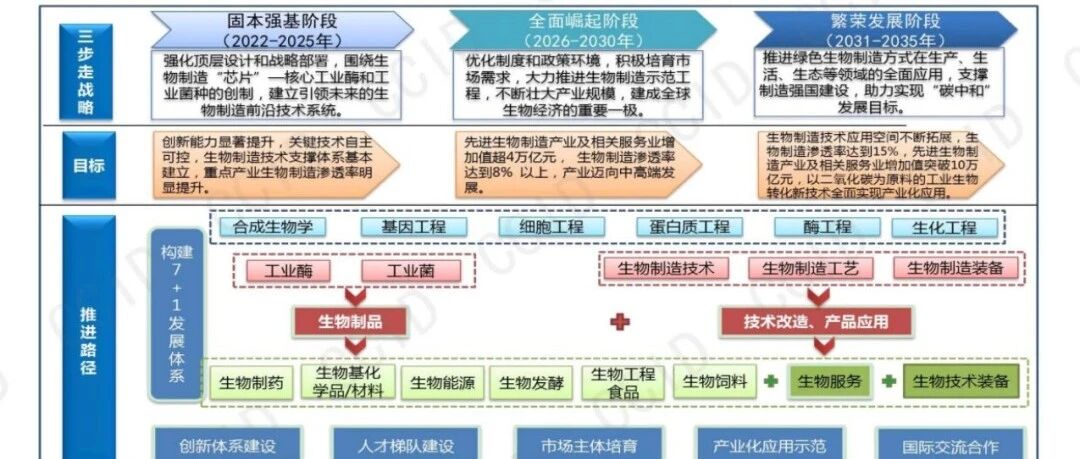
Core Viewpoint - Biomanufacturing is identified as a key future industry in China's 14th Five-Year Plan, expected to create a market worth trillions in the next decade, driven by advancements in technology and policy support [2][5]. Group 1: Industry Overview - The biomanufacturing industry in China is nearing a total scale of 1 trillion yuan, with fermentation capacity accounting for over 70% of the global total [2][4]. - Shenzhen has become a hub for biomanufacturing, with 40% of newly established companies in this sector located there in the past three years, showcasing a significant industry clustering effect [4]. - The industry is supported by a comprehensive system of policy, funding, and technological advancements as outlined in the 14th Five-Year Plan [5]. Group 2: Key Enterprises - The article identifies 100 core enterprises in biomanufacturing, spanning the entire industry chain from upstream technology development to downstream commercial applications [7]. - Notable companies include: - Huada Technology, a leader in gene sequencing technology [17]. - Kaisa Biotech, which has achieved over 80% market share in the global long-chain dicarboxylic acid market [21]. - WuXi Biologics, representing China's capabilities in the global biopharmaceutical industry [27]. Group 3: Upstream Innovations - The upstream sector focuses on providing essential tools and technologies for research and production, with a shift towards domestic innovation and smart integration [16]. - Key trends include the localization of critical tools and the rise of AI-driven platform companies that enhance research efficiency [16][17]. - Over 75% of the 20 identified upstream enterprises are private, indicating a vibrant innovation landscape [16]. Group 4: Midstream Developments - The midstream sector is characterized by a dual structure of "upgraders" and "disruptors," with companies like Meihua Biotech and Chuaning Biotech leading in traditional fermentation while others like Kaisa Biotech innovate with new bioproducts [20][21]. - This segment contains the highest number of enterprises, with 40 out of the 100 identified companies, emphasizing the importance of production capacity and cost control [20]. Group 5: Downstream Applications - The downstream sector serves as a critical market for biomanufacturing, focusing on medical, consumer, and agricultural applications [25]. - Companies like Muyuan Foods exemplify the cost-saving potential of biomanufacturing in agriculture, while WuXi Biologics and Kelaiying represent the pharmaceutical sector's output capabilities [26][27]. - Future trends indicate a broadening of applications into new areas such as biobased textiles and environmental remediation [27].


新材料为2026年工信部政策发力重点,新材料50ETF(516710)新材料含量79.85%,指数维度全市场排名第一
Mei Ri Jing Ji Xin Wen· 2026-01-13 11:04
Group 1 - The core viewpoint of the article emphasizes the importance of advancing high-quality technological supply and enhancing the role of enterprises in technological innovation, as stated by the Ministry of Industry and Information Technology for 2026 [1] - The industrial growth is expected to rely more on "value creation" and "quality-based competition," with a focus on revitalizing traditional industries and strengthening emerging industries such as integrated circuits, new materials, aerospace, biomanufacturing, embodied intelligence, and 6G [1] - Guangfa Securities believes that advanced metal materials and new functional materials will benefit from growth in aerospace and high-end equipment sectors, with improved R&D conversion efficiency supported by policies [1] Group 2 - The New Materials 50 ETF (516710) opened lower but saw component stocks such as Enjie Co., Ltd. and Nanda Optoelectronics rise over 2%, while Wanhua Chemical and Dongfang Shenghong increased by over 1% [1] - The New Materials 50 ETF closely tracks the CSI New Materials Theme Index, which selects 50 listed companies involved in advanced steel, non-ferrous metals, chemicals, inorganic non-metals, and other key strategic materials, reflecting the overall performance of new materials theme listed companies [1] - The index has a new materials content of 79.85%, ranking first across all market dimensions [1]
最高补助1000万元,一地支持仪器仪表等企业
仪器信息网· 2026-01-13 09:07
Core Viewpoint - Shanghai has released a three-year action plan to support the transformation and upgrading of advanced manufacturing, aiming to add 100 enterprises with an annual output value exceeding 1 billion yuan by 2028, totaling over 600, and to drive the addition of 500 new large-scale industrial enterprises in the supply chain, while significantly increasing the proportion of R&D expenses in revenue [2][3][7]. Group 1: Main Goals - By 2028, the plan aims to add 100 manufacturing enterprises with an annual output value exceeding 1 billion yuan, totaling over 600, and to drive the addition of 500 new large-scale industrial enterprises in the supply chain [7]. Group 2: Implementation Actions - **Optimizing Traditional Advantage Industries**: The plan encourages petrochemical companies to reduce oil dependency and develop new functional materials, while supporting steel and non-ferrous metal companies to strengthen specialty steel and expand lightweight alloys [8]. - **Accelerating Leading Industry Strategies**: Support for integrated circuit companies to focus on equipment, advanced processes, and materials, aiming to cultivate internationally competitive leading enterprises [8]. - **Promoting Key and Emerging Industries**: The plan emphasizes the development of new-generation electronic information, smart connected vehicles, high-end equipment, and green low-carbon industries [9]. Group 3: Innovation and Technology - **Releasing Innovation Vitality**: The plan supports enterprises to increase basic research investment, providing financial subsidies based on the amount of R&D expenditure [9]. - **Accelerating Core Technology Breakthroughs**: Focus on supporting enterprises in laser manufacturing, quantum technology, and new functional materials to conduct foundational research [10]. Group 4: Quality and Efficiency Enhancement - **Promoting Technological Transformation**: Support for enterprises to upgrade production, R&D, and design processes, with financial support for fixed asset investment loans [10]. - **Deepening Digital Transformation**: The plan includes initiatives for AI integration in manufacturing, aiming for large enterprises to achieve full digital application coverage by 2027 [10]. Group 5: Resource and Support Actions - **Strengthening Talent Development**: The plan supports enterprises in attracting high-level talent, providing priority recommendations for national and local talent cultivation programs [11]. - **Enhancing Financial Support**: Focus on promoting low-interest, high-amount, and long-term loan products for manufacturing enterprises, with interest subsidies for key component and raw material loans [12]. - **Expanding Logistics Support**: The plan aims to build industrial logistics and warehousing facilities to integrate logistics with manufacturing [12].

官宣!「生物基化学品与材料专场」来袭!就在3月杭州,第五届中国合成生物学及生物制造大会!
synbio新材料· 2026-01-13 07:22
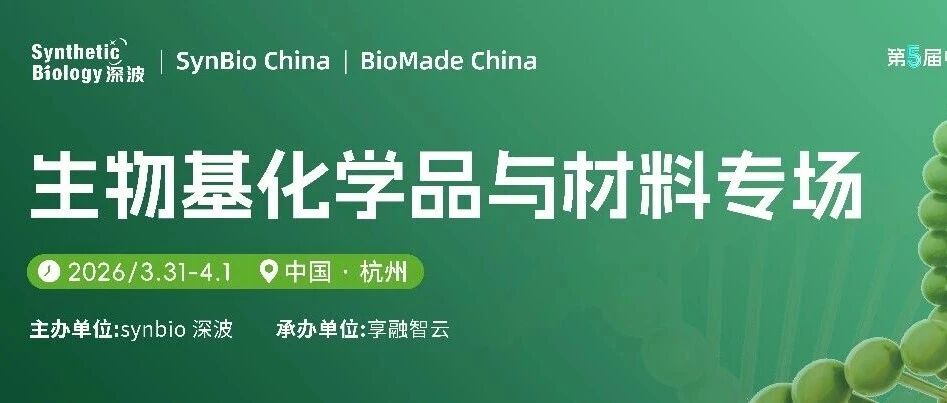
Core Insights - The article emphasizes the importance of bio-based chemicals and materials as a key pillar of the bio-manufacturing industry, highlighting their advantages such as renewable raw materials and low carbon emissions throughout their lifecycle, which positions them to replace traditional petroleum-based products in various sectors like packaging, textiles, and automotive [2] - The Chinese government prioritizes the development of bio-based new materials, categorizing them as strategic materials, and has implemented multiple supportive policies for the industry. However, challenges remain, including cost competitiveness, stability of raw material supply chains, product performance optimization, and market acceptance [2] Event Details - The "5th China Synthetic Biology and Bio-Manufacturing Conference" will be held in Hangzhou from March 31 to April 1, 2026, with an expected attendance of 1,000 participants [4] - The conference aims to gather insights from various sectors including industry, academia, and research to address challenges in the bio-based chemicals and materials industry and promote high-quality development [2][4] Forum Structure - The conference will feature multiple sessions, including: - Day 1 AM: Bio-Manufacturing Industry Ecosystem Conference and Life China Third Functional Food and Nutrition Science Conference [8] - Day 1 PM: Special sessions on food and drug synergy, efficacy skincare, and AI + bio-manufacturing [8] - Day 2 AM: Special sessions on functional raw materials and bio-manufacturing, and bio-manufacturing processes [8] - Day 2 PM: Special sessions on future food and all-age nutrition, and bio-based chemicals and materials [8] Proposed Topics - Topics to be discussed include: - Green bio-manufacturing of bio-based bulk chemicals - Molecular and material innovations based on synthetic biology technology - Large-scale production and high-value utilization of bio-based platform compounds - Development and application of furan bio-based new materials technology - Industrialization practices for high-value utilization of non-food biomass [13]
苏州市市长吴庆文:在江苏推进中国式现代化走在前做示范中勇挑大梁
Xin Lang Cai Jing· 2026-01-13 05:18
Group 1: Company Overview - Suzhou Huaxing Yuanchuang Technology Co., Ltd. is focused on the development of semiconductor and automotive electronics testing new products, showcasing over 1,200 patent certificates [1] Group 2: Economic Performance - Suzhou's economic total ranks sixth among Chinese cities, with industrial output value second nationally and import-export volume fourth [3] - The city's public budget revenue is also sixth in the country, indicating strong fiscal health [3] Group 3: Innovation and Development - Suzhou has achieved over 1 trillion in both total R&D investment and technology contract transaction volume, with a R&D intensity of 4.2% [5] - The city has established six national advanced manufacturing clusters and is recognized for its leadership in artificial intelligence and new industrialization [5] Group 4: Future Development Goals - Suzhou aims to enhance economic strength, promote technological and industrial innovation, and improve living standards as part of its "15th Five-Year Plan" [6][8] - The city plans to focus on smart, green, and integrated development, aiming to build a modern industrial system centered on advanced manufacturing [8][10] Group 5: Industry Transformation - Traditional industries will undergo upgrades through new technologies, while emerging industries like high-end equipment and biomedicine will be further developed [10][12] - Future industries such as artificial intelligence and quantum technology will be prioritized, with a strategic focus on integrating these technologies into urban development [12][13] Group 6: Talent and Innovation Ecosystem - Suzhou is committed to investing over 10% of its fiscal revenue into technological innovation annually, aiming to enhance its status as a hub for innovation and industry [13][14] - The city will strengthen its talent recruitment and development strategies to support its innovation ecosystem [14][16]
华熙生物涨2.03%,成交额1.98亿元,主力资金净流入1076.99万元
Xin Lang Cai Jing· 2026-01-13 03:49
Core Viewpoint - Huaxi Biological has shown a stock price increase of 8.15% year-to-date, with a recent trading volume indicating active market participation and a total market capitalization of 22.754 billion yuan [1][2]. Financial Performance - For the period from January to September 2025, Huaxi Biological reported a revenue of 3.163 billion yuan, representing a year-on-year decrease of 18.36%. The net profit attributable to shareholders was 252 million yuan, down 30.29% compared to the previous year [2]. - Cumulative cash dividends since the A-share listing amount to 1.138 billion yuan, with 528 million yuan distributed over the past three years [3]. Stock Market Activity - As of January 13, the stock price of Huaxi Biological was 47.24 yuan per share, with a trading volume of 198 million yuan and a turnover rate of 0.88% [1]. - The stock has experienced a 5.19% increase over the last five trading days and a 4.51% increase over the last 20 days, while it has decreased by 11.25% over the last 60 days [2]. Shareholder Structure - As of September 30, 2025, the number of shareholders for Huaxi Biological was 30,100, a decrease of 0.62% from the previous period. The average number of circulating shares per shareholder increased by 0.62% to 16,014 shares [2][3]. - Major institutional shareholders have reduced their holdings, with significant decreases noted in the top ten circulating shareholders [3].
