
农业农村现代化

Search documents
《团结》目录
Xin Lang Cai Jing· 2026-01-19 22:17
Group 1 - The article discusses the modernization of agriculture and rural areas in China, highlighting the challenges and solutions for achieving synchronization with national modernization efforts [1] - It emphasizes the importance of integrating technological and industrial innovations to foster new productive forces in agriculture [1] - The current status and future directions of smart agriculture development are analyzed, indicating a shift towards more technology-driven practices [1] Group 2 - The article examines the difficulties and strategies for modernizing seed industry, which is crucial for agricultural advancement [1] - It presents a case study of Anhui Province's "Thousand Villages Leading, Ten Thousand Villages Upgrading" project, identifying shortcomings and potential pathways for creating livable and workable rural areas [1] - The article also touches on the role of cultural heritage and education in promoting the continuity of cultural narratives within rural development [1]
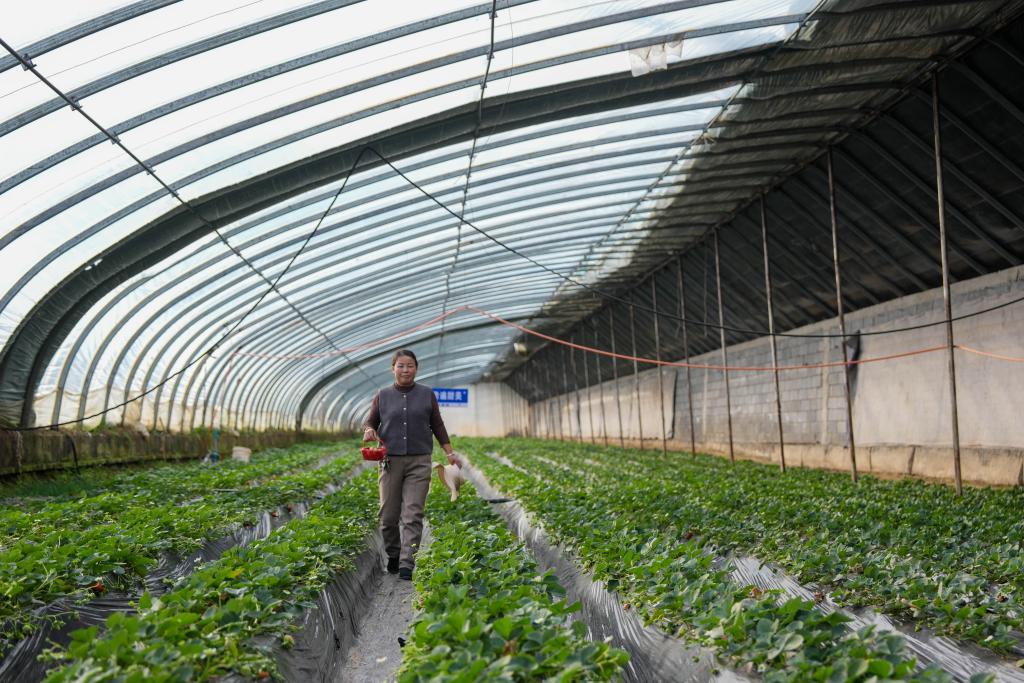
四中全会精神在基层丨青海西宁:探寻高原草莓走红“密码”
Xin Hua Wang· 2026-01-19 11:26
Core Insights - The strawberry industry in Xining, Qinghai, is experiencing significant growth due to favorable climatic conditions and modern agricultural practices [1][2][3] - The establishment of cooperative economic organizations and partnerships with agricultural experts has enhanced local farmers' skills and production capabilities [2][3] - Technological advancements, including the establishment of a virus-free seedling base, have supported the production of high-quality strawberry seedlings, contributing to a stable supply chain [3][5] Group 1: Industry Development - Xining's Huanzhong District is recognized as a primary strawberry production area, benefiting from ideal growing conditions such as large temperature variations and ample sunlight [1] - The area has expanded its strawberry cultivation significantly, with the establishment of over 17 strawberry planting bases covering approximately 1,170 acres and a total production of about 1,857 tons [5] - The full industry chain, including seedling breeding, planting, and fresh fruit sales, has surpassed a total output value of 100 million yuan [5] Group 2: Technological and Educational Support - The collaboration between Jiangsu and Qinghai has facilitated the introduction of agricultural experts to address technical challenges in strawberry cultivation [2] - Local farmers have benefited from on-site training and guidance, leading to improved planting techniques and increased yield and sales [2][3] - The modern agricultural facilities, including a professional seedling laboratory, have enabled the production of over 5 million high-quality seedlings annually, ensuring a consistent supply for year-round strawberry production [3]

“清华三农论坛2026”召开,专家共议加快农业农村现代化核心任务
Xin Lang Cai Jing· 2026-01-19 09:42
此外,论坛还发布了《"十四五"宜居宜业和美乡村指数研究报告》,报告系统构建宜居宜业和美乡村指 标体系(CIRS-LEHR指数),定量评测全国1470个县域宜居宜业和美乡村建设水平,比较分析各地区 和美乡村建设成效,科学研判和美乡村建设的发展趋势和政策取向。 "清华三农论坛"自2013年创办以来,已连续举办十四届。论坛汇聚"三农"领域重量级专家学者、乡村振 兴实践生动案例,探讨农村发展的对策思路,交流农村改革的实践经验,展示农村研究的最新成果,得 到社会各界广泛关注,已成为具有重要影响力的"三农"学术论坛。 清华大学文科资深教授、国情研究院名誉院长胡鞍钢从国际比较视角,强调加快农业、农村、农民现代 化对夯实中国式现代化根基的战略意义,并提出通过科技赋能、产业融合等实施路径建设现代化农业强 国的思考。 国务院发展研究中心农村经济研究部原部长、研究员叶兴庆指出,要锚定"把农业建成现代化大产业"这 一目标,抓好耕地保护建设与农业科技创新"两个要害",坚持产量产能、生产生态、增产增收"三个一 起抓",统筹发展科技、绿色、质量、品牌"四个农业"。 中国社会科学院学部委员、农村发展研究所研究员魏后凯则指出,"十五五"时期需 ...
国家现代农业产业园实现“零”的突破!枣庄农业发展获佳绩
Qi Lu Wan Bao· 2026-01-16 15:34
Core Viewpoint - The news conference highlighted the progress and future plans of Zaozhuang in modernizing agriculture and rural revitalization during the 14th Five-Year Plan period, emphasizing food security and agricultural productivity as top priorities [1] Group 1: Agricultural Modernization - Zaozhuang has constructed 2.535 million acres of high-standard farmland by 2024, a 24.6% increase from 2020, with a crop variety coverage rate of 99% and an agricultural mechanization rate of 93.4%, up by 4.6 percentage points [1] - The total grain output reached 1.893 million tons, a 4.8% increase from 2020, with consistent high yields in wheat and corn [1] - The total output value of agriculture, forestry, animal husbandry, and fishery is projected to reach 40.9 billion yuan, a 28.1% increase from 2020 [1] Group 2: Industry Development - Zaozhuang has prioritized the pomegranate industry, aiming for a total output value of over 5.5 billion yuan by 2025, a 37.5% increase from 2023 [2] - The number of large-scale agricultural processing enterprises has increased by 113% since 2020, with 7 national-level and 17 provincial-level agricultural industrial strong towns established [2] - The city has developed 81 provincial-level smart agriculture application bases and launched the "Zao Taste Pomegranate" brand, receiving provincial government support [2] Group 3: Rural Revitalization - Zaozhuang has built 514 beautiful villages and 110,000 beautiful courtyards, implementing a "double ten hundred thousand" project to create themed agricultural areas [3] - The city has achieved 100% effective management of domestic sewage and harmless treatment of household waste in administrative villages, with a toilet renovation rate of 93% [3] - The rural road network has been expanded by 1,311 kilometers, and the scale of rural water supply has reached 98.4% [3] Group 4: Reform and Innovation - Zaozhuang has developed 12,000 new agricultural operating entities and over 4,200 agricultural social organizations serving nearly 440,000 households [4] - The city has completed 3,861 online transactions worth 480 million yuan through a regional rural property trading platform [4] Group 5: Poverty Alleviation - The city has included 1,236 households and 3,359 individuals in its poverty prevention monitoring and assistance program [5] - A total of 7.7 billion yuan has been allocated for various projects, resulting in an average increase of 475,100 yuan in collective operating assets for villages with impoverished populations [5] - The per capita disposable income of rural residents is expected to increase by 35.3% by 2024 compared to 2020 [5] Group 6: Future Outlook - Zaozhuang aims to stabilize grain production at over 1.91 million tons by the end of the 15th Five-Year Plan, focusing on high-efficiency agricultural models [6] - The city plans to enhance its agricultural industry clusters from "1+5+15" to "3+4+7" by the end of the 15th Five-Year Plan [7] - The goal is to establish around 100 city-level agricultural areas and 1,000 beautiful villages, covering over two-thirds of administrative villages [7]
省委农村工作会议召开 沈晓明讲话 毛伟明主持
Xin Lang Cai Jing· 2026-01-16 10:50
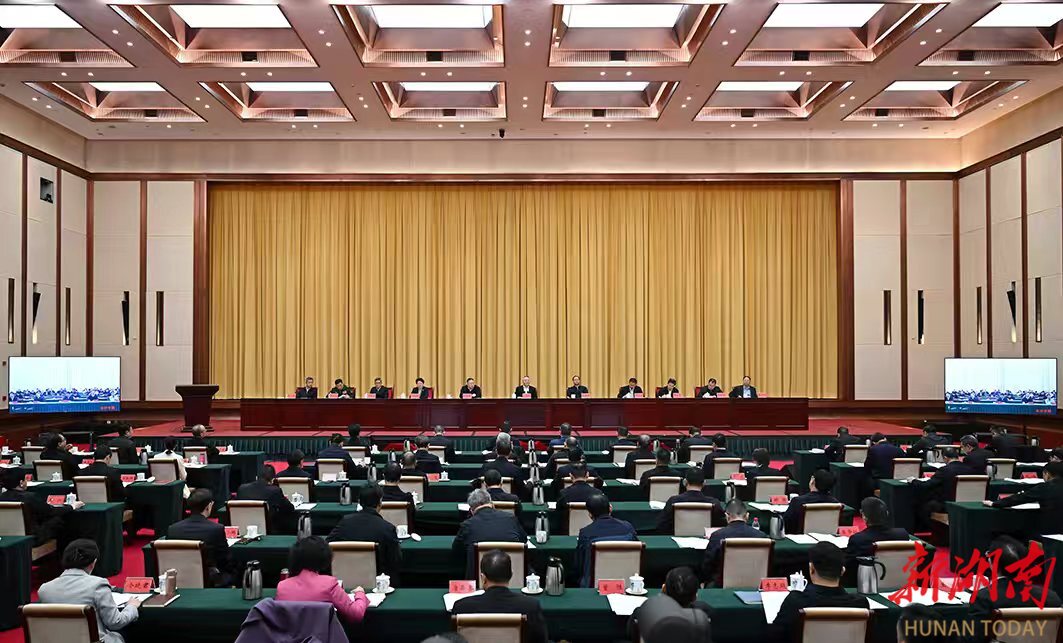
省委农村工作会议在长沙召开 锚定农业农村现代化目标 扎实推进乡村全面振兴 沈晓明强调,要在抓实粮食稳产保供上下更大功夫,更加注重藏粮于地、藏粮于技,充分调动农民种粮积极性。要在巩固拓展脱贫攻坚成果上下更大功 夫,重点关注解决因病返贫致贫、乡村车间可持续发展等问题,牢牢守住不发生规模性返贫致贫的底线。要在促进农民稳定增收上下更大功夫,提高政策 效能,健全联农带农机制,做好稳岗就业工作。要在建设宜居宜业"和美湘村"上下更大功夫,统筹优化乡村规划建设,着力提升乡村产业发展质效,强化 乡村生态保护修复,提高乡村善治水平。要在深化农村改革上下更大功夫,深入推进农业领域教育科技人才一体改革,稳妥推进农村土地制度改革,建立 健全新型农村集体经济运行机制,着力完善城乡融合发展体制机制。要加强党对"三农"工作的全面领导,严格落实五级书记抓乡村振兴政治责任,强化要 素资源保障,建强农村基层党组织,弘扬求真务实作风,凝聚齐抓共管合力。 毛伟明指出,要深入贯彻习近平总书记关于"三农"工作的重要论述,聚焦良好开局扛牢责任,守牢耕地红线、提升粮食单产、强化科技支撑,扛稳粮食安 全重任。聚焦常态帮扶做好统筹,抓实就业帮扶举措、发展乡村特色 ...
加快农业农村现代化扎实推进乡村全面振兴为全市高质量发展现代化建设提供坚实支撑
Xi An Ri Bao· 2026-01-16 02:44
Core Viewpoint - The meeting emphasized the importance of modernizing agriculture and rural areas, aligning with Xi Jinping's directives for the "Three Rural Issues" work, and aims to enhance urban-rural integration and rural revitalization efforts [1][2]. Group 1: Agricultural Modernization - The meeting highlighted the need to firmly uphold food security responsibilities and maintain arable land boundaries while advancing key agricultural industry chains [2]. - There is a focus on improving the efficiency of technology transfer and application to enhance overall agricultural production capacity and quality [2]. Group 2: Poverty Alleviation and Support Systems - The meeting stressed the importance of consolidating and expanding the achievements of poverty alleviation, optimizing the regular support system, and ensuring that large-scale poverty does not reoccur [2]. - It was noted that a development-oriented support approach should be prioritized [2]. Group 3: Rural Development and Environment - The meeting called for the application of the "Ten Million Project" experience to optimize rural land use and improve living conditions in rural areas [2]. - There is a commitment to deepen rural reforms and accelerate the establishment of a modern agricultural management system [2]. Group 4: Political Responsibility and Planning - The meeting underscored the necessity of implementing political responsibilities for rural revitalization at all levels and selecting capable leaders for village committees [2]. - A high-quality plan for the agricultural and rural sectors for the 14th Five-Year Plan period is to be developed, with a focus on key tasks for the year ahead [2].
锚定农业农村现代化目标 加快打造都市农业强市
Zheng Zhou Ri Bao· 2026-01-16 00:34
Group 1 - The core message emphasizes the importance of modernizing agriculture and rural areas, aligning with the directives from the central and provincial government to achieve comprehensive rural revitalization and support urban agricultural development [1][2] - The focus is on enhancing agricultural productivity through technology, optimizing crop varieties, and innovating business models in modern specialty agriculture [1] - There is a strong push for developing organic, ecological, and leisure tourism agriculture, alongside improving agricultural processing and storage technologies to boost overall production capacity and quality [1][2] Group 2 - The year is highlighted as significant for agricultural work, with goals set to transform agriculture into a modern industry and improve living conditions in rural areas [2] - The strategy includes fostering technology-driven, integrated, green, and leisure-oriented urban agriculture, while also promoting the integration of agriculture with culture and tourism [2] - Emphasis is placed on rural reform, utilizing idle land, and enhancing community governance through a structured party leadership system to stimulate rural development [2]
深度关注 | 助力“千万工程”全面开花
Zhong Yang Ji Wei Guo Jia Jian Wei Wang Zhan· 2026-01-16 00:24
Core Viewpoint - The article emphasizes the importance of implementing the "Thousand Villages Demonstration and Ten Thousand Villages Renovation" project to promote rural revitalization in China, highlighting its successful experience and the need for effective supervision to ensure policy execution and resource management [3][5][15]. Group 1: Implementation of the "Thousand Villages" Project - The "Thousand Villages" project, initiated by Xi Jinping, has evolved over 20 years, focusing on rural environment improvement and leading to significant changes in rural areas across China [5][6]. - The project aims to enhance rural governance, promote local industries, and improve living conditions, thereby benefiting millions of farmers [5][11]. - The experience from the "Thousand Villages" project is being utilized to guide the implementation of rural revitalization strategies nationwide [4][15]. Group 2: Role of Supervision in Rural Revitalization - Local disciplinary inspection and supervision agencies are focusing on key areas such as project implementation, policy enforcement, and fund management to ensure effective execution of rural revitalization initiatives [3][10]. - In various regions, supervision has led to the identification and resolution of issues related to infrastructure and service delivery, enhancing the overall effectiveness of rural development projects [8][9]. - The establishment of monitoring systems and the promotion of community involvement are crucial for sustaining improvements in rural governance and living standards [12][13]. Group 3: Agricultural Modernization and Economic Development - The article highlights the significant increase in grain production, with annual output projected to rise from 13,657 billion jin in 2021 to 14,297.5 billion jin by 2025, reflecting the focus on agricultural modernization [5]. - The development of local specialty industries is emphasized as a foundation for rural revitalization, with examples of successful agricultural projects leading to increased farmer incomes [7][10]. - The integration of digital technologies and innovative practices in rural areas is seen as essential for achieving sustainable economic growth and improving the quality of life for rural residents [6][11].
培育乡村特色新业态
Jing Ji Ri Bao· 2026-01-15 21:32
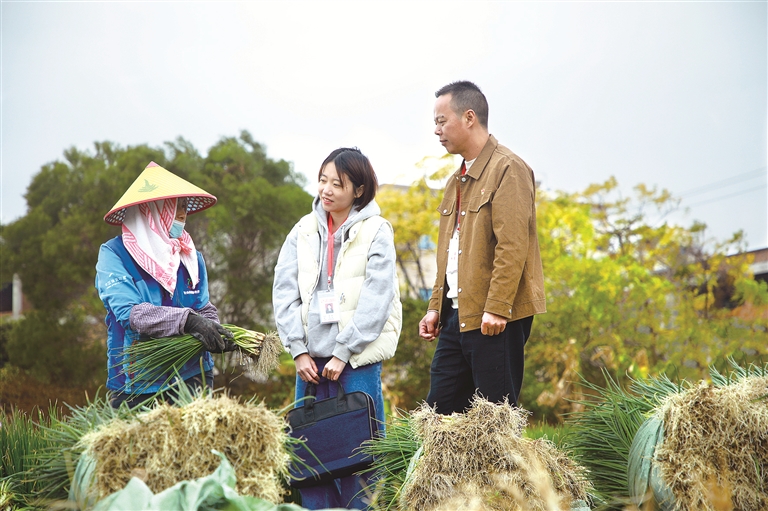
Core Insights - The cumulative transaction volume of the agricultural product sales platform operated by China Supply and Marketing E-commerce Co., Ltd. in poverty alleviation areas is expected to exceed 60 billion yuan by the end of 2025, indicating a significant shift in rural specialty industry development [1] Group 1: Challenges in Rural Specialty Industry Development - Many rural specialty industries are still in a small-scale and fragmented operational state, with low product added value and weak market competitiveness [1] - Some industries have short supply chains and low levels of integrated development, lacking deep processing and extended industrial chains, and insufficient integration with rural tourism and cultural creativity [1] - There are inadequate guarantees for development factors, with weak infrastructure and public services limiting industrial transformation and sustainable development [1] - Brand development is lagging, with weak market expansion capabilities and a lack of effective brand cultivation and promotion mechanisms, resulting in low product recognition and market share [1] Group 2: Strategies for Enhancing Industry Competitiveness - Cultivating leading enterprises to enhance industry competitiveness by formulating scientific and reasonable industrial development plans, optimizing industrial layout, and encouraging mergers and brand alliances [2] - Strengthening factor guarantees and extending industrial chains through increased financial, fiscal, and land policy support, as well as fostering a talent pool for rural specialty industries [2] - Promoting technological innovation and the establishment of platforms for the transformation of scientific achievements to improve the technological content and competitiveness of rural specialty industries [2] Group 3: Brand Building and Market Expansion - Implementing a brand cultivation project for rural specialty industries to create regionally distinctive and culturally rich brands with market influence [3] - Utilizing e-commerce platforms and new marketing methods to broaden product sales channels and develop rural e-commerce [3] - Encouraging the development of various forms of moderate-scale operations and enhancing farmers' skills to increase their participation in rural specialty industry development and improve income [3]
全国人大代表李叶红:提高强农惠农富农政策效能
Ren Min Ri Bao· 2026-01-15 09:58
Core Viewpoint - The article emphasizes the importance of enhancing the effectiveness of policies aimed at strengthening agriculture, benefiting farmers, and enriching rural areas, which are crucial for the quality of China's modernization [1] Policy Precision - There is a need to increase the precision of agricultural policies by listening to the real demands of rural production and helping agricultural entities address practical difficulties such as labor and market connections [1] - Agricultural subsidy policies should be more targeted, rewarding those who produce more grain to motivate farmers to engage in agricultural activities [1] - The focus should be on addressing urgent issues faced by farmers and filling gaps in rural construction to avoid resource wastage from ineffective initiatives [1] Policy Coordination - A consistent policy direction is necessary to create a synergistic effect, leading to coordinated policy efforts [1] - The article suggests improving the diversified investment mechanism for rural revitalization, ensuring financial support and social participation [1] - For example, in grain production, it is essential to strengthen the support and coordination of pricing, subsidies, and insurance policies to maintain reasonable prices for important agricultural products, ensuring profitability for farmers [1] Enhancing Internal Motivation - Policies should not only address immediate challenges but also focus on long-term development [1] - Continuous skills training, support for returning workers, and the development of profitable industries are recommended to enhance farmers' resilience to market risks and broaden income channels [1] - This approach aims to strengthen the internal motivation and resilience of agricultural and rural development [1]