开源模型

Search documents
谁在拆 OpenAI 的围墙?
3 6 Ke· 2025-08-06 01:41
Core Insights - OpenAI's recent decision to open-source two new models, gpt-oss-120b and gpt-oss-20b, marks a strategic shift from its previous closed-source approach, which had established a dominant position in the large model market [1][2][3] - The move is seen as a response to the rising competition from open-source models that offer similar performance at significantly lower costs, prompting OpenAI to reconsider its strategy [2][4] Group 1: Strategic Implications - OpenAI's choice to use the Apache 2.0 license for its open-source models allows for commercial use and modifications, directly competing with Meta's Llama [3] - The models released are of medium scale, ensuring they do not threaten OpenAI's high-end closed-source products while still attracting developers [3][4] - OpenAI aims to maintain control over its core technology by keeping critical components, such as training data and optimization strategies, proprietary [4][8] Group 2: Market Dynamics - The AI industry is entering a phase of "layered competition," with OpenAI pursuing a dual strategy of open-source models to attract developers while retaining high-profit closed-source products for enterprise clients [5][7] - In contrast, Anthropic has chosen to focus on closed-source models targeting high-paying clients in sectors that prioritize safety and reliability, indicating a market segmentation based on user needs [6][7] Group 3: Regulatory Considerations - OpenAI's introduction of open-source models may serve as a proactive measure against increasing regulatory scrutiny on closed-source models, as open-source solutions are generally more transparent and easier to audit [8] - This strategic positioning could provide OpenAI with a competitive advantage as regulatory frameworks evolve, allowing it to maintain relevance in a changing landscape [8][10] Group 4: Developer Opportunities - The open-source models support local deployment and integration with popular frameworks, significantly lowering the barrier for independent developers to create advanced AI applications [8][10] - This shift could lead to a new wave of innovation, with the potential for groundbreaking AI applications emerging from smaller, independent developers [8][10]
奥特曼深夜官宣:OpenAI重回开源,两大推理模型追平o4-mini,号称世界最强
3 6 Ke· 2025-08-06 00:31
OpenAI深夜扔出开源核弹,gpt-oss 20B和120B两款模型同时上线。它们不仅性能比肩o3-mini和o4-mini,而且还能在消费级显卡甚至手机上轻松运行。 GPT-2以来,奥特曼终于兑现了Open AI。 他来了!他来了! 就在今夜,奥特曼带着两款全新的开源模型走来了! 正如几天前泄露的,它们分别是总参数1170亿,激活参数51亿的「gpt-oss-120b」和总参数210亿,激活参数36亿的「gpt-oss-20b」。 终于,OpenAI再次回归开源。 gpt-oss-120b 在核心推理基准测试中,120B模型的表现与OpenAI o4-mini相当,并且能在单张80GB显存的GPU上高效运行(如H100)。 gpt-oss-20b适用于低延迟、本地或专业化场景 在常用基准测试中,20B模型的表现与OpenAI o3-mini类似,并且能在仅有16GB显存的边缘设备上运行。 除此之外,两款模型在工具使用、少样本函数调用、CoT推理以及HealthBench评测中也表现强劲,甚至比OpenAI o1和GPT-4o等专有模型还要更强。 其他亮点如下: 宽松的Apache 2.0许可证:可自由用于 ...

OpenAI发布2款开源模型,北大校友扛大旗
Hu Xiu· 2025-08-06 00:15
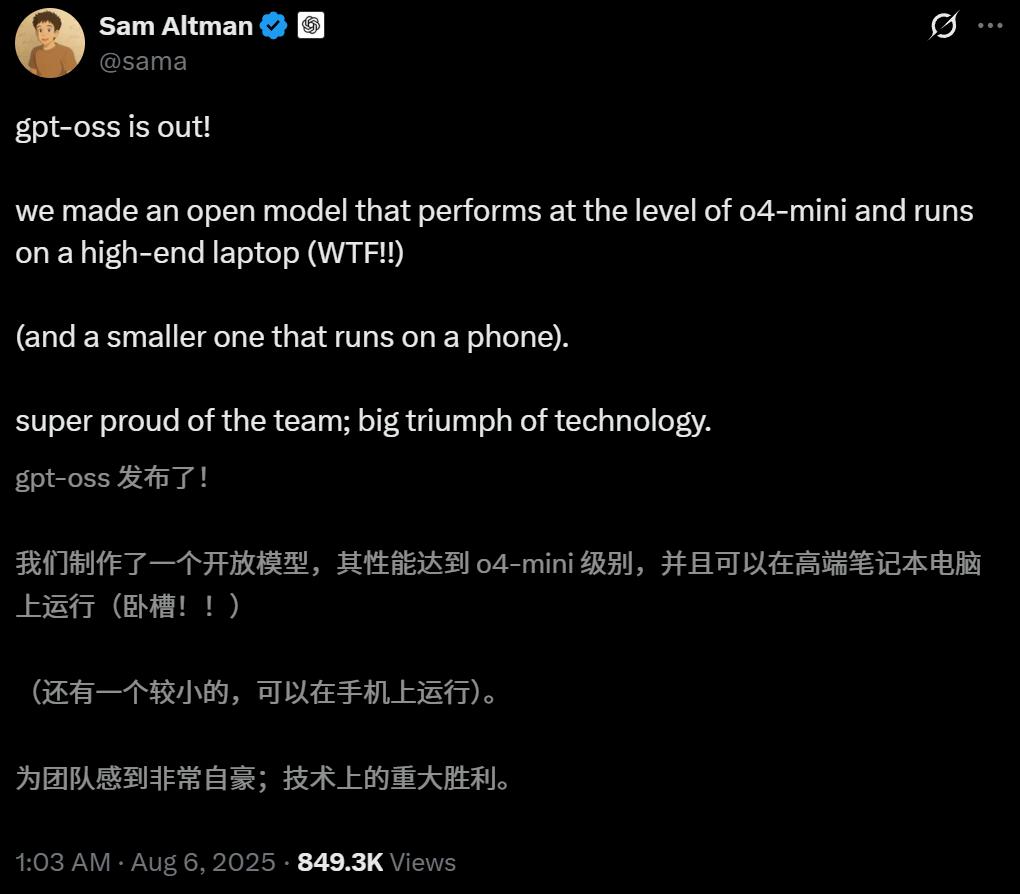
本文来自微信公众号:APPSO (ID:appsolution),作者:发现明日产品的,原文标题:《刚刚,OpenAI发布2款开源模型!手机笔记本也能跑,北大校 友扛大旗》,题图来自:AI生成 时隔五年之后,OpenAI刚刚正式发布两款开源权重语言模型——gpt-oss-120b和gpt-oss-20b,而上一次他们开源语言模型,还要追溯到2019年的GPT-2。 OpenAI是真open了。 而今天AI圈也火药味十足,OpenAI开源gpt-oss、Anthropic推出Claude Opus 4.1(下文有详细报道)、Google DeepMind发布Genie 3,三大巨头不约而同在 同一天放出王炸,上演了一出神仙打架。 OpenAI CEO Sam Altman(山姆·奥特曼)在社交媒体上的兴奋溢于言表:"gpt-oss发布了!我们做了一个开放模型,性能达到o4-mini水平,并且能在高端 笔记本上运行。为团队感到超级自豪,这是技术上的重大胜利。" 模型亮点概括如下: gpt-oss-120b:大型开放模型,适用于生产、通用、高推理需求的用例,可运行于单个H100 GPU(1170亿参数,激活参数为5 ...

OpenAI发布ChatGPT世代首个开源模型gpt-oss,4060Ti都能跑得动。
数字生命卡兹克· 2025-08-05 22:08
Core Viewpoint - The article discusses the recent advancements in AI models, particularly focusing on OpenAI's release of the open-source model GPT-oss, which is seen as a significant move in the AI landscape, potentially reshaping the open-source community and lowering barriers for developers [9][80]. Group 1: Model Releases - Google released a new world model, Genie 3, which has generated excitement in the gaming and VR community [3]. - Anthropic announced Claude Opus 4.1, showcasing advancements in programming capabilities [5]. - OpenAI launched GPT-oss, its first open-source model since GPT-2, which includes two models: GPT-oss-120B and GPT-oss-20B [9][14]. Group 2: Model Specifications - GPT-oss-120B has 117 billion parameters with 5.1 billion active parameters per token, while GPT-oss-20B has 21 billion parameters with 3.6 billion active parameters [15][16]. - Both models support a context length of 128K and are designed to be run on consumer-grade hardware, with the 20B model requiring only 16GB of memory [17][20]. Group 3: Performance Metrics - In various benchmarks, GPT-oss-120B and GPT-oss-20B scored 90.0 and 85.3 in MMLU, respectively, indicating strong reasoning and knowledge capabilities [32]. - The models performed well in competitive programming tests, scoring 2622 and 2516 points, respectively, although they were outperformed by OpenAI's previous models [32]. Group 4: Community Impact - The release of GPT-oss is expected to lower the entry barriers for developers and enrich the AI ecosystem, allowing more users to experiment with advanced AI capabilities [80]. - OpenAI's move is seen as a response to competitive pressure from other AI companies, indicating a shift towards more open and accessible AI technologies [78][80].

六年来首次!OpenAI新模型开放权重,Altman称为"全球最佳开放模型"
Hua Er Jie Jian Wen· 2025-08-05 20:05
Core Insights - OpenAI has released two open-weight language models, gpt-oss-120b and gpt-oss-20b, marking its first open-weight model launch since 2019 and responding to competition from Meta, Mistral AI, and DeepSeek [1][2][12] Model Specifications - gpt-oss-120b and gpt-oss-20b are designed for low-cost options, with gpt-oss-20b able to run on a laptop with 16GB RAM and gpt-oss-120b requiring approximately 80GB RAM [2][5] - gpt-oss-120b has a total of 117 billion parameters, activating 5.1 billion parameters per token, while gpt-oss-20b has 21 billion parameters, activating 3.6 billion parameters per token [5][6] Performance Evaluation - gpt-oss-120b performs comparably to OpenAI's o4-mini in core inference benchmarks, while gpt-oss-20b matches or exceeds the performance of o3-mini [7][8] - Both models utilize advanced pre-training and post-training techniques, focusing on efficiency and practical deployment across environments [5][11] Security Measures - OpenAI has implemented extensive security measures to prevent malicious use of the models, filtering harmful data during pre-training and conducting specialized fine-tuning for security assessments [11] - The company collaborates with independent expert groups to evaluate potential security risks associated with the models [11] Market Impact - The release of these models is seen as a strategic shift for OpenAI, which had previously focused on proprietary API services, now responding to competitive pressures in the open-weight model space [12][15] - OpenAI has partnered with major cloud service providers like Amazon to offer these models, enhancing accessibility for developers and researchers [3][11]

中国AI猛追美国
日经中文网· 2025-08-05 02:43
Core Insights - The article highlights the rapid advancement of China's AI capabilities, particularly in open-source models, which are increasingly being adopted both domestically and internationally [2][4][7]. Group 1: AI Model Development - The number of AI models registered in China has increased by 40% in the past six months, with a total of 439 models as of June 2023 [4]. - A report from Stanford University indicates that the performance gap between Chinese and American AI models has narrowed significantly, from 9.26% in January 2024 to just 1.7% by February 2025 [5]. Group 2: Global AI Conference - The World Artificial Intelligence Conference held in Shanghai saw participation from approximately 800 companies, an increase of about 300 from the previous year, showcasing over 40 AI models and 60 robots [4]. - Chinese Premier Li Qiang emphasized the need for global cooperation in AI governance, addressing issues like chip supply shortages and restricted talent exchange [4]. Group 3: Open-Source AI Adoption - Chinese companies are increasingly adopting open-source models, which facilitate service integration and attract more developers for improvements [7]. - Alibaba's "Qwen2.5-Max" ranked 12th among 124 AI models tested, outperforming Meta's open-source model, which ranked 28th [7]. Group 4: International Implications - Japan is also utilizing Chinese AI models, with the National Institute of Informatics' "LLM-jp-3.1" ranking first in Japan and using Qwen for data enhancement [8]. - Despite advancements, China still relies on U.S. semiconductor products for AI computing capabilities, which poses challenges for further development [9]. - The U.S. government has implemented strategies to maintain its AI technology advantage, indicating a competitive landscape between the two nations [9].



对话PPIO姚欣:AI大模型赛道加速内卷,但合理盈利路径仍需探索
Tai Mei Ti A P P· 2025-08-05 02:23
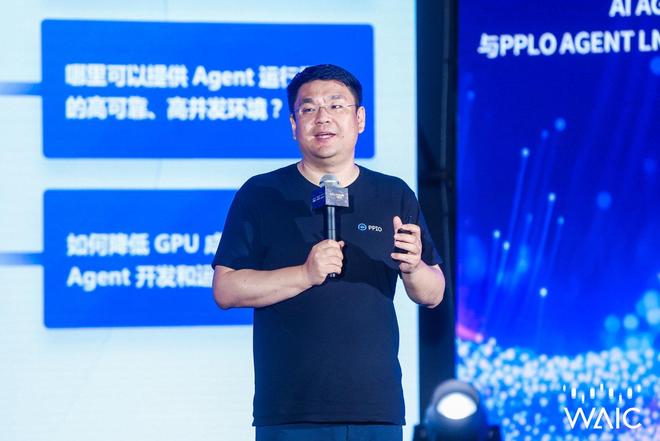
Core Insights - PPIO, co-founded by CEO Yao Xin, is focusing on AI cloud computing services, particularly in the context of the growing demand for GPU computing power and AI inference driven by technologies like ChatGPT and DeepSeek [3][4] - The company has optimized the DeepSeek-R1 model, achieving over 10 times throughput improvement and reducing operational costs by up to 90% [4] - PPIO is recognized as the largest independent edge cloud service provider in China, holding a market share of 4.1% and operating the largest computing network in the country [4][5] Company Developments - PPIO has submitted its IPO application to the Hong Kong Stock Exchange, indicating increased interest from investors following the submission [5] - The company launched China's first Agentic AI infrastructure service platform, which includes a sandbox for agents and supports rapid integration of various AI models [5][6] - PPIO aims to build a comprehensive infrastructure service for developers and enterprises, focusing on agent-based applications [5][6] Market Position and Strategy - PPIO is one of the earliest participants in the distributed cloud computing market to offer AI cloud services, with a significant increase in daily token consumption from 27.1 billion in December 2024 to 200 billion by June 2025 [5] - The company emphasizes the importance of open-source models for the development of the AI industry, contrasting with the trend of U.S. companies moving towards closed-source models [6][10] - Yao Xin believes that the future of AI will require a shift towards distributed computing, particularly in edge and side computing, as the industry moves away from centralized models [7][28] Industry Insights - The AI infrastructure market is characterized by low margins and large scale, with PPIO positioning itself to capitalize on the growing demand for distributed computing solutions [6][18] - The company sees significant opportunities in the domestic GPU market, particularly as the demand for inference capabilities increases [20] - Yao Xin highlights the need for a strong integration of hardware and software to drive advancements in AI technology, emphasizing the importance of end-to-end capabilities [20][22]
大模型年中报告:Anthropic 市场份额超 OpenAI,开源模型企业采用率下降
Founder Park· 2025-08-04 13:38
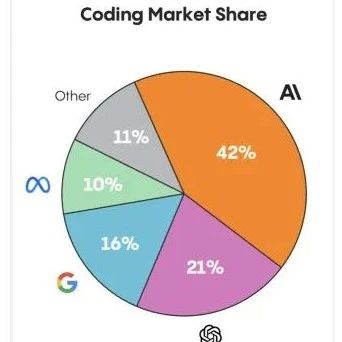
Core Insights - The foundational large models are not only the core engine of generative AI but are also shaping the future of computing [2] - There has been a significant increase in model API spending, which rose from $3.5 billion to $8.4 billion, indicating a shift in focus from model training to model inference [2] - The emergence of "code generation" as the first large-scale application of AI marks a pivotal development in the industry [2] Group 1: Market Dynamics - Anthropic has surpassed OpenAI in enterprise usage, with a market share of 32% compared to OpenAI's 25%, which has halved from two years ago [9][12] - The release of Claude Sonnet 3.5 in June 2024 initiated Anthropic's rise, further accelerated by subsequent releases [12] - The code generation application has become a killer app for AI, with Claude capturing 42% of the market, significantly outperforming OpenAI's 21% [13] Group 2: Trends in Model Adoption - The adoption of open-source models in enterprises has slightly declined from 19% to 13%, with Meta's Llama series still leading [17] - Despite the continuous progress in open-source models, they lag behind closed-source models by 9 to 12 months in performance [17][20] - Developers prioritize performance over cost when selecting models, with 66% opting to upgrade within their existing supplier ecosystem [24][27] Group 3: Shift in AI Spending - AI spending is transitioning from model training to inference, with 74% of model developers indicating that most of their tasks are now driven by inference, up from 48% a year ago [31]
具有“开源精神”的投研团队是什么样的?
点拾投资· 2025-08-01 07:03
Core Viewpoint - The article emphasizes that 2025 is likely to be the true beginning of the artificial intelligence (AI) era, highlighted by the rapid adoption of open-source models like DeepSeek's V3 and R1, which reached over 100 million users in just seven days [1][2]. Group 1: Importance of Open Source in AI - Open-source models are seen as crucial for democratizing technology, allowing individuals to customize and commercialize AI solutions [1][2]. - The debate between open-source and closed-source models has gained traction, with industry leaders acknowledging the historical missteps of closed-source approaches [1][2]. - The concept of "technological democratization" is highlighted, suggesting that open-source models can inspire new economic paradigms through systemic technological changes [1][2]. Group 2: Investment Opportunities in AI - The article outlines three levels of economic impact from AI: enhancing productivity, creating new markets and business models, and optimizing resource allocation [6][7][8]. - Five key investment opportunities are identified: AI infrastructure, embodied intelligence, vertical deepening of generative AI, the explosion of AI agent ecosystems, and AI smart terminals [9]. Group 3: Insights from the World Artificial Intelligence Conference - The World Artificial Intelligence Conference showcased over 3,000 AI products, reflecting China's capabilities in hard technology [5]. - The conference served as a platform for discussing the predictions made in the "China Technology - Dare! 2025 Noan Fund Technology Investment Report" [5]. Group 4: Team Structure and Investment Strategy - The Noan Fund's technology team has developed a robust investment strategy, focusing on the intersection of various technology sectors to capture significant opportunities [20][22]. - The team emphasizes a culture of open communication and collaboration to minimize alpha loss and enhance research efficiency [20][22]. Group 5: Historical Context and Future Outlook - The article discusses the evolution of China's technology sector, particularly in semiconductor capabilities, and how the Noan Fund has positioned itself during challenging times [12][14]. - The team believes that the current AI revolution is akin to past technological waves, with hardware innovation being a critical driver [23][24]. Group 6: Commitment to Long-term Investment - The Noan Fund is committed to being a "patient capital" provider, supporting the growth of China's technology sector through sustained investment [28][27]. - The article concludes that the mission of financial institutions is to facilitate industrial development and optimize resource allocation in society [28][29].

基模下半场:开源、人才、模型评估,今天的关键问题到底是什么?
Founder Park· 2025-07-31 14:57
Core Insights - The competition in large models has shifted to a contest between Chinese and American AI, with Chinese models potentially setting new open-source standards [3][6][10] - The rapid development of Chinese models like GLM-4.5, Kimi 2, and Qwen 3 indicates a significant shift in the landscape of open-source AI [6][10] - The importance of effective evaluation metrics for models is emphasized, as they can significantly influence the discourse in the AI community [5][24][25] Group 1 - The emergence of Chinese models as potential open-source standards could reshape the global AI landscape, particularly for developing countries [6][10] - The engineering culture in China is well-suited for rapidly implementing validated models, which may lead to a competitive advantage [8][10] - The talent gap between institutions is not as pronounced as perceived; efficiency in resource allocation often determines model quality [5][16] Group 2 - The focus on talent acquisition by companies like Meta may not address the underlying issues of internal talent utilization and recognition [15][18] - The chaotic nature of many AI labs can hinder progress, but some organizations manage to produce significant results despite this [20][22] - The future of AI evaluation metrics will likely shift towards those that can effectively measure model capabilities in real-world applications [23][24] Group 3 - The challenges of reinforcement learning (RL) and model evaluation are highlighted, with a need for better benchmarks to assess model performance [23][26] - The complexity of creating effective evaluation criteria is increasing, as traditional methods may not suffice for advanced models [34][36] - The long-term progress in AI may be limited by the need for better measurement tools and methodologies rather than just intellectual advancements [37][38]