
科技金融

Search documents
从“漫灌”到“滴灌”:银行发力科技金融变革一线观察
Zhong Guo Zheng Quan Bao· 2026-01-25 21:05
Group 1 - The core viewpoint emphasizes the need for banks to transition from traditional lending practices to a more nuanced approach that supports technological innovation through precise financial support [1][6] - The shift in banking strategy involves moving from reliance on hard assets to understanding the potential of soft assets, requiring banks to assess future growth rather than just past performance [1][2] - Banks are increasingly adopting digital tools to identify potential technology companies, marking a consensus among many banks to upgrade their technology financial service models [1][2] Group 2 - The role of banks is evolving from being mere fund providers to becoming partners in the market, supporting technology companies throughout their growth journey [3][4] - Banks are implementing comprehensive financial service models that combine online and offline approaches to meet the financing needs of technology enterprises, particularly those with high development potential [2][3] - Collaborative ecosystems are being developed where banks not only provide loans but also connect technology companies with industry resources and investment opportunities [3][4] Group 3 - A systemic transformation within banks is necessary to create a long-term mechanism that encourages lending to technology companies, focusing on risk pricing, organizational structure, and incentive systems [5][6] - The current challenges in technology finance stem from mismatches between the needs of technology companies and traditional banking models, necessitating a shift in risk assessment and service collaboration [5][6] - The future of banking in the context of technology finance will involve creating a diverse ecosystem that includes government, investment institutions, and other stakeholders to enhance support for innovation [6]
GDP增长5.4%,北京是怎样实现的?
Xin Jing Bao· 2026-01-25 05:48
Core Insights - Beijing's economy achieved significant growth in 2025, with a GDP increase of 5.4% [1] Economic Growth and Investment - The city established a central funding project reserve mechanism, issuing 123.3 billion yuan in local government special bonds and initiating a pilot program for special bond investment in government investment funds [2] - Fixed asset investment in Beijing reached 82 billion yuan, with a 5.5% increase in overall fixed asset investment and a 40.1% rise in high-tech industry investment [4] Support for SMEs and Innovation - A total of 6,742 billion yuan in loans were provided to small and micro enterprises and individual businesses, supported by various policies aimed at enhancing long-term capital market participation and promoting venture capital [2] - The city issued 6,643.3 billion yuan in technology innovation bonds, facilitating nearly 700 billion yuan in loans for over 1,400 enterprises [2] Consumption and Market Development - Beijing accelerated the construction of an international consumption center, implementing actions to boost consumption and receiving approval for new consumption models and environments [3] - The city organized 2,295 large-scale events and launched a citywide scenic area ticketing service platform, contributing to a 5% increase in consumer spending [4] Emerging Industries and Digital Economy - The city promoted the upgrade of advantageous industries and maintained a leading position in the digital economy, with over 31 trillion data entries shared cumulatively [5][6] - The establishment of a national data circulation infrastructure and a significant increase in data trading volume were reported, with a 172% year-on-year growth in trading volume at the Beijing big data exchange [6] Green Technology and Sustainability - Beijing led in green technology with 69,000 effective green technology invention patents and initiated a voluntary greenhouse gas emission trading market [7] - The city built 490,000 charging piles and 1,044 supercharging stations, promoting renewable energy and green development initiatives [7]
【智库圆桌】深耕普惠金融促发展惠民生
Xin Lang Cai Jing· 2026-01-25 00:45
Core Viewpoint - The development of inclusive finance in China reflects a people-centered approach, emphasizing the importance of financial services for all social strata, particularly small and micro enterprises, to promote social equity and inclusive growth [2][3]. Group 1: Importance and Achievements of Inclusive Finance - Inclusive finance is defined as providing appropriate and effective financial services at affordable costs to all social groups, focusing on equal opportunities and commercial sustainability [2]. - Since the concept was introduced by the UN in 2005, China has made significant progress in inclusive finance, with policies established since 2013 to support its development [2][3]. - The 2023 State Council's implementation opinions highlight the need for high-quality development of inclusive finance to promote common prosperity for all [2]. Group 2: Support for Micro and Small Enterprises - Inclusive finance is crucial for enhancing the vitality of micro and small enterprises, which play a vital role in stabilizing employment and promoting innovation [3]. - Challenges such as high financing costs and difficulties in obtaining subsidies persist for these enterprises, necessitating improved financial services [3][4]. - Financial institutions are innovating products and services tailored to the unique needs of small enterprises, leading to increased loan volumes and reduced costs [5]. Group 3: Policy and Service System Development - China has established a comprehensive policy and service system for inclusive finance, significantly improving service coverage, accessibility, and satisfaction [4]. - By the end of 2024, there will be an average of 1.62 bank outlets per 10,000 people, with nearly 98% coverage in rural areas [4]. - The development of digital financial services has led to a substantial increase in mobile payment transactions in rural areas, reaching 339.33 billion transactions in 2024, a 33.03% increase year-on-year [4]. Group 4: Technological Empowerment - The integration of advanced technologies such as big data and artificial intelligence is transforming the operational model of inclusive finance, addressing challenges of high costs and risks [6]. - Digital banks are innovating lending models that significantly enhance loan application efficiency, such as the "310" model, which allows for quick loan processing [6]. Group 5: Reform Pilot Zones and Innovations - Various pilot zones for inclusive finance reform have been established, focusing on different regional needs and challenges, such as supporting rural revitalization and small enterprises [7][8]. - Innovations in credit information sharing and risk-sharing mechanisms have been implemented to enhance financial support for rural areas and small businesses [8][9]. Group 6: Enhancing Financial Services for Vulnerable Groups - Inclusive finance targets five key groups: micro enterprises, agricultural workers, new urban residents, the elderly, and flexible employment individuals, each facing unique financial challenges [12]. - Efforts are being made to improve the quality of financial services in the livelihood sector, ensuring that financial products are better suited to the needs of these groups [12][13]. Group 7: Future Directions and Recommendations - Continued emphasis on policy coordination and incentive mechanisms is necessary to support financial resources in underserved areas [15]. - The development of a national integrated financing credit service platform is recommended to enhance data sharing and improve financial service delivery [15]. - Financial institutions are encouraged to innovate products that cater to the specific cash flow characteristics of small enterprises and flexible employment [15].
香港金融业如何对接“十五五”?
Xin Lang Cai Jing· 2026-01-24 10:16
Core Viewpoint - The financial industry in Hong Kong will focus on "consolidating advantages, innovation-driven, internal and external linkage, and safety control" over the next five years, with a strategic emphasis on four key areas [6]. Group 1: Integration with National Development - The Hong Kong Legislative Council passed a motion to align the region's development vision with the national "14th Five-Year Plan," emphasizing the need for a long-term development strategy [3]. - A high-level dedicated agency is proposed to coordinate and implement long-term planning, addressing the current lack of comprehensive planning in Hong Kong [3]. Group 2: Financial Industry Development Strategies - The Hong Kong government has outlined four strategic areas for the financial industry to integrate with national development, focusing on market advantages, financial security, internal and external linkages, and innovation [6][7]. - The government aims to enhance Hong Kong's market competitiveness, particularly in the stock market and offshore RMB business, while attracting family offices and optimizing the tax system [6]. Group 3: Financial Security Measures - The government will work closely with regulatory bodies to improve market supervision and prevent systemic risks, as highlighted in the "14th Five-Year Plan" [6]. Group 4: Internal and External Linkages - The Hong Kong government plans to expand connectivity through existing frameworks like Stock Connect and Bond Connect, and will promote new initiatives such as including REITs in connectivity mechanisms [7]. - Hong Kong aims to play a pivotal role in facilitating mainland enterprises' international expansion while attracting foreign businesses and international capital [7]. Group 5: New Growth Opportunities - The financial sector will focus on technology finance, assist mainland tech companies in financing, and explore new opportunities in commodities and green finance [8]. - In 2024, Hong Kong is expected to issue over $84 billion in green and sustainable debt, maintaining its position as the leading market in Asia [8]. Group 6: Gold Market Developments - The Hong Kong Monetary Authority has introduced new policies to promote green finance, including the inclusion of manufacturing and ICT sectors in sustainable finance classifications [9]. - Plans are underway to expand gold storage capacity at Hong Kong International Airport to over 2,000 tons within three years, aiming to establish an international gold trading center [9][10].


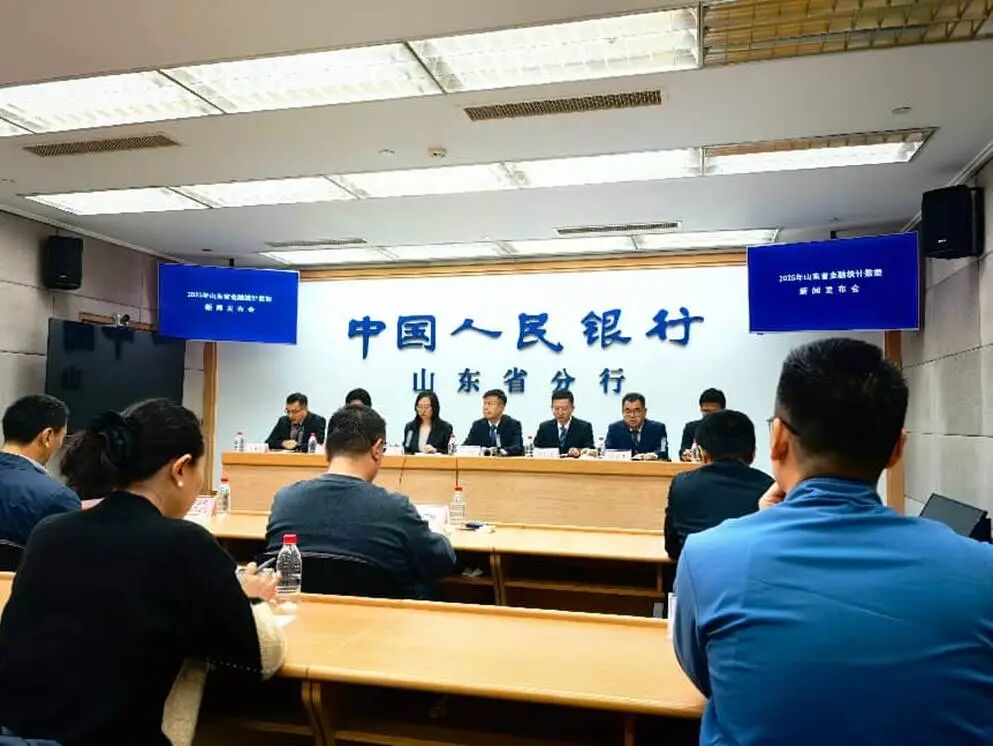
多项指标持续高于全国平均水平,山东金融呈现“量稳、价降、面扩”态势
Xin Lang Cai Jing· 2026-01-24 09:19
Core Insights - The financial performance of Shandong Province in 2025 showed significant growth, with key indicators such as social financing scale and loans exceeding national averages, indicating a strong monetary foundation for economic development in the northern region of China [1] Financial Performance - By the end of 2025, Shandong's social financing scale reached 25.9 trillion yuan, with an annual growth of 9.0%, outpacing the national average by 0.7 percentage points [1] - The total balance of loans in both domestic and foreign currencies was 16.3 trillion yuan, growing by 8.2%, and deposits reached 19.0 trillion yuan, increasing by 9.1% [1] Cost of Financing - Financing costs continued to decrease, with a total of 16.9 billion yuan in benefits provided to businesses and residents through policy interest rate reductions and pilot programs [3] - The average interest rate for newly issued corporate loans was 3.57%, down by 0.19 percentage points year-on-year, while rates for small and micro enterprises and personal housing loans remained low [3] Credit Structure Optimization - The loan balance for enterprises reached 10.9 trillion yuan, marking a 12.6% year-on-year increase, the highest growth for the same period historically [3] - Loans in key sectors totaled 6.7 trillion yuan, with a year-on-year growth of 15.6%, highlighting a focus on high-quality transformation [3] Investment and Consumption - Loans for fixed assets and infrastructure reached 4.2 trillion yuan and 4.9 trillion yuan respectively, with notable growth rates [3] - The digital RMB pilot program continued to deepen, supporting the dual empowerment of investment and consumption [3] Foreign Trade and Investment - Foreign trade and investment showed steady progress, with a 35% increase in the convenience of trade and payment for quality enterprises [4] - A cross-border financial service platform supported 3,208 foreign-related enterprises in financing 41.3 billion USD, with cross-border RMB transactions accounting for 40.5% of total transactions from January to November [4] Financial Innovation - Shandong led several financial reform initiatives, achieving full coverage of the pilot program for indicating corporate loan financing costs across 16 cities, with 690,000 loans totaling 2.6 trillion yuan [4] - The bond market saw 34 enterprises issue technology innovation bonds totaling 649.3 billion yuan, ranking fourth nationally [4] Foreign Exchange Reforms - Continuous deepening of foreign exchange reforms included 330 million yuan in green foreign debt pilot projects covering multiple green sectors [5] - 14 high-quality enterprises in various industries benefited from "trusted exemption" conveniences in foreign exchange operations [5]
中国银河证券·中国证券报私募行业星耀领航计划 | “星耀领航计划”走进艮岳投资:探索从量化孵化到平台运营的科技金融实践路径
Zhong Guo Zheng Quan Bao· 2026-01-24 02:59
Core Insights - The article discusses the development and practices of Ganyue Investment in the quantitative investment sector, emphasizing its commitment to technology innovation and multi-strategy platform development [1][2]. Group 1: Company Development - Ganyue Investment was established in 2016 and has undergone three phases: quantitative incubation, proprietary fund management, and the establishment of a multi-strategy, multi-portfolio manager platform [2]. - The company currently manages approximately 1.9 billion yuan, with teams focused on quantitative stocks, convertible bonds, subjective futures, arbitrage, and asset allocation [2]. Group 2: Technological Innovation - Ganyue Investment has formed an AI research team composed of personnel from major internet companies, focusing on "AI + securities" to enhance research efficiency and reduce repetitive manual tasks [2][3]. - The company has made significant hardware investments, establishing a substantial independent data center to support the development and iteration of quantitative strategies [2]. - Ganyue Investment is exploring the transformation of investment processes through AI technology, aiming to automate the conversion of research reports and academic papers into effective factors or models [3]. Group 3: Corporate Social Responsibility - Ganyue Investment adopts a subtle approach to corporate social responsibility, focusing on long-term support for education and youth talent development through donations and scholarships [4][5]. - The company encourages employee participation in volunteer services and supports employee-initiated public welfare projects, embedding social responsibility into its corporate culture [4][5]. Group 4: Trust and Industry Development - The "Starry Navigation Plan" provides a platform for private equity institutions to showcase their value and build trust with investors and partners [6]. - Ganyue Investment's development path from quantitative incubation to platform operation exemplifies the potential for professional and diversified growth in the private equity sector [6].

中国银行业理财市场年度报告(2025年)
银行业理财登记托管中心· 2026-01-24 02:10
Investment Rating - The report does not explicitly provide an investment rating for the industry Core Insights - The banking wealth management market in China reached a total scale of 33.29 trillion yuan by the end of 2025, reflecting an 11.15% increase from the beginning of the year, with 3.34 million new wealth management products issued, raising 76.33 trillion yuan in funds [6][20] - The report emphasizes the importance of the wealth management industry in supporting the real economy, with approximately 21 trillion yuan allocated to support various sectors [6] - The number of investors holding wealth management products reached 143 million, a growth of 14.37% year-on-year, generating returns of 730.3 billion yuan for investors throughout the year [6] Summary by Sections Development Environment of the Wealth Management Industry - The report highlights the complex changes in the development environment, including global geopolitical tensions and domestic economic challenges, while emphasizing the resilience and potential of China's economy [8] - The "14th Five-Year Plan" and the upcoming "15th Five-Year Plan" outline the strategic direction for the financial sector, focusing on technology finance, green finance, inclusive finance, pension finance, and digital finance [8][9] Wealth Management Products - By the end of 2025, the total number of wealth management products in the market was 46,300, with a total scale of 33.29 trillion yuan, marking a 14.89% increase in the number of products [21][24] - The report indicates a shift from single-asset driven strategies to multi-asset allocation, with a focus on risk management and dynamic adjustments to enhance portfolio resilience [26][27] - Fixed income products dominate the market, accounting for 97.09% of the total scale, while mixed and equity products remain relatively small [32][33] Investor Profile - The report notes that the wealth management industry has seen a significant increase in the number of investors, with a focus on enhancing investor protection and appropriate management of wealth management products [19][40] - The risk management framework is emphasized, with a focus on compliance and transparency to safeguard investor interests [14][16] Market Institutions and Services - The report discusses the establishment of various wealth management companies and the importance of digital financial services, including the use of AI and big data in wealth management [10][12] - It highlights the role of wealth management companies in supporting the pension finance sector and the ongoing development of a centralized data exchange platform for wealth management products [7][12]
山东去年金融数据揭晓 全年企业贷款增加1.2万亿元,增量创历史新高
Da Zhong Ri Bao· 2026-01-24 01:03
Group 1 - The core viewpoint of the news is that Shandong Province has achieved stable financial growth in 2025, creating a favorable monetary environment for economic development in the northern region of China [1] - By the end of December 2025, Shandong's social financing scale, loans, and deposits reached CNY 25.9 trillion, CNY 16.3 trillion, and CNY 19.0 trillion respectively, with year-on-year growth rates of 9.0%, 8.2%, and 9.1%, outpacing national averages [1] - The number of enterprises receiving loan support increased to 310,000 by the end of December 2025, with a total enterprise loan balance of CNY 10.9 trillion, reflecting a year-on-year growth of 12.6% [1] Group 2 - In 2025, the average interest rate for newly issued corporate loans in Shandong was 3.57%, a decrease of 0.19 percentage points year-on-year, marking a historical low [2] - Shandong has implemented a comprehensive financing cost disclosure initiative for corporate loans, covering all 16 cities in the province, with 690,000 loans totaling CNY 2.6 trillion disclosed by the end of 2025 [2] - The province has successfully promoted the issuance of technology innovation bonds, with 34 enterprises issuing bonds worth CNY 649.3 billion, ranking fourth nationally in both the number of issuers and total issuance [2] Group 3 - By the end of 2025, the balance of technology loans in Shandong reached CNY 2.8 trillion, growing by 15.5% year-on-year, significantly higher than the overall loan growth rate [3] - Shandong has become one of the first provinces to pilot green foreign debt, with seven cities successfully conducting trial operations and achieving cross-border financing of approximately CNY 3.3 billion in key green sectors [3]
“星耀领航计划”走进艮岳投资:探索从量化孵化到平台运营的科技金融实践路径
Zhong Guo Zheng Quan Bao· 2026-01-24 00:29
近日,"中国银河证券·中国证券报私募行业星耀领航计划"调研团队走进艮岳投资,公司合伙人蔡群接 受了中国证券报记者的专访,分享了公司在量化投资领域的深耕、对科技创新的探索、多策略平台化发 展的实践,以及他对企业社会责任的理解。 其次,公司在硬件投入上不遗余力。公司位于杭州萧山世纪城,自建了规模可观的独立机房,在算力等 硬件基础设施上进行了超前投入,为量化策略的研发与迭代筑牢底层基础。 最后,公司积极探索AI技术对投资流程的改造。蔡群分享了一个具体案例:公司曾推行"实习生计划", 试图通过人海战术挖掘因子,但效果有限。生成式AI技术兴起后,公司利用自研及外部工具,显著提 升了研究效率。"使用AI技术一方面降低了实习生需求,另一方面能够让因子验证更高效。"他表示,公 司未来的目标是探索将前沿研报、学术论文自动转化为有效因子或模型,但目前该探索仍处于初级阶 段。 对于量化私募是否会完全转型为科技公司的问题,蔡群持开放态度。他认为,量化本身具有较强的科技 属性,公司氛围也已趋向科技化,倡导"人人用AI"。但作为平台型公司,其策略包容性更强,未来的定 位将是做量化、主观等多种策略的融合体。 践行责任于无声处 "星耀领航计 ...
深耕债券市场沃土 浇灌实体经济之花
Zhong Guo Zheng Quan Bao· 2026-01-23 21:02
Group 1: Core Insights - The bond market in China is experiencing significant growth, with an average annual compound growth rate of 8.46% from 2021 to 2025, and a projected market size increase of 70.61% by the end of 2025 compared to 2020 [2][3] - Financial institutions, particularly state-owned enterprises like Caixin Securities, are committed to supporting national strategies and local economic development through innovative bond financing [4][5] Group 2: Market Structure Changes - The proportion of interest rate bonds has increased to 70.03% by the end of 2025, up by 7.64 percentage points from 2020, highlighting their role as a stabilizing force in the capital market [3] - The credit bond market is undergoing a transformation, with a shift away from high-leverage real estate financing towards new credit bond varieties that support emerging economic drivers, such as technology innovation [3][4] Group 3: Innovations in Bond Issuance - Caixin Securities has issued nearly 300 billion yuan in bonds during the "14th Five-Year Plan" period, ranking 23rd in the market for company bonds [5] - The company has been a leader in green finance, issuing nine green low-carbon transition bonds totaling over 2 billion yuan, including the first rural revitalization low-carbon transition bond in China [6] Group 4: Risk Management and Compliance - The company emphasizes a robust risk management framework, achieving an A-class rating for bond business quality from the China Securities Association for six consecutive years [7] - A comprehensive internal control system is in place to manage risks throughout the entire bond issuance process, from project initiation to ongoing management [8] Group 5: Future Development Strategies - The company plans to focus on high-growth technology innovation enterprises and major R&D projects, aiming for significant growth in technology bond issuance during the "15th Five-Year Plan" [8][9] - There is a commitment to enhancing digital capabilities and expanding service stations to improve financing services and better meet local economic needs [8][9]