
乡村全面振兴

Search documents
加快农业特色产业发展
Xin Lang Cai Jing· 2026-01-12 21:04
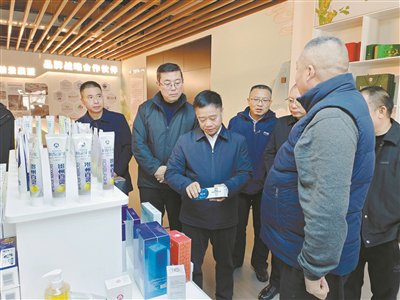
Group 1 - The research team from the Zunyi Municipal Committee of the Chinese Kuomintang conducted a study on accelerating the development of agricultural特色产业 and promoting comprehensive rural revitalization [3] - The team visited various locations including high-standard farmland for pea shoots, Guizhou Moutai's agricultural technology company, tea companies, and cosmetic manufacturing firms to assess the current status of特色农业, product processing, marketing development, and technological research capabilities [3] - Zunyi City has significant advantages in特色农业 such as tea, chili, ecological livestock, and traditional Chinese medicine, with a solid industrial foundation and vast development space, indicating a promising market outlook [3] Group 2 - The research team aims to produce a high-quality report with actionable recommendations to leverage特色资源优势 and support comprehensive rural revitalization [3]

昌平将推进永安古城更新改造,重现玉带河等节点景观
Xin Jing Bao· 2026-01-12 07:14
Core Viewpoint - The Changping District of Beijing is set to advance the overall renovation and transformation of the Yong'an Ancient City by 2026, aiming to restore historical landmarks and enhance urban functionality [1][2]. Group 1: Urban Development and Infrastructure - The renovation of Yong'an Ancient City will include the construction of commercial, cultural, and recreational facilities, with a focus on historical preservation and urban vitality [2][3]. - The first phase of the Yong'an Ancient City urban renewal project will transform outdated facilities and underutilized land into a mixed-use district that integrates commercial, office, and community living spaces [2][3]. - The construction of the second phase of Line 19's northern extension is planned, along with the acceleration of preliminary work for the 17th line branch, enhancing the transportation network in the area [4][5]. Group 2: Employment and Education - The district aims to create over 15,000 new urban jobs this year, focusing on enhancing employment services for key groups such as college graduates and veterans [6][7]. - Educational initiatives include the opening of new schools and the addition of 1,440 primary and secondary school places, as well as 1,350 kindergarten places, to improve public education services [7]. Group 3: Community Services and Housing - The district will enhance elderly care services by establishing two new senior service centers and increasing the coverage of elderly care stations [7]. - Plans to build 2,000 units of affordable housing are underway, promoting high-quality real estate development and community building [7].
曲周县精准发力招引央企子公司
Xin Lang Cai Jing· 2026-01-12 00:26
Core Insights - The establishment of China Agricultural Service (Hebei) Modern Agricultural Service Co., Ltd. marks a significant development for the local supply and marketing sector in Quzhou County, as it is a subsidiary of the China Supply and Marketing Group, a central state-owned enterprise [1][2] - This initiative sets a record for the continuous introduction of central enterprises at the county level in Hebei Province for two consecutive years [1] Group 1 - The new company will occupy 20 acres with a total construction area of 4,007 square meters, including facilities such as a drying center, grain transfer warehouse, agricultural machinery and supplies warehouse, and a service center for farmers [2] - The project aims to provide specialized services such as agricultural machinery operations, unified pest control, and drying and storage solutions, offering tailored "nanny-style" and "menu-style" service plans for farmers and new agricultural entities [2] - The county supply and marketing cooperative has established a special service team to facilitate the project, providing comprehensive support in registration, land assurance, and policy alignment, significantly reducing the time cost for project implementation [2] Group 2 - The county government is committed to supporting the project through funding and human resources, ensuring efficient operation and creating a conducive environment for the central enterprise's investment and development [2] - The company is set to enter the construction phase soon, with plans for ongoing collaboration with the central enterprise to revitalize the traditional supply and marketing sector and contribute to high-quality economic development and rural revitalization in the county [2]
推进乡村全面振兴 今年我国将部署这些工作
Yang Shi Xin Wen· 2026-01-11 23:21
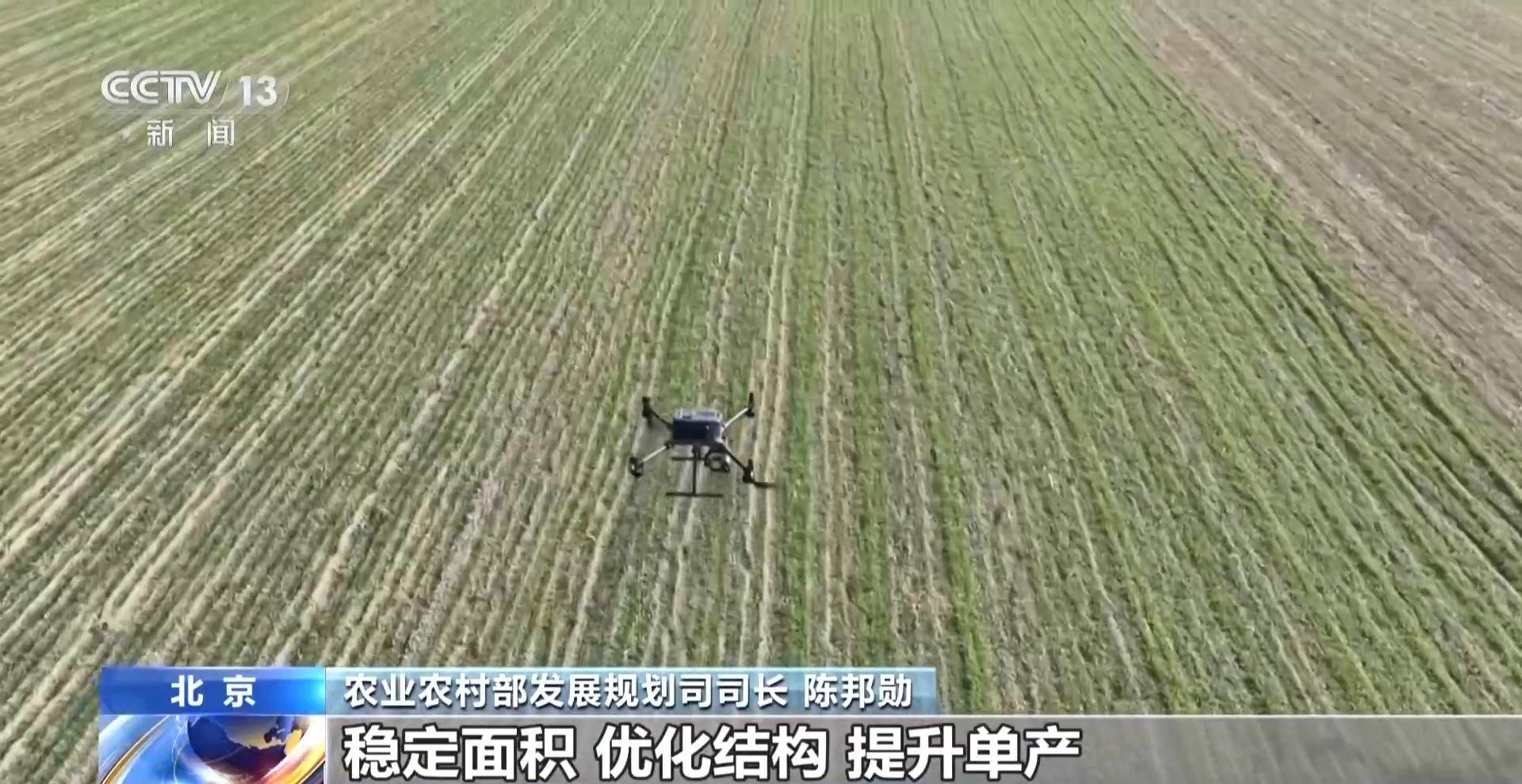
Group 1 - The core focus for the year is to enhance agricultural production capacity and quality efficiency, with a significant push for increased yield in grain and oil crops, and high-standard farmland construction [1][3] - The Ministry of Agriculture and Rural Affairs emphasizes the importance of stabilizing grain production and ensuring the supply of important agricultural products, implementing a new round of actions aimed at increasing grain production capacity by 1 billion jin [3] - There will be a transition to a normalized and precise assistance phase to consolidate and expand the achievements of poverty alleviation, with measures to prevent a return to poverty being established [3] Group 2 - The initiative includes modernizing facility agriculture and expanding food production space comprehensively [1] - The focus will also be on creating livable and workable rural areas, with a second round of land contract extensions being piloted for 30 years after expiration [3] - The Ministry aims to optimize agricultural structure and enhance yield per unit area while maintaining stability in agricultural land area [3]
为乡村全面振兴注入文化暖流(专家点评)
Xin Lang Cai Jing· 2026-01-11 02:48
本文转自【人民日报】; 在长江村务工的何英梅,通过村两委在村里打造的多种形式阅读场景,实现了从"看书难"到"读书易"的 转变,这是乡村精神文明建设在基层落地生根的生动注脚。 (作者为无锡广播电视集团(台)总编辑) 《人民日报》(2026年01月11日 第 04 版) 乡村全面振兴不仅要富口袋,更要富脑袋。长江村将阅读场景嵌入乡村肌理,让精神文明融入日常生 活,既延续了文化惠民的初心,又以低成本、广覆盖的方式搭建起精神家园。这种"接地气"的文化建 设,让乡村不仅有了产业的"筋骨",更有了文化的"灵魂"。 在"十五五"规划建议提出实施公共文化服务提质增效行动的背景下,长江村的实践,为文化惠民和乡村 公共文化服务建设提供了可借鉴的样本。当阅读成为乡村的生活常态,文化自信便会生根发芽,乡村全 面振兴也将获得源源不断的精神动力。 从智慧书柜的扫码借阅,到《新长江报》的免费发放,从读书节的多元活动,到常态化读书分享会,长 江村的阅读推广持续创新形式,精准对接不同群体需求:务工人员能便捷获取新书,老年人能通过报纸 了解村情、品读美文,亲子家庭能在互动中培养阅读习惯。5000余次借阅量、1200余本更新书籍、40场 左右读书 ...
以常态化帮扶机制筑牢防止返贫致贫底线
Jing Ji Ri Bao· 2026-01-10 21:57
Core Viewpoint - The recent Central Rural Work Conference emphasizes the establishment of a regular mechanism to prevent poverty and improve support policies, which is crucial for promoting rural revitalization and common prosperity for farmers [1] Group 1: Achievements and Current Status - During the "14th Five-Year Plan" period, significant progress has been made in consolidating poverty alleviation achievements, with the income levels and living quality of the impoverished population significantly improved [1] - Over 7 million monitoring subjects have been identified and supported to eliminate the risk of returning to poverty, with continuous improvements in education, healthcare, housing, and drinking water safety for the impoverished population [1] - The central government has invested a total of 850.5 billion yuan in rural revitalization support funds over the past five years, focusing on key areas such as 160 counties and 35,000 resettlement areas [1] Group 2: Future Challenges and Strategies - Despite the achievements, there are still risks of returning to poverty for some farmers, and underdeveloped regions face various constraints that require national support [2] - The transition from temporary assistance to a regular governance model aligned with rural revitalization strategies is necessary, as the current support system still falls short of the requirements for comprehensive rural revitalization [2] - There is a need to enhance development momentum and internal motivation, as some beneficiaries exhibit a reliance mentality and lack skills that match market demands [2] Group 3: Key Focus Areas for Support - The core goal of regular assistance should shift from "safety net" to "empowerment," emphasizing capacity building and opportunity provision [3] - The focus should be on cultivating characteristic industries, improving the development environment, and enhancing human capital, balancing both "blood transfusion" and "blood production" approaches [3] - The government should transition from a leading role to a collaborative approach, integrating market forces and encouraging social participation in the assistance process [3] Group 4: Monitoring and Evaluation - A unified, precise, and dynamic monitoring system for preventing poverty should be established, enhancing data sharing and connectivity among relevant departments [4] - The application of digital technologies, such as big data and AI, is essential for accurately identifying those at risk of returning to poverty [4] - There should be a focus on dynamic management of beneficiaries, including clear exit conditions and procedures for assistance policies [4]
省委常委会召开会议 梁言顺主持并讲话
Xin Lang Cai Jing· 2026-01-10 12:18
Group 1 - The core viewpoint emphasizes the importance of addressing "three rural issues" as a top priority, aiming for agricultural modernization and rural revitalization [1] - The meeting highlighted the need to ensure food security by focusing on production capacity, ecological production, and increasing income, while promoting the construction of the Jianghuai grain storage [2] - It was stressed to implement a mechanism to prevent poverty and ensure effective employment and industry support, aiming to maintain a baseline against large-scale poverty [2] Group 2 - The meeting underscored the importance of urban renewal as a key strategy, focusing on the planning and construction of quality housing, communities, and urban areas [3] - Responsibilities were assigned to various regions and departments to enhance coordination and ensure a cohesive approach to urban development across the province [3] - The goal is to create high-quality living spaces for residents through improved waste management, building control, and property service quality [3]
陈刚在百色崇左调研,强调要扎实推进乡村全面振兴
Guang Xi Ri Bao· 2026-01-10 01:57
Group 1 - The core message emphasizes the importance of party leadership in promoting the development of characteristic industries and advancing rural revitalization in Guangxi [1][3] - The development model of "party leadership + industrial revitalization + linking farmers" is highlighted as a successful approach to achieve industrial growth, collective income increase, and community benefits [1] - The need for strong local leadership and capable teams is stressed, with a focus on recruiting politically qualified and community-oriented individuals into the party to enhance grassroots governance [1] Group 2 - The integration of local advantages in location, ecology, and resources is encouraged to develop tourism-related industries such as homestays and agritourism, leveraging proximity to attractions like the Detian Waterfall [2] - The promotion of a "three-chain integration" approach involving party building, legal frameworks, and industrial development is recommended to enhance rural governance and community standards [2] - Continuous efforts to consolidate and expand poverty alleviation achievements while preventing large-scale poverty recurrence are emphasized, alongside the need for modern agricultural practices [3] Group 3 - The strategy of "location-based, differentiated development" is proposed to foster county-level economies and promote stable income growth for residents [3] - The importance of addressing community concerns and ensuring social stability through effective governance and support measures is highlighted [3]
研究做好“三农”等工作
Xin Lang Cai Jing· 2026-01-09 18:42
Group 1 - The meeting emphasized the importance of implementing Xi Jinping's directives on "Three Rural Issues" and aimed to modernize agriculture and rural areas, promoting comprehensive rural revitalization and urban-rural integration [1][2] - The focus is on consolidating agricultural advantages, enhancing production capacity and quality, and ensuring stable income growth for workers through tailored economic development strategies [1][2] - The meeting highlighted the need for a people-centered urban development approach, fostering a harmonious urban-rural community and promoting high-quality urban development [2] Group 2 - The meeting called for a collaborative urban work structure involving unified leadership from the Party, government cooperation, and community participation to build a modernized city with unique characteristics [2] - It stressed the importance of planning and innovation in developing industrial parks and enhancing the management of chemical parks to transition from standard construction to high-quality development [2] - The meeting also underscored the necessity of risk prevention and safety measures in development, promoting green and safe growth [2]
省委常委会召开会议 传达学习习近平总书记重要讲话精神 研究巡视巡察工作等事项
Da Zhong Ri Bao· 2026-01-09 01:06
Core Points - The meeting of the Provincial Standing Committee focused on conveying the important speech of General Secretary Xi Jinping and reviewing relevant work matters [2][3] - The meeting emphasized the need for all levels of party organizations and members to deeply learn and implement the spirit of Xi Jinping's speeches, ensuring a commitment to ideals, practical actions, responsibility, and self-discipline [3] Group 1: Key Discussions - The meeting highlighted the importance of self-examination and party character analysis as a standard for the entire party, showcasing the significance of self-revolution and responsibility in party building [3] - It was stressed that the achievements in the development of the party and the country should be deeply understood to boost confidence and maintain a proactive approach [3] - The meeting called for the implementation of Xi Jinping's important instructions to promote stable and healthy economic and social development, ensuring a good start for the "14th Five-Year Plan" [3] Group 2: Inspection and Governance - The meeting discussed strengthening village inspection work, emphasizing the need to address issues that hinder rural revitalization and agricultural modernization, thereby improving grassroots governance [4] - A report on the 2025 provincial inspection work and the 2026 work plan was reviewed, highlighting the importance of deepening political inspections and enhancing the application of results [4] - The meeting aimed to establish a coordinated inspection and supervision framework to support the construction of a modernized strong province [4]