中央八项规定精神

Search documents
民航湖南监管局开展年轻干部深入贯彻中央八项规定精神学习交流及警示教育
Zhong Guo Min Hang Wang· 2025-08-01 05:32
Core Viewpoint - The Civil Aviation Hunan Regulatory Bureau is focusing on enhancing the discipline awareness and work style of young cadres through a series of educational activities aimed at implementing the spirit of the Central Eight Regulations [1][2] Group 1: Educational Activities - The activities include theoretical learning, case warning education, and discussions to promote a multi-dimensional approach to discipline and work style improvement among young cadres [1] - Young cadres participated in a collective viewing of case warning education films to reflect on real-life examples of corruption and self-discipline [1] - A discussion was held on how to implement the Central Eight Regulations in their respective positions, fostering an environment of idea exchange and deepening learning outcomes [1] Group 2: Leadership Guidance - The Deputy Secretary of the Hunan Bureau's Party Committee and Secretary of the Discipline Inspection Commission encouraged young cadres to uphold their ideals and professional ethics while serving the public [1] - Emphasis was placed on the importance of personal growth in the context of high-quality development in the civil aviation sector [1] Group 3: Future Focus - The Hunan Regulatory Bureau plans to continue focusing on the training and management of young cadres, innovating educational methods, and enriching practical experiences [2] - The goal is to build a team of young backbones characterized by strong work ethic, professional skills, and integrity, contributing to the high-quality development of civil aviation in Hunan [2]
中央纪委国家监委通报
券商中国· 2025-07-31 02:08
Group 1 - The article highlights the ongoing efforts of the Central Commission for Discipline Inspection and National Supervisory Commission in China to strengthen the supervision and inspection of discipline inspection and supervisory cadres, emphasizing the importance of political integrity and capability [2] - In the first half of 2025, over 16,800 cases related to discipline inspection cadres were received, with more than 14,000 cases processed, indicating a rigorous approach to maintaining discipline within the ranks [2] - A total of 6,006 discipline inspection cadres were subjected to criticism and education through the "four forms" of handling, showcasing a structured approach to addressing misconduct [2] Group 2 - The article reports that 2,042 cases were filed against discipline inspection cadres, with 1,666 individuals receiving disciplinary actions, including 49 at the bureau level and 319 at the county level, reflecting a significant enforcement of accountability [2] - The use of the "four forms" of handling includes various levels of criticism and education, with the first form being the most frequently applied, indicating a preference for corrective measures over punitive actions [2]

学有所悟丨以钉钉子精神推进作风建设常态长效
Zhong Yang Ji Wei Guo Jia Jian Wei Wang Zhan· 2025-07-31 00:29
Group 1 - The core viewpoint emphasizes the importance of style construction as a perpetual topic in the Party's development, which affects the Party's image and public support, ultimately determining the success or failure of the Party and the state [1] - The "nail-driving spirit" is highlighted as both a work attitude and method, essential for strengthening style construction and ensuring the implementation of the Central Eight Regulations [1][2] - The article discusses the need for continuous efforts in style construction, recognizing its long-term, complex, and arduous nature, and the importance of using technology and institutional guarantees to maintain effectiveness [3][4] Group 2 - The article stresses the necessity of accurately identifying the entry points for style construction, focusing on specific issues such as the "Four Winds" problems, and ensuring that efforts are targeted and effective [2] - It emphasizes the role of public opinion in evaluating the effectiveness of style construction, asserting that the relationship between the Party and the people is central to addressing style issues [5] - The need for cultural integration in style construction is discussed, advocating for the incorporation of integrity culture into the education of Party members to foster a deeper commitment to the Central Eight Regulations [4]
贵州深入开展贯彻落实中央八项规定精神监督驰而不息纠“四风”树新风
Zhong Yang Ji Wei Guo Jia Jian Wei Wang Zhan· 2025-07-31 00:29
Group 1 - The Guizhou Provincial Discipline Inspection Commission has intensified efforts to combat corruption and promote integrity, focusing on the implementation of the Central Eight Regulations [1][2] - In the first half of the year, Guizhou Province reported 1,549 cases of hedonism and extravagance, with 2,190 individuals receiving criticism or punishment, including 1,511 facing disciplinary actions [2] - The commission has established a collaborative mechanism with various departments to address issues such as drunk driving among public officials and related corruption [3] Group 2 - The Guizhou Provincial Discipline Inspection Commission is actively addressing issues related to performance evaluation biases, non-responsiveness, and formalism to alleviate burdens on grassroots levels [2] - A total of 2,198 cases of formalism and bureaucratism were addressed in the first half of the year, with 2,709 individuals receiving criticism or punishment, including 1,835 facing disciplinary actions [2] - The commission is promoting a comprehensive approach to tackle both corruption and misconduct, enhancing communication and collaboration among different departments [3][4] Group 3 - The commission is utilizing big data analysis to investigate issues such as improper dining and drunk driving, aiming to uncover underlying corruption [4] - A month-long education campaign on discipline and law has been launched across the province, focusing on instilling ethical behavior among party members and officials [4] - New regulations have been developed to record and report instances where leaders interfere in significant matters, further standardizing the use of power by officials [4]
三季度省委整治形式主义为基层减负专项工作机制会议召开
Shan Xi Ri Bao· 2025-07-31 00:16
Group 1 - The meeting on July 30 focused on the third quarter's special work mechanism to reduce formalism burdens on grassroots levels, emphasizing the importance of Xi Jinping's directives on this issue [1][2] - The meeting highlighted that various regions and departments have effectively combined the reduction of formalism with the implementation of the Central Eight Regulations, showing positive progress in the work [2] - The meeting stressed the need to uphold political responsibility, maintain a problem-oriented approach, and focus on strict standards to correct deviations in performance evaluation [2] Group 2 - Key tasks include strictly implementing the "Several Regulations on Reducing Formalism Burdens on Grassroots," promoting simplified documentation and meetings, and addressing issues like "finger-tip formalism" [2] - The meeting aims to tackle negative tendencies such as unrealistic task deployment, excessive policy execution, and "one-size-fits-all" approaches, while also addressing persistent issues like "petition fears" and "accountability anxiety" [2] - Continuous efforts will be made to enhance the learning and promotion of the "Several Regulations," increase the scrutiny of typical problems, and push for systematic improvements to foster a better work style [2]
深度关注 | 解读全国查处违反中央八项规定精神问题“半年报”
Zhong Yang Ji Wei Guo Jia Jian Wei Wang Zhan· 2025-07-30 01:21
Core Viewpoint - The article emphasizes the ongoing efforts and strict measures taken by the Central Commission for Discipline Inspection and National Supervisory Commission to combat violations of the Central Eight Regulations, highlighting a significant number of cases and disciplinary actions taken in the first half of the year [5][6][8]. Summary by Sections Overview of Violations - In the first half of the year, a total of 113,548 cases of violations of the Central Eight Regulations were investigated, resulting in 149,729 individuals being criticized or dealt with, including 100,761 receiving party disciplinary and administrative sanctions [5][8]. Zero Tolerance Policy - The Central Eight Regulations are viewed as a hallmark of the Party's governance, with a strong emphasis on zero tolerance for violations, particularly against the "Four Winds" (formalism, bureaucratism, hedonism, and extravagance) [6][7]. Continuous Monitoring and Reporting - The article notes that this is the 142nd consecutive month of reporting data on violations, indicating a sustained commitment to improving party conduct and governance [8]. Specific Violations and Actions - Among the violations, 6 cases involved provincial and ministerial-level officials, 550 involved departmental-level officials, and 106,408 involved officials at the county level and below [8]. - The article highlights that 57,278 cases of formalism and bureaucratism were addressed, with 47,305 individuals receiving disciplinary actions [9]. Focus on Enjoyment and Extravagance - There were 56,270 cases related to hedonism and extravagance, with 53.3% of these involving the illegal acceptance of gifts and money [12][13]. Addressing Specific Issues - The article discusses the need for continuous efforts to combat issues like improper dining and the use of public funds for personal enjoyment, with 12,150 cases reported in this area [14]. Integration of Anti-Corruption Measures - The article emphasizes the importance of integrating the fight against improper conduct and corruption, with a focus on identifying and addressing the root causes of these issues [15][16].

践行中央八项规定精神 共筑期货强国之路
Qi Huo Ri Bao Wang· 2025-07-29 18:22
Core Viewpoint - The implementation of the Central Eight Regulations has initiated a significant transformation in the conduct of the Party and the financial industry, emphasizing the importance of integrity and service to the economy [1][2]. Group 1: Importance of the Central Eight Regulations - The Central Eight Regulations aim to eliminate formalism, bureaucratism, hedonism, and extravagance, thereby reshaping the relationship between the Party and the people [2]. - The spirit of the regulations embodies the eternal pursuit of being "people-oriented, pragmatic, and clean," reflecting a self-revolutionary spirit [2]. - The financial sector, particularly the futures industry, is encouraged to integrate the spirit of the regulations into its operations to achieve high-quality development [2]. Group 2: Service to the Real Economy - The futures industry must focus on serving the real economy, translating the requirement of "close contact with the masses" into practical actions [2]. - The "insurance + futures" project exemplifies how the industry can provide targeted financial support to agricultural sectors [2]. - Continuous innovation in service models and the development of risk-hedging tools are essential for supporting enterprises through economic cycles [2]. Group 3: Risk Management and Compliance - The futures market is inherently associated with risk, necessitating a rigorous adherence to the principles of the Central Eight Regulations to mitigate risks [3]. - The industry must establish a robust risk management system and ensure compliance to maintain market stability [3]. Group 4: Corporate Culture and Integrity - The Central Eight Regulations are deeply embedded in the corporate culture of Huatai Futures, guiding its practices and client relationships [4]. - Trust is fundamental in finance, and Huatai Futures prioritizes client interests while adhering to principles of transparency and fairness [4]. - Talent development is crucial, with a focus on integrity and professional capability, supported by partnerships with educational institutions [4]. Group 5: Promoting Integrity in Partnerships - Huatai Futures actively promotes a culture of integrity in its partnerships, requiring all collaborators to sign anti-corruption agreements [5]. - These agreements serve as a commitment to uphold market integrity and protect legal rights [5]. Group 6: Continuous Improvement in Conduct - The futures industry faces challenges in fully implementing the Central Eight Regulations, necessitating ongoing efforts to strengthen compliance and ethical standards [7]. - Continuous education and training on the importance of conduct and the regulations are essential for all industry participants [7]. Group 7: Institutional Framework and Supervision - Establishing a comprehensive system of integrity norms is vital for the futures industry, clarifying acceptable and unacceptable behaviors [8]. - A multi-faceted supervision framework is necessary to ensure compliance and accountability within the industry [8]. Group 8: Building a Collaborative Integrity Community - Collaboration among regulatory bodies, industry associations, and market participants is essential to create a robust integrity framework in the futures industry [9]. - The commitment to integrity and ethical conduct is a long-term goal for the industry, requiring collective efforts from all stakeholders [9].
锲而不舍落实中央八项规定精神丨从会议桌转向田间地头——新疆精河县农技干部蹲点助农见闻
Xin Hua Wang· 2025-07-29 07:18
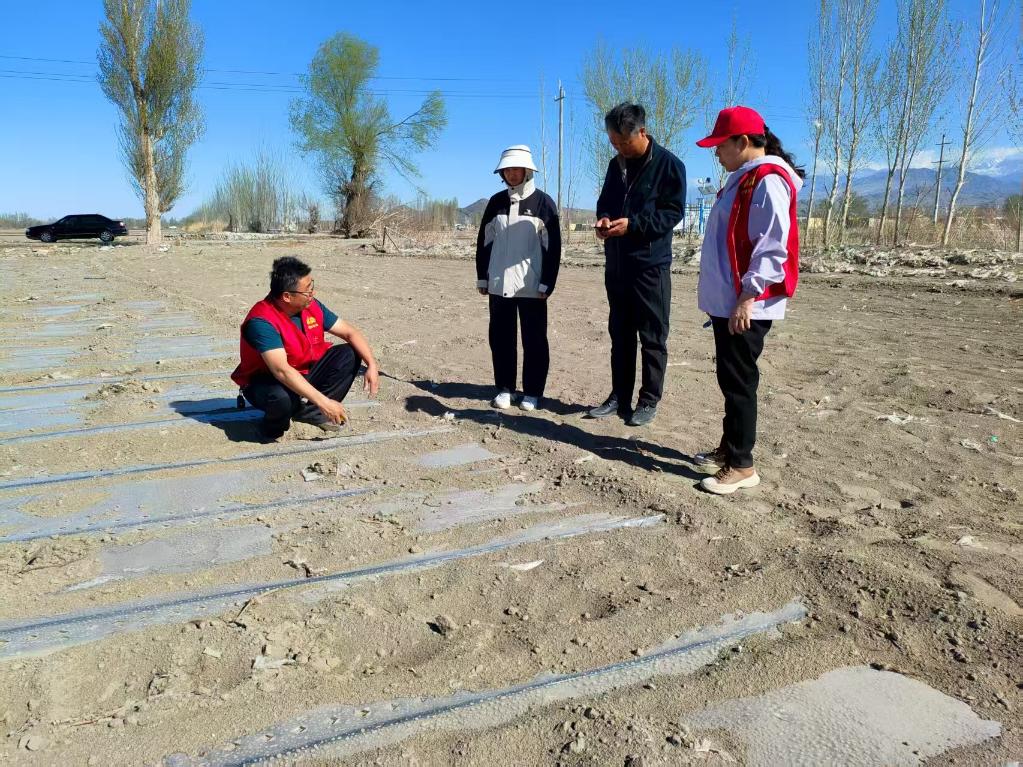
Core Insights - The article highlights the shift of agricultural technical personnel in Xinjiang Jinghe County from meetings to direct fieldwork, enhancing support for local farmers during the cumin harvest season [1][4] - The implementation of a "cotton + cumin" intercropping model has been introduced, allowing for two harvests in one season, increasing per-acre profitability while reducing cotton planting costs [1][3] Group 1 - Agricultural technical personnel are actively engaging with farmers in fields, providing hands-on guidance for harvesting, breeding, and processing, thereby extending the local agricultural industry chain [1][3] - The county's agricultural bureau has streamlined meeting processes and reduced documentation, enabling staff to focus more on fieldwork and direct farmer support [1][4] - Farmers have reported increased earnings from intercropping, with one farmer noting an additional income of 300 to 400 yuan per acre due to the new techniques [3] Group 2 - A mechanism has been established where technical leaders and experts are assigned to specific areas to ensure direct support in key agricultural practices such as seed selection, field management, and pest control [3][4] - The approach has fostered a sense of trust and confidence among farmers, who appreciate the timely and relevant guidance provided by technical personnel [3][4] - The agricultural bureau emphasizes the importance of reducing bureaucratic burdens to enhance service efficiency for farmers [4]
中央纪委国家监委通报
中国基金报· 2025-07-28 16:18
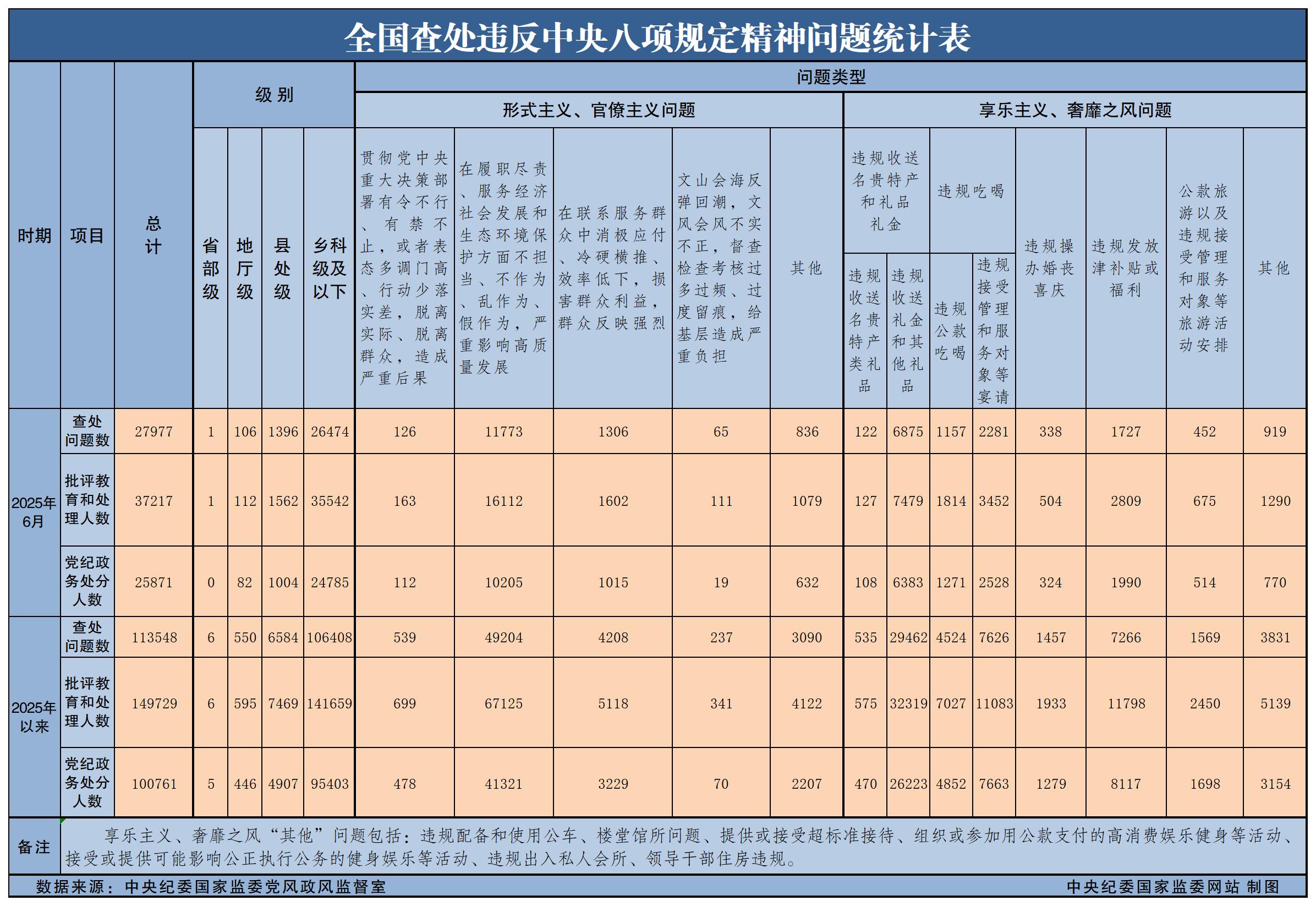
Group 1 - The central government reported a total of 27,977 cases of violations of the Eight Regulations in June 2025, with 37,217 individuals receiving criticism or punishment, including 25,871 party disciplinary and administrative sanctions [2] - Among the violations, 11,773 cases were related to non-performance, non-action, and misconduct that severely impacted high-quality development, accounting for 83.5% of the total formalism and bureaucratism issues [2] - The majority of violations were found at the grassroots level, with 26,474 cases (94.6%) involving officials at the township level and below [2] Group 2 - The emphasis on strict governance of the party through addressing work styles is highlighted as an important experience in the party's self-revolution in the new era [3] - The need for disciplinary inspection and supervision agencies to persistently implement the Eight Regulations and focus on the "Four Winds" issues is stressed [3]
2025年6月全国查处违反中央八项规定精神问题27977起
Yang Shi Wang· 2025-07-28 09:40
Summary of Key Points Core Viewpoint - The Central Commission for Discipline Inspection and the National Supervisory Commission reported a total of 27,977 cases of violations of the Central Eight Regulations in June 2025, with 37,217 individuals receiving criticism and punishment, including 25,871 party disciplinary and administrative sanctions, marking the 142nd consecutive month of monthly report data publication [1]. Group 1: Violations and Punishments - In June 2025, 27,977 cases of violations of the Central Eight Regulations were reported, with 37,217 individuals receiving criticism and handling, including 25,871 party disciplinary actions [1][4]. - The types of violations included issues related to not fulfilling responsibilities, poor service in economic and social development, and ecological protection, with 11,773 cases reported, accounting for 83.5% of the total formalism and bureaucratic issues [4]. Group 2: Breakdown of Violations by Category - Among the violations categorized as hedonism and extravagance, the issues of receiving valuable gifts and cash, improper dining, and unauthorized allowances or benefits accounted for 50.4%, 24.8%, and 12.5% of the total, respectively [4]. - The report highlighted that the majority of violations (94.6%) were committed by officials at the township level and below, with 26,474 cases reported in this category [4]. Group 3: Focus on Discipline and Governance - The report emphasizes the importance of strict governance and the need for various levels of disciplinary inspection agencies to persistently implement the Central Eight Regulations and address the "Four Winds" issues [4]. - It calls for a focus on the characteristics of the "Four Winds" in different regions and industries, aiming to deepen rectification efforts and maintain strict discipline [4].