
生态保护

Search documents
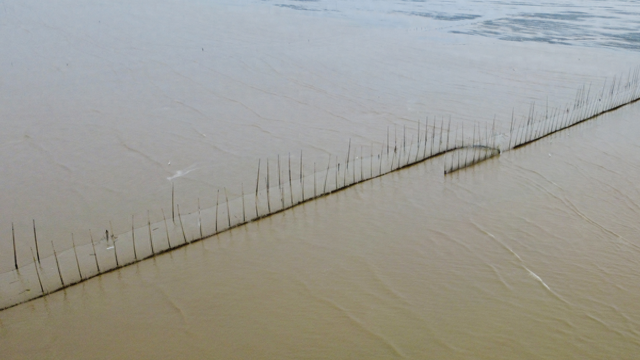
北海网红赶海打卡地被下禁令,禁止游客“扫荡式”赶海
Xin Lang Cai Jing· 2025-12-20 14:59
Core Viewpoint - The local government has implemented a ban on beachcombing activities in Beihai Xia Village to protect the ecological environment and allow the coastal ecosystem to recover, following years of overexploitation and environmental degradation caused by tourism and illegal fishing practices [10][12]. Group 1: Environmental Impact - The use of destructive fishing gear, such as fine-meshed nylon nets, has led to significant ecological damage, particularly affecting the population of horseshoe crabs, a nationally protected species [3][5]. - The increase in beachcombing tourism has resulted in a decline in marine biodiversity, with many small marine organisms being collected indiscriminately by tourists, which disrupts the food chain for migratory birds [5][6]. - The activities of tourists, including digging and driving vehicles on the beach, have created physical barriers that hinder the movement of juvenile horseshoe crabs and other marine life, leading to increased mortality rates [3][5]. Group 2: Economic and Social Dynamics - Initially, local villagers engaged in beachcombing tourism cooperatively, setting a unified price of 38 yuan, which fostered a sense of community and ecological responsibility [6][8]. - The influx of external businesses has disrupted this cooperative model, leading to price wars and a focus on profit over ecological sustainability, resulting in a decline in local community cohesion [8][10]. - The local government's ban aims to restore the ecological balance and provide a respite for the beach ecosystem, with hopes for improved management practices in the future [10][12].

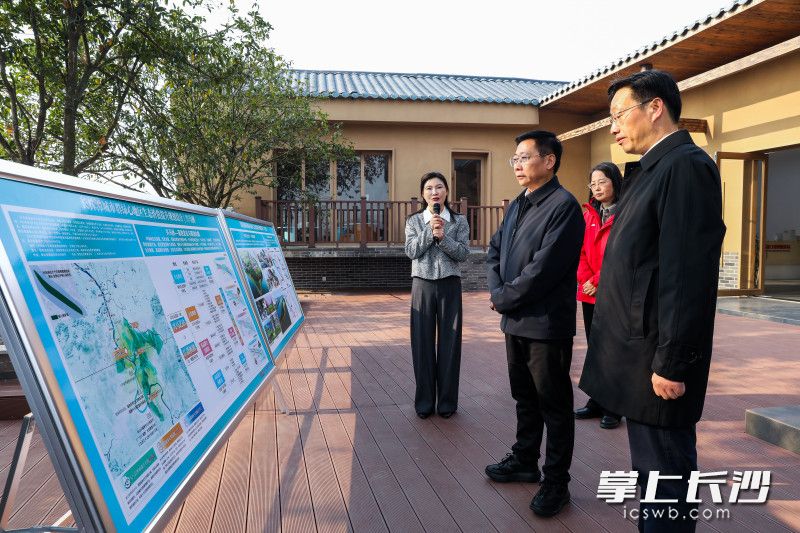
陈博彰调研长株潭湘江洲岛文旅体资源贯通联接、督导生态环境治理并巡河
Xin Lang Cai Jing· 2025-12-20 12:59
Core Viewpoint - The article emphasizes the integration of cultural, tourism, and sports resources in the Xiangjiang River islands to promote ecological protection and sustainable development in the Chang-Zhu-Tan area [1][3]. Group 1: Development Strategy - The government aims to activate new momentum for the integration of cultural, tourism, and sports resources on the islands, using ecological protection as a foundation and resource connectivity as a link [1]. - The strategy includes leveraging the hosting of the National Games in Hunan to comprehensively assess the ecological baseline, cultural resources, and existing development conditions of each island [5]. Group 2: Ecological Protection - The Xiangjiang River is described as a "golden waterway" with unique ecological advantages and rich cultural heritage, necessitating a strong commitment to ecological environment protection [5]. - The government is focused on enhancing river and lake governance effectiveness and ensuring the protection of the river's ecological safety [5]. Group 3: Community Engagement - During the field research, the government officials engaged with local residents, business operators, and grassroots cadres to discuss the planning and development of the islands [3]. - The initiative aims to foster collaboration among various departments and enhance cross-regional cooperation to strengthen the cultural and tourism industry [5].
“鸟中大熊猫”黑鹳做客山西繁峙 生态与人文共谱和谐曲
Xin Lang Cai Jing· 2025-12-20 11:52
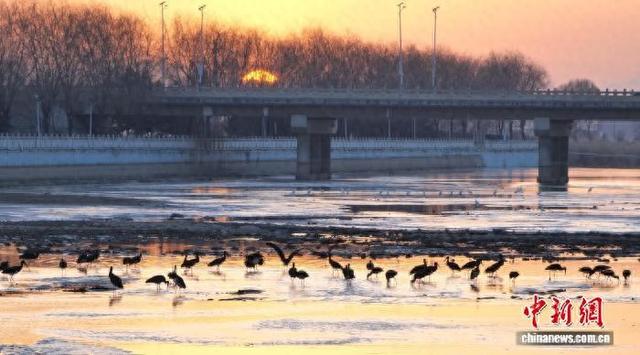
"鸟中大熊 中新网忻州12月20日电(杨静 钟昱星)冬日,国家一级保护野生动物黑鹳成群现身山西省忻州市繁峙县滹 源景区,它们或在浅滩上悠然觅食,或在晴空下展翅翱翔,红喙红腿映着碧波,黑褐色羽衣泛着金属光 泽,为滹沱河畔的生态画卷增添了灵动生机。 "鸟中大熊 猫"黑鹳做客山西繁峙。 韩红伟 摄 黑鹳数量稀少,濒危程度高,全球仅存2000多只,因此被誉为"鸟中大熊猫"。更为特殊的是,黑鹳堪称 生态环境的"顶级质检员",对栖息环境要求极为苛刻,仅会选择水质澄澈、鱼虾丰沛且远离喧嚣的湿地 环境进行栖息繁衍。其体长可达1米至1.2米,红喙尖长锋利,红腿纤细挺拔,静立时身姿端庄,飞行时 姿态舒展。 这群"生态挑剔者"为何会青睐繁峙县滹源景区?答案就藏在当地对山水生态与人文底蕴的坚守中。 作为国家4A级旅游景区,滹源景区依托滹沱河生态资源而建,220万平方米的区域内,"一带二廊三区 串珠状"的分布格局,将湿地、河岛、芦苇荡等多样生态景观有机串联。全长80公里的滹沱河穿境而 过,橡胶坝蓄水形成的连片浅滩水质澄澈,鱼虾、水生昆虫等生物资源丰沛,契合黑鹳浅水区觅食、喜 静避扰的生活习性,为其提供了理想的栖息环境。 猫"黑鹳做客山 ...
国家一级保护动物草原雕在成都龙泉山获救
Bei Jing Ri Bao Ke Hu Duan· 2025-12-20 11:29
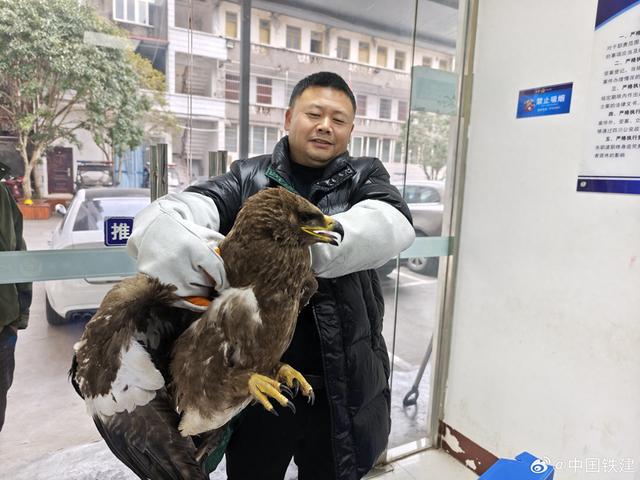
来源: 转自:北京日报客户端 近日,中铁二十三局集团成都龙泉山生态保护修复暨国家储备林项目的产业工人巡山时发现一只受伤的 草原雕(国家一级野生保护动物)。中国铁建、公安民警与专业机构迅速接力成功救助。草原雕掉落的 这片区域正是入川猛禽南北迁徙关键停歇带,随着生态廊道功能提升,过境猛禽目击记录较往年增长三 倍,脆弱山地已经变身 131 种鸟类的迁徙 "服务区"。 r an 1 4 东部影 lle y 83 E 6 @中国铁建 中国铁建 @ ...

山西鸟类种群进一步扩大 划定40处重点候鸟迁徙通道
Xin Hua She· 2025-12-20 05:54
Group 1 - The core viewpoint of the article highlights the expansion of bird populations in Shanxi Province, with the establishment of 40 key migratory bird corridors and a grid-based monitoring mechanism to provide ideal habitats for birds [1] - Shanxi is focusing on flagship species protection, such as the brown-eared pheasant, to systematically improve the quality of bird habitats through projects like black stork protection and the introduction of the crested ibis, leading to continuous improvement of waterbird habitats [1] - A comprehensive protection system has been established, including a full chain from water point construction to habitat restoration, artificial breeding, and wild release, making wetlands important stopovers and breeding grounds for migratory birds [1] Group 2 - Shanxi has conducted special law enforcement actions for four consecutive years and will launch a three-year bird protection initiative starting in 2025 to combat poaching and illegal trade in birds [1] - The province has built 2 provincial and 27 municipal wildlife rescue centers to provide timely treatment for injured, sick, or lost birds before releasing them back into nature [1] - 22 birdwatching routes have been announced to allow citizens to experience ecological beauty and share in conservation efforts, encouraging more people to join wildlife protection initiatives [2]
“大国重器”澎湃中国能量 “智慧”大坝点亮绿色未来
Yang Shi Wang· 2025-12-20 03:57
Core Viewpoint - The Baihetan Hydropower Station, the second largest in the world, has achieved significant operational success in its first three years, contributing to energy savings and ecological protection efforts [1][3]. Group 1: Operational Performance - Since the full commissioning of all units in December 2022, the Baihetan Hydropower Station has generated over 200 billion kilowatt-hours of electricity, equivalent to saving over 60 million tons of standard coal and reducing carbon dioxide emissions by over 160 million tons [3]. - The dam, standing at 289 meters, can withstand a water pressure of 16.5 million tons, with operational indicators exceeding premium engineering standards and no operational faults reported [5]. Group 2: Technological Advancements - The station has implemented over 10,000 monitoring instruments in key areas to collect real-time data on the dam's physical and mechanical state, accumulating over 1 billion data points [5]. - A digital twin dam safety monitoring system has been established, allowing for comprehensive inspections of the dam in just three minutes, significantly reducing the manpower and time required for such assessments [7]. Group 3: Ecological Initiatives - The Baihetan Hydropower Station plays a crucial role in flood control for the Yangtze River, with a reservoir capacity of 7.5 billion cubic meters, and conducts over ten ecological adjustments annually to protect fish populations [10]. - The station has developed a diversified ecological protection system, including layered water intake and artificial flood peaks, to support fish spawning while maintaining stable water temperatures [10][12].

线索筛查、固定证据,尽显科技范儿
Xin Lang Cai Jing· 2025-12-19 23:34
本报讯(通讯员王永强 刘潮杰)随着阵阵水花溅起,一条条鱼儿跃入水中。近日,由涉水生态案人员 蒋某购置,河南省淅川县检察院组织的增殖放流活动,在丹江口水库自然水域开展,共投放鲢鱼、鳙鱼 等鱼苗2万余尾。 丹江口库区是国家南水北调中线工程水源地,是国家一级水源保护区。为保护库区生态环境,淅川县检 察院持续建立健全丹江生态保护工作机制。该院在丹江岸边建立"益泓碧水"检察工作室,接入水利水文 监测系统、环保在线排污数据、卫星遥感监测数据等,实时筛查水质异常、排污超标等风险;及时发现 涉生态环境检察公益诉讼案件线索。 5月,两地检察机关同步立案,并于6月分别向两地农业农村部门制发检察建议,要求其与环保部门、属 地镇政府、库区执法部门形成监督合力,两地行政机关共同督促拆除非法养殖网箱。8月,在两地检察 机关现场监督下,淅川县和丹江口市综合执法组工作人员,对蒋某的拖船、网箱彻底拆除,并责令其进 行生态修复。近日组织的增殖放流活动正是蒋某进行生态修复的举措之一。 据了解,自2024年以来,淅川县检察院立足检察职能,共推动相关执法部门拆除288平方米水域非法网 箱,督促清理库区周边工程废料1万余方,清运处置侵占库岸的固体废物5 ...
观鸟经济点绿成金
Xin Lang Cai Jing· 2025-12-19 22:31
Core Insights - The city of Sanmenxia is transforming its ecological assets, particularly the return of swans, into a "beautiful economy" that harmonizes ecological protection with cultural tourism consumption [1][2] - The number of swans wintering in Sanmenxia has increased from over 2,000 a decade ago to approximately 16,000 today, with their habitats expanding along more than 100 kilometers of the Yellow River [1] - The local government has implemented various protective measures, including the establishment of a monitoring network and the creation of a "swan cafeteria" to support the swan population [1] Economic Impact - In 2024, over 10 million tourists are expected to visit Sanmenxia for the swans, driving annual tourism revenue to exceed 10 billion yuan [2] - The swans have become a valuable brand, contributing to the city's identity and attracting various cultural events throughout the year [2] - The tourism sector is experiencing significant growth, with hotel occupancy rates increasing by over 10% year-on-year and new business models emerging in the area [1] Industrial Development - Sanmenxia is simultaneously advancing its industrial transformation, focusing on high-end materials, particularly in the new materials sector, which has seen significant growth and applications in national projects [2] - The city ranks among the top in Henan province for research and development investment intensity, indicating a commitment to innovation and industrial upgrade [2] - The synergy between ecological beauty and technological advancement is driving Sanmenxia's transition towards a greener economy [2]
看!马摆大山风电场的“生态朋友圈”
Xin Lang Cai Jing· 2025-12-19 22:31
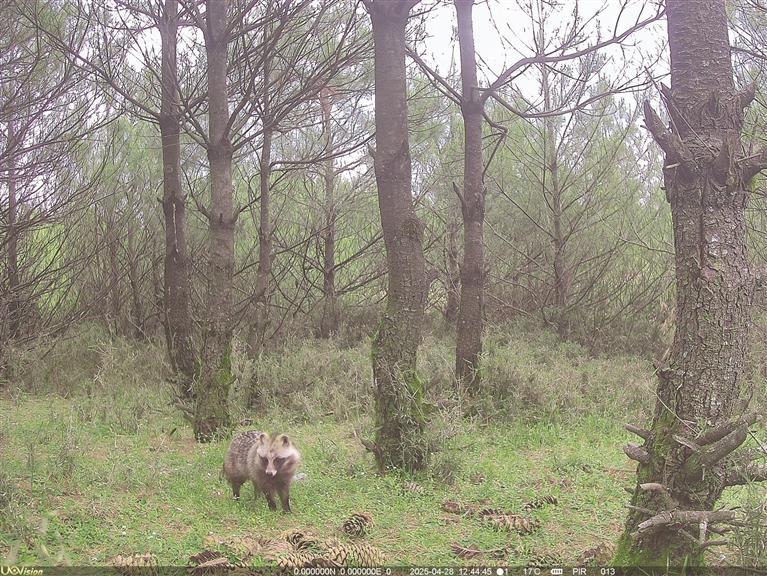
Core Insights - The Ma Bai Da Mountain Wind Farm in Weining, Bijie City, has recorded the presence of the national second-class protected wild animal, the raccoon dog, through infrared cameras set up by the Guizhou branch of Longyuan Power and the provincial forestry research institute [10] Group 1: Wildlife Monitoring - The presence of the raccoon dog confirms that wild populations still exist in Guizhou, where their numbers have drastically decreased over the past decades [10] - The documentation of the raccoon dog provides valuable data for further monitoring, research, and protection of this species [10] Group 2: Biodiversity at the Wind Farm - The Ma Bai Da Mountain Wind Farm is home to a variety of wildlife, including the colorful white-bellied pheasant, elegant oriental white stork, tiger-patterned dove, red-billed blue magpie, and red-headed long-tailed tit [10] - This diverse array of species contributes to a harmonious ecological environment at the wind farm [10]
让绿色成为贵阳贵安的鲜明底色
Xin Lang Cai Jing· 2025-12-19 20:27
Core Viewpoint - The article emphasizes the importance of green development as a distinctive feature of Chinese modernization, highlighting the need for ecological civilization construction in Guiyang and Gui'an [1][2][3] Group 1: Ecological City Construction - The city aims to optimize its ecological space by creating an ecological spatial pattern of "one belt, four corridors, eight rivers, and a thousand parks" [1] - There is a focus on enriching urban ecological products and promoting public access to urban parks and green spaces [1] - The initiative includes building urban ecological facilities and communities that are low-carbon, livable, clean, and harmonious [1] Group 2: Ecological Governance - The article outlines the need for comprehensive pollution control across air, water, soil, and solid waste to improve environmental quality [1][2] - It emphasizes the importance of establishing a long-term mechanism for rectifying prominent ecological issues [1][2] Group 3: Ecological Protection - The protection of ecosystems is highlighted as essential for enhancing productivity, with a focus on integrated protection and restoration of natural resources [2] - The article calls for the implementation of biodiversity protection action plans and the enhancement of forest quality through various forestry practices [2] Group 4: Ecological Economy Development - The article discusses the economic value inherent in good ecological conditions, advocating for the development of green agriculture, industry, and services [2] - It mentions the promotion of green energy and the implementation of carbon peak and intensity control measures [2] Group 5: Ecological Culture Cultivation - The cultivation of ecological culture is deemed necessary for supporting ecological civilization, with initiatives to develop ecological cultural products and practices [2] - The article encourages the establishment of green initiatives across various community levels, including schools and families [2] Group 6: Ecological System Optimization - The article stresses the need for institutional and legal frameworks to support environmental protection, including market-based mechanisms for ecological product transactions [3] - It calls for the improvement of local regulations and government rules related to ecological environment management [3]