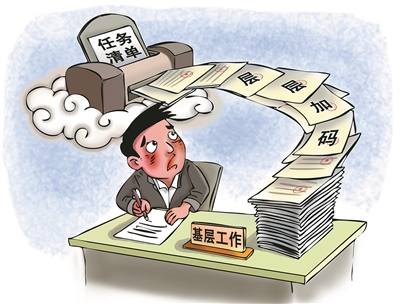
为基层减负

Search documents
全国乡镇(街道)履职事项清单全部编制完成
Ren Min Ri Bao· 2025-07-30 23:55
Core Points - The establishment of a comprehensive duty list for townships and streets is a fundamental institutional arrangement to strengthen grassroots governance and modernize governance capabilities, in line with the spirit of the 20th National Congress of the Communist Party of China [1][2] - The duty list work is divided into three phases: pilot exploration, initial implementation, and full rollout, involving drafting, soliciting opinions, and finalizing the list [2] - The average number of items in the duty lists across regions is 340, including 117 basic duty items, 99 cooperative duty items, and 124 items returned to higher authorities [1][3] Implementation and Training - Training for township and street party committee secretaries is comprehensive and practical, ensuring targeted training follows the progress of the duty list work [2] - Research and guidance teams are established to address challenges in remote areas, with a focus on improving the quality of the duty list compilation [2] Achievements and Future Plans - The duty list work has clarified responsibilities, reduced burdens on grassroots, and resolved over 60 long-standing issues in areas like fire safety inspections and illegal constructions [3] - The Central Organization Department will propose specific policy measures based on local experiences to ensure effective implementation of the duty lists [3]
减少不必要的“陪会”(金台潮声·作风建设系列谈⑯)
Ren Min Ri Bao· 2025-07-28 22:30
Group 1 - The core issue highlighted is the excessive and redundant meetings at various administrative levels, which burden grassroots officials and detract from their ability to perform essential tasks [1][2] - The phenomenon of "accompanying meetings" is rooted in distorted performance views among some leaders, leading to a culture where attendance at meetings is equated with commitment to directives [1][3] - There is a call for a shift in focus from the quantity of meetings held to the actual outcomes achieved, emphasizing practical solutions and direct engagement with the community [2][3] Group 2 - Effective measures to reduce unnecessary meetings include setting strict regulations on meeting approvals and limiting the number of attendees to essential personnel [2] - Successful models, such as "neighborhood discussion courtyards," encourage officials to engage directly with the public rather than being confined to meeting rooms, demonstrating better results [2] - The need for a systematic approach to meeting organization is emphasized, advocating for high-quality, efficient meetings that convey necessary information without redundancy [3]
我说变化丨“风气正了,人心顺了”
Zhong Yang Ji Wei Guo Jia Jian Wei Wang Zhan· 2025-07-26 02:14
Group 1 - The core viewpoint emphasizes the transformation of the village from a troubled area to a beautiful countryside, driven by rural revitalization policies and efforts to reduce burdens on grassroots workers [1] - The implementation of policies to reduce burdens has led to a significant decrease in unnecessary meetings and paperwork, allowing village officials to focus more on community engagement and addressing villagers' concerns [1] - The village has seen improvements in environmental conditions, with community members actively participating in cleaning efforts and beautifying their surroundings, resulting in a cleaner and more pleasant living environment [2] Group 2 - The village has established transparent governance practices, with public displays of financial expenditures and project completions, fostering trust among residents [2] - New village regulations and a residents' council have been created to promote values such as frugality and integrity, contributing to a positive community atmosphere [2] - The collective efforts of village officials, party members, and residents have led to a significant improvement in the village's appearance and community spirit, accelerating development and enhancing overall satisfaction among villagers [2]
化解纠纷岂能“定量”摊派?(干部状态新观察·为基层减负赋能)
Ren Min Ri Bao· 2025-07-24 22:28
Core Viewpoint - The article discusses the challenges and changes in the implementation of the "随手调" APP for conflict resolution in Yuechi County, Sichuan Province, highlighting the shift from qualitative to quantitative metrics in evaluating grassroots conflict mediation efforts [2][5][7] Group 1: Implementation of "随手调" APP - The "随手调" APP was introduced in 2014 to help community leaders record and analyze conflict resolution efforts, aiming to reduce paperwork and improve data accessibility for higher authorities [2][5] - Since January 2023, the county has imposed annual data entry tasks on local officials, leading to concerns that the focus has shifted from genuine mediation to merely meeting quantitative targets [3][4][5] Group 2: Challenges Faced by Local Officials - Local officials, such as Wang Weizhong and Tang Qiyong, express discomfort with the new task-oriented approach, feeling it undermines the sincerity and effectiveness of conflict resolution [3][4][6] - The pressure to meet data entry quotas has led to instances of fabricating cases to fulfill requirements, raising concerns about the authenticity of the recorded data [4][5] Group 3: Changes in Approach and Outcomes - Following feedback and recognition of the issues, Yuechi County has revised its approach, eliminating mandatory data entry quotas and focusing on the quality of recorded cases [5][6] - The new strategy emphasizes genuine conflict resolution and allows officials to dedicate more time to serving their communities, resulting in more accurate data collection and improved mediation outcomes [6][7]


江苏:县级以下禁止开发政务服务APP 多地整治形式主义
Qi Lu Wan Bao· 2025-07-08 01:56
Group 1 - The core viewpoint of the article highlights the recent measures taken by Jiangsu Province to enhance the quality and efficiency of government services, specifically prohibiting the development of government service apps below the county level [1][2] - The measures include mandating the integration of government service applications into a centralized platform, "Su Service Office," and requiring existing county-level apps to be migrated by the end of December [2][4] - The article also discusses the broader context of reducing bureaucratic burdens on grassroots levels, with various regions implementing strategies to address formalism and excessive administrative demands [3][4] Group 2 - Specific examples of local efforts to reduce formalism include Shanghai's cleanup of redundant government applications and work groups, resulting in a 41.7% reduction in the number of work groups [4] - In Henan, a research team visited over 60 grassroots departments to identify and address issues related to administrative burdens and non-compliance with management standards [4] - The article notes that the central government has been actively addressing issues of formalism and bureaucratic inefficiency, with a significant number of violations reported in May 2025 [5]
深度关注·持续擦亮新时代管党治党“金色名片”减出新气象 干出精气神
Zhong Yang Ji Wei Guo Jia Jian Wei Wang Zhan· 2025-07-08 00:53
Group 1 - The core viewpoint emphasizes the importance of reducing formalism and bureaucratic burdens on grassroots levels to enhance efficiency and service delivery [2][5][13] - The implementation of measures to streamline meetings and reduce unnecessary documentation has shown significant results, with a reported 63.6% reduction in issued documents and a 43.9% decrease in meetings in Changde City [6][9] - The introduction of digital platforms like "Meeting Intelligence Management" has facilitated better management of meetings, leading to a 25% reduction in meeting frequency and a 60% decrease in printed materials in Beibei District [8][9] Group 2 - The "Four Down to the Grassroots" initiative aims to encourage officials to engage directly with the public, thereby improving the effectiveness of governance [10][12] - The focus on practical outcomes over formal reporting has led to more effective problem identification and resolution, as seen in the proactive measures taken during flood risk assessments [12][13] - The establishment of regulations to combat formalism and bureaucratic inefficiencies is seen as a critical step in enhancing the operational effectiveness of local governments [13][14] Group 3 - The integration of technology in administrative processes, such as the "Bright Code into Enterprises" mechanism, has reduced the burden of repeated inspections on businesses, promoting a more efficient regulatory environment [15][16] - The emphasis on reducing redundant checks and improving the transparency of administrative actions has garnered positive feedback from local businesses, indicating a shift towards a more supportive governance model [15][16] - The overall strategy aims to balance regulatory oversight with the need to minimize unnecessary burdens on both grassroots officials and the public [15][16]
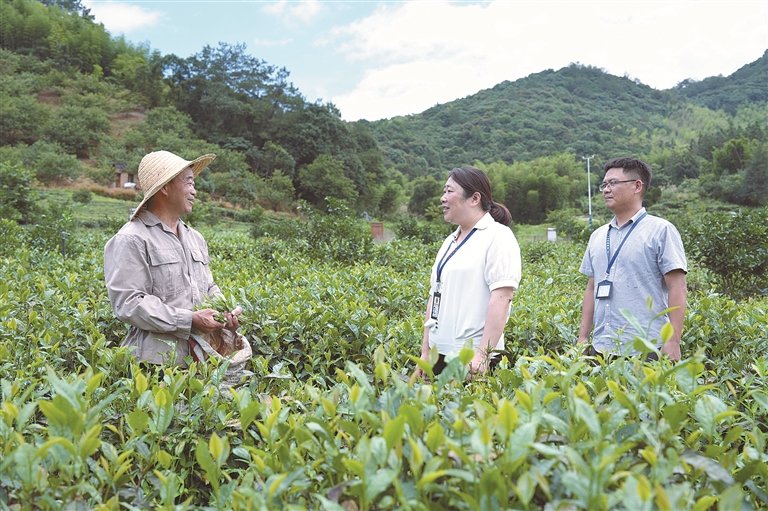
自然资源部:为基层减负 服务“挑大梁”
Xin Hua She· 2025-06-20 13:51
Group 1 - The Ministry of Natural Resources has initiated measures to support major economic provinces, reducing burdens for local economic development and addressing grassroots issues [1] - A service team has been established, consisting of 48 young cadres sent to major economic provinces for six months to resolve key challenges [1] - A total of 293 requests have been submitted by economic provinces, with 133 requests already resolved [1] Group 2 - The implementation of "Internet + real estate registration" has been expanded, with 2,663 counties and districts participating, and all 2,843 counties and districts achieving cross-province handling of key registration services [2] - Various reform measures such as "integrated window service" and "transfer of ownership with mortgage" have been introduced to enhance efficiency for the public [2] - The optimization of land survey workflows aims to alleviate year-end pressure on local authorities and improve regulatory oversight [2]
苏州市委常委会召开会议 学习贯彻习近平总书记重要讲话精神 传达学习省委全会精神
Su Zhou Ri Bao· 2025-05-30 23:55
Group 1 - The meeting emphasized the importance of high-quality development, focusing on the foundation of the real economy, technological advancements in agriculture, and addressing ecological and cultural issues [1][2] - The meeting highlighted the need for effective social governance, emphasizing the role of party leadership and legal frameworks in addressing community concerns [1] - The meeting discussed the preparation of the "14th Five-Year Plan," stressing the importance of identifying key issues and setting scientific development goals [1] Group 2 - The meeting underscored the significance of spiritual civilization construction, promoting values that unite the community and enhance social civility [2] - The meeting called for a proactive approach to contribute to Jiangsu's development, focusing on employment stability and market confidence [2] - The meeting addressed the need for reducing bureaucratic burdens on grassroots levels, emphasizing a problem-oriented approach [3] Group 3 - The meeting recognized the importance of ecological environment protection, advocating for scientific research and effective mechanisms to address environmental issues [3]
南通农商银行整治形式主义,为基层发展“松绑”赋能
Jiang Nan Shi Bao· 2025-05-27 07:24
Group 1 - The core viewpoint of the articles emphasizes the importance of reducing formalism to enhance the efficiency of grassroots operations in Nantong Rural Commercial Bank, recognizing that grassroots are the foundation of banking business development [1] - The bank has issued a notification outlining 19 specific work requirements across five areas to provide a clear roadmap for reducing formalism, ensuring a solid institutional foundation for this initiative [2] - The bank has implemented measures to streamline meetings and documents, resulting in a 26% decrease in the number of meetings and a 15% reduction in document issuance in 2024, allowing employees to focus more on actual work [3] Group 2 - The bank has established a "Wednesday Visit Day" to facilitate direct communication between middle management and grassroots employees, ensuring that feedback is collected and measures are adjusted accordingly to maintain the effectiveness of the reduction efforts [4] - The initiative has led to a noticeable improvement in work style and a significant enhancement of the practical spirit among employees, allowing them to fully engage in business operations and contributing to the bank's high-quality development [4] - The bank plans to continue deepening the reduction of formalism and exploring new measures to lighten the burden on grassroots employees, thereby enhancing their ability to contribute to financial services for the real economy [4]

层层落实不是层层加码(干部状态新观察·为基层减负赋能)
Ren Min Ri Bao· 2025-05-26 22:20
Core Viewpoint - The article emphasizes the need to reduce the burden on grassroots officials by addressing issues of excessive task layering and misalignment of responsibilities, ultimately aiming to enhance their work efficiency and morale [2][3]. Group 1: Issues Faced by Grassroots Officials - Grassroots officials are experiencing increased workloads due to layered task requirements and imprecise assessment methods, which create confusion and hinder their ability to serve the public effectively [2][3]. - The phenomenon of "layered increases" is prevalent, where tasks are compounded at various administrative levels, leading to unnecessary burdens on local officials [3][4]. Group 2: Measures Taken to Alleviate Burdens - Qinghai Province's Xining City has implemented clear task lists to reduce the burden on grassroots officials, promoting flexible enforcement in urban management [2][4]. - The city has introduced specific management standards for different types of roads, aiming to minimize disruptions to local vendors while maintaining urban aesthetics [4][5]. Group 3: Communication and Feedback Mechanisms - Xining City has established internal communication channels to facilitate feedback from grassroots officials, allowing for timely corrections of misaligned enforcement practices [6]. - The city promotes a "721" work method, focusing on resolving 70% of issues through service, 20% through management, and only 10% through enforcement, to reduce unnecessary punitive measures [6][7]. Group 4: Educational Initiatives and Policy Framework - Continuous education on the central government's eight regulations has led to the development of a task list aimed at reducing formalism and ensuring compliance with administrative laws [7]. - The city is committed to transforming educational outcomes into tangible benefits for the public, ensuring that the results of these initiatives are felt by the community [7].