
人工智能教育

Search documents
曹妃甸第一中学入选
Xin Lang Cai Jing· 2026-01-17 01:14
Core Viewpoint - The Ministry of Education has announced the second batch of primary and secondary school artificial intelligence education bases, with Caofeidian First Middle School successfully selected, aiming to explore new concepts, models, and solutions for AI education [1] Group 1: AI Education Base Development - The initiative seeks to create exemplary cases and advanced experiences to promote high-quality development of AI education in primary and secondary schools [1] - Previously, Kaiping Primary School in Kaiping District was recognized as the first batch of national AI education bases in 2024, while Yingbin Road Primary School in Fengrun District was designated as a provincial AI education base [1] Group 2: Educational Strategies and Implementation - The local education bureau is actively implementing national policies to integrate AI with education, supported by information technology courses in primary and secondary schools [1] - Efforts include expanding AI educational resources, innovating teaching support and service methods, and enhancing the coverage and benefits of AI education [1] - The focus areas include the development of school-based AI curricula, interdisciplinary integration, transformation of teaching methods, co-construction and sharing of digital educational resources, improvement of teachers' digital literacy, and cultivation of students' innovative practical abilities [1]
我市成为全国首批全域实现义务教育优质均衡的省会城市
Nan Jing Ri Bao· 2026-01-14 03:36
Core Insights - Nanjing has been recognized as one of the first provincial capital cities in China to achieve full national supervision assessment for quality balanced development in compulsory education [1] Group 1: Education Resource Expansion - Nanjing has continuously expanded quality education resources, with the establishment of Mingdao School in Jiangbei New Area, which covers approximately 67,000 square meters and promises high-quality education from the start [2] - The city has opened 70 new compulsory education schools during the 14th Five-Year Plan, adding nearly 120,000 new student places to alleviate enrollment pressure [3] Group 2: Group-Based Education Management - The city is promoting group-based education management to optimize resource allocation, with over 80% coverage of group-based management in compulsory education [3] - Different strategies are being implemented for urban and rural areas, focusing on revitalizing existing resources in urban centers and accelerating the establishment of new schools in new districts [2] Group 3: Internal Development of Schools - Nanjing is focusing on enhancing the internal capabilities of schools through initiatives like the "Jinling Good Classroom" innovation plan and the establishment of development alliances for urban and rural schools [4] - The core aim is to shift the focus of schools towards internal development in areas such as curriculum, teaching, and culture [4] Group 4: Comprehensive Education Approach - The city is implementing a five-pronged approach to education, emphasizing moral, physical, aesthetic, labor, and intellectual education, with notable achievements in student health and academic performance [5][6] - Initiatives include the "2·15 Special Action" for health, talent expansion plans for arts education, and labor skills competitions [5][6] Group 5: Digital Education Innovation - Nanjing has developed the "Jinling Micro School" digital education platform, providing over 20,000 resources for various subjects and achieving over 1.4 billion visits [7] - The city is integrating new technologies like artificial intelligence into education, with plans to invest 23 million yuan in 2024 for AI teaching equipment across 625 public schools [8]
南京全域通过义务教育优质均衡发展县(市、区)认定
Yang Zi Wan Bao Wang· 2026-01-13 10:16
Group 1 - The Ministry of Education announced the results of the first batch of counties (cities, districts) recognized for quality and balanced development in compulsory education by 2025, with all 12 districts in Nanjing recognized, making it the first provincial capital city in China to achieve this status [1] Group 2 - During the 14th Five-Year Plan period, Nanjing opened 70 new compulsory education schools, adding nearly 120,000 new student places to alleviate enrollment pressure during peak periods [3] - The city has advanced group-based schooling, achieving 100% coverage of quality resources in newly established compulsory education schools, with over 80% coverage of group-based schooling [3] - Nanjing initiated the "Jinling Good Classroom" innovation action plan for primary education, promoting collaborative growth among educational departments, research institutions, and schools [3] - A "New Quality Junior High School Development Community" was established to foster resource sharing and mutual progress between urban and rural schools [3] Group 3 - Nanjing is integrating high-quality teacher resources and developing the "Jinling Micro School" digital education platform [3] - In 2024, the municipal government will invest 23 million yuan in special funds to equip 625 public primary and secondary schools with core artificial intelligence teaching equipment [3] - By 2025, Nanjing will establish the first provincial center for artificial intelligence education research in primary and secondary schools and release the "Nanjing City Primary and Secondary School Artificial Intelligence Education Action Plan (2025-2027)" [3]

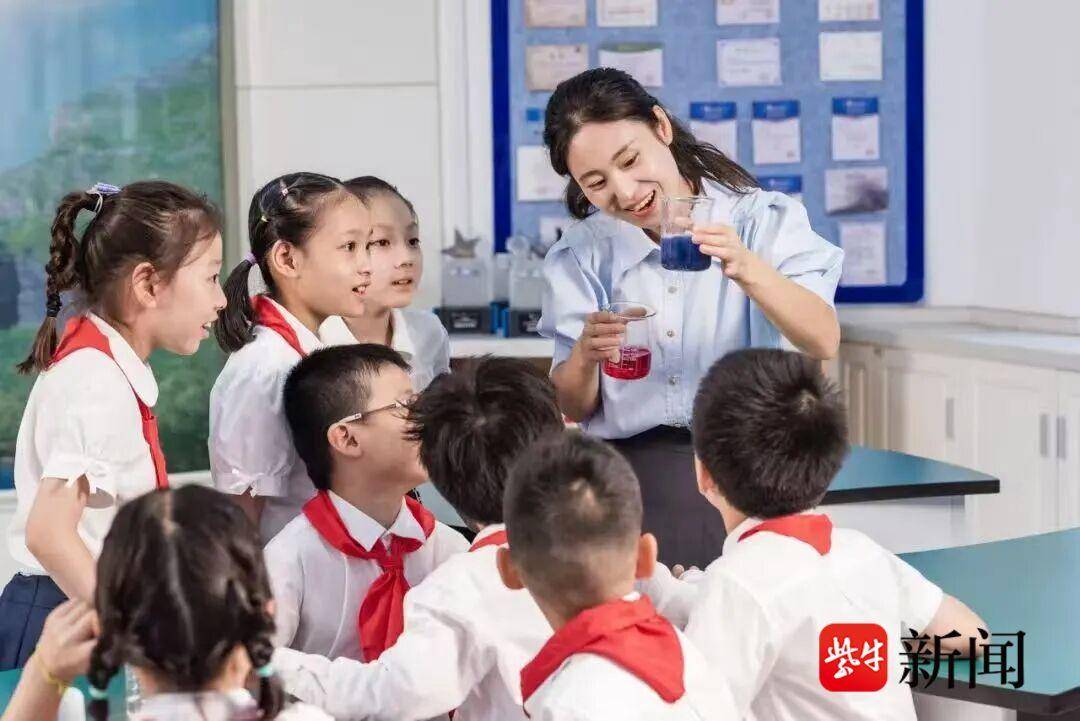
全国率先!内蒙古举办国家智慧教育平台应用能力竞赛
Xin Lang Cai Jing· 2026-01-08 12:50
Core Insights - The first National Smart Education Platform Application Ability Competition in Inner Mongolia was successfully held, marking a pioneering effort in the country [1] - The competition aims to enhance the application capabilities of educators and promote educational reform and digital transformation in line with national digital education strategies [1] Group 1: Event Overview - The event was organized by the Inner Mongolia Education Department and hosted by Hohhot Vocational and Technical University [1] - The competition encourages participation from various cities and universities, focusing on practical teaching, personalized learning, and innovative educational resources [1] Group 2: Digital Education Resources - Inner Mongolia has prioritized digital education as a key driver for modernizing education, with significant resource development [1] - The regional smart education platform has aggregated 228,000 high-quality digital resources across different educational stages and subjects [1] - Customized digital resource packages have been created to meet the specific needs of rural and border schools, including 50 AI education courses and 3000 premium assignments [1]
国家级认定,深圳7区上榜!全省唯一全市域通过
Nan Fang Du Shi Bao· 2026-01-07 23:37
Core Viewpoint - Shenzhen has achieved a significant milestone in education by having all 10 districts recognized as quality balanced development areas for compulsory education by the Ministry of Education, making it the only city in Guangdong to achieve this status [1] Group 1: Recognition and Achievements - The Ministry of Education announced the first batch of quality balanced development counties (cities, districts) for compulsory education in 2025, with Shenzhen's seven districts being recognized [1] - Shenzhen is the only city in Guangdong where all districts have passed the national evaluation for quality balanced development in education [1] - In 2023, Shenzhen's Futian District was recognized as one of the first areas in the country to pass the national evaluation for quality balanced development in compulsory education [1] Group 2: Investment and Infrastructure - Shenzhen has invested a total of 495.6 billion yuan in education during the 14th Five-Year Plan, with annual budgets exceeding 100 billion yuan for three consecutive years, highlighting the priority given to education [2] - The city has added over 10 square kilometers of new construction land since 2020, creating 965,000 new basic education seats, surpassing the total from previous five-year plans [2] Group 3: Equity and Accessibility - Shenzhen has implemented policies to ensure that 47.6% of compulsory education seats are available for non-local children, the highest percentage among major cities in China [3] - The city has established a standardized special education service system, achieving a 100% enrollment rate for eligible disabled children in compulsory education [3] Group 4: Quality and Curriculum Reform - Shenzhen has introduced various reforms to enhance educational quality, including daily physical education classes and a focus on arts education, resulting in a 23% increase in student fitness levels [4] - The city has established 92 public school education groups, covering 486 schools, with 15 groups recognized as quality education groups in Guangdong [4] Group 5: Teacher Development - Shenzhen has focused on teacher resource allocation through reforms in recruitment, salary, and professional development, enhancing the overall quality of the teaching workforce [5] - The city has implemented policies to ensure teacher salaries are comparable to civil servants, promoting a more balanced distribution of teaching resources [5] Group 6: Talent Development - Shenzhen prioritizes talent development and the balanced growth of basic education, continuously optimizing the educational ecosystem to support high-quality urban development and innovation [6]
“十五五”海淀新增中学学位2万个
Xin Lang Cai Jing· 2026-01-07 22:24
Group 1 - The core viewpoint is that Haidian District plans to expand educational resources significantly during the "14th Five-Year Plan" period, with a focus on increasing middle school enrollment capacity by 20,000 through new constructions and renovations [1][2] - This year, Haidian District will construct and renovate 6 schools, adding a total of 3,985 new student places [1] - The 6 schools include 5 renovations and 1 new complete middle school, ensuring the new student places are distributed effectively in the Mingguang Village area [1] Group 2 - Haidian District aims to deepen the integration of digital intelligence in education, establishing a dedicated AI education model and planning to build 24 AI laboratories to cover over 80% of schools [1] - The district will also enhance the quality of education by promoting a comprehensive educational approach, including the establishment of 10 technology high schools and a tiered talent cultivation system [1][2] - The plan includes expanding preschool education resources, with a target of 75% for kindergarten classes, and promoting collaborative education involving families, communities, and enterprises [2]
海淀未来五年计划新增中学学位2万个
Xin Jing Bao· 2026-01-07 12:59
Group 1 - The core focus of Haidian District's education initiatives includes the acceleration of six new construction and expansion projects for primary and secondary schools, ensuring the addition of 3,985 new student places, with 3,265 of these being for middle schools [1][3] - During the "14th Five-Year Plan" period, Haidian District aims to expand the supply of educational places, adding 46,000 new places in basic education, and will implement a group-based school management model, forming 43 educational groups [2][3] - The district plans to enhance early childhood education resources, achieving a 75% ratio of kindergarten classes to nursery classes, and will deepen the integration of various educational aspects to improve student health and well-being [2][3] Group 2 - In 2025, Haidian District will incorporate eight private schools into public education groups, completing nine new construction and expansion projects that will add 7,910 quality student places [2] - The district is set to establish 100 AI laboratories and promote systemic changes in education through artificial intelligence, aiming to cover over 80% of schools with intelligent educational applications [3] - Haidian District will also advance the construction of national primary and secondary school science education experimental zones and strengthen ten technology high schools, creating a layered training system for outstanding innovative talents [3]
硬核!广东这几项教育指标全国第一!
Nan Fang Nong Cun Bao· 2026-01-07 07:01
Core Viewpoint - Guangdong Province has achieved significant milestones in education during the "14th Five-Year Plan" period, aiming to build a strong education system and promote high-quality development in education [3][4]. Group 1: Education Development Achievements - By the end of 2025, Guangdong will have 36,868 schools, an increase of 28 from the end of the "13th Five-Year Plan," ranking second in the country [6][7]. - The number of enrolled students is 27.66 million, an increase of 1.6556 million from the end of the "13th Five-Year Plan," ranking first in the nation [8]. - The number of full-time teachers is 1.6804 million, an increase of 158,500 from the end of the "13th Five-Year Plan," also ranking first in the country [9]. - Guangdong's basic education institutions account for approximately 10% of the national total, providing nearly one-fifth of the compulsory education enrollment for migrant children nationwide [9][10]. Group 2: Policy and Resource Allocation - Guangdong has implemented a series of policies to enhance the quality of basic education, including the "Action Plan for Promoting High-Quality Development of Basic Education" and the "Education Action Plan for High-Quality Development of 100 Counties, 1,000 Towns, and 10,000 Villages" [16][18]. - The province focuses on expanding quality educational resources through new constructions and renovations, promoting group-based schooling and urban-rural education communities [22][23]. - The province has increased the enrollment of migrant children in public schools, with a 28% increase in the proportion of migrant children attending public schools [25][26]. Group 3: Financial Support and Student Aid - Guangdong has established a comprehensive student aid policy system that covers all educational stages, with a total financial input of approximately 38.42 billion yuan for student aid during the "14th Five-Year Plan," benefiting 20.27 million students [41][42]. - The financial input for student aid increased by 730 million yuan, a growth rate of 9.4% compared to 2020, with the number of aided students growing by 1.486 million, a 45.1% increase [42][43]. - The province has implemented various financial aid policies across different educational levels, including subsidies for economically disadvantaged students in preschool and exemptions from fees in compulsory education [46][48]. Group 4: Future Plans - Guangdong plans to continue increasing the supply of quality basic education resources and accelerate the construction of a high-quality basic education system [34][53].

【省教育厅】陕西10所学校入选中小学人工智能教育基地
Shan Xi Ri Bao· 2026-01-07 00:40
Core Insights - The Ministry of Education has announced the second batch of 325 primary and secondary school artificial intelligence education bases, with 10 schools from Shaanxi province included in the list [1] Group 1: AI Education Bases - A total of 325 primary and secondary schools have been designated as artificial intelligence education bases across the country [1] - The selected schools from Shaanxi include notable institutions such as Shaanxi Normal University Experimental Primary School and Baoji High-tech Third Primary School [1] Group 2: Implementation and Objectives - The AI education bases aim to explore effective implementation paths for artificial intelligence education and continuously enhance quality teaching resources [1] - The initiative is designed to meet the demand for innovative talent cultivation by upgrading existing digital teaching environments and facilities according to AI teaching requirements [1] - The program will provide students with opportunities for AI experience, learning, exploration, and practice, promoting personalized development through scalable and tailored education [1]
推开“AI教室”的门 天津市政协助力破解教学实践难题
Xin Lang Cai Jing· 2026-01-06 10:15
Group 1 - The core viewpoint is that the integration of artificial intelligence (AI) in primary and secondary education is not merely about usage but requires a deeper understanding and effective application in teaching [1][2] - AI applications in classrooms are currently facing challenges, such as a lack of connection between AI-generated content and educational objectives, leading to a disconnect in teaching [1] - A research team led by Zhao Changlong identified that the integration of AI in daily teaching is insufficient, with a lack of systematic training for teachers and inadequate quality resources suitable for classrooms [1] Group 2 - Zhao Changlong emphasizes that AI education should not just involve adding more courses or tools but should provide students with a systematic understanding of AI concepts and methods, integrating AI tools into traditional subjects to enhance learning [2] - The research results suggest leveraging local university library resources and faculty to support AI education in primary and secondary schools, including one-on-one or group teaching consultations for teachers [2] - Proposed interdisciplinary projects include incorporating algorithmic thinking and data processing in math classes, discussing AI applications in climate prediction and life sciences in science classes, and engaging students in AI-generated art and music in arts classes [2] Group 3 - The exploration of how AI can better integrate into schools continues, with the focus on whether it can truly enhance teaching rather than just the sophistication of the technology [3] - Establishing a resource connection between higher education and basic education is crucial for teachers to effectively utilize AI and for students to engage deeply with the subject [3]