
传统与现代融合

Search documents
60秒带你看APEC会议举办地庆州
Xin Hua She· 2025-10-28 06:14
Core Viewpoint - Gyeongju, located in southeastern South Korea, is a historical city known for its rich cultural heritage and modern technological advancements, symbolizing the blend of tradition and innovation in Korea [1] Group 1: Historical Significance - Gyeongju served as the capital of the Silla Dynasty from 57 BC to 935 AD, leaving behind numerous historical relics and cultural heritage [1] - The city is referred to as a "museum without a roof," highlighting its extensive historical significance [1] Group 2: Cultural Exchange - Gyeongju has a history of friendly exchanges with China, exemplified by stories such as the Silla prince Kim Jiao's journey to China and Choi Chi-won studying in Tang Dynasty [1] - The city represents a historical witness to Sino-Korean friendship [1] Group 3: Modern Development - Gyeongju is not only a historical city but also a hub for advanced technology industries, earning the title of "the city that best represents Korea" [1] - The city has recently revitalized by integrating traditional and modern elements, showcasing new vitality [1]
簪花与拜拜,重新发现泉州 | 未来预想图城市系列 mook 上新
第一财经· 2025-09-23 02:18
Core Viewpoint - The article discusses the launch of a new project by the company, focusing on the exploration of cities through a series of publications, starting with Quanzhou, highlighting its unique blend of tradition and modernity [5][20]. Summary by Sections Project Introduction - The company is introducing a new series of publications called "Future Vision Map City Series," with the first book titled "Re-discovering Quanzhou," aimed at providing deeper insights into urban exploration beyond mere travel guides [5][6]. Selection of Quanzhou - Quanzhou was chosen for its rich cultural background, local pride, and distinct brand image, embodying both tradition and modernity [9][20]. Framework of Exploration - The exploration framework consists of ten keywords that serve as lenses to understand the city's history, culture, and economic life, allowing readers to navigate through the content based on their interests [11][16]. Key Themes - The ten keywords include: - Red Brick: Visual impact of the city's architecture - Paving: The role of deities in local governance - Maritime Trade: Historical significance as a major port - West Street: A blend of commercialization and daily life - Locals: Insights from five local residents - Overseas Chinese: Their influence on modern Quanzhou - Quanzhou Prefecture: Contemporary business legends - Xunpu: Cultural reflections on family and gender roles - Tea Drinking: Social interactions over tea - Opera: Everyday cultural experiences [11][20]. Cultural Symbols - "Zan Hua" (hairpin flower) and "Bai Bai" (worship) are identified as cultural symbols connecting tradition and modernity, with discussions on their significance and cultural implications [20][24]. Historical Context - Quanzhou's historical significance is underscored by its designation as a UNESCO World Heritage site, reflecting its rich maritime trade history [26]. Modern Developments - The article highlights the preservation of Quanzhou's architectural features amidst urban renewal, showcasing it as a "living ancient city" [26]. Business Insights - The entrepreneurial spirit of Quanzhou residents is emphasized, with references to successful brands originating from the region, illustrating the local economy's resilience and adaptability [32][26]. Publication Features - The publication includes a city walk guide and a visually appealing design, combining in-depth reporting with engaging illustrations and photographs to enhance the reader's experience [34][37].


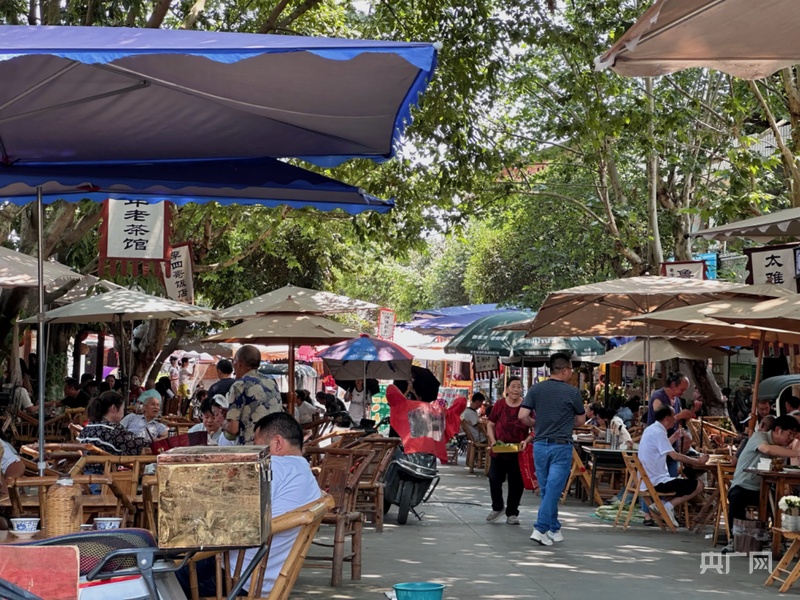
消费新观察|百年茶馆生出业态“新枝”
Yang Guang Wang· 2025-06-22 07:26
Core Viewpoint - The transformation of Peng Town showcases the integration of traditional consumption with modern business, highlighted by the thriving tea culture and the emergence of diverse new businesses [1][2][3] Group 1: Traditional Tea Culture - The historical significance of the Guanyinge Old Teahouse, established during the Ming Dynasty, remains a central attraction for both locals and tourists [1] - The number of teahouses in Peng Town has increased from two over 30 years ago to over 100 today, indicating a significant growth in traditional tea consumption [2] Group 2: Modern Business Integration - The influx of young consumers and tourists has revitalized the old teahouse, leading to a surge in business for nearby establishments, including a coffee shop that combines leisure and cultural exchange [2] - New businesses, such as a coffee shop and a handmade craft store, have been established in response to the growing interest in cultural and artisanal products among younger demographics [2][3] Group 3: Ecological Development of the Old Street - The unique ecosystem of Peng Town's old street is characterized by the coexistence of traditional teahouses and diverse new businesses, creating a vibrant commercial atmosphere [3] - Local government efforts have led to the introduction of 155 new businesses across various sectors, including coffee, cultural creativity, and traditional clothing, while preserving the essence of traditional trades [3]
匠心独运创新创造(现场评论) ——写好人文经济学的大文章②
Ren Min Ri Bao· 2025-06-10 21:59
Group 1 - The core idea emphasizes the importance of cultural innovation in revitalizing historical cities like Huangshan, blending traditional culture with modern tourism experiences to attract visitors [1][2]. - The success of a cultural creative store in the ancient city of Huizhou demonstrates that unique local cultural resources, when creatively expressed, can lead to successful business models, moving away from generic offerings [1]. - The integration of modern technology, such as light shows in ancient villages, must be done thoughtfully to preserve the historical ambiance while enhancing visitor experiences [2]. Group 2 - The relationship between culture and economy is highlighted as interdependent, suggesting that cultural richness can drive economic growth in tourism [3]. - The example of a pizza shop in Huangshan, which creatively combines local flavors with international cuisine, illustrates how cultural exchange can lead to innovative business opportunities [2].