光子计算

Search documents
中科创星李浩:中国硬科技投资远远不够,持续关注底层创新丨最前线
3 6 Ke· 2025-06-19 11:16
Core Viewpoint - China's hard technology investment is not overheated but is significantly insufficient, requiring collective efforts from society to enhance the financial system's confidence and understanding of technology [1] Group 1: Investment Landscape - Zhongke Chuangxing, founded in 2013, is a pioneer in hard technology investment, focusing on the transformation of excellent scientific research achievements from research institutions and universities [1] - As of June this year, the fund's managed scale exceeds 12 billion yuan, having invested in and incubated over 530 hard technology companies [1] - Zhongke Chuangxing maintains a rapid investment pace despite the contraction of dollar funds and difficulties in GP fundraising [1] Group 2: Investment Strategy - Zhongke Chuangxing is one of the fastest institutions in the market, with last year's project count equivalent to the total of 30 GPs [2] - The firm employs a unique risk-hedging logic, emphasizing a large project pool to diversify risks, where 50 out of 100 projects may fail, but top projects can cover losses [2] - The company is particularly focused on the AI sector, which, despite being hot, is still in its early development stage, and values breakthroughs in underlying technologies such as quantum computing and controlled nuclear fusion [2] Group 3: Long-term Vision - Hard technology investments require "patient capital," with many projects co-invested with local future industry funds due to long investment cycles that can last up to 20 years [2] - Zhongke Chuangxing aims to balance long-term value with short-term exits by constructing a "research-incubation-industry" flywheel, binding early with research projects and later introducing industrial capital [2] - The company emphasizes the need for more "last-mile" participants to improve the low conversion rate of China's scientific and technological achievements [3]
光芯片最大瓶颈,已被消除
半导体行业观察· 2025-05-12 01:03
Core Viewpoint - The article discusses the advancements in photonic chips as a potential replacement for traditional electronic microchips, particularly in the context of increasing demands for computational power driven by artificial intelligence (AI) [1][2]. Group 1: Photonic Chips Advantages - Photonic chips utilize light (photons) instead of electricity (electrons) for information processing, promising higher speed, greater bandwidth, and improved efficiency due to the absence of electrical resistance and heat loss [1]. - They are particularly well-suited for matrix multiplication, a fundamental operation in AI [1]. Group 2: Challenges in Photonic Computing - Converting photons to electrical signals can slow down processing times, and photonic computing relies on analog rather than digital operations, which can reduce precision and limit the types of computations [2]. - The current inability to manufacture large-scale photonic circuits with sufficient precision complicates the transition from small prototypes to scalable solutions [2]. Group 3: Recent Research Developments - A new photonic processor called the Photonic Arithmetic Computing Engine (Pace) was developed by Lightelligence, featuring over 16,000 photonic components and demonstrating low latency and practical application viability [2][3]. - Another photonic processor from Lightmatter was shown to operate with precision comparable to traditional electronic processors, successfully executing AI tasks such as text generation and game playing [3]. Group 4: Future Potential - Both research teams believe their photonic systems could become part of scalable next-generation hardware to support AI applications, although further improvements in materials and design are necessary [3].


世界首款基于光的NPU
半导体行业观察· 2025-04-14 01:28
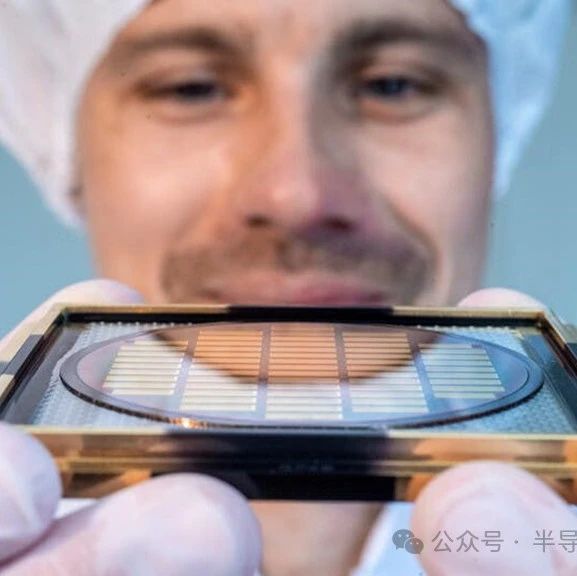
Core Viewpoint - The article discusses the breakthrough in photon-based artificial intelligence (AI) chips, which promise to redefine chip manufacturing by offering faster, more efficient, and environmentally friendly computing solutions [3][5][8]. Group 1: Photon AI Chip Technology - Q.ANT has developed a new production line for photon AI chips using thin-film lithium niobate (TFLN), which efficiently manages light signals without excessive heat generation [3][4]. - Photon chips, or photon neural processing units (NPU), manipulate photons instead of electrons, allowing for faster and more efficient computations, particularly in AI and neural networks [3][4]. - The technology can execute complex calculations at light speed by utilizing the concept of light interference, which is crucial for AI workloads [4][5]. Group 2: Advantages and Efficiency - Photon NPUs can process multiple data streams simultaneously through wavelength division multiplexing, achieving high throughput and low latency while consuming less power [4][5]. - The new chips can increase processing speed by 50 times and reduce energy consumption by 30 times, making them suitable for large-scale computing tasks in data centers [4][5]. - The technology is designed to complement traditional processors like GPUs, enhancing the next generation of computing ecosystems [6]. Group 3: Market Impact and Future Goals - The production line can handle up to 1,000 wafers annually, facilitating continuous development and adaptation of chip designs to meet market demands [6][7]. - The ultimate goal is to make photon processors a key component of global AI infrastructure by 2030, promoting sustainable and scalable computing solutions [8]. - The shift to photon-based computing is expected to significantly lower operational costs and accelerate advancements in various fields, including medicine and climate modeling [8].
中金 | AI进化论(7):新计算范式——曙“光”初现、前途有“量”
中金点睛· 2025-03-23 23:33
Core Viewpoint - Quantum and photonic computing possess significant computational advantages over traditional computing, especially in the context of the exponential growth in computational reasoning demands driven by AI. The commercialization of quantum computing is expected to accelerate with advancements from leading global companies like Google and IBM, as well as domestic innovations such as Wukong, Nine Chapters No. 3, and Zu Chongzhi No. 3 [1][3][4]. Group 1: Quantum and Photonic Computing Advantages - Quantum computing utilizes quantum bits (qubits) and can achieve exponential speedup over classical computers in specific problems, such as large number factorization and quantum chemistry simulations. For instance, Google's Willow chip, equipped with 53 qubits, can compute in a dimension of 2^53 [3][11]. - Photonic computing offers higher information capacity, efficiency, and parallelism compared to traditional electronic computing, making it advantageous for solving complex problems [3][14]. Group 2: Technological Pathways - Various technological pathways for quantum and photonic computing are rapidly evolving, including superconducting quantum computing, photonic computing, ion traps, neutral atoms, semiconductors, and topological computing. Superconducting quantum computing is currently the most mainstream approach, with products from companies like IBM and Google [4][18]. - The development of quantum computing technologies is characterized by a competitive landscape, with significant advancements in superconducting, ion trap, and photonic technologies [18][19]. Group 3: Industry Developments and Collaborations - NVIDIA has launched a "Quantum Day" at its GTC conference, inviting CEOs from 12 quantum computing companies to discuss advancements and applications of quantum technology in AI. NVIDIA also announced the establishment of a quantum computing research lab in Boston, collaborating with top universities [3][7][9]. - Major companies like Google, IBM, and Microsoft are making significant strides in quantum computing, with Google focusing on superconducting quantum computing and recently introducing the Willow chip with 105 qubits [40][41][47][48]. Group 4: Domestic Innovations - The "Zu Chongzhi No. 3" quantum computer developed by the University of Science and Technology of China has achieved 105 qubits, demonstrating high fidelity in quantum operations [54]. - The "Nine Chapters" series, led by the University of Science and Technology of China, has made significant advancements in photonic quantum computing, with the latest prototype achieving control over 255 photons, setting a new record in quantum computing superiority [56].