底层创新

Search documents
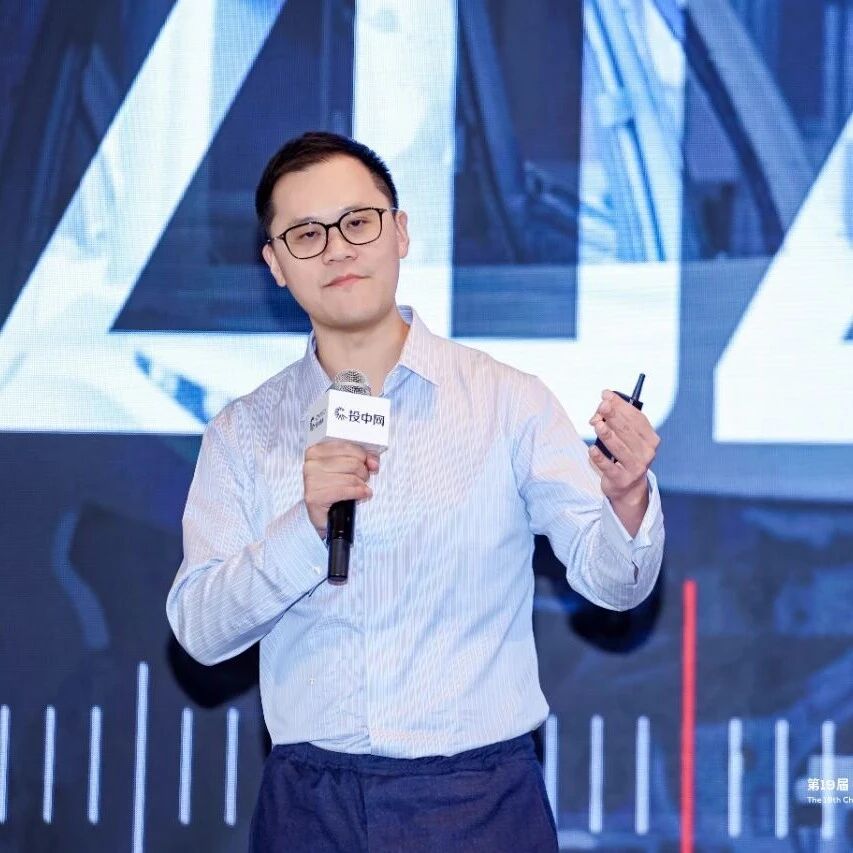
芯联资本袁锋:CVC下半场,要摆脱简单的供应链投资
投中网· 2025-11-29 07:03
Core Viewpoint - The next five years will be a golden period for Corporate Venture Capital (CVC), emphasizing its value and role in driving innovation and establishing competitive advantages for companies [2][4]. Group 1: Past Five Years - The past five years have seen the gradual recognition of CVC's value, with supply chain investment serving as the essential entry point for CVCs [5][10]. - The Chinese hard technology sector, particularly the automotive industry, has undergone significant transformation, with the penetration rate of new energy vehicles rising from less than 5% in 2020 to 50% today [6]. - The semiconductor industry has also experienced rapid growth, with domestic companies increasing their market presence, leading to a rise in the localization rate of semiconductor equipment from about 10% to 40%-50% in some wafer fabs [9]. Group 2: Future Five Years - The future will witness a shift from simple supply chain investments to a focus on innovation and ecosystem building, with CVCs acting as connectors to enhance their companies' competitive advantages [11][14]. - By 2025, the industry will see a consolidation phase, with many startups exiting the market, leading to increased concentration in both the automotive and semiconductor sectors [12]. - There will be a transition from pursuing scale to fostering foundational innovation, with Chinese companies aiming to lead in core technologies such as autonomous driving and battery systems [13]. - CVCs will need to build systematic capabilities rather than relying on single-point breakthroughs, as comprehensive systems become crucial for industry leadership [13]. - Internationalization will become increasingly important, with Chinese companies establishing local production to adapt to global supply chain strategies [14]. Group 3: CVC's New Mission - CVCs must evolve to become "links" that help companies build their strengths while also investing in emerging industries and reinforcing competitive barriers through innovation [14][15]. - Successful examples include investments in silicon carbide technology, which has captured 70% of the Chinese market, and collaborations in robotics and AI to enhance foundational technology capabilities [15][16]. - The role of CVCs will vary across different stages of corporate development, as seen in historical examples like Intel, which transitioned from supply chain investments to ecosystem building and embracing AI innovations [17][18].

2025高工锂电十五周年奖&高工金球奖获奖名单重磅揭晓
高工锂电· 2025-11-21 11:29
Core Insights - The lithium battery industry has transitioned from an early "frenzy" phase to a more mature stage, emphasizing collaboration and global respect [4] - The industry leaders stress the importance of long-term commitment and excellence in technology to lead the global market [6] - A call for a shift from short-term speculation to high-quality, high-value, and innovative development is highlighted as essential for future success [7] Industry Development - The event celebrated the achievements of the lithium battery industry over the past 15 years, recognizing its growth and global competitiveness [9][11] - The future 15 years are seen as a critical phase for high-quality innovation and development in the lithium battery sector [11] Awards and Recognition - The "2025 High工锂电 Fifteen Anniversary Award" and "2025 High工金球 Award" were presented to recognize outstanding contributions and breakthroughs in the industry [13] - Notable companies and individuals were acknowledged for their roles in advancing technology, market presence, and innovative business models [14][16][18][19][20][21][22][23][27][28][29][30][31][32][33][34]



政策托举之下,创业者为什么还是拿不到钱?
Sou Hu Cai Jing· 2025-10-18 04:28
Core Insights - The "14th Five-Year Plan" emphasizes venture capital as a core tool for breakthroughs in hard technology, with government guidance funds exceeding 6 trillion yuan, focusing on critical areas like integrated circuits and quantum computing [1] - Policy direction provides a clear path for venture capital while reducing investment risks through fiscal subsidies and tax incentives, alongside deepened capital market reforms that offer diversified exit channels for early-stage projects [1] - The current investment landscape shows a presence of various funds, but a lack of willingness to invest in uncertain projects, leading to a preference for projects with clearer short-term returns [2][3] Investment Environment - Public sector funding aims to support long-term innovation but is constrained by the need for compliance and accountability, resulting in a preference for projects that yield immediate, reportable results [2] - The shift in funding dynamics has led to a focus on projects with high certainty and clear policy backing, sidelining longer-term, high-risk innovations [2][3] Risk and Return Dynamics - The structure of equity investment has shifted towards debt-like terms, creating a scenario where venture capital resembles fixed returns, which discourages entrepreneurs from engaging with such funding [3] - This transformation leads to a homogenization of funded projects, favoring those with clear metrics and demonstrable outcomes, while innovative, exploratory projects are increasingly marginalized [3][5] Market Trends - The changing exit environment, characterized by instability in secondary market windows and IPO rhythms, places additional pressure on long-term projects, making them less attractive to investors [5] - In the AI era, projects that demonstrate immediate cash flow and efficiency improvements are favored, while foundational innovations requiring longer development times are often dismissed as overly idealistic [5][6] Conclusion - The current investment climate reflects a preference for certainty and short-term results, which may undermine the exploration of innovative ideas and technologies, raising questions about the future of venture capital's role in fostering true innovation [6]


K2开源大模型,会是Kimi的DeepSeek时刻吗?
Hu Xiu· 2025-07-14 03:20
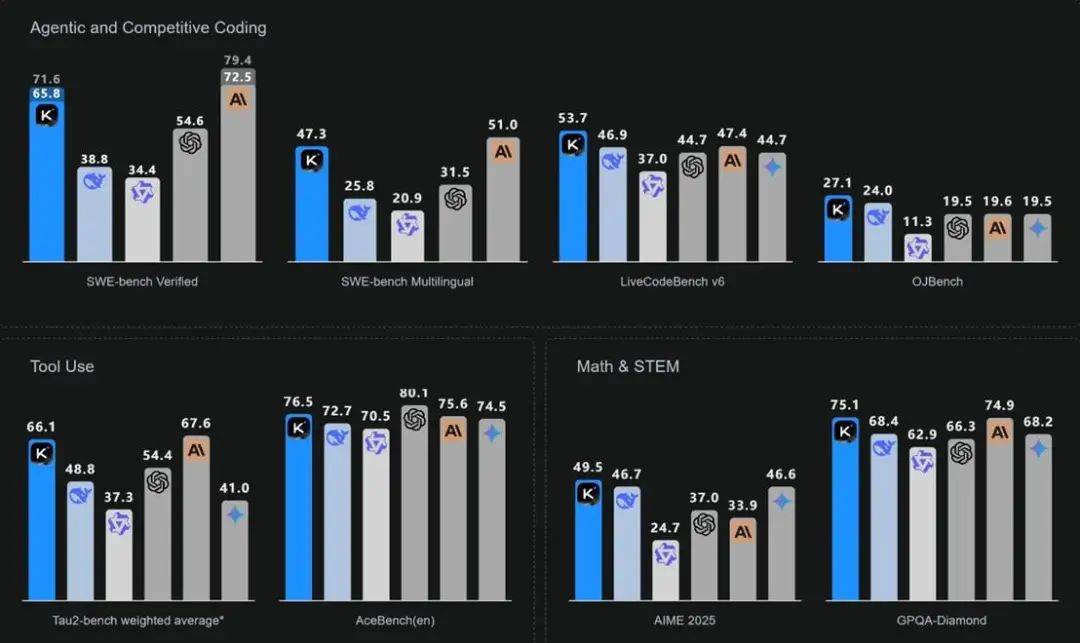
Core Insights - The article discusses the emergence of MoonShot's latest open-source model K2, which has a parameter scale of 1 trillion, making it the largest open-source model currently available [2] - K2's performance in various benchmarks positions it as a strong competitor against established models like Claude 4 Opus and GPT-4.1, highlighting China's growing influence in the global AI landscape [2][4] - The competitive landscape in the AI sector is intensifying, with Chinese companies like MoonShot and MiniMax leading the charge in open-source innovation, challenging Western counterparts [4][6] Company Developments - MoonShot's K2 model has quickly gained popularity, becoming the top trending open-source model on HuggingFace shortly after its release [4] - The model's architecture incorporates fewer attention heads and more experts, enhancing efficiency in processing long contexts, which is a significant improvement over previous models [8][10] - MoonShot has disclosed a total funding amount of approximately $1.5 billion, which is significantly lower than that of its Western competitors, indicating a more efficient operational model [6] Market Impact - K2's compatibility with OpenAI and Anthropic's API formats positions it favorably in the AI application development market, potentially allowing it to capture a significant share of the market [7] - The article notes that the competitive dynamics between MoonShot and DeepSeek have intensified, with both companies releasing multiple models aimed at various AI applications [5][12] - The focus on multi-agent collaboration and the integration of various models into K2 may enhance its commercial viability and market appeal [12]

中科创星李浩:中国硬科技投资远远不够,持续关注底层创新丨最前线
3 6 Ke· 2025-06-19 11:16
Core Viewpoint - China's hard technology investment is not overheated but is significantly insufficient, requiring collective efforts from society to enhance the financial system's confidence and understanding of technology [1] Group 1: Investment Landscape - Zhongke Chuangxing, founded in 2013, is a pioneer in hard technology investment, focusing on the transformation of excellent scientific research achievements from research institutions and universities [1] - As of June this year, the fund's managed scale exceeds 12 billion yuan, having invested in and incubated over 530 hard technology companies [1] - Zhongke Chuangxing maintains a rapid investment pace despite the contraction of dollar funds and difficulties in GP fundraising [1] Group 2: Investment Strategy - Zhongke Chuangxing is one of the fastest institutions in the market, with last year's project count equivalent to the total of 30 GPs [2] - The firm employs a unique risk-hedging logic, emphasizing a large project pool to diversify risks, where 50 out of 100 projects may fail, but top projects can cover losses [2] - The company is particularly focused on the AI sector, which, despite being hot, is still in its early development stage, and values breakthroughs in underlying technologies such as quantum computing and controlled nuclear fusion [2] Group 3: Long-term Vision - Hard technology investments require "patient capital," with many projects co-invested with local future industry funds due to long investment cycles that can last up to 20 years [2] - Zhongke Chuangxing aims to balance long-term value with short-term exits by constructing a "research-incubation-industry" flywheel, binding early with research projects and later introducing industrial capital [2] - The company emphasizes the need for more "last-mile" participants to improve the low conversion rate of China's scientific and technological achievements [3]
乐纯生物成功自研高通量过滤膜,以底层创新筑牢本土生物制药供应链安全防线
Huan Qiu Wang· 2025-05-06 09:37
Core Viewpoint - LePure Biotech has achieved a significant breakthrough with its self-developed Extreme™ PVDF sterilizing filter membrane, marking a major step for domestic bioprocess companies in ensuring supply chain security [1][2]. Downstream Demand Side - Historically, the Chinese biopharmaceutical upstream market has relied heavily on imported consumables, with over 95% market share held by multinational companies. However, domestic biopharmaceutical companies are now focusing on self-reliance to mitigate risks from international supply chain fluctuations [2]. - Currently, domestic single-use consumables and equipment account for over 50% of the biopharmaceutical R&D and production process, with LePure Biotech holding a competitive advantage in market share for filters and culture media [2]. - The Extreme™ PVDF filter membrane can process 2-3 times the amount of imported competitors per unit area during constant pressure filtration tests, significantly reducing production costs and improving efficiency [2]. Upstream Process Side - The introduction of the PVDF filter membrane is expected to fundamentally improve the quality of domestic virus removal filtration materials, which have faced high technical performance requirements [4]. - LePure Biotech has also successfully developed another widely used membrane material, the PES hydrophobic filter membrane, and plans to launch a complete range of PES ultrafiltration membrane products by the end of the year [4]. - The company emphasizes the importance of foundational R&D capabilities to stabilize supply chain security, having launched the Lekrius® membrane in 2021 and the Extreme™ PVDF filter membrane this year [4][6]. Product Development Strategy - LePure Biotech adopts a strategy of "strengthening foundational R&D, deepening application R&D, and optimizing overall processes" across three categories of consumables: single-use systems, cell culture, and filtration purification [6]. - The rapid growth of the filtration business has become the company's second growth curve, with plans to continue developing various product models to meet pharmaceutical market demands [6]. Market Position and Future Outlook - LePure Biotech recognizes both the advantages and challenges of "Chinese manufacturing capabilities," noting unique strengths in technology conversion efficiency, supply chain responsiveness, and cost-effectiveness [7]. - Despite the rapid development of domestic companies in formulation development and process stability, there remains a gap compared to established international brands, necessitating longer cycles for technology validation and market cultivation [7]. - The successful self-research by LePure Biotech provides a safer and more reliable supply chain assurance for the Chinese biopharmaceutical industry, positioning the company to play a more significant role in the global biopharmaceutical supply chain as more innovative products are launched [7].