免费学前教育

Search documents
免费学前教育落地观察:家长的减负与园长的烦恼
21世纪经济报道· 2025-09-18 10:12
Core Viewpoint - The article discusses the implementation of a national policy to waive preschool education fees for children in their final year of kindergarten, highlighting the financial support from the government and the varying responses from public and private kindergartens across different regions [1][4][12]. Group 1: Policy Implementation - The national government has allocated 20 billion yuan to gradually promote free preschool education, specifically waiving fees for children in their final year of kindergarten [1][4]. - Various regions, including Shandong, Hainan, and Liaoning, have released detailed plans for implementing the fee waiver, with Hainan aiming for full coverage of public kindergartens by the fall semester of 2025 [4][12]. - Local governments are required to provide financial support to kindergartens affected by the fee waiver, with Shandong planning to allocate 720 million yuan to support approximately 774,700 children [4][5]. Group 2: Execution Challenges - There are discrepancies in the execution of the fee waiver policy, particularly regarding the eligibility of children over six years old, leading to confusion among parents and kindergartens [6][11]. - Some private kindergartens have reported delays in receiving government subsidies, which has led to concerns about their financial stability and the potential for reduced quality of education [10][11]. - The article notes that some private kindergartens are adopting a "pre-collect and post-refund" approach, causing further complications in the implementation of the fee waiver [7][10]. Group 3: Quality Assurance - The article emphasizes the importance of ensuring that the quality of preschool education does not decline as a result of the fee waiver policy, with various regions establishing mechanisms to maintain funding levels for educational quality [12][13]. - Local governments are encouraged to enhance financial input to support the quality of preschool education, with specific measures being taken in places like Guangdong to ensure adequate funding per child [12][13].


家长的“减负”与园长的“烦恼”:免费学前教育落地观察
2 1 Shi Ji Jing Ji Bao Dao· 2025-09-18 07:45
Core Viewpoint - The implementation of free preschool education for children in their final year of kindergarten is being rolled out across various regions in China, with both public and private kindergartens adjusting their fees accordingly [2][3][8]. Group 1: Policy Implementation - The national government has allocated 20 billion yuan to gradually promote free preschool education, with local governments also announcing related policies [2]. - Public kindergartens are fully exempting tuition fees for children in their final year, while private kindergartens are providing varying levels of fee reductions based on their classification [2][7]. - For example, in Liaoning, the policy aims to reduce educational costs and improve public education services [2]. Group 2: Financial Support and Subsidies - Local governments are establishing financial support mechanisms to compensate kindergartens for lost income due to fee exemptions, with specific funding allocations detailed in various regions [3][9]. - In Shandong, approximately 774,700 children will benefit from the policy, with the provincial government allocating 720 million yuan for subsidies [3]. - The financial support is structured to ensure that the quality of education is maintained despite the fee reductions [8][9]. Group 3: Challenges and Misunderstandings - There are discrepancies in the understanding of the policy, particularly regarding the eligibility of older children for fee exemptions, leading to confusion among parents and kindergartens [5][6]. - Some private kindergartens are reportedly collecting full fees upfront, citing a lack of communication regarding the implementation of the fee reduction policy [6][7]. - The variation in fee reduction standards among private kindergartens raises concerns about equitable access to the benefits of the policy [8]. Group 4: Quality Assurance - There is a strong emphasis on ensuring that the quality of preschool education does not decline as a result of the fee exemption policy, with various regions implementing measures to maintain educational standards [8][9]. - The need for increased financial investment in preschool education is highlighted, as local governments face challenges in balancing budget constraints with the need for quality education [9].
1000亿元,安排上了!
Sou Hu Cai Jing· 2025-09-12 12:51
Group 1 - The core viewpoint of the article highlights the achievements in fiscal reform and development during the "14th Five-Year Plan" period, emphasizing the significant increase in R&D investment and its impact on economic growth [1][3][4] Group 2 - During the "14th Five-Year Plan" period, national fiscal science and technology expenditure is expected to reach 5.5 trillion yuan, a 34% increase compared to the "13th Five-Year Plan" period, with a focus on basic research and national strategic technology tasks [3][4] - Cumulative investment in basic research is projected to reach 730 billion yuan, with an average annual growth rate of 12.3% [3] - The intensity of R&D investment is expected to rise from 2.41% at the end of the "13th Five-Year Plan" to 2.68% by 2024, maintaining China's position as the second-largest R&D investor globally [3] Group 3 - Over the past four years, China's economy has achieved an average growth rate of 5.5%, contributing approximately 30% to global economic growth [4] - The fiscal policy has become more proactive and precise, enhancing its adaptability to economic conditions and supporting stable economic development [4] Group 4 - The national general public budget has allocated 20.5 trillion yuan for education, 19.6 trillion yuan for social security and employment, 10.6 trillion yuan for health care, and 4 trillion yuan for housing security, totaling nearly 100 trillion yuan in fiscal spending on people's livelihoods [6] - In 2023, the national fiscal budget includes 100 billion yuan for childcare subsidies and 20 billion yuan for gradually implementing free preschool education [6]
X @外汇交易员
外汇交易员· 2025-09-12 07:26
Fiscal Policy - The Ministry of Finance considers both risk prevention and development promotion in its fiscal policy, ensuring sufficient future policy space [1] - The Ministry of Finance has allocated 100 billion yuan for childcare subsidies and 20 billion yuan to gradually implement free preschool education [2] Social Welfare - The government is actively responding to the concerns of the people by implementing childcare subsidies and free preschool education [2]
X @外汇交易员
外汇交易员· 2025-09-12 07:17
Government Initiatives & Fiscal Policy - Central government allocates 100 billion yuan for childcare subsidies [1] - 20 billion yuan allocated to gradually implement free preschool education [1] - Central government to establish a joint fiscal power transfer payment project named "Childcare Subsidy Fund" [1] - Initial budget of approximately 90 billion yuan allocated for the "Childcare Subsidy Fund" in the current year [1] - Central government to subsidize local governments at a certain percentage for the funds required for issuing national basic standard subsidies, with the central government bearing approximately 90% of the overall cost [1]
我省逐步推行免费学前教育
Liao Ning Ri Bao· 2025-09-11 01:01
Group 1 - The core viewpoint of the news is the implementation of a gradual exemption of childcare education fees for preschool children in public kindergartens in Liaoning Province, aimed at reducing educational costs and improving public education service levels [1][2] - Starting from the autumn semester of this year, public kindergartens will exempt childcare education fees for children in their final year of preschool [1] - For children attending approved private kindergartens, the fee exemption will be aligned with the level of similar public kindergartens in the area [1] Group 2 - The financial compensation for the loss of income due to the fee exemption will be provided by the government, with funding shared among central, provincial, and municipal finances [2] - The provincial finance and education departments will determine the subsidy standards based on the number of children in kindergartens and the approved fee standards [2] - There are provisions to support disadvantaged groups, ensuring that funding for preschool education is not reduced due to the implementation of the fee exemption policy [2]
生娃养娃 这些真金白银的政策值得关注
Ren Min Ri Bao· 2025-09-02 00:19
Core Viewpoint - The government is actively implementing various policies to enhance the support system for childbirth and childcare, aiming to reduce the costs associated with childbirth, upbringing, and education, thereby promoting a family-friendly society [1] Group 1: Financial Support Measures - Childcare subsidies will be provided at 3,600 yuan per child per year starting from January 1, 2025, for children under three years old, with a budget of approximately 90 billion yuan allocated for this initiative [2] - Maternity allowances, commonly referred to as "maternity pay," are being directly issued to individuals in 20 provinces, ensuring timely financial support for insured women during maternity leave [2] Group 2: Educational Cost Reductions - Free preschool education will be gradually implemented, starting from the fall semester of 2025, exempting public kindergarten fees for children in their final year, benefiting around 12 million children [3] - The scope of individual income tax deductions related to child-rearing has been expanded, allowing for a monthly deduction of 2,000 yuan for each child under three and for educational expenses from preschool to doctoral levels [3] Group 3: Enhanced Support Services - A "1+N" childcare service system is being established, focusing on community-based childcare services, which will provide more accessible and affordable childcare options for families [4] - Maternity leave policies are being improved, with most provinces extending maternity leave to 158 days or more and introducing additional parental leave options [4] - Other measures include increasing the coverage of maternity medical expense insurance and enhancing housing fund loan limits for families with multiple children [4]
广东减免幼儿园学前一年保教费 公办全额免除 民办参照公办费用减免
Nan Fang Ri Bao Wang Luo Ban· 2025-09-01 09:17
Core Points - Guangdong province will implement a policy to waive childcare education fees starting from the autumn semester of 2025, covering all eligible children in public kindergartens, regardless of whether they are public or private institutions [1][2] - The policy will also apply to affiliated classes in primary schools, special education schools, children's welfare institutions, and rehabilitation institutions for disabled children [1] - The current fee structure for preschool education for younger classes will remain unchanged [1] Summary by Sections - **Fee Waiver Implementation** - The waiver of childcare education fees will begin in the autumn semester of 2025, affecting all eligible children in the final year of kindergarten [1] - The fee waiver will include children in both urban and rural areas, as well as in public and private kindergartens [1] - **Support for Economically Disadvantaged Groups** - Guangdong will continue to provide financial assistance to economically disadvantaged children, orphans, and disabled children, with a current subsidy of 1,000 yuan per child per year [2] - The province will maintain a per-student funding policy for public and inclusive private kindergartens, with a minimum standard of 600 yuan per child per year [2] - **Fee Structure Regulations** - The fee waiver standard will be based on the approved fee structure for public kindergartens, excluding meal fees, accommodation fees, and other approved service charges [1] - Private kindergartens may charge families for any fees exceeding the waiver level as per regulations [1]
教育惠民暖人心!新学期新举措 涉及费用减免、教材修订、课程设置……梳理↓
Yang Shi Wang· 2025-09-01 07:45
Group 1: Education Policy Changes - The State Council issued an opinion to gradually implement free preschool education starting from the autumn semester of 2025, exempting public kindergarten tuition fees and reducing fees for private kindergartens accordingly [1] - The average national student aid standard for ordinary high schools will increase from 2000 yuan per student per year in 2024 to 2300 yuan in 2025, while the same increase applies to vocational schools [9] - Special education funding will be increased, with a total of 5 billion yuan allocated to support special education schools, and per-student funding for special education students will rise from 6000 yuan to 7000 yuan, benefiting approximately 910,000 disabled students [10] Group 2: Curriculum and Teaching Changes - The revised eighth-grade compulsory education history textbook will be introduced in the autumn semester of 2025, emphasizing the history of the Anti-Japanese War and the role of the Communist Party in the national resistance [14][16] - New standards for physical education in primary and secondary schools will require at least 2 hours of comprehensive physical activity daily, with specific guidelines to ensure that physical education classes are not compromised [18] - Various cities, including Beijing and Tianjin, will explore the implementation of artificial intelligence general education courses in primary and secondary schools, with a minimum of 8 class hours per academic year in Beijing [20][22]
全国中小学幼儿园陆续开学 多项教育惠民新举措开始实施
Yang Shi Xin Wen· 2025-09-01 02:01
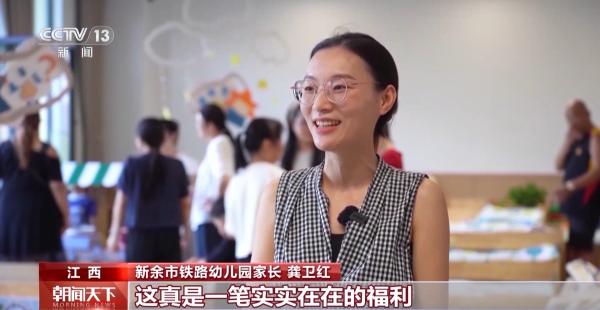
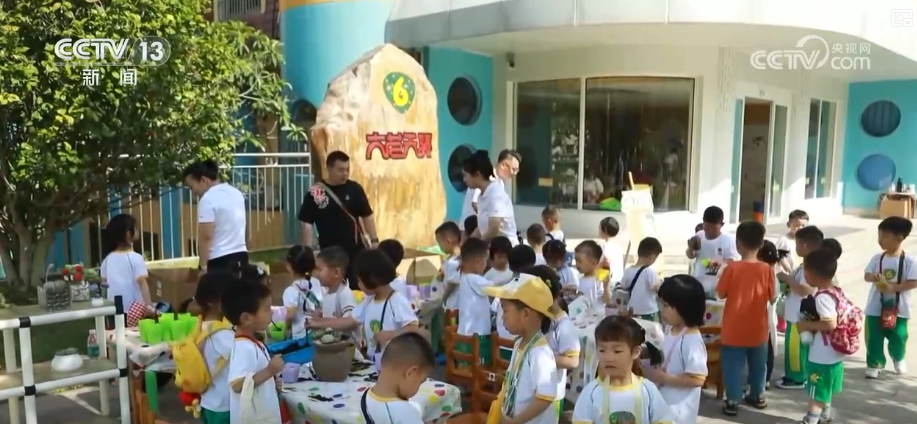
今年8月,国务院办公厅印发《关于逐步推行免费学前教育的意见》,明确从今年秋季学期起,免除公 办幼儿园大班保教费,民办幼儿园参照同类公办园减免相应保教费。 江西省新余市教育体育局发展规划科科长 谢辉辉:对于民办幼儿园,政策同样带来了减免。比方说某 民办幼儿园原本每月保育教育费收取1000元,以新余同类型公办园收费标准600元为例,家长只需缴纳 400元差额。 今年8月,财政部提出进一步加大对特殊教育学校支持保障力度,继续安排特殊教育补助资金5亿元,支 持地方持续改善特殊教育学校办学条件。2025年,义务教育阶段特殊教育学校和随班就读残疾学生生均 公用经费补助标准由每生每年6000元提高至7000元,惠及约91万残疾学生。 近期,全国中小学幼儿园陆续开学,新学期都有哪些教育惠民新举措? 新学期伊始,在江西新余铁路幼儿园的大班休息室,前来送孩子的家长们脸上洋溢着笑容。 江西省新余市铁路幼儿园家长 龚卫红:以前每个月的保教费600块钱,政策实施后一年可以省五千多块 钱,对于我们这种工薪家庭来说,这真是一笔实实在在的福利。 此外,普通高中国家助学金平均资助标准,由去年的每生每年2000元提高到今年的2300元;中等职业 ...