全域土地综合整治

Search documents
惠州长布村 “腾笼换鸟” ,集体经济收入将增近 6 倍
Nan Fang Du Shi Bao· 2025-10-28 07:20
Core Viewpoint - The transformation of Changbu Village from a low-end industrial area to a high-quality development model is driven by strategic land reform and the integration of industry, city, and rural development, showcasing a replicable model for rural revitalization in the Guangdong-Hong Kong-Macao Greater Bay Area [1][8]. Development Background - Changbu Village initially adopted a "come one, come all" approach to industrial development, leading to a concentration of low-end industries and environmental issues [2]. - By 2010, over 400 enterprises had settled in the village, making it one of the largest industrial villages in the region, but this rapid growth resulted in fragmented land use and low productivity [2]. - The "Changbu No. 1" site exemplified these challenges, with low output and high energy consumption, necessitating urgent industrial upgrades [2][3]. Transformation Strategy - The local government initiated a comprehensive land reform plan, incorporating the "Changbu No. 1" site into a broader land consolidation project to facilitate industrial upgrades [3]. - A new project focused on smart logistics and supply chain management is expected to generate an annual tax revenue of 45 million yuan, significantly increasing the village's economic income [3][6]. Infrastructure and Public Services - Infrastructure improvements include expanding and upgrading roads, enhancing sewage systems, and creating a beautiful river landscape to improve both industrial and living environments [4][5]. - The establishment of a community service center aims to provide comprehensive support for residents and employees, enhancing the overall quality of life [5]. Future Planning - The village plans to continue its industrial upgrade by clearing low-efficiency industries and attracting high-quality projects, with significant land leases expiring in the coming years [6]. - A new fitness and leisure industry model is being developed, integrating sports training facilities with local tourism resources to create a sustainable economic ecosystem [6]. Economic Growth - The collective economy of Changbu Village has shown steady growth, with projected collective income reaching 4.8 million yuan in 2024, and total income for village groups exceeding 12 million yuan [7]. Conclusion - The successful transformation of Changbu Village illustrates the importance of strategic planning and integrated development, providing a model for rural revitalization that balances industrial growth with community well-being [8].
推进全域土地综合整治 到2027年四川将启动实施至少60个项目
Si Chuan Ri Bao· 2025-10-23 01:53
Core Viewpoint - The Sichuan Provincial Government aims to implement at least 60 comprehensive land remediation projects by 2027, with a goal to establish a replicable model by 2030, leveraging the "Ten Million Project" experience [1][2] Group 1: Key Work Areas - The implementation plan outlines six key areas: strengthening planning guidance, conducting agricultural land remediation, organizing construction land, promoting ecological protection and restoration, exploring the protection of unique resources, and expanding remediation content [1] - Agricultural land remediation will involve integrating spatial governance of arable, forest, and garden lands to improve quality and connectivity [1] - Construction land organization will focus on revitalizing and optimizing underutilized and idle construction land based on regional development needs [1] - Ecological protection and restoration will adopt localized, small-scale, and nature-based restoration measures [1] Group 2: Policy Measures - The plan specifies five policy measures: optimizing land spatial layout, enhancing land use efficiency, realizing the value of natural resource assets, strengthening element guarantee incentives, and exploring cross-regional remediation practices [2] - Cross-regional remediation will consider rural types, resource endowments, industrial linkages, and development needs to explore comprehensive land remediation across different scales and dimensions [2] - Comprehensive land remediation will be conducted at the township level, focusing on agricultural land organization, construction land organization, ecological protection, and historical cultural preservation [2]
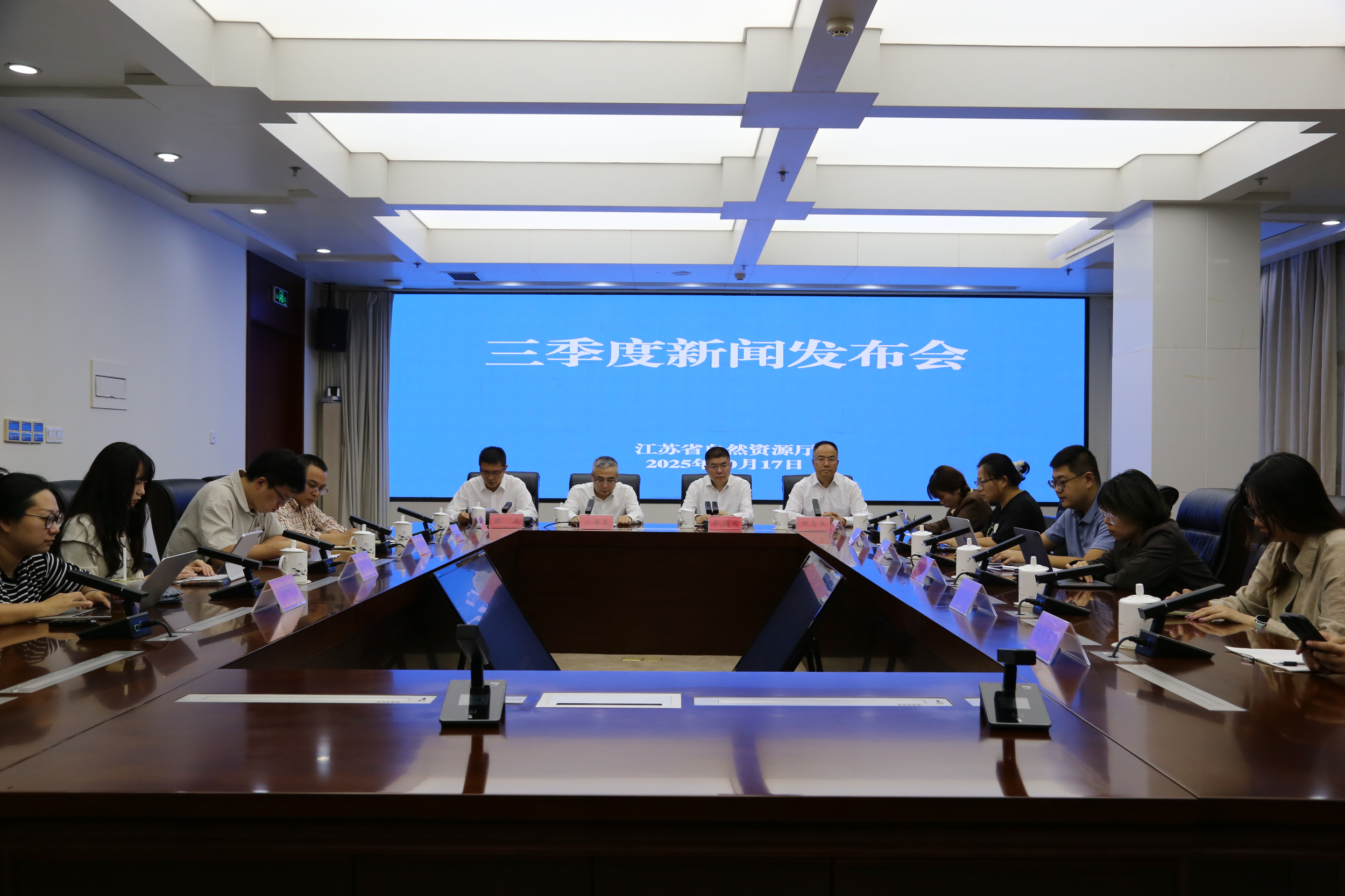
江苏自然资源工作新进展:全域土地综合整治与年度国土调查成果丰硕
Zhong Guo Fa Zhan Wang· 2025-10-21 03:21
Group 1: Major Project Element Guarantee - Jiangsu Province's natural resource element guarantee for major projects has shown significant results, with a total of 359,600 acres secured, including 341,000 acres for provincial major projects and 18,600 acres for key private investment projects [3][4] - The element guarantee work is advanced through three main approaches: integrated land use planning, improved construction land approval efficiency, and integrated element guarantee services [4][5] - The province aims to strengthen pre-intervention, enhance departmental collaboration, and promote innovative reforms to support continuous economic recovery [5] Group 2: Comprehensive Land Improvement - The "Ten Thousand Project" is a successful practice of the "Green Mountains and Clear Water are Gold and Silver Mountains" concept in rural areas, with Jiangsu establishing a systematic approach to land improvement through pilot projects [6][7] - The implementation plan emphasizes localized strategies, full-process control, and improved policy support for land use optimization and ecological protection [6][7][9] - Jiangsu has completed 499,400 acres of agricultural land improvement and 127,700 acres of construction land organization, showcasing effective ecological restoration and public space governance [11][16] Group 3: National Land Change Survey Results - The 2024 National Land Change Survey, initiated on October 1, aims to comprehensively understand land use changes, with stable overall areas for agricultural, construction, and unused land [17][18] - The province has achieved significant results in farmland protection, with a total farmland area of 62,542,400 acres, and has increased transportation and water engineering land by 116,100 acres and 50,000 acres respectively [18] - The survey results will enhance the management capabilities of natural resources, supporting land spatial planning and ecological restoration efforts [18] Group 4: Water Resource Investigation - Jiangsu has taken the lead in national water resource investigations, implementing efficient measures to form basic data ahead of schedule [19] - The province has established a collaborative working mechanism and optimized technical systems for comprehensive water resource evaluation [19] - The development of a smart platform for data collection and analysis has been achieved, enhancing the efficiency of water resource management [19]

充分发挥全域土地综合整治功能
Xin Hua Ri Bao· 2025-10-20 23:33
Core Viewpoint - The article emphasizes the importance of comprehensive land consolidation as a strategic initiative to enhance rural development and optimize land resource allocation in China, addressing the challenges posed by the dual urban-rural land system [1] Group 1: Land Resource Market Development - Comprehensive land consolidation is crucial for improving the internal development dynamics of rural areas by enhancing the efficiency of land resource allocation [1] - Since the initiation of pilot projects in 2019 by the Ministry of Natural Resources, 1,304 pilot projects have been steadily advancing, accumulating valuable practical experience [1] Group 2: Spatial Reconstruction and Property Rights Restructuring - The initiative aims to reduce the transaction costs of land resource marketization by clarifying property rights and simplifying complex ownership structures [2] - A pilot project in Suzhou's Huangqiao Street achieved a 97% increase in arable land and reduced the proportion of scattered plots from 54% to 1.9%, while also improving land quality by one grade [2] Group 3: Indicator Activation and Value Creation - Comprehensive land consolidation facilitates the flexible allocation of land development rights, allowing for the market-based trading of measurable "virtual land factors" across larger regions [3] - In a pilot project in Yancheng's Jianhu County, the consolidation efforts resulted in the creation of 733 mu of supplementary arable land indicators and 1,998 mu of urban-rural linkage indicators, generating 325 million yuan through inter-county trading of construction land indicators [3] Group 4: Ecological Restoration and Value Empowerment - The initiative incorporates ecological restoration as a key component, enhancing rural ecological service functions and expanding the market potential of land factors [4] - A pilot project in Suqian's Sihong County explored the "green ticket" trading model, successfully completing five transactions totaling 1.0829 million yuan, promoting a positive interaction between land development and ecological product value [4]
江苏全域土地综合整治多重效益显现——“一子落”带动“满盘活”
Xin Hua Ri Bao· 2025-10-18 23:31
Core Insights - The article emphasizes the importance of comprehensive land remediation as a platform for implementing rural revitalization strategies and advancing the "Ten Thousand Projects" initiative, which optimizes land use and promotes urban-rural integration [1][2]. Group 1: Progress and Achievements - Jiangsu Province has made significant progress in comprehensive land remediation, with 41 township projects and two county-level pilot projects in Suzhou, achieving over 70% completion [3]. - The province has completed the remediation of 499,400 acres of farmland and established 206,500 acres of high-standard farmland, while also reducing construction land by 7,600 acres [3]. - A total of 605 inefficient industrial enterprises have been eliminated, and ecological restoration efforts have covered 46,700 acres, showcasing multiple benefits from these initiatives [3]. Group 2: Case Study - Huangqiao Street - Huangqiao Street in Suzhou serves as a model for land remediation, transitioning from a mixed industrial area to a hub for headquarters economy and smart manufacturing, increasing the average tax revenue per acre from 128,000 yuan to 1,000,000 yuan [2]. - The area has improved its spatial layout significantly, with a floor area ratio increase from 0.7 to 2.5, demonstrating effective urban-rural integration [2]. Group 3: Tailored Approaches - Jiangsu Province encourages localized strategies for land remediation, resulting in diverse models such as modern efficient agriculture in Yancheng and cultural heritage protection in Kunshan [4]. - The province's approach has led to enhanced agricultural productivity, with some areas reporting an increase of nearly 200 jin per acre in grain yield [4]. - The ongoing projects are expected to provide replicable experiences for high-quality rural development across the country, contributing to a more livable and workable rural landscape [4].
共探全域土地综合整治新路径
Zhong Guo Zi Ran Zi Yuan Bao· 2025-10-15 07:29
Core Viewpoint - The article discusses the collaboration between Jiangjin District of Chongqing and Yanping District of Nanping City in Fujian Province, focusing on the integration of comprehensive land remediation and industrial development [1] Group 1: Land Remediation and Industrial Integration - Yanping District utilizes comprehensive land remediation as a strategy to promote the deep integration of primary, secondary, and tertiary industries [1] - The district is cultivating five distinctive industries, referred to as "five ones": "one bottle of milk" (dairy industry), "one flower" (lily flower), "one bamboo" (bamboo industry), "one leaf" (tea industry), and "one river" (ecological protection and development of the Min River basin) [1] Group 2: Strategic Cooperation - During the exchange, Jiangjin District enterprises signed a strategic cooperation agreement with Fujian Natural Resources Technology Co., Ltd. to explore innovative paths for comprehensive land remediation [1] - The collaboration aims to leverage state-owned enterprise strengths to promote efficient resource utilization and high-quality industrial development [1]
陕西省人民政府新闻办公室举办新闻发布会介绍“推动高水平保护 服务高质量发展”有关情况
Shan Xi Ri Bao· 2025-10-10 07:09
Core Viewpoint - The press conference focused on the theme "Promoting High-Level Protection and Serving High-Quality Development," highlighting the efforts of Shaanxi Province in natural resource management and ecological protection to support economic growth [5][22]. Group 1: Agricultural Land Protection - Shaanxi Province has made significant advancements in agricultural land protection, implementing a five-level management system and investing 100 million yuan annually to reward outstanding units [6][23]. - The province has added 2.086 million mu of arable land since the 14th Five-Year Plan, exceeding national assessment targets, with total arable land at 46.0461 million mu and permanent basic farmland at 33.7898 million mu [6][23]. Group 2: Spatial Planning and Control - The province has enhanced its land spatial planning system, completing various regional plans and ensuring that planning is effectively communicated and implemented at all levels [7][24]. - A total of 1,048 town plans and 6,632 village plans have been completed, supporting rural revitalization efforts [7][24]. Group 3: Resource Element Guarantee - Shaanxi has improved its mechanisms for land use approval, achieving a 95.83% guarantee rate for 600 provincial key projects, with 5.01 million mu of construction land approved this year [8][25]. - The province has also optimized mining rights registration processes, approving 72 mining rights and 35 exploration rights this year, with an additional coal production capacity of 9.45 million tons per year [8][25]. Group 4: Ecological Protection and Restoration - The province has established a comprehensive ecological protection and restoration planning system, completing plans for 10 cities and 77 counties [9][26]. - Significant progress has been made in ecological restoration, with 583,800 mu of ecological restoration completed in the Qinling Mountains and 709 kilometers of riverbank restoration [9][27]. Group 5: Public Services and Disaster Prevention - The province has implemented a comprehensive geological disaster prevention management system, successfully avoiding casualties in 33 out of 101 geological disaster incidents this year [10][28]. - The relocation subsidy for disaster-affected households has been increased to 150,000 yuan per household, with a high execution rate for disaster relocation projects [10][28].
上海:深入开展全市域土地综合整治,助推郊野空间提质增效
Xin Lang Cai Jing· 2025-09-26 12:03
Core Viewpoint - The Shanghai Municipal Government has issued implementation opinions to enhance the quality and efficiency of rural space through comprehensive land remediation across the city, aiming to complete over 40 major construction tasks by the end of the 14th Five-Year Plan period [2][3]. Group 1: Comprehensive Land Remediation - The implementation plan will include a thorough investigation of historical, cultural, ownership, and natural factors to define remediation goals and coordinate various construction tasks [3][4]. - The plan allows for localized adjustments to the "three zones and three lines" while ensuring that the quantity of arable land does not decrease and that the quality and ecological conditions improve [3][4]. - The implementation scheme must align with national land spatial planning and will be updated accordingly after project acceptance [3][4]. Group 2: Agricultural Land Management - The initiative aims to build a modern agricultural system by enhancing high-standard farmland construction and improving the quality of arable land [5][6]. - It encourages the consolidation of fragmented arable land into larger, more efficient plots and the restoration of non-arable land back to agricultural use [5][6]. - The plan includes a dynamic balance of permanent basic farmland within town and street areas, with adjustments not exceeding 5% of the designated area [6]. Group 3: Construction Land Optimization - The strategy emphasizes strict control over the total area of construction land, prioritizing the redevelopment of low-efficiency land and the activation of non-construction land within villages [7][8]. - It aims to improve living conditions and village layouts while respecting the wishes of rural communities [7][8]. - The plan encourages the consolidation of small, scattered collective construction land into larger plots for new industries and business developments [8]. Group 4: Ecological Protection and Restoration - The initiative promotes integrated protection and restoration of various ecosystems, including farmland, forests, rivers, lakes, and wetlands [9]. - It emphasizes the importance of biodiversity and the maintenance of natural habitats while enhancing the quality of green ecological spaces [9]. - The plan includes measures for coastal ecological restoration and the creation of ecological corridors along the coastline [9]. Group 5: Policy and Funding Mechanisms - The implementation will involve collaboration among various government departments to ensure effective execution and oversight of the remediation projects [12][13]. - The plan encourages social capital participation in land remediation and ecological restoration, establishing a market mechanism for ecological benefits [13]. - It aims to optimize funding sources and enhance the management of ecological assets, including participation in carbon trading [13].
辽宁厅召开全域土地综合整治推进会
Zhong Guo Zi Ran Zi Yuan Bao· 2025-09-26 07:52
Core Viewpoint - The meeting emphasized the significance of comprehensive land remediation work in optimizing land spatial structure, promoting resource conservation, supporting rural revitalization, and contributing to ecological civilization construction [1] Group 1: Policy and Theory - The meeting highlighted the importance of learning from the "Ten Thousand Projects" experience and integrating policy document spirit into planning, project implementation, and long-term management [1] - It was noted that comprehensive land remediation is a crucial platform for enhancing the governance system and capacity of land space [1] Group 2: Implementation Strategies - The meeting called for the adoption of key methods such as "planning guidance, systematic implementation, and collaborative promotion" in conducting comprehensive land remediation work [1] - There is a strict requirement to adhere to the "policy bottom line" to ensure significant progress in comprehensive land remediation efforts [1] Group 3: Goals and Outcomes - The aim is to establish a new pattern of comprehensive land remediation across the province, enhancing the overall effectiveness of land management [1]
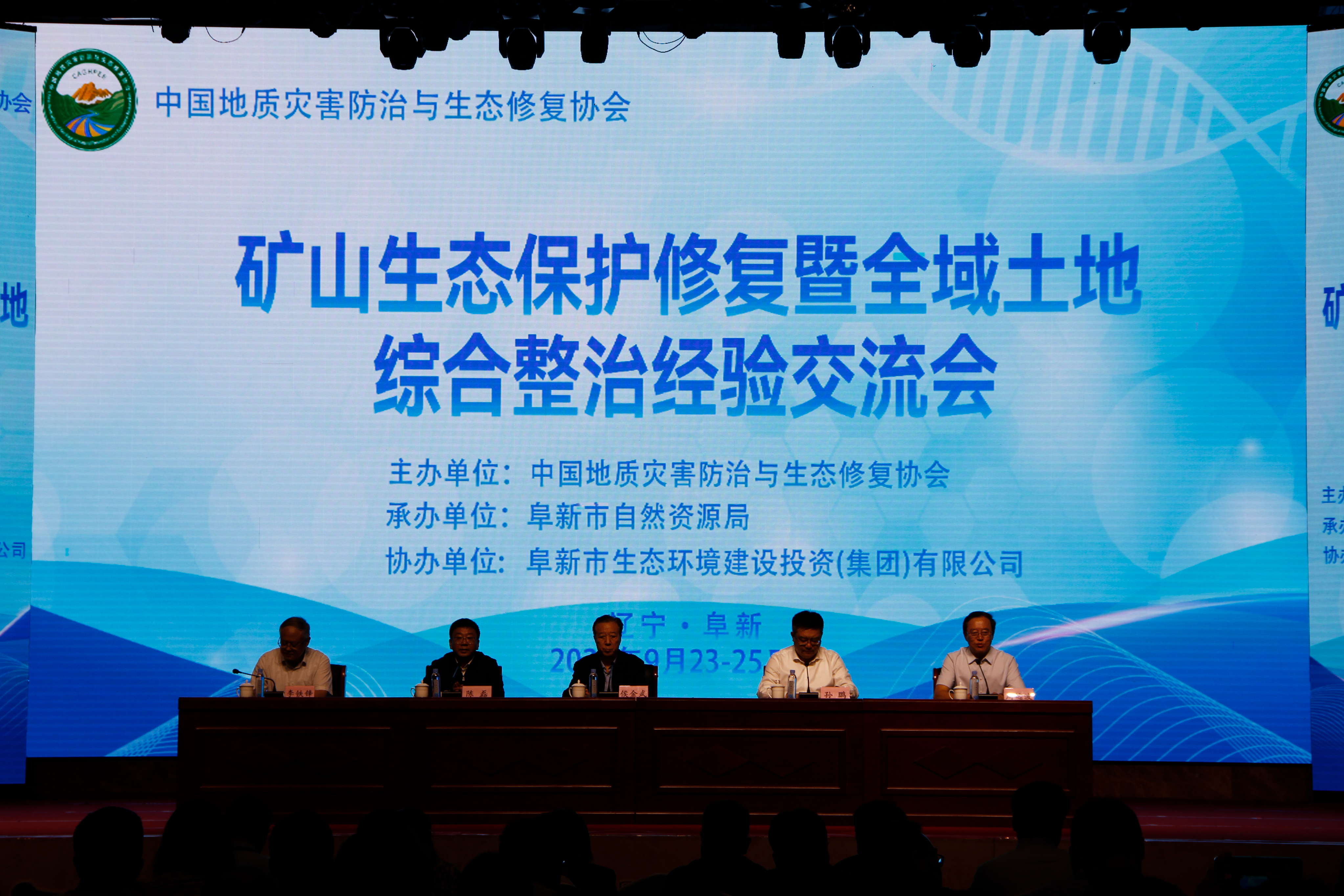
矿山生态保护修复暨全域土地综合整治经验交流会在辽宁阜新召开
Zhong Guo Zi Ran Zi Yuan Bao· 2025-09-26 03:45
Core Viewpoint - The conference on mining ecological protection and comprehensive land remediation emphasizes the importance of "ecological priority and green development" as a core strategy for urban transformation, aiming to integrate ecological restoration with industrial development and benefit local communities [1] Group 1: Conference Overview - The conference took place from September 23 to 25 in Fuxin City, Liaoning Province, attended by key officials and experts from various provinces [1] - The event included discussions on diversified investment in mining ecological protection and industrialized governance, along with field visits to specific projects [1] Group 2: Strategic Goals - The conference highlighted the goal of "restoring ecology, empowering industries, and benefiting people's livelihoods" as a target for the comprehensive remediation of the Haizhou open-pit mine [1] - A three-year special action plan for the restoration of abandoned mines was proposed, focusing on the integration of abandoned mine governance with regional development [1]