净息差压力

Search documents
有银行今年降了七次!存款利率又双叒下调
2 1 Shi Ji Jing Ji Bao Dao· 2025-10-20 11:12
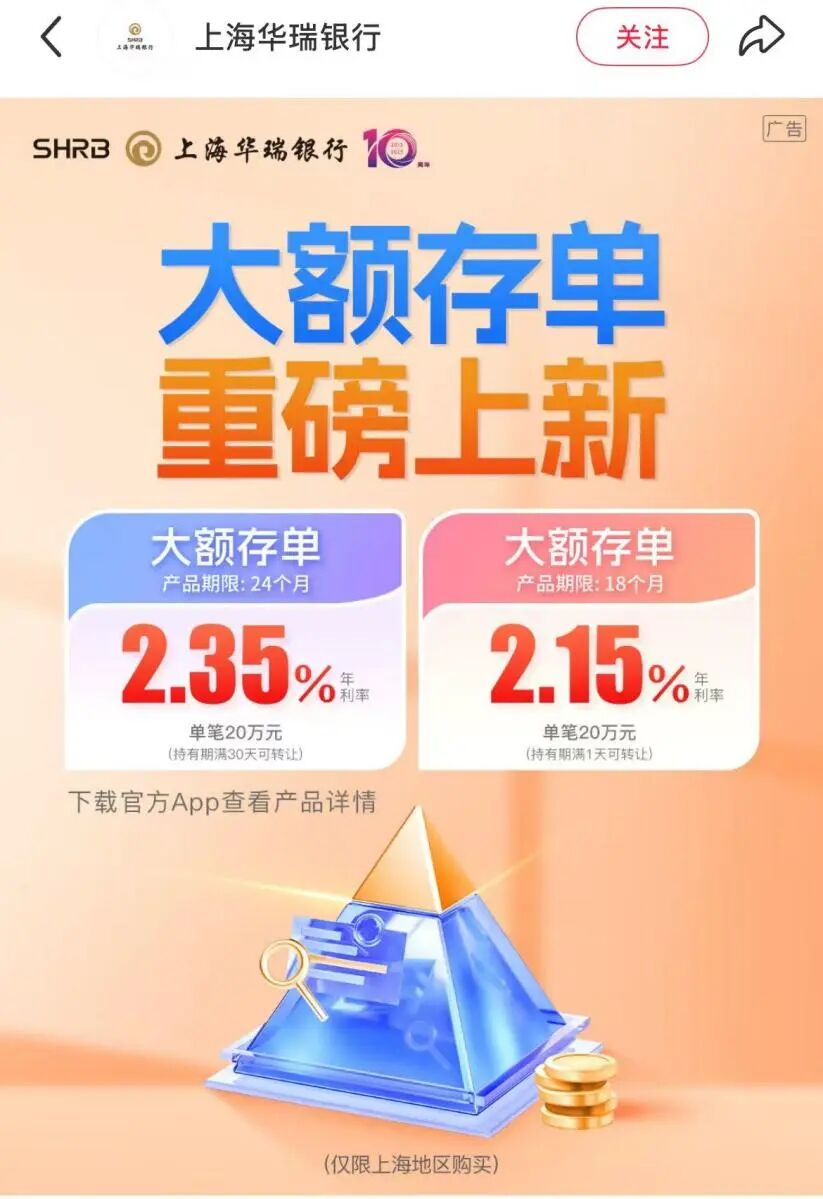
Core Viewpoint - The recent trend of banks lowering deposit interest rates has become a norm, particularly among small and medium-sized banks, with significant reductions in long-term deposit rates due to strong market expectations for future interest rate cuts [1][5]. Group 1: Deposit Rate Adjustments - Multiple banks, especially small and medium-sized ones, have recently announced reductions in deposit rates, with the most significant cuts observed in three-year and five-year deposit rates, decreasing by 15 to 40 basis points [1][3]. - Shanghai Huari Bank reduced its three-year fixed deposit rate from 2.3% to 2.15%, marking its seventh rate cut this year, with similar actions taken by other small banks [3][4]. - The overall trend shows that national banks have seen their three-year and five-year fixed deposit rates drop to the 2% range, with some even falling to the 1% range [5][6]. Group 2: Reasons for Rate Cuts - The primary reasons for the recent deposit rate cuts include the need to address net interest margin pressures and the desire of small banks to narrow the gap in funding costs compared to larger banks [5][6]. - Analysts suggest that the continuous narrowing of net interest margins has compelled small banks to lower deposit rates to alleviate funding costs [5][6]. Group 3: Interest Rate Inversion - A notable phenomenon is the frequent occurrence of interest rate inversion, where long-term deposit rates are lower than short-term rates, contrary to typical expectations [7]. - For instance, Shanghai Huari Bank's three-year deposit rate is 2.15%, while the five-year rate is slightly lower at 2.1%, indicating this inversion trend [7]. - Analysts believe that banks are strategically lowering long-term deposit rates to optimize their liability structure and manage the costs associated with long-term deposits [7].


热抢!民营银行上架大额存单 年利率突破2%
Zhong Guo Ji Jin Bao· 2025-09-17 14:30
Core Viewpoint - The recent launch of large-denomination certificates of deposit (CDs) with annual interest rates exceeding 2% by private banks has sparked a buying frenzy among investors, driven by limited availability and regional restrictions [1][2][4]. Group 1: Product Details - Private banks such as Huari Bank and Su Bank have introduced large-denomination CDs with annual interest rates of 2.3% and 2.1% respectively, with a minimum investment of 200,000 yuan [2][4]. - The CDs are primarily available for a duration of 2 years, with some products also offering an 18-month option, but are restricted to specific regions like Shanghai [2][4]. - The limited supply has led to a rapid depletion of available quotas, with remaining amounts reported at 86.8 million yuan and 19.4 million yuan for different products [2]. Group 2: Market Dynamics - The trend of offering high-interest CDs is mainly observed among internet banks, with investors actively seeking to secure these products, sometimes using multiple accounts to increase their chances [5][7]. - Industry experts suggest that the high-interest rates are a temporary strategy for customer acquisition and may not be sustainable in the long term due to the pressure on net interest margins faced by banks [7][8]. - The overall banking sector is experiencing a decline in net interest margins, with private banks showing a more significant drop, prompting them to offer attractive rates to attract deposits [8]. Group 3: Strategic Implications - The introduction of these high-yield products is seen as a way for private banks to enhance their retail market competitiveness and manage their liability structure by targeting high-net-worth clients [7][8]. - Marketing efforts are being intensified by banks through various online platforms to educate and attract customers, indicating a proactive approach to customer engagement [8].
定期存款利率持续下跌 3个月期平均利率进入“0”字头
Zheng Quan Ri Bao· 2025-07-24 16:11
Group 1 - The core viewpoint of the articles indicates a continuous decline in bank deposit rates, with average rates for medium to long-term deposits entering the "1" range and 3-month deposit rates dropping into the "0" range [1][2] - As of June 2025, the average interest rates for various deposit terms are as follows: 3-month at 0.949%, 6-month at 1.156%, 1-year at 1.287%, 2-year at 1.372%, 3-year at 1.695%, and 5-year at 1.538%, showing a decline across all terms compared to May [1] - Major state-owned banks and national joint-stock banks have lowered their deposit rates, with the maximum reduction reaching 25 basis points, and some 1-year fixed deposit rates falling below 1% [1][2] Group 2 - The People's Bank of China announced a reduction in the 1-year LPR to 3% and the 5-year LPR to 3.5%, both down by 10 basis points from previous values, prompting banks to adjust their rates accordingly [2] - Analysts suggest that the downward trend in deposit rates may continue in the medium to long term due to ongoing pressure on banks' net interest margins as a result of lower LPR rates [2] - In June 2025, the average interest rates for large denomination certificates of deposit (CDs) were reported as follows: 3-month at 1.179%, 6-month at 1.391%, 1-year at 1.477%, 2-year at 1.462%, 3-year at 1.768%, and 5-year at 1.700%, with declines noted across most terms compared to May [3]
5年期大额存单为何逐渐消失?业内人士:银行息差压力下转向主推国债、保险业务
Sou Hu Cai Jing· 2025-06-13 11:47
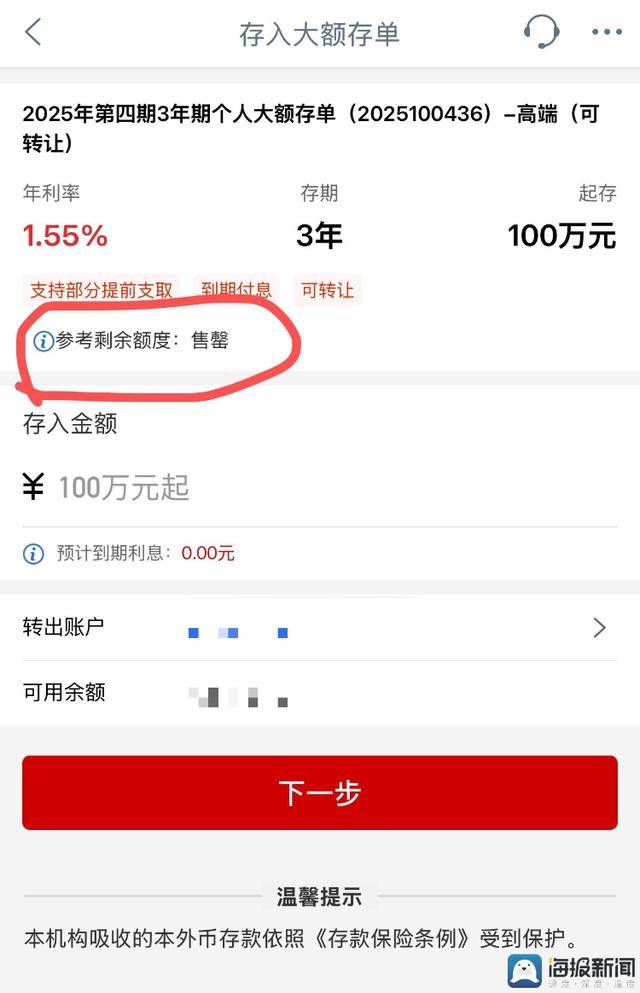
Core Viewpoint - The banking industry is experiencing a significant reduction in long-term large-denomination certificate of deposit (CD) interest rates, leading to a phenomenon known as "deposit migration" as consumers seek better returns from other financial products [1][8]. Summary by Sections Interest Rate Changes - Major banks, including Industrial and Commercial Bank of China, China Construction Bank, and Agricultural Bank of China, have removed five-year large-denomination CDs from their offerings, with some banks now only providing up to three-year products at rates as low as 1.2% to 1.4% [1][2][6]. - The three-year large-denomination CD currently has a rate of 1.55%, while two-year and one-year products are offered at 1.2% [5][6]. Reasons for Rate Reductions - The primary reason for the reduction in long-term large-denomination CD rates is the pressure on net interest margins, prompting banks to reform their liability structures [1][10]. - As loan rates continue to decline, banks are compelled to lower high-cost long-term liabilities to alleviate pressure, thereby reducing their interest rate risk exposure [1][10]. Impact on Consumer Behavior - The decline in large-denomination CD offerings has led to a "deposit migration," where consumers are increasingly turning to alternative investment options such as money market funds, government bonds, and insurance products [8][9]. - The current three-year government bond rate is 1.63%, and five-year bonds yield 1.7%, making them attractive alternatives to traditional deposits [8]. Market Trends - The banking wealth management market has seen significant growth, with the scale of bank wealth management products reaching 29.14 trillion yuan, a year-on-year increase of 9.41% [8]. - Insurance products are gaining popularity as alternatives to long-term deposits, with many clients showing increased interest in savings-type insurance products that offer higher returns [9]. Future Outlook - The trend of reducing long-term deposit offerings is expected to continue as banks aim to manage their interest margins effectively [10][11]. - Ordinary fixed-term deposit rates may further decline, with current rates for two-year ordinary deposits ranging from 1.2% to 1.4% [11].