
医疗旅游

Search documents
2026年第一个火的搞钱赛道:带老外来中国看病
3 6 Ke· 2026-01-13 08:22
Core Viewpoint - The influx of foreign patients to China's major cities for medical treatment is increasing, driven by the relaxation of visa policies and the efficiency of the Chinese healthcare system [6][8][32]. Group 1: Medical Tourism Trends - Foreign patients are increasingly visiting China for medical care, with notable cases such as a British patient receiving rapid treatment within four days [4][5]. - The efficiency and affordability of medical services in China are highlighted, with comparisons showing significant cost savings for treatments compared to Western countries [5][30]. - As of December 2025, over 40 million foreign visitors are expected to enter China, marking a 27.2% year-on-year increase [7]. Group 2: Market Dynamics - The demand for medical tourism is shifting from sightseeing to healthcare, creating new business opportunities in the sector [8][9]. - Young entrepreneurs are entering the medical tourism space, providing services such as translation and patient coordination [10][11]. - The market for accompanying foreign patients is competitive, with many individuals vying for limited opportunities [17][18]. Group 3: Business Models and Opportunities - Companies like MedTourChina are emerging to facilitate connections between foreign patients and Chinese healthcare providers, resembling a travel agency model [21][22]. - The Chinese government is actively promoting international medical tourism, with pilot programs in major cities and a growing number of hospitals offering international services [22][23]. - The potential for growth in this sector is recognized, but challenges remain in establishing China as a primary destination for Western patients [28][30]. Group 4: Economic Implications - The Chinese government aims to reduce the travel service trade deficit, which exceeded 1.5 trillion yuan in 2024, by attracting foreign spending through medical tourism [33][35]. - In the first eleven months of 2025, foreign spending in China reached 351.57 billion yuan, a 51.3% increase compared to previous years [36][37]. - The medical tourism sector is seen as a vital component of China's broader strategy to enhance service consumption and economic stability [38].

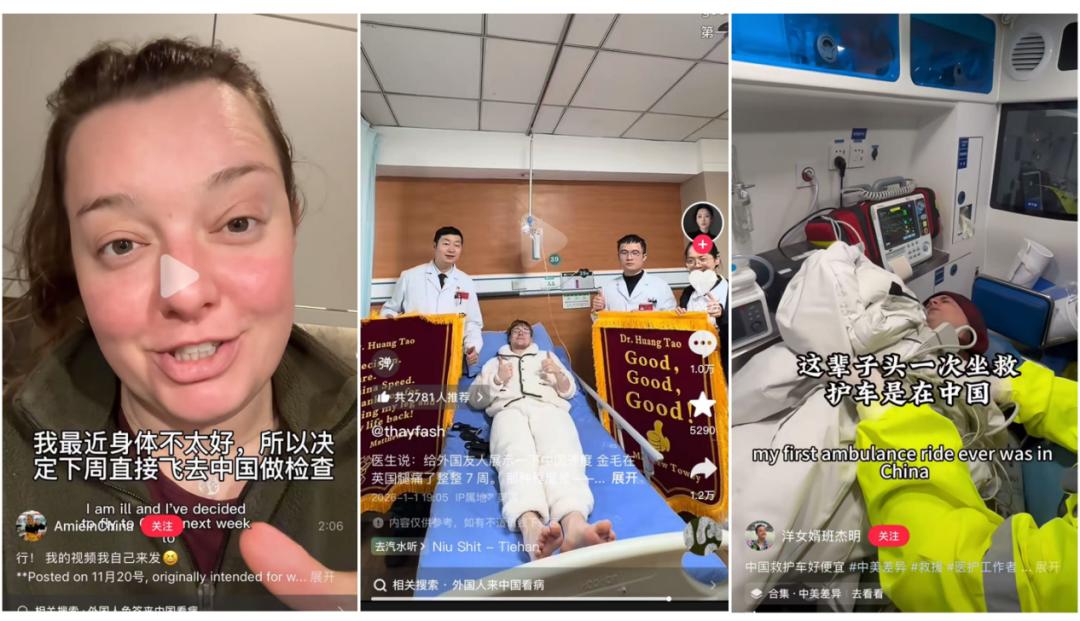
免签后,第一批老外涌入中国医院
3 6 Ke· 2026-01-08 02:29
Core Insights - The article discusses a growing trend of foreigners traveling to China for medical treatment, highlighting the efficiency and affordability of the Chinese healthcare system compared to that of Western countries [5][9][19] - It emphasizes the shift in perception among foreign middle-class individuals who are now seeking medical services in China, driven by the long waiting times and high costs in their home countries [9][10][12] Group 1: Medical Tourism Trends - There is an increasing number of foreign individuals, particularly from Europe and North America, traveling to China for medical care, attracted by the lower costs and quicker service [9][10] - The trend has shifted from primarily high-ranking expatriates or families with rare diseases to ordinary professionals and retirees seeking efficient healthcare solutions [9][10] - Social media platforms like TikTok and YouTube have played a significant role in educating potential patients about the advantages of Chinese healthcare, showcasing quick and affordable medical services [11][12] Group 2: Comparative Healthcare Analysis - The article contrasts the long waiting times and bureaucratic processes in Western healthcare systems with the efficient, streamlined services in Chinese hospitals, which are perceived as a "miracle" by foreign patients [8][14] - Cost comparisons reveal that even self-paying patients in China find medical services significantly cheaper than in their home countries, making it an attractive option [16] - The attitude and professionalism of Chinese doctors are also highlighted as a positive aspect, with foreign patients appreciating the care they receive despite potential language barriers [16] Group 3: Future Implications for Chinese Healthcare - The article suggests that China is at a pivotal moment to capitalize on the influx of foreign patients, potentially establishing a dual-track healthcare system to cater to both local and international patients [19][20] - It emphasizes the need for China to balance openness to foreign patients with the protection of local healthcare resources, ensuring that the influx does not overwhelm existing services [20] - The potential for China to become a significant player in the global medical tourism market is underscored, with the country's large population and trained medical workforce being key assets [19][20]

老外开始组团来中国看病
投资界· 2026-01-06 07:45
Core Viewpoint - The article discusses the rising trend of foreigners traveling to China for medical treatment, highlighting the efficiency, affordability, and quality of healthcare services compared to their home countries, particularly the UK and the US [2][5][11]. Group 1: Case Studies of Foreign Patients - A British influencer named Amy traveled 8,000 kilometers to China for medical treatment, receiving a comprehensive diagnosis and treatment within 13 days at a cost of approximately 2,800 RMB (about £298), significantly lower than the costs in the UK [3][4]. - Another case involved a British blogger whose stepfather faced long wait times for diagnosis in the UK, but received prompt treatment in Shanghai, leading to a viral video with nearly 1.5 million views [4]. Group 2: Factors Driving Medical Tourism - The increase in foreign patients seeking medical care in China is attributed to the country's visa-free policies and the comparative analysis of healthcare costs between China and the US, which revealed significant savings for patients [5][8]. - Social media has played a crucial role in spreading awareness about the benefits of seeking medical treatment in China, with many foreigners sharing their positive experiences online [5][9]. Group 3: Concerns from Domestic Patients - There are concerns among Chinese citizens about the potential impact of foreign patients on local healthcare resources, with fears that they may occupy slots meant for domestic patients [9][10]. - Some individuals worry that the influx of foreign patients could overwhelm already strained medical facilities and lead to inequities in healthcare access [10]. Group 4: Structure of International Medical Services - China's hospitals have established International Medical Departments to cater specifically to foreign patients, ensuring that these services do not interfere with domestic patient care [11][12]. - The International Medical Departments operate under strict regulations, limiting their service capacity to 10% of the hospital's total services, thus safeguarding resources for local patients [12][13]. Group 5: Economic and Quality Benefits - The presence of foreign patients is seen as a potential revenue stream for hospitals, allowing them to reinvest in facilities and improve services for all patients [14]. - Engaging with international patients can enhance the overall quality of medical services in China, as hospitals gain experience and expertise in various medical fields [14][15]. Group 6: Future Outlook - The article predicts a significant increase in medical tourism to China by 2026, driven by high-profile cases and the expansion of visa-free policies [16][17]. - The Chinese government is actively promoting international medical services, aiming to attract more foreign patients and improve the overall healthcare landscape [16][17].

免签后老外扎堆来中国看病
3 6 Ke· 2026-01-06 03:15
Core Insights - The phenomenon of foreigners traveling to China for medical treatment has gained significant attention, highlighted by cases like a British influencer traveling 8,000 kilometers for healthcare, showcasing the efficiency and affordability of Chinese medical services compared to the UK [1][2][4]. Group 1: Medical Tourism Trends - The rise in interest for medical tourism in China is attributed to recent visa-free policies, particularly attracting Russian citizens to local hospitals for treatments, especially traditional Chinese medicine [5]. - A notable event that sparked this trend was the influx of American users to Chinese social media platforms following the TikTok ban, leading to discussions about the stark differences in healthcare costs and efficiency between the US and China [7][8]. - The hashtag 逃离斩杀线, which translates to "escaping the killing line," became popular on Weibo, indicating a growing trend of foreigners seeking medical care in China [7]. Group 2: Concerns from Local Population - There are concerns among Chinese citizens regarding the potential competition for medical resources as more foreigners seek treatment in local hospitals, fearing that this could lead to a shortage for locals [8][10]. - Some individuals worry that the influx of foreign patients could overwhelm already strained medical teams, especially during peak seasons when hospitals are already busy [11][12]. Group 3: Hospital Response and Infrastructure - Chinese hospitals have established international medical departments to cater specifically to foreign patients, ensuring that these services do not interfere with domestic patient care [14][16]. - The international medical departments operate under strict regulations, limiting their service capacity to 10% of the total hospital services, thus preventing resource depletion for local patients [15][16]. - The pricing for services in international medical departments is significantly higher than for local patients, which allows hospitals to generate additional revenue that can be reinvested into improving healthcare services for all [16][18]. Group 4: Future Developments - Chinese hospitals are actively expanding their international medical departments, with several institutions officially recognized as pilot units for international medical tourism [18][19]. - Recent government initiatives aim to standardize and promote international medical services, indicating a strategic push to attract more foreign patients [19][20]. - Predictions suggest that the trend of foreigners seeking medical treatment in China will continue to grow, particularly as policies become more favorable and awareness increases [22].

免签后老外扎堆中国看病:旅游红利还是资源掠夺?
虎嗅APP· 2026-01-05 10:14
Core Viewpoint - The article discusses the rising trend of foreign patients traveling to China for medical treatment, highlighting the efficiency and cost-effectiveness of the Chinese healthcare system compared to Western countries, particularly the UK and the US [3][10][27]. Group 1: Case Studies of Foreign Patients - A British TikTok influencer named Amy traveled 8,000 kilometers to China for medical treatment, receiving a comprehensive diagnosis and treatment within 13 days at a cost of approximately 2,800 RMB (298.6 GBP), significantly lower than the costs in the UK [4][5]. - Another case involved a British blogger whose stepfather faced long wait times for diagnosis in the UK, ultimately receiving prompt treatment in Shanghai, which was also documented on social media [8][9]. Group 2: Factors Driving Interest in Medical Tourism - The increase in foreign patients seeking treatment in China is partly due to recent visa exemption policies and the comparative analysis of healthcare costs between China and Western countries, which revealed significant savings for patients [10][20]. - Social media has played a crucial role in spreading awareness about the efficiency and affordability of Chinese healthcare, leading to a surge in interest from foreign patients [6][11]. Group 3: Concerns from Domestic Patients - There are concerns among Chinese citizens about foreign patients potentially monopolizing medical resources, especially in top-tier hospitals that are already under strain [12][14]. - Some citizens worry that the influx of foreign patients could lead to a diversion of resources away from local patients, creating a perception of inequality in healthcare access [15][16]. Group 4: Structure of International Medical Services - Chinese hospitals have established dedicated international medical departments that operate independently from regular outpatient services, ensuring that domestic patients are not adversely affected [18][19]. - The international medical departments are subject to strict regulations, limiting their service capacity to 10% of the total hospital services, thereby safeguarding local patient access [20][21]. Group 5: Future Prospects and Developments - The Chinese healthcare system is actively preparing to attract more foreign patients, with many hospitals establishing international medical departments and engaging with potential patients through social media [23][24]. - Recent government initiatives aim to standardize and promote international medical services, indicating a strategic push to enhance China's position in the global medical tourism market [25][26][27].

韩国实施近十年的医美退税政策月底终结,失去这张“折扣券”后外国消费者还会去吗?
Sou Hu Cai Jing· 2025-12-12 10:08
Core Viewpoint - The termination of South Korea's tax refund policy for medical beauty services, effective December 31, 2023, is expected to significantly impact the medical tourism industry, which has thrived on this incentive for nearly a decade [1][2]. Group 1: Policy Changes - The tax refund policy, which allowed foreign patients to claim a 10% VAT refund on medical beauty services exceeding 30,000 KRW (approximately 143.7 CNY), has been officially removed from the revised Tax Special Cases Limitation Act [1][2]. - This policy was instrumental in attracting a large number of overseas medical beauty tourists, contributing to the growth of South Korea's medical tourism sector [1][2]. Group 2: Economic Impact - The total medical expenditure by foreign patients in South Korea is projected to rise from approximately 400 billion KRW (about 1.912 billion CNY) in 2019 to 12.4 trillion KRW (around 59.272 billion CNY) by 2024 [2]. - The cancellation of the tax refund is expected to increase the cost of medical services for foreign patients, potentially leading to a significant decrease in medical beauty tourists [4]. Group 3: Industry Response - Industry professionals have expressed strong opposition to the policy change, warning that it could diminish South Korea's status as a leading destination for medical tourism, especially as other countries enhance their competitive advantages [6]. - Analysts suggest that while the immediate impact of the tax refund cancellation may be limited, the long-term success of South Korea's medical beauty industry will depend on maintaining high standards of quality, reputation, and safety [7].

《乐十条》人才“兴海南”政策重磅解读来了!
Zhong Guo Jing Ji Wang· 2025-12-12 08:23
Core Viewpoint - The launch of the "Ten Measures for Talent Development" aims to attract global high-quality medical talent to the Boao Lecheng International Medical Tourism Pilot Zone, supporting high-quality development and the construction of Hainan Free Trade Port [1][2]. Group 1: Talent Development Measures - The "Ten Measures" focus on "attracting, nurturing, utilizing, and retaining talent" with four core characteristics: significant financial incentives, open and inclusive policies, targeted recruitment of key talents, and comprehensive support services [2][3]. - A talent development fund of no less than 100 million yuan will be allocated annually for three years, with 10 million yuan in research startup funding for strategic scientists and relocation rewards ranging from 300,000 to 2 million yuan for urgently needed talents [2]. - The measures aim to create an international talent team by breaking nationality barriers and supporting foreign medical talents in professional title recognition [2][3]. Group 2: Policy Integration and Support - The "Ten Measures" are designed to enhance the existing talent policies of Hainan Free Trade Port, creating a new talent development ecosystem that integrates provincial coordination, regional focus, and policy synergy [3]. - The measures are not isolated but are part of a broader strategy to improve the quality and quantity of the health workforce in Hainan, with Lecheng serving as a pilot for replicable health talent work experiences [3][4]. - The local government emphasizes a comprehensive service system for talent, including housing, education, healthcare, and transportation, to ensure a supportive environment for medical professionals [4]. Group 3: Strategic Importance of Lecheng - Lecheng is positioned as a unique "medical special zone" with policy advantages and resources for global innovative drugs and real-world research, providing a platform for talent to realize their value [5]. - The international platform advantages of Lecheng will be amplified as the Hainan Free Trade Port progresses, making it a significant opportunity for professionals in the medical field [5].
博鳌乐城打造全球医疗资源交汇“超级接口”
Hai Nan Ri Bao· 2025-12-10 01:58
Core Viewpoint - Boao Lecheng International Medical Tourism Pilot Zone has transformed from a "policy testing ground" to a "new highland" for the industry, establishing itself as a global hub for medical resources and a key player in the development of medical tourism in China [11]. Group A: Policy and Platform Development - Over the past 12 years, Lecheng has evolved from a "policy showcase" to a "global innovation launch platform," significantly reducing approval times for medical products from months to an average of 1.6 days [12]. - The implementation of the "zero tariff" policy for medical devices has led to over 400 million yuan in imports and tax reductions of 52.68 million yuan, facilitating the integration of medical, pharmaceutical, research, production, and urban development [13]. - Lecheng has established deep cooperation with over 180 medical device companies from 20 countries, introducing more than 520 international innovative medical products, with 21 products accelerating approval for domestic market entry [13]. Group B: Medical Resource Aggregation - Lecheng has developed a comprehensive high-end medical service system, with 36 top medical institutions covering various specialties, benefiting over 200,000 patients with special medical devices [15]. - The area has become a "life oasis," providing advanced medical solutions and integrating traditional Chinese medicine with modern healthcare practices, enhancing overall patient well-being [15]. - The establishment of a trust system around cutting-edge medical resources is expanding the health industry landscape, catering to diverse health needs through a full lifecycle health management approach [15]. Group C: Medical Tourism Consumption - Lecheng is enhancing its medical tourism offerings by integrating healthcare with leisure and wellness services, attracting a growing number of international visitors [16][17]. - The region has launched over 25 personalized medical tourism routes, providing comprehensive services including accommodation and multilingual guidance, with a significant increase in medical tourism visits, reaching 564,900 in the first ten months of the year, a growth of 81.02% [18]. - Collaborations with international partners and the introduction of cross-border medical insurance services are further boosting Lecheng's appeal as a medical tourism destination [19].
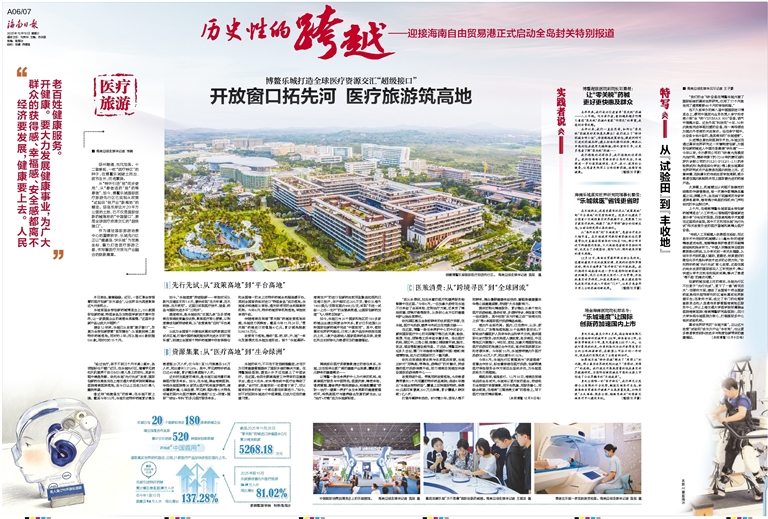
乐城先行区政策优势激发与会企业家投资意愿
Hai Nan Ri Bao· 2025-11-30 00:25
Core Insights - The Boao Lecheng International Medical Tourism Pilot Zone is attracting significant interest from private enterprises due to its unique policy advantages and advanced medical facilities, which are seen as opportunities for investment and collaboration in the healthcare sector [2][3] Group 1: Investment Opportunities - The Lecheng pilot zone is showcasing cutting-edge medical technologies, such as targeted drugs for tumor treatment and miniature heart pacemakers, which are drawing attention from investors [2] - The policy advantages of the Lecheng zone are creating a favorable environment for private enterprises to invest in the healthcare sector, particularly in medical tourism and wellness projects [3] Group 2: Industry Development - The introduction of international medical resources in Lecheng is significantly enhancing the quality of domestic medical services, contributing to the growth of the healthcare industry in Hainan Free Trade Port [2] - The integration of cultural tourism and healthcare is being emphasized by companies looking to collaborate with Lecheng, indicating a trend towards holistic wellness solutions [3]
省政协委员、瑞金海南医院院长顾志冬:创新破局,助乐城医疗服务水平再提升
Hai Nan Ri Bao· 2025-11-14 03:17
Core Viewpoint - The article highlights the achievements and future plans of Ruijin Hainan Hospital, emphasizing its role in enhancing medical services in the Boao Lecheng International Medical Tourism Pilot Zone through innovation and collaboration with international pharmaceutical companies [2][3]. Group 1: Hospital Achievements - Ruijin Hainan Hospital has successfully implemented 193 new drugs and medical devices, with 132 being national firsts, benefiting over 30,000 patients [2]. - The hospital has established a "immersive" training system, sending young staff to Shanghai for hands-on learning and attracting over 400 experts from Shanghai for regular consultations and surgeries [3]. - The hospital has developed a seamless information system for remote consultations, focusing on complex surgeries and advancing three major disciplines: oncology, cardiovascular metabolism, and brain science [3]. Group 2: Challenges and Solutions - The hospital faced challenges such as aligning medical standards across regions, attracting and training core talent, and policy implementation, which initially hindered rapid development [2][3]. - To address these challenges, the hospital has implemented vertical management and integrated operations, replicating quality control systems from the Shanghai headquarters [3]. Group 3: Future Plans and Recommendations - The hospital aims to build a national regional medical center to support local patients and those from across the country, promoting the concept of "no major illness out of the island" and "no major illness out of the country" [3]. - Suggestions have been made to enhance the attractiveness of medical tourism in the Lecheng Pilot Zone by integrating local cultural features and creating diverse health tourism routes [4]. - The hospital plans to continue researching and addressing pain points in patient care and medical institution development, focusing on optimizing policies for medical openness and real-world research [4].