多极化格局

Search documents
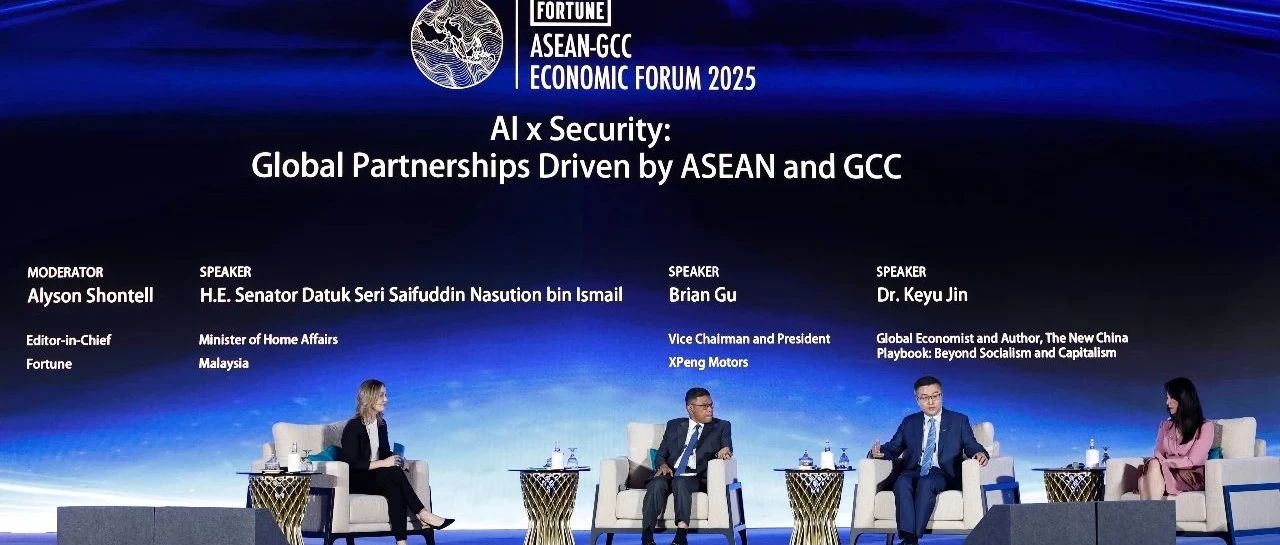
金刻羽:新技术时代,告别旧的“权力剧本”
财富FORTUNE· 2025-05-29 11:44
Core Viewpoint - The competition between China and the United States in the technology sector is intensifying, with the notion of "who will win" being an outdated perspective. The rise of AI technology is reshaping industries and geopolitical landscapes, indicating that power is no longer solely determined by size and scale, but by the ability to coordinate and gain support from various parties [1]. Group 1 - The current geopolitical narrative is overly focused on traditional power concepts such as military strength and resources, which no longer accurately reflect the world's reality [1]. - The semiconductor industry exemplifies how U.S. attempts to suppress China's technological capabilities have inadvertently accelerated China's innovation [1]. - Countries that attempt to coerce others into choosing sides may face isolation, as both the U.S. and China are concerned about their national security, but this is not the only reality in today's world [1]. Group 2 - Neutral countries should focus on embedding themselves in key nodes, such as becoming financial or logistics hubs, to gain influence rather than choosing sides [2]. - Malaysia and Singapore are leveraging their positions as network hubs or logistics nodes to exert greater influence than their size would suggest [2]. - Malaysia is striving to become Southeast Asia's data center, with the total capacity of AI data centers in Johor expected to rise from 10 megawatts three years ago to over 1,500 megawatts by 2024, potentially surpassing Virginia, USA, in five years [2]. Group 3 - Concerns about the technological decoupling between China and the U.S. were expressed by executives from Chinese companies, emphasizing the desire for a world that is not fragmented by technology choices [3]. - Neutral countries like those in ASEAN and the Gulf Cooperation Council provide a buffer space for both China and the U.S., allowing different technologies to coexist without being labeled as either Chinese or American [4].

重塑布雷顿森林体系委员会执行董事马克·乌赞答每经问:当前正是重塑全球经济平衡的关键时机 中国需推动经济向内需驱动转型
Mei Ri Jing Ji Xin Wen· 2025-05-17 18:24
Core Viewpoint - The Bretton Woods system, established 80 years ago, is facing calls for reform due to rising tensions and concerns regarding its framework, particularly in light of the shifting global economic power dynamics [1][5]. Group 1: Reasons for Reform - The shift in global economic power, particularly the rise of China and other emerging markets like Brazil and South Africa, has led to demands for greater representation in international institutions [5]. - The current governance framework is perceived as monopolistic, with leadership positions in key institutions like the IMF and World Bank traditionally held by representatives from Europe and the U.S. [5]. - There is a need for diversification and reform to ensure the legitimacy of international institutions, especially as China seeks to play a more significant role in global governance [5][6]. Group 2: U.S. and Global Economic Dynamics - The U.S. is questioning the post-World War II international order, suggesting it may no longer be suitable, which calls for a rebalancing of global governance and economic structures [6]. - The current U.S. financial policies are marked by uncertainty, which could impact the dynamics between the dollar, the yuan, and U.S.-China relations [6][8]. - A fundamental issue in global trade is the heavy reliance on the U.S. market, indicating potential systemic problems within the global trade framework [7]. Group 3: Path to Economic Rebalancing - A significant adjustment is deemed necessary, with China focusing on expanding domestic demand, while the U.S. should aim to reduce consumption and increase savings [7]. - Multilateral institutions are expected to play a crucial role in advising major economic players like the Eurozone, China, and the U.S. on achieving economic rebalancing [8]. - Recent global crises, including the pandemic and geopolitical tensions, have led to inflationary pressures, raising questions about the permanence of these inflationary trends [8].

突然翻脸!特朗普全面封锁伊朗石油,现在看来中国才是最明智的
Sou Hu Cai Jing· 2025-05-06 04:12
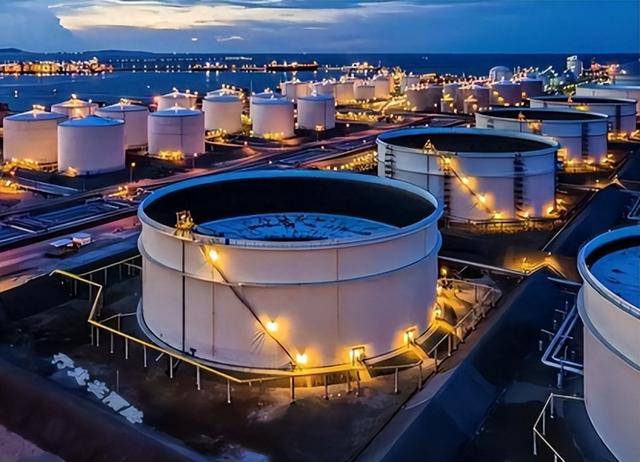
Core Points - The article discusses the impact of the U.S. oil ban on Iran and the complex choices faced by China as a major buyer of Iranian oil amidst U.S. pressure [3][5][21]. Group 1: U.S. Sanctions and Iran's Economy - The U.S. has implemented a comprehensive ban on Iranian oil exports, which has significantly increased tensions in the international energy market [5][11]. - In 2024, Iran's oil exports generated $54 billion, accounting for nearly half of its government revenue, highlighting the critical role of oil in Iran's economy [7][13]. - The Iranian currency, the rial, has depreciated over 90% against the dollar, exacerbating economic difficulties and leading to a reported inflation rate of 40% [13][15]. Group 2: China's Position and Response - China is a primary buyer of Iranian oil and has opted to conduct transactions in yuan rather than dollars, which has drawn U.S. scrutiny [7][24]. - The article suggests that the U.S. aims to undermine the yuan's influence in international trade, particularly in energy markets, through its sanctions on Iran [9][22]. - China is actively seeking to diversify its energy imports and reduce reliance on the dollar, engaging in closer energy cooperation with countries like Russia and Iran [40][45]. Group 3: Geopolitical Implications - The U.S. sanctions are seen as a strategy to weaken Iran economically while simultaneously applying pressure on China, which is viewed as a primary competitor [21][22]. - The article indicates that the U.S. is employing a range of tactics, including economic sanctions and military threats, to isolate Iran and maintain its dominance in the global energy market [26][28]. - The ongoing tensions and sanctions could lead to a shift towards a more multipolar world, diminishing U.S. hegemony in international affairs [42][46].