
工业数字化转型

Search documents
智能制造加力消费潜能释放
Jing Ji Ri Bao· 2025-09-06 22:11
Group 1: Manufacturing and Industry - Fujian is a major manufacturing province, producing 1 in every 5 pairs of sports shoes and 1 in every 3 automotive glass globally [1] - In 2024, the revenue of Fujian's consumer goods industry is expected to reach nearly 2.5 trillion yuan, accounting for 42% of the province's industrial revenue [1] - The province has cultivated 33 national-level smart manufacturing factories and 354 provincial-level digital benchmark enterprises [1] Group 2: Innovation and Technology - The WhatsPOP Innovation Center in Jinjiang integrates 12 spaces, including a global fashion industry brain and AI design empowerment center, to merge fashion with technology [2] - The use of 5G and AI in food production has led to a 28% reduction in energy consumption through real-time monitoring and intelligent control [3] Group 3: Food Industry Development - The promotion of Fujian cuisine, such as the mass production of Buddha Jumps Over the Wall, is supported by over 20 national patents for rapid freezing technology [4] - In the first quarter, Fujian issued over 10 million yuan in dining consumption vouchers, covering more than 16,000 restaurants, contributing to a 6.1% increase in dining revenue in the first half of the year [4] Group 4: Market Performance - In the first seven months of the year, Fujian's total retail sales of consumer goods reached 1.456 trillion yuan, with a year-on-year growth of 5.8% [5]
西安经开区:从“制造”迈向“智造”, 数字经济如何重塑制造业版图
21世纪经济报道· 2025-09-05 03:18
Core Viewpoint - The digital economy is emerging as a new engine driving China's economic growth, with significant integration between digital and traditional industries, particularly in the Xi'an Economic and Technological Development Zone [1][3][12]. Group 1: Digital Economy Development - The Xi'an Economic and Technological Development Zone is positioned as a key area for industrial development, leveraging its manufacturing base to foster new growth driven by the digital economy [1][3]. - In the first half of the year, the industrial added value in the Xi'an Economic and Technological Development Zone reached 169.80 billion, a year-on-year increase of 17%, while the industrial output value was 1416.18 billion, growing by 28% [3]. - The zone has established a comprehensive policy support system covering industrial development, technological innovation, talent introduction, and financial services, aiming to create an optimal business environment [5]. Group 2: Key Projects and Investments - Qi An Xin Group established a wholly-owned subsidiary in the development zone, planning to invest approximately 200 million in a "Belt and Road" data center project, highlighting the area's strong industrial foundation and infrastructure [4]. - The development zone has successfully attracted over a hundred high-quality industrial projects this year, including significant private enterprises like Hongsheng Beverage and Mingbo Automotive [5]. - The collaboration between Xi'an Economic and Technological Development Zone and Nanjing Weituo Technology Co., which signed a cooperation agreement to invest 100 million in establishing a Northwest operation and R&D center, emphasizes the focus on key industries such as military, automotive, and equipment manufacturing [7][8]. Group 3: Ecosystem and Strategic Positioning - The development zone is creating a supportive ecosystem for digital economy projects, integrating various sectors such as AI, blockchain, and industrial software to enhance manufacturing capabilities [9][12]. - The strategic positioning of the Xi'an Economic and Technological Development Zone as a "digital economy highland" in the western region is reinforced by its strong educational resources and industrial foundation [3][12]. - The zone's approach to integrating manufacturing with digital technologies is seen as a model for other regions, showcasing the potential for high-quality development through this dual focus [12].


高质量AI行业解决方案加速工业数智化,北电数智工业大模型应用能力领跑
Huan Qiu Wang Zi Xun· 2025-08-27 06:28
Core Insights - The article emphasizes the rapid integration of artificial intelligence into industrial processes, transforming traditional industrial models and driving efficiency, quality optimization, and green development [1][5] - High-quality AI solutions are crucial for addressing the complexities and high demands of industrial scenarios, directly impacting the success of enterprises' intelligent transformation [1][4] Industrial AI Model Capabilities - The Beidian Smart Sun Industrial AI model excels in document understanding, data analysis, and intelligent agent capabilities, enabling enterprises to overcome data fragmentation and complex processing challenges [1][2] - It provides precise answers to industrial documents, such as process manuals and safety regulations, thereby lowering the usage threshold and supporting technical decision-making and process optimization [1][2] Data Analysis and Insights - The model can accurately analyze tabular data and deliver deep insights that help enterprises monitor production status and optimize processes effectively [2] - It demonstrates superior decision-making and collaboration capabilities, with strong autonomous and semi-autonomous task execution abilities tailored for complex industrial processes [2][4] Challenges in Industrial AI Implementation - The development of industrial AI models faces challenges related to scene adaptability, including discrepancies between industrial knowledge and general model structures, small sample sizes, and the need for deterministic decision-making [3] - Technical bottlenecks such as data scarcity, complex structures, and widespread data silos hinder effective implementation [3] Strategic Initiatives by Beidian - Beidian is focused on overcoming development challenges through industrial collaboration and technological breakthroughs, including the establishment of industrial data standards and secure data sharing protocols [4] - The company is also enhancing its model's industry recognition capabilities through scenario-based fine-tuning and complex task reinforcement learning [4] Future Outlook - The Beidian Smart Sun Industrial AI model is positioned to address the critical challenge of scene adaptability, driving quality improvements and efficiency leaps in the industrial sector [5] - This model is expected to play a vital role in supporting the digital transformation of China's industrial landscape [5]
数字认证(300579.SZ):产品和服务已广泛应用于石油石化、电力、水利等多个工业细分领域
Ge Long Hui· 2025-08-19 09:38
Core Viewpoint - Digital Certification (300579.SZ) positions itself as a leading provider of cybersecurity solutions, offering systematic cryptographic protection services for industrial digital transformation [1] Group 1: Company Overview - The company provides products and services that are widely applied in various industrial sectors, including oil and petrochemicals, electricity, and water conservancy [1]

光环新网股价上涨1.29% 工业算力布局受关注
Jin Rong Jie· 2025-08-13 17:16
Group 1 - The stock price of Guanghuan Xinnet reached 14.87 yuan as of August 13, 2025, with an increase of 1.29% from the previous trading day and a trading volume of 1.295 billion yuan [1] - Guanghuan Xinnet operates in the internet services sector, focusing on cloud computing and data center services, and has been actively investing in the industrial computing power market [1] - The Chongqing government recently released a plan to accelerate the development of "5G + Industrial Internet," emphasizing the enhancement of industrial computing power infrastructure, which is expected to benefit Guanghuan Xinnet as a cloud computing service provider [1] Group 2 - On August 13, the net inflow of main funds was 74.3767 million yuan, with a cumulative net inflow of 119 million yuan over the past five days [2]

日照|150万台设备上云 3万多家企业受益 日照“云端”赋能工业强市
Da Zhong Ri Bao· 2025-08-12 01:17
Group 1 - Rizhao City has successfully included 6 industrial internet platforms in the 2025 provincial-level industrial internet platform list, ranking fifth in the province [1] - The platforms include those from Rizhao Wanteng Information Technology Co., Ltd., Shandong Jusu Cloud Group Co., Ltd., and Shandong Benin Electronic Technology Development Co., Ltd. [1] - The city has a total of 12 provincial-level key industrial internet platforms, indicating a strong digital transformation in the industrial sector [1] Group 2 - Rizhao City has cultivated a total of 71 industrial internet platforms, with 54 being industrial internet platforms, connecting over 1.5 million devices and serving more than 30,000 industrial enterprises [2] - The city has implemented 122 key digital transformation projects this year, with an investment of 1.88 billion yuan, significantly upgrading traditional industries [2] - In the first half of the year, Rizhao's GDP reached 130.52 billion yuan, with a year-on-year growth of 5.8%, and industrial investment grew by 31.5% [2] Group 3 - The city aims to use the construction of provincial-level key industrial internet platforms to foster competitive industrial clusters in steel and automotive parts, promoting a "smart empowerment" initiative [3] - Rizhao City is focused on building a modern industrial structure and becoming a benchmark city for the digital transformation and upgrading of manufacturing in the province [3]
英孚康三大标签,工业自动化新未来
Sou Hu Cai Jing· 2025-08-07 09:46
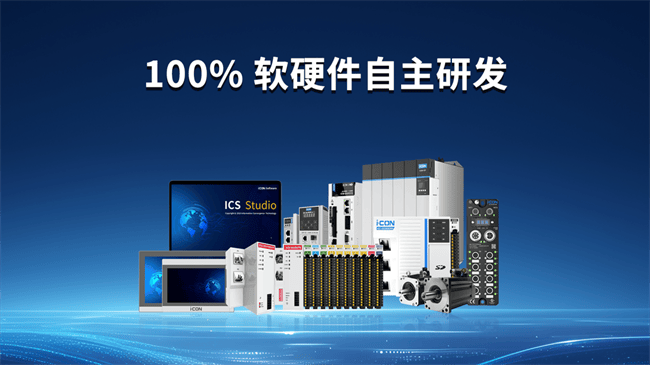
Core Viewpoint - The company, Yingfukang, positions itself as a reliable partner for the manufacturing industry in the realm of industrial automation by emphasizing its 100% self-developed hardware and software, advanced system integration architecture, and rapid customer response mechanisms [1]. Group 1: 100% Self-Developed Hardware and Software - Yingfukang has chosen a path of independent innovation, establishing a technological moat that ensures security in the industrial automation sector, which has been historically dominated by the German Codesys platform [2][3]. - The company has developed a complete industrial automation technology system over nearly a decade, including the ICS Studio integrated development platform, which eliminates reliance on Codesys and enhances flexibility, security, and controllability [3]. - Yingfukang's self-developed PLC series products have achieved or surpassed international standards in speed, precision, and stability, ensuring compatibility and reliability in industrial systems [3]. Group 2: Advanced System Integration Architecture - The ICS Studio platform revolutionizes industrial control system development by integrating all key components into a unified software ecosystem, significantly improving development efficiency and innovation potential [5][6]. - The platform is set to advance into an AI-enabled intelligent development era, incorporating advanced AI systems like DeepSeek for intelligent code generation, allowing engineers to focus on core process innovation and system optimization [8]. - Yingfukang's "One Network to the End" architecture addresses the issue of data silos in industrial digital transformation, enabling seamless connectivity from the field level to the management level, thus simplifying network design and deployment [9][11]. Group 3: Rapid Customer Response Mechanism - Yingfukang has established a comprehensive service system covering the entire product lifecycle, alleviating customer concerns regarding replacement convenience, system stability, and after-sales reliability [12]. - The company has formed a team of experienced technical experts to provide end-to-end services, including demand assessment, solution design, on-site implementation, and troubleshooting, ensuring unconditional support for technical issues and system optimization needs [12]. - A 24/7 customer support mechanism has been implemented, allowing clients to receive timely assistance for technical challenges regardless of time or location [12].
2024年全球地磅市场,前五大厂商32%份额领衔行业
QYResearch· 2025-07-17 09:03
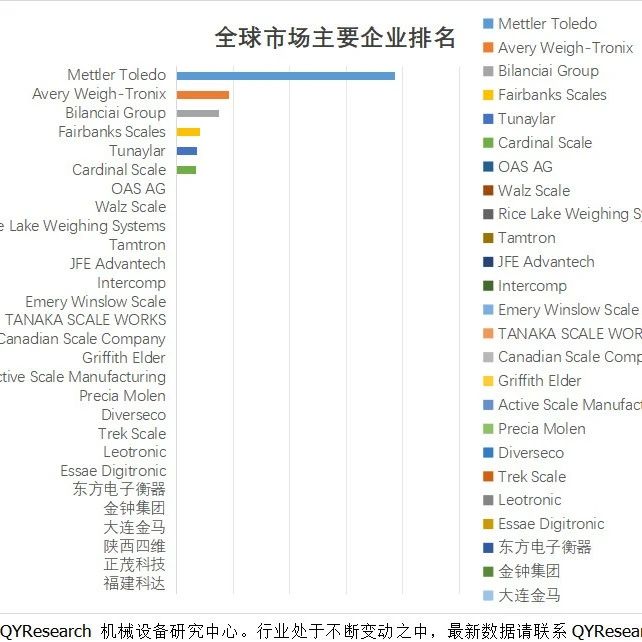
Core Insights - The global weighbridge market is projected to reach USD 1.02 billion by 2030, with a compound annual growth rate (CAGR) of 4.1% from 2025 to 2031, driven by the construction of smart logistics systems, normalization of overload governance, and industrial digital transformation [1][16]. Market Overview - The weighbridge market is characterized as a high-precision measurement device essential for modern logistics, mining production, and trade settlement, closely linked to infrastructure development, industrial upgrades, and regulatory policies [1]. - The top five manufacturers hold approximately 32.0% of the market share [7]. Product Segmentation - The surface-mounted weighbridge is the dominant product type, accounting for about 17.1% of the market share [10]. - In terms of application, logistics and transportation represent the largest downstream market, capturing approximately 38.5% of the demand [12]. Key Drivers - The explosive growth of e-commerce logistics is expected to contribute 40% of the market increment by 2030, highlighting the demand for efficient weighing solutions [16]. - Upgrading manufacturing processes necessitates high-precision weighbridges in industries such as mining, metallurgy, and construction, aiding companies in cost savings [17]. - Emerging fields like precision agriculture and medical weighing are driving additional demand [18]. Challenges - The long replacement cycle of weighbridges, typically 10-25 years, results in slow replacement rates, with many companies delaying upgrades until equipment failure [19]. - Investment returns can be slow, particularly in low-traffic or seasonal operations, making the cost-effectiveness of purchasing weighbridges questionable [20]. Technological Advancements - The integration of 5G and digital twin technologies enables full lifecycle management of weighbridges, enhancing efficiency through IoT connectivity and real-time data transmission to cloud platforms [21]. Competitive Landscape - Chinese weighbridge manufacturers are rapidly expanding into Southeast Asia and Africa, leveraging cost advantages [22]. - Government initiatives, such as revising measurement standards and providing tax incentives for smart manufacturing equipment, are accelerating technological advancements in the industry [22].
剑维软件中国智能创新中心成立
Zhong Guo Jing Ji Wang· 2025-07-14 14:11
Core Insights - AVEVA has established a new China Intelligent Innovation Center, marking a significant step in its localization and innovation strategy [1] - The center aims to address the urgent demand for digital productivity in the context of China's industrial development and the global trend towards green and intelligent growth [1] - AVEVA's executives express confidence in the Chinese market, emphasizing the importance of local collaboration and innovation to support the digital transformation of domestic industries [1][2] Group 1 - The China Intelligent Innovation Center will serve as a key part of AVEVA's global R&D network, focusing on local needs [1] - The center is designed to tackle challenges such as traditional production models, data silos, and increasing decarbonization demands [1] - AVEVA aims to leverage China's mature industrial system as a platform for technological innovation [1] Group 2 - Schneider Electric and AVEVA are providing resilient and energy-efficient solutions for Chinese enterprises [2] - The collaboration focuses on integrating industrial intelligence and automation technologies to enhance operational competitiveness [2] - The goal is to build a sustainable industrial system that supports a greener and more digital future [2]
与能化行业同行——访ABB能源工业中国业务负责人
Zhong Guo Hua Gong Bao· 2025-06-23 02:43
Core Insights - ABB and the Mechanical Industry Instrumentation and Metering Comprehensive Technology Economic Research Institute have established the Ethernet-APL+PROFINET Application Technology Joint Laboratory in Beijing, marking a significant collaboration in the field of smart industrial communication [1] - The joint laboratory aims to accelerate the standardization and large-scale application of Ethernet-APL technology in the Chinese market, facilitating industrial digital transformation and smart manufacturing [1][2] Group 1: Industry Transformation - ABB is committed to the intelligent transformation of the energy and chemical industries, promoting advanced technologies like Ethernet-APL to enhance efficiency and sustainability [2] - The company recognizes the rapid development in China's energy transition and petrochemical industry upgrades, supported by government policies and increased R&D investments [2] - ABB's collaboration with industry players has led to successful implementations, such as the BASF Zhanjiang integrated project, which utilizes Ethernet-APL technology to improve automation control, efficiency, and safety [2][4] Group 2: Successful Case Studies - In a coal chemical enterprise in Yunnan, ABB's Advanced Process Control (APC) solution has significantly improved yield, reduced energy consumption, and minimized production fluctuations, resulting in notable economic benefits [3] - ABB provided process control and energy management solutions for an energy station in the Guangdong-Hong Kong-Macao Greater Bay Area, optimizing energy dispatch strategies to enhance efficiency and reduce carbon emissions [3] Group 3: Technological Advantages - The Ethernet-APL technology, based on the IEEE 802.3 standard, offers five core advantages: real-time data processing, optimized energy management, intelligent device management, system architecture optimization, and excellent scalability and flexibility for process automation systems [4] - The technology supports the transition towards unmanned and green smart factories, providing a foundational framework for advanced automation and intelligent technologies [4] Group 4: Collaborative Ecosystem Development - The joint laboratory aims to drive industry progress through new technologies and participate in the formulation of national standards, offering technical testing, certification support, and training platforms for upstream and downstream enterprises [5] - ABB emphasizes the importance of building an ecosystem by leveraging industry collaboration and user engagement to enhance the overall development of the sector [5][6] - The BASF Zhanjiang project serves as a global benchmark for large-scale deployment of new technologies, encouraging more companies in the chemical industry to adopt innovative solutions [6]