政权更迭

Search documents
全面断网的8天,伊朗到底发生了什么?
Xin Jing Bao· 2026-01-23 00:00
Core Viewpoint - The recent protests in Iran, triggered by economic issues such as currency devaluation and rising inflation, have escalated into a significant political challenge for the government, with thousands reported dead and a complex interplay of internal and external factors influencing the situation [1][2][15]. Economic Conditions - Iran has been facing severe economic challenges, including a dramatic decline in the value of its currency, the rial, and a staggering inflation rate, leading to a 72% increase in food prices year-on-year [15][16]. - The purchasing power of Iranians has decreased by over 90% in the past eight years, exacerbating public discontent and leading to widespread protests [16]. Nature of Protests - The protests began as economic demonstrations primarily involving merchants and shopkeepers but quickly evolved into broader anti-government sentiments, with participation from families and individuals of all ages [3][4][5]. - The Iranian government responded to the protests with internet blackouts and other measures to control the situation, a tactic previously used during past protests [5][11]. External Influences - The protests have been complicated by external factors, including statements from U.S. President Trump and other foreign leaders, which have been perceived as attempts to incite regime change in Iran [12][13][19]. - The involvement of opposition figures, such as Reza Pahlavi, the son of the last Shah of Iran, has added a layer of complexity, with some protesters expressing support for a return to the monarchy, although this is not a unified sentiment among all demonstrators [12][13]. Government Response - The Iranian government has acknowledged the protests and the associated casualties, with Supreme Leader Khamenei attributing blame to foreign interference, particularly from the U.S. [1][2][20]. - Despite the government's efforts to quell the unrest, including promises of economic reforms and subsidies, public dissatisfaction remains high, indicating that the underlying issues are far from resolved [16][21]. Future Outlook - Analysts suggest that while the immediate protests may have subsided, the underlying economic and social issues are likely to lead to future unrest, as the population continues to grapple with poverty, inflation, and political dissatisfaction [15][21]. - The potential for external military intervention remains a concern, with ongoing tensions between Iran and the U.S. suggesting that the situation could escalate again [18][19].
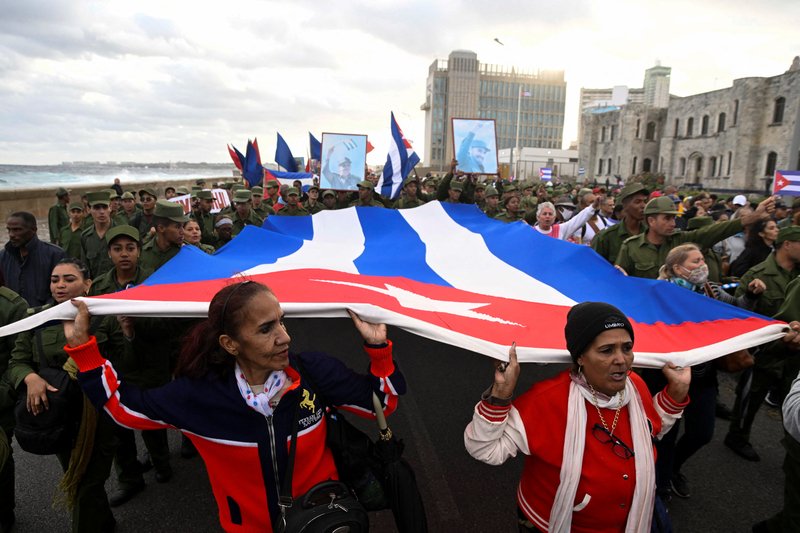
特朗普政府彻底颠了:图谋年底前颠覆古巴政权,正在积极寻找“内线”
Xin Lang Cai Jing· 2026-01-22 11:57
Core Viewpoint - The Trump administration is planning to undermine the Cuban government by leveraging its experience in Venezuela, aiming to establish U.S. dominance in the Western Hemisphere [1][2][5] Group 1: U.S. Strategy Towards Cuba - The Trump administration is considering actions to "overthrow the Cuban regime" by the end of the year, using the recent military action in Venezuela as a model [1][2] - U.S. officials believe that without Maduro's support, the Cuban government will become more vulnerable [2] - The administration is focusing on cutting off oil supplies from Venezuela to Cuba, which is a critical economic support for Cuba [1][5] Group 2: Economic and Political Pressure - The U.S. plans to impose visa restrictions on Cuban officials involved in overseas medical services to limit Cuba's economic income [1] - U.S. intelligence assesses that Cuba's economy is under significant pressure due to frequent power outages and shortages of basic goods, which could lead to a rapid depletion of oil supplies if Venezuela's support is cut off [1] Group 3: Historical Context and Political Dynamics - Historically, the U.S. has attempted to overthrow the Cuban regime multiple times since the 1959 Cuban Revolution, but these efforts have not succeeded [6] - The current political landscape in Cuba is different from Venezuela, with a weaker opposition, making U.S. intervention more complex [5][6] - Trump aims to surpass previous administrations' efforts in Cuba, viewing a successful regime change as a significant part of his political legacy [6] Group 4: Cuban Response - Cuban President Díaz-Canel has stated that Cuba will defend itself against U.S. threats and blames the country's economic difficulties on over 60 years of U.S. sanctions [7] - He emphasizes that Cuba does not threaten any nation but is prepared to defend its sovereignty [7]

美媒披露美国对伊朗动武顾虑:难以“一击制胜”
Xin Hua She· 2026-01-16 06:16
Group 1 - The Trump administration has concerns about military intervention in Iran, fearing it may not achieve regime change and could provoke retaliation from Iran [1] - Advisors to President Trump have indicated that large-scale military strikes are unlikely to lead to regime change in Iran and may escalate into a larger conflict, suggesting a wait-and-see approach regarding the domestic situation in Iran [1] - Regional allies of the U.S., including Saudi Arabia and Qatar, have urged against military action against Iran, and Israel has expressed similar concerns [1] Group 2 - Israeli Prime Minister Netanyahu requested President Trump to delay any military action against Iran to allow more time for Israel to prepare for potential Iranian retaliation [1] - The U.S. is increasing military presence in the Middle East, including deploying at least one aircraft carrier and additional missile defense systems, to provide military options for Trump regarding potential strikes on Iran [2] - Trump has expressed a desire for any military action against Iran to be a "quick, decisive strike" rather than a prolonged conflict [1]
伊朗处于最高战备状态、导弹储备量增加,美军正从中东主要基地撤出人员
Xin Jing Bao· 2026-01-14 14:28
Group 1 - Iran is currently at the highest state of military readiness, with an increase in missile reserves since 2025 [1] - The facilities damaged during the intense conflict between Israel and Iran in June 2025 have been repaired, and the output levels of the Islamic Revolutionary Guard Corps Aerospace Force have surpassed those of June last year [1] Group 2 - The U.S. is withdrawing personnel from major military bases in the Middle East as a precautionary measure due to escalating tensions [2] - Some personnel at the Al Udeid Air Base in Qatar have been advised to evacuate by the evening of January 14 [2] - Iran has warned regional countries, including Saudi Arabia, UAE, and Turkey, that it will retaliate against U.S. bases in those countries if attacked [2] Group 3 - U.S. military aircraft, including an MQ-4C drone and a C-130J transport plane, have been observed flying along the Iranian border [3] - The U.S. State Department has urged American citizens to leave Iran immediately and consider traveling overland to Turkey or Armenia [3] - President Trump has threatened military intervention in Iran and has canceled all talks with Iranian officials [3] Group 4 - Iran is actively engaging in diplomatic efforts to garner support from neighboring countries, including Qatar, Turkey, and Iraq [4] - Iranian officials have accused the U.S. of attempting regime change in Iran through sanctions and threats, asserting that such strategies have failed in the past [4] - Iran's permanent representative to the UN has condemned U.S. actions that incite violence and interfere in Iran's internal affairs, warning against potential military aggression [4]
环球时报:特朗普透露在伊朗最终目标
Xin Lang Cai Jing· 2026-01-14 14:27
Core Viewpoint - The ultimate goal of the U.S. President Trump regarding Iran is to "win," with a focus on military actions and interventions to achieve this objective [1] Group 1: Military Actions and Strategies - Trump highlighted recent military operations, including the U.S. military's raid in Venezuela to capture President Maduro and the killing of ISIS leader Abu Bakr al-Baghdadi in Syria [1] - The U.S. military's airstrike in Iraq that killed Quds Force commander Qassem Soleimani was also mentioned as part of the strategy against Iran [1] - Trump has been briefed on a wide range of military and covert operation options to address the situation in Iran, which go beyond traditional airstrikes [1] Group 2: Iran's Response and Stance - Iran's UN representative accused the U.S. of attempting regime change through sanctions and chaos, asserting that such strategies have failed in the past [1] - Iranian officials, including Foreign Minister Zarif, expressed readiness for negotiations with the U.S. based on mutual respect but also emphasized their preparedness for war [1] - Iran's Defense Minister warned that any violation of Iranian territory would be met with a stronger response [1]
美军机沿伊朗边界飞行 伊朗寻求外交支持
Xin Hua She· 2026-01-14 11:25
Group 1 - A US military MQ-4C drone recently took off from a base in the UAE, flying over the Persian Gulf and along the Iranian border before returning from the Oman Gulf [1] - The US State Department has urged American citizens to leave Iran immediately, suggesting land routes to Turkey or Armenia [1] - President Trump has threatened military intervention in Iran, stating that support is on the way, although he did not specify what this support entails [1] Group 2 - Iran is actively engaging in diplomatic efforts with neighboring countries, including Qatar, Turkey, and Iraq, to garner support [2] - Iran's UN representative accused the US of attempting regime change in Iran through sanctions and threats, asserting that such strategies have failed in the past [2] - Iran's representative condemned US actions that incite violence and interfere in Iran's internal affairs, warning against potential military aggression [2]
伊朗火药桶逼近临界点 黄金强势回升创历史新高
Jin Tou Wang· 2026-01-12 02:20
Group 1 - The current spot gold price is 1027.01 CNY per gram, reflecting an increase of 15.08 USD, or 1.49%, from the previous trading day [1] - The opening price for the day was 1011.82 CNY per gram, with a high of 1032.13 CNY and a low of 1011.54 CNY [1] Group 2 - Protests in Iran have escalated, with demonstrations spreading to dozens of cities and hundreds of thousands participating, driven by economic collapse, government corruption, and oppression [2] - The Iranian regime, led by Supreme Leader Khamenei, faces its most severe challenge since 1979, with ongoing economic difficulties and public anger complicating control efforts [2] - Brent crude oil prices surged over 5% to 63 USD per barrel due to supply disruption risks, highlighting global market concerns [2] - The U.S. administration, under President Trump, has threatened to strike Iran, raising fears of a regime change strategy similar to that in Venezuela [2] - Iran has warned that if attacked, U.S. assets in the Middle East and Israel would become "legitimate targets," despite its economic stagnation and high inflation [2] - Analysts suggest that the Iranian regime may persist through restructuring or a Revolutionary Guard coup, with a complete collapse being unlikely but short-term violence and division risks remaining high [2] Group 3 - The gold price analysis indicates that the price has not yet broken previous highs but reached a new historical peak at 8:30 AM [3] - Key support level for price action is at 4550, with a potential upward target of around 4600 if this level is effectively breached [3] - The daily candlestick chart shows a bullish signal with indicators maintaining a golden cross, while the MACD lines are becoming flat, suggesting an overall upward trend [3]
委内瑞拉,重大宣布!特朗普:取消第二波打击!
券商中国· 2026-01-09 09:52
Core Viewpoint - The article discusses the escalating tensions in Venezuela following a U.S. military operation that resulted in the capture of President Maduro and his wife, with significant implications for U.S.-Venezuela relations and potential military actions by the U.S. [1][2][9] Group 1: U.S. Military Actions and Responses - On January 3, the U.S. launched a large-scale military operation in Venezuela, capturing Maduro and his wife, which drew widespread international condemnation [2][4] - The Venezuelan National Assembly passed a resolution to honor the victims of the U.S. military actions, declaring them national heroes and calling for international condemnation of the U.S. actions [4] - Trump indicated plans for ground operations against drug trafficking in Venezuela, claiming a 96% reduction in drug transport via sea routes [5][7] Group 2: Political Reactions and Legislative Actions - The U.S. Senate passed a resolution requiring Trump to seek congressional approval before using military force in Venezuela, reflecting a significant political pushback against unilateral military actions [9][10] - Trump criticized Republican senators who supported the resolution, asserting that their actions undermined U.S. military authority [10] Group 3: Economic Implications - Trump mentioned plans for U.S. oil companies to invest at least $100 billion to rebuild Venezuela's oil infrastructure, indicating a strategic interest in Venezuela's oil reserves [7][8] - He claimed that the U.S. would gain access to 30 to 50 million barrels of heavy Venezuelan crude oil, although he acknowledged that restoring the oil industry would take years [8]
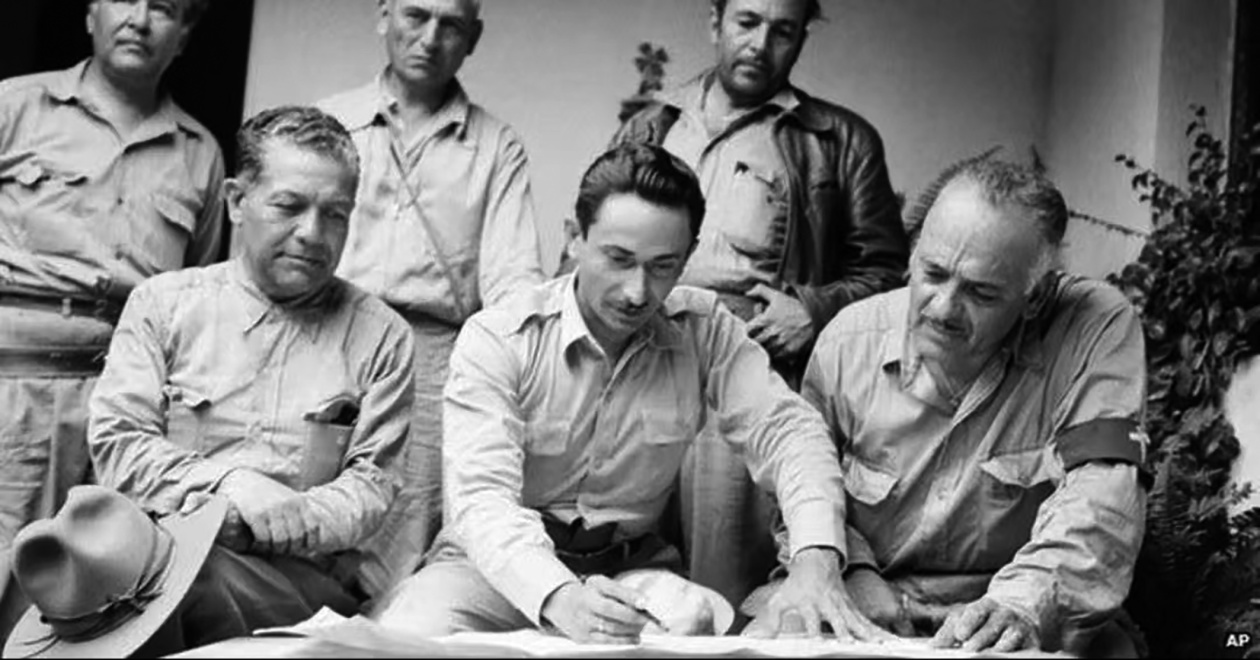
【史海回眸】美策动政变,危地马拉总统1954年被迫下台
Huan Qiu Shi Bao· 2026-01-08 22:40
Core Viewpoint - The article discusses the U.S. government's covert operations during the Cold War, specifically focusing on the CIA's orchestration of the coup against Guatemalan President Jacobo Árbenz in 1954, which was driven by economic interests and political control in the region [1][3]. Group 1: Historical Context - Guatemala, located in Central America, gained independence from Spanish colonial rule in 1821 and saw significant U.S. capital investment starting in the late 19th century, particularly from the United Fruit Company, which controlled the country's economic lifelines [1]. - Jacobo Árbenz was democratically elected as President in 1951 and implemented reforms such as minimum wage laws, increased investment in education, and land redistribution, which garnered popular support but conflicted with the interests of the United Fruit Company [1][3]. Group 2: U.S. Intervention - The U.S. government, concerned about Árbenz's reforms and alleged ties to the Soviet Union, initiated a covert operation to overthrow his government, approving a budget of $2.7 million for this purpose [3][4]. - The CIA's strategy included psychological warfare, airstrikes, and the recruitment of a rebel army led by Carlos Castillo Armas, which ultimately failed to achieve military success against the Guatemalan army [4]. Group 3: Aftermath of the Coup - Following Árbenz's resignation on June 27, 1954, under pressure from the U.S. and military officials, Castillo Armas was installed as president, reversing many of Árbenz's reforms and establishing a pro-U.S. regime [5]. - Castillo Armas's government reallocated land back to the United Fruit Company, revoked labor rights, and initiated a campaign against perceived communists, leading to widespread arrests and executions [5].
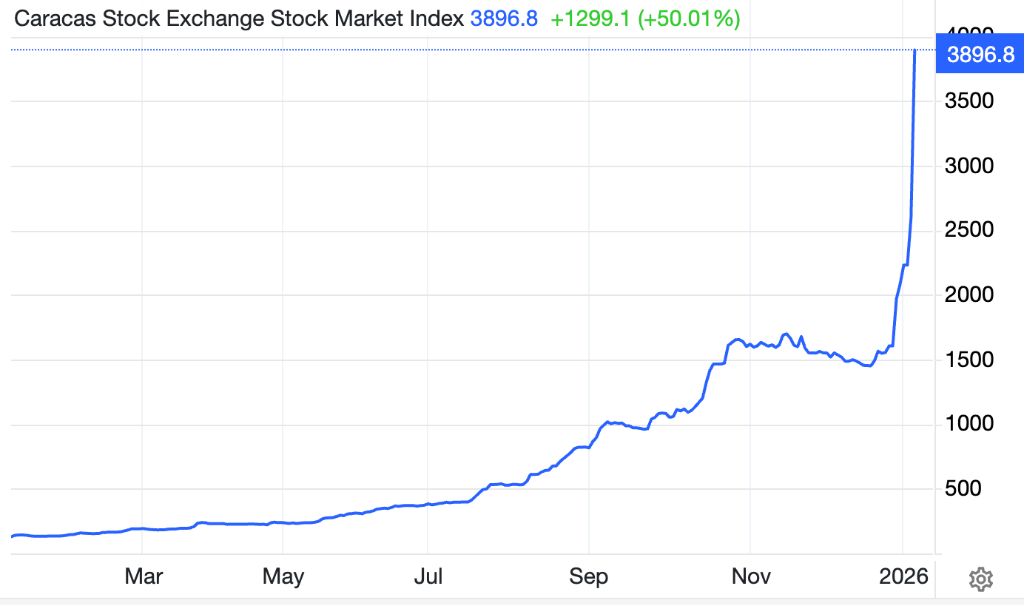
委内瑞拉股市单日暴涨50%!“政局变天”却引发资本狂欢?
Hua Er Jie Jian Wen· 2026-01-07 10:21
Group 1 - The Venezuelan stock market experienced a significant surge, with the IBC index rising from approximately 2000 points to nearly 3900 points, marking an increase of over 50% in a single day [1] - Following the U.S. airstrike on Venezuela and the subsequent declaration of a national emergency, the stock market saw a notable acceleration in growth, with a 74% increase after President Maduro was taken out of the country [1] - Investor interest in Venezuelan assets has notably increased, particularly in sectors such as oil, infrastructure, and financial services, driven by expectations of economic and political shifts [1] Group 2 - The Caracas Stock Exchange, established in 1947, is the smallest stock exchange in South America, with only about 15 companies listed and an average daily trading volume of less than 1 million USD [3] - The ownership of stocks on this exchange is primarily held by local banks, financial institutions, and a few high-net-worth investors, resulting in low market liquidity and potential for amplified price volatility [3] Group 3 - The focus on oil assets has intensified, with expectations that opening Venezuela's vast oil reserves to international energy companies could attract significant capital inflow and enhance global oil supply [4] - The Trump administration's plan to revitalize Venezuela's oil industry involves an estimated investment of around 10 billion USD annually over the next decade, with total costs potentially exceeding 100 billion USD [4] - There is a growing market expectation for regime change and debt restructuring in Venezuela, leading to a substantial increase in the prices of sovereign bonds and bonds from the state oil company PDVSA [4] Group 4 - President Trump announced that the interim Venezuelan government will transfer 30 to 50 million barrels of oil to the U.S., with proceeds from the sale intended to benefit both Venezuelan and American citizens [5] - The announced oil volume corresponds to a production level significantly lower than historical averages, reflecting the impact of U.S. sanctions prior to the partial blockade [5]