文化润疆

Search documents
一本烹饪书,一份粤新情!喀什“粤菜师傅”获得实战进阶指南
Nan Fang Nong Cun Bao· 2026-01-12 02:32
Core Viewpoint - The donation of the cookbook "New Ideas of Cantonese Cuisine: Entering Kashgar" aims to enhance culinary skills and promote cultural exchange between Guangdong and Xinjiang through the "Cantonese Chef" training program [2][12][47]. Group 1: Donation Event - The donation event for the cookbook took place at the Kashgar Hotel, attended by representatives from local renowned catering enterprises [3][10]. - The cookbook was compiled with support from Guangdong's aid to Xinjiang and is intended for local culinary professionals [4][5][8]. Group 2: Culinary Development - The "Cantonese Chef" program is a key task of Guangdong's 10th batch of aid to Xinjiang, focusing on establishing the first Cantonese cuisine academy in Xinjiang [13][32]. - Over the past two years, more than 100 innovative dishes have been developed through collaboration between Guangdong and Xinjiang culinary experts, showcasing cultural integration [14][30]. Group 3: Training and Achievements - The Guangdong aid has established the first Cantonese cuisine academy in Xinjiang, which has trained over 1,600 students, with many winning awards in various culinary competitions [33][36]. - The academy's course on making Kashgar-style roasted meat has been recognized as a high-quality training model by the Ministry of Human Resources and Social Security [40][41]. Group 4: Educational Impact - The cookbook serves as a practical guide for culinary training, combining theoretical knowledge and practical instruction, thus providing a valuable resource for cultivating local Cantonese culinary talent [45][47]. - The establishment of the "Cantonese Chef" training base at the Kashgar Hotel aims to improve local dining services and promote economic development in the region [51][52].


年终岁末演出市场热潮涌动 兼具艺术质感与文化温度视听盛宴满足观众多元需求
Yang Shi Wang· 2025-12-29 04:58
Group 1 - The national performance market is experiencing a surge at the end of the year, offering audiences a series of artistic and culturally rich visual and auditory feasts [1] - The Sichuan Province's third Sichuan Opera performance "Beijing Exhibition Week" will be held from December 23 to 28 at the Mei Lanfang Grand Theatre in Beijing, featuring four major operas and a special performance showcasing unique skills such as face-changing and fire-spitting [3] - The Beijing National Orchestra's "Chinese Seasons" concert series recently took place at the National Grand Theatre, presenting a diverse array of ethnic music that highlights the beauty of national music [5] Group 2 - A cultural and artistic exchange event was held in Hami, Xinjiang, featuring performances that included songs, dances, instruments, and dramas, aimed at honoring the dedicated staff in the border areas [6][9] - The 15th National Dance Exhibition in Wuxi, Jiangsu, attracted dance enthusiasts, showcasing 10 outstanding dance dramas and 51 dance programs from 31 recommended units, with the original work "Yimeng Moment" revitalizing the spirit of Yimeng on stage [13]
东莞理工学院援疆团队获教育部表扬
Nan Fang Nong Cun Bao· 2025-12-23 12:05
Core Viewpoint - Dongguan University of Technology's "Yue Bing Gong Rong" team received recognition from the Ministry of Education for their outstanding performance in the "Promoting Mandarin to Assist Rural Revitalization" national college student summer social practice [2][3][4] Group 1: Recognition and Achievements - The team was also awarded as an excellent team for the 2025 national college student summer "Three Going to the Countryside" social practice activity [4] - The recognition highlights the efforts of Guangdong teachers and students in educational support in Xinjiang [5][44] Group 2: Summer Camp Activities - In the summer of this year, under the support of the Guangdong provincial counterpart assistance to Xinjiang command, the university organized a team of 16 teachers and students to conduct a two-week volunteer service in the Xinjiang Production and Construction Corps [7][9] - The core theme of the activities was "Promoting Mandarin to Assist Rural Revitalization," integrating technology empowerment and cultural inheritance [10] Group 3: Educational Initiatives - The practice team established a "Technology + Culture" summer camp at the First Middle School of the 51st Regiment, offering courses such as rocket making, Scratch programming, and AI psychological painting [13][15] - They donated educational tools to support the school's "Boya Popular Science Education Base" construction [15] Group 4: Community Engagement - The team organized a "Promoting Mandarin Correct Pronunciation Mini-Class" in ethnic communities, serving over 50 people and conducting research to tailor language learning to community needs [28][30] - A "Yue Bing Gong Yu: Same Sound, Same Feelings" event attracted over 300 residents, combining traditional crafts with language learning [32][36] Group 5: Impact and Future Plans - The activities benefited over 500 people in the border area, with reports on their achievements widely covered by media [39] - The university plans to continue its educational support efforts, focusing on a four-dimensional model of "school-local co-construction, psychological support, technology empowerment, and cultural enrichment" [45][46]
新疆克州以现代化建设成果持续推动高质量发展
Xin Lang Cai Jing· 2025-12-23 05:38
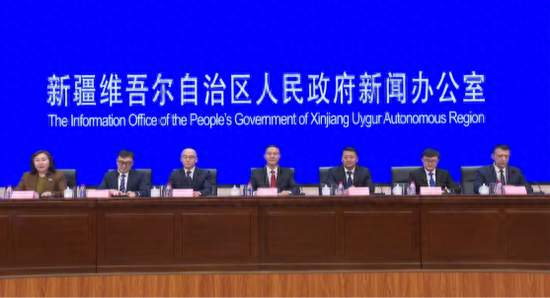
Group 1 - The Xinjiang Uyghur Autonomous Region is focusing on strengthening the awareness of the Chinese national community while promoting social stability, economic development, and ethnic unity [1] - The Kizilsu Kirghiz Autonomous Prefecture is implementing the Cultural Enrichment of Xinjiang project, which includes the systematic protection and transmission of the world intangible cultural heritage "Manas" epic, with a complete Chinese translation officially published [3] - The region is actively developing four major industries: new energy, new materials, new processing manufacturing, and new business formats, aiming for both quantitative and qualitative economic growth [3] Group 2 - The region's GDP has quadrupled since 2012, and it is the only prefecture in Xinjiang that relies entirely on clean energy for power generation, striving to establish a clean energy base of tens of millions of kilowatts in southern Xinjiang [3] - The development of specialty agriculture and rural "small foreign trade" is thriving, with the income of rural residents increasing 2.8 times since 2012, effectively translating development achievements into improved living standards [4] - Public services in education and healthcare have significantly improved, with the establishment of Xinjiang Tianshan Vocational and Technical University (Kizilsu campus) ending the region's lack of undergraduate education [4]
以文化润疆生动实践为新疆高质量发展注入精神力量
Xin Lang Cai Jing· 2025-12-21 19:39
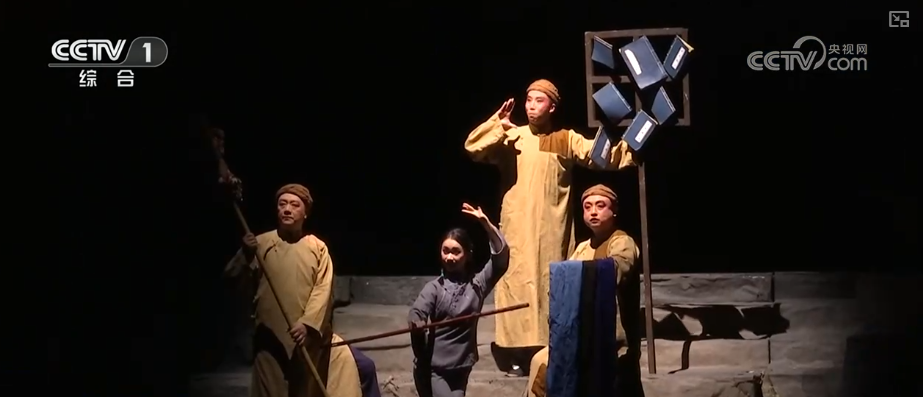
Core Viewpoint - The development of a culturally strong nation is essential for enhancing national unity and social cohesion, as emphasized in the 20th Central Committee's proposal for the 15th Five-Year Plan, which aims to promote a new era of socialism with Chinese characteristics through cultural strength [1] Group 1: Cultural Empowerment and Economic Development - Xinjiang is actively exploring the dual path of "resource transformation + business innovation" to promote cultural development and high-quality economic growth [2] - The region leverages its rich historical and cultural heritage, transforming cultural resources into developmental advantages, such as turning the Kizil Caves and Jiaohe Ancient City into dynamic cultural landmarks that enhance tourism [2] - The integration of culture with industry is being fostered, with traditional crafts like Edir Silk and ethnic embroidery being revitalized through modern design and technology, creating a complete industrial chain [2] Group 2: Cultural Cohesion and Shared Values - The essence of a culturally strong nation lies in the enhancement of spiritual civilization among its people, focusing on the cultural needs of various ethnic groups to foster a sense of community [3] - High-quality cultural products serve as vital carriers of spiritual strength, with notable achievements in artistic creation from Xinjiang, such as award-winning films and literature that promote cultural identity [3] - Efforts to protect and promote minority cultures, such as the Uyghur Muqam and Kyrgyz epic "Manas," are integral to fostering cultural integration and enhancing national identity [3] Group 3: International Influence of Chinese Civilization - The construction of a culturally strong nation requires both adherence to cultural integrity and the responsibility of international cultural transmission, as outlined in the proposal to enhance the influence of Chinese civilization [4] - Xinjiang's approach combines cultural heritage preservation with mainstream value dissemination, creating a framework for cultural promotion and international communication [4] - Various artistic productions, such as stage performances and musicals, effectively convey Chinese values and showcase the region's development, enhancing cultural confidence and international discourse power [5]
扬州援疆多点开花 绘就边疆发展答卷
Xin Hua Ri Bao· 2025-12-17 21:56
Group 1 - The core viewpoint of the news highlights the successful implementation of the "down to Yangzhou" consumption assistance initiative, which has facilitated the sale of over 650 tons of specialty agricultural products valued at 7.5 million yuan, marking a significant phase in the aid efforts from Yangzhou to Xinjiang [1] - The consumption assistance has been a core focus of the aid work, with an annual scale of 30 million yuan aimed at resolving sales challenges for local agricultural products, thereby increasing farmers' income [1] - The project has established a complete industrial chain for the breeding of Sanhua geese, with the breeding scale increasing from 6,500 to 150,000 by 2025, contributing to a "goose economy" worth over 100 million yuan [1] Group 2 - The investment of 90 million yuan in water supply expansion has improved daily water supply capacity from 55,000 cubic meters to 105,000 cubic meters, benefiting over 200,000 residents [2] - A total of 1.38 million yuan has been invested in 55 small-scale projects, enhancing infrastructure and benefiting over 100,000 people [2] - The cultural integration project at the Xijun Princess Square has become a landmark, attracting 21.648 million tourists and generating 16.09 billion yuan in tourism revenue in 2025, significantly increasing local income [2] Group 3 - Since 2023, the 11th batch of Yangzhou aid work group has invested 365 million yuan in 21 completed projects, maintaining the highest investment completion and fund disbursement rates in the province for three consecutive years [3] - Future efforts will focus on deepening specialty agriculture and expanding sales channels to enhance the economic benefits of local ecological products [3]
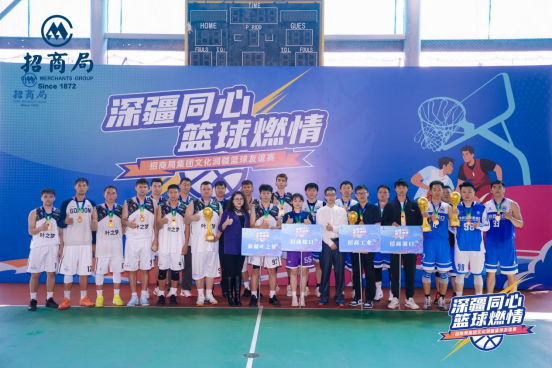
深疆同心筑梦新时代 篮球燃情共谱团结篇——招商局慈善基金会文化润疆篮球友谊赛圆满落幕
Cai Fu Zai Xian· 2025-12-15 13:12
Group 1 - The event "Deep Xinjiang Together: Basketball Passion" organized by the China Merchants Charity Foundation successfully concluded, showcasing a cultural exchange through sports between teams from Xinjiang and China Merchants Group [1][3] - The event featured four teams, including the "Dream of Leaf Basketball Team" from Xinjiang and three teams from China Merchants Group, emphasizing teamwork and cultural integration [3][6] - The event was part of the "Cultural Enrichment of Xinjiang" initiative, reflecting the new era's strategy for Xinjiang's development [1][7] Group 2 - Unique awards were established to recognize different aspects of team spirit, including the "National Unity Pioneer Award" and the "Cultural Enrichment Dream Award," highlighting the event's diverse values [5][6] - The event included cultural visits and exchanges, allowing participants to experience the achievements of China's reform and opening up, reinforcing the educational aspect of the initiative [6][7] - China Merchants Group has been actively involved in Xinjiang's development through various forms of support, including industrial investment and educational assistance, demonstrating its commitment to social responsibility [7][8]

塔城地区沙湾市:打造“百姓文化圈” 城乡百姓乐享多彩生活
Zhong Guo Xin Wen Wang· 2025-12-15 09:09
Core Insights - The article highlights the efforts of Shawan City in enhancing public cultural services and promoting cultural activities at the grassroots level, enriching the spiritual and cultural lives of various ethnic groups [1][2][4] Group 1: Cultural Activities and Community Engagement - Shawan City has seen the establishment of over 150 village-level artistic representative teams, encompassing various forms such as dance, choir, drama, and instrumental music [2] - The city has transformed the winter downtime into a "cultural winter busy" period by offering a series of community training programs, which have reached over 50,000 people through more than 200 cultural performances [2][4] - Local residents have expressed satisfaction with the free training programs, which not only provide physical activity but also teach new skills, making their lives more fulfilling [1][3] Group 2: Training and Talent Development - The city regularly invites experts from various institutions to provide targeted training for over 300 members of its core artistic groups, ensuring the transmission of intangible cultural heritage like Qinqiang opera [3] - Since the beginning of the 14th Five-Year Plan, Shawan City has conducted over 60 cultural training sessions, benefiting more than 5,000 participants [3] Group 3: Infrastructure Investment - Shawan City has invested 220 million yuan in upgrading cultural venues such as cultural centers, art galleries, museums, libraries, and archives, significantly enhancing public cultural service capabilities [4] - The ongoing improvements aim to create a modern public cultural service system that is integrated, smart, and convenient, focusing on quality and personalized services [4]
打开文化润疆的艺术之窗
Ren Min Ri Bao· 2025-12-13 22:01
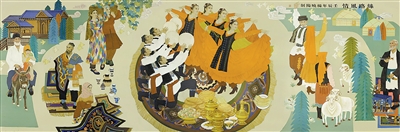
冬日的严寒挡不住艺术的暖意,近日在新疆美术馆开幕的"丝绸之路——杨晓阳丝路四十年美术创作暨 文献展(新疆站)",吸引不少观众前来打卡,他们或驻足凝视画作,或低声交流感受。今年正值新疆 维吾尔自治区成立70周年大庆,新疆美术馆面貌焕然一新,名家作品展等接踵而至,为文化润疆打开一 扇扇艺术之窗。 徜徉在杨晓阳创作的500余幅佳作之间,我的内心深感震撼。这震撼来自杨晓阳40年笔耕不辍,对"丝绸 之路"情有独钟、对新疆大地保有深情厚谊。古老的丝绸之路不仅是商贸大道,更是文化交流之路。随 着高质量共建"一带一路"深入推进,丝路文化成为艺术家热衷表现的主题。杨晓阳的坚守更加凸显现实 意义。在他的作品与丝绸之路的众多连接点中,新疆无疑尤为重要——既是他研究丝路的起点,也是他 的精神家园。1985年,杨晓阳历时4个月,从西安出发,沿丝路古道一路骑行至新疆,沿途做了大量的 考察、写生和记录工作。自此他与新疆有了不解之缘,这片土地的历史文化与各民族情谊为其创作提供 了不竭滋养。之后的40年,他又陆续对众多丝路沿线国家和地区进行实地考察,不断深化对历史与现实 的认知,丰富对丝路主题的挖掘与表达。如展览所呈现,其40年的创作成果将古 ...
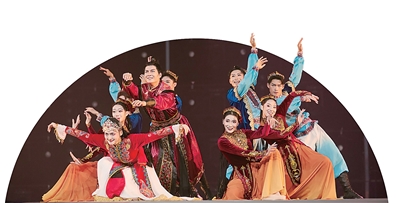
蹁跹舞姿诉说丝路新语
Ren Min Ri Bao· 2025-11-27 22:30
Core Insights - The second season of the large-scale dance variety show "New National Dance Conference," co-produced by Xinjiang Radio and Television Station and the Xinjiang Dancers Association, has recently concluded, achieving significant online engagement with 440 million views in the first season and 47 trending topics in the second season [1][2] - The show aims to promote the deep integration of excellent cultures from various ethnic groups and strengthen the sense of community among the Chinese nation through artistic expression [1][3] Group 1 - The first season garnered a total of 440 million views, while the second season achieved 47 trending topics, indicating a successful expansion of its audience reach [1] - The program creatively reinterprets ethnic dance through a variety show format, enhancing its appeal and showcasing its rich heritage and contemporary relevance [1][2] - The second season featured performances in scenic locations across the Aksu region, Karamay City, and Bortala Mongol Autonomous Prefecture, integrating the beauty of Xinjiang's landscapes and cultural history into the dance performances [1] Group 2 - The competition phase in the studio included themes like "Dance Rhythm of a Thousand Years" and "Heritage Dream," which tested dancers' abilities across different ethnic dance styles while captivating the audience with engaging narratives [2] - The show effectively combines dance language with audiovisual elements, using close-up shots and montage techniques to enhance the emotional impact of the performances [2] - The inclusion of heavyweight guest performers and judges adds a layer of professionalism to the program, providing valuable insights and enhancing audience appreciation of dance art [2]