智能体互联网

Search documents
科技早报 | 雷军公开小米17 Pro全新背屏设计;华为三款旗舰手机降价
Sou Hu Cai Jing· 2025-09-18 00:17
Group 1: Xiaomi and Huawei Developments - Xiaomi's chairman Lei Jun unveiled the new back screen design for the Xiaomi 17 Pro smartphone, featuring customizable display options and dual cameras [1] - Huawei has initiated price reductions for three flagship phone series, with the Mate X6 dropping from 12,999 yuan to 10,999 yuan, and the Pura 80 series seeing reductions of up to 1,500 yuan [2][4] Group 2: Tencent and Alibaba Market Performance - Tencent's market capitalization has returned to 600 billion HKD, with a nearly 300% increase over three years, driven by AI investments and strong gaming revenue [4] - Alibaba's stock price has reached a nearly four-year high, with a year-to-date increase of over 96%, recovering significantly from a low of 59 HKD in October 2022 [5] Group 3: Haier and Robotaxi Investments - Haier's Robotaxi business received strategic investment from Alibaba, indicating a deepening collaboration in autonomous driving technology [5][6] - Haier aims to scale its Robotaxi operations within two years, having already established a team of over 200 personnel [6] Group 4: Health and Retail Expansion - "Dong Mingzhu Health Home" has opened 970 stores nationwide, with plans to establish 3,000 stores this year, generating approximately 3.9 billion yuan in retail sales from 293 stores [7] Group 5: Huawei's Technological Insights - Huawei released a report outlining ten technology trends for the smart world by 2035, emphasizing breakthroughs in computing architecture and the growing importance of data for AI development [8] Group 6: Laser Radar Market Growth - The Chinese laser radar market is projected to exceed 24 billion yuan by 2025, with significant growth driven by increased demand in the robotics sector [9]


华为,发布!未来十年,十大技术趋势!
Zheng Quan Shi Bao· 2025-09-17 04:02
Group 1 - Huawei held the "Exploring the Unknown, Leaping into the Future" keynote speech on September 16, officially releasing the "Intelligent World 2035" series reports, which include the "Intelligent World 2035" and "Global Digital Intelligence Index 2025" reports, forecasting key technological trends for the next decade and their impacts on various industries such as education, healthcare, finance, manufacturing, and energy [1] - The first trend indicates that AGI will be the most transformative driving force in the next decade, but several core challenges must be overcome to achieve the AGI singularity, with a necessary path towards the physical world [1] Group 2 - The second trend highlights that as large models develop, AI agents will evolve from execution tools to decision-making partners, driving an industrial revolution [2] - The third trend points to a transformation in development models, where human-AI collaborative programming becomes mainstream, allowing humans to focus on top-level design and innovative thinking while delegating tedious coding tasks to efficient AI [2] - The fourth trend notes a shift in interaction methods from graphical interfaces to natural language, evolving towards multi-modal interactions that integrate human senses, providing users with immersive experiences [2] Group 3 - The fifth trend states that mobile apps are transitioning from independent functional entities to AI-driven service nodes, where users can simply give commands, and AI agents will invoke relevant service nodes for an optimal experience [2] - The sixth trend anticipates that with breakthroughs in key technologies like world models, new L4+ autonomous vehicles will enter daily life, becoming a "mobile third space" [2] - The seventh trend predicts that by 2035, the total computing power of society will increase by 100,000 times, breaking free from traditional von Neumann architecture constraints and achieving disruptive innovations across four core areas: computing architecture, material devices, engineering processes, and computing paradigms [2] Group 4 - The eighth trend emphasizes that data will become the "new fuel" driving AI development, with AI storage capacity demands expected to grow 500 times by 2025, accounting for over 70% of total storage needs, leading to changes in storage paradigms driven by Agentic AI [2] - The ninth trend indicates that the number of connected objects in communication networks will expand from 9 billion people to 900 billion intelligent agents, marking a transition from mobile internet to intelligent agent internet [3] - The tenth trend highlights that energy will become a core constraint on the rapid development of AI, with renewable energy expected to accelerate the replacement of traditional fossil fuels, surpassing 50% of total power generation by 2035, while AI will play a central role in managing new energy systems through token management of watts for real-time energy management [3]
华为:2035年全社会的算力总量将增长10万倍
财联社· 2025-09-17 01:23
Core Insights - The report emphasizes that by 2035, the total computing power of society will increase by 100,000 times, indicating a significant transformation in the computing landscape [1] - It highlights that the computing field will break free from the traditional von Neumann architecture, achieving disruptive innovations in four core areas: computing architecture, material devices, engineering processes, and computing paradigms [1] - Data is identified as the "new fuel" driving the development of artificial intelligence, with AI storage capacity demand expected to grow by 500 times compared to 2025, accounting for over 70% of total storage needs [1] - The report predicts that the number of connected entities in communication networks will expand from 9 billion people to 900 billion intelligent agents, marking a transition from mobile internet to intelligent agent internet [1]

从中国“霸榜”到全球开源,AI的新思考!GOSIM HANGZHOU 2025圆满收官
AI科技大本营· 2025-09-16 10:33
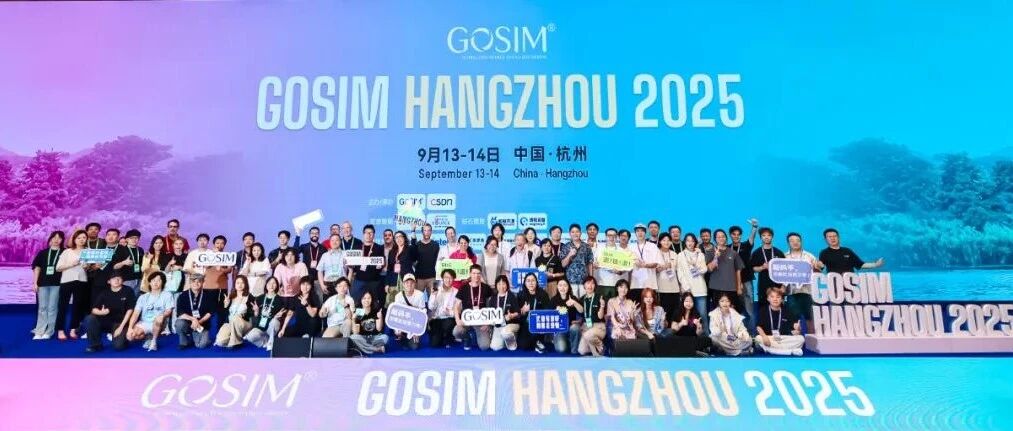
Core Insights - The GOSIM HANGZHOU 2025 conference highlighted the integration of open-source and AI technologies, showcasing their potential across various industries and emphasizing the importance of community collaboration in driving innovation [1][3][4]. Group 1: Conference Overview - The conference attracted over 200 global leaders in open-source and AI, along with more than 1500 developers, featuring keynote speeches, high-end forums, and specialized discussions on AI models and infrastructure [1][3]. - Keynote speakers included influential figures from organizations like the United Nations and major tech companies, discussing the significance of open-source in AI development and global collaboration [3][6][7]. Group 2: Community and Collaboration - The event emphasized community engagement, with forums dedicated to the Rust programming language and hands-on workshops that fostered interaction among developers [4][5][15]. - The conference featured a strong focus on practical applications, including hackathons that encouraged developers to create innovative solutions in real-time [22][24]. Group 3: AI and Open Source Integration - Discussions on the future of AI highlighted the need for high-quality training data and the challenges of integrating AI into real-world applications, stressing the role of open collaboration in overcoming these hurdles [8][12]. - The conference explored various AI themes, including embodied intelligence, intelligent agents, and the next generation of AI technologies, showcasing advancements and potential applications [10][12][14]. Group 4: Workshops and Practical Engagement - A total of 14 workshops were organized, allowing developers to engage in hands-on learning and collaboration on cutting-edge technologies [17][20]. - The workshops covered a range of topics, from AI inference to cross-platform development, providing participants with practical skills and insights [18][20]. Group 5: Future Directions and Closing Remarks - The conference concluded with a call for continued collaboration in the open-source AI community, setting the stage for future events and innovations [33][34]. - GOSIM HANGZHOU 2025 served as a platform for fostering connections between academia and industry, promoting ongoing dialogue and exploration in the tech community [29][31].
智能体互联网:被“人工智能+”行动忽视的关键未来
Jing Ji Guan Cha Wang· 2025-09-12 03:53
Core Insights - The "Artificial Intelligence+" initiative aims to deeply integrate AI with various sectors of the economy and society, focusing on six key actions: scientific technology, industrial development, quality improvement in consumption, welfare, governance capabilities, and global cooperation [2] - The policy document reflects a significant shift from the "Internet+" initiative, with a notable reduction in the emphasis on platforms, indicating a recognition of the differences between AI as a cognitive technology and the internet as a connective technology [2][3] - The long-term goals for 2030 and 2035 emphasize the need for a comprehensive and systemic approach to develop an intelligent economy and society, which requires a network strategy to support the penetration of AI into various sectors [12][16] Comparison of Policy Approaches - The "Internet+" initiative focused on the internet as an infrastructure for connecting and integrating resources, emphasizing the role of platform enterprises in driving action [5][6] - In contrast, the "Artificial Intelligence+" initiative appears to lack a coherent internal logic and core focus, presenting a collection of scattered efforts rather than a unified strategy [6][7] - The fundamental differences in technology economics explain the divergent policy approaches, with the internet's value stemming from connectivity and network effects, while AI's value lies in enhancing the intelligence of individual nodes [7][8] Industry Practices and Challenges - Platform enterprises initially aimed to extend their influence from consumer to enterprise markets, but faced challenges in achieving rapid technology diffusion, leading to a shift in focus back to more straightforward B2B paths [9][10] - The "Artificial Intelligence+" initiative encourages a transition from digital empowerment to intelligent-driven services, indicating a shift in how enterprises will adopt AI technologies [10][11] - The absence of a strong internet component in the "Artificial Intelligence+" policy may hinder the potential for network effects that could enhance the initiative's long-term goals [12][13] Future Directions - The concept of the "Internet of Agents" is highlighted as a potential area for synergy between AI and the internet, suggesting that AI could facilitate a transition from platform-based models to more decentralized, agent-based networks [14][15] - The emergence of open-source protocols for intelligent agents could disrupt the current platform-dominated landscape, fostering a more equitable distribution of intelligence and data [14][15] - The successful integration of AI into various sectors will depend on establishing a foundation for the "Internet of Agents," which could ultimately support the broader goals of the "Artificial Intelligence+" initiative [16][17]

人工智能专题:智能体互联网白皮书
Sou Hu Cai Jing· 2025-09-07 07:22
Core Insights - The report titled "White Paper on Intelligent Agent Internet" focuses on the development background, core challenges, system architecture, key technologies, evolution path, and application cases of the Intelligent Agent Internet, driven by breakthroughs in generative AI and large model technologies [1][8][18]. Group 1: Vision and Transformation - The Intelligent Agent Internet represents a paradigm shift from "connecting information" to "connecting intelligence," aiming to connect autonomous agents capable of perception, decision-making, and execution [1][8]. - The core characteristics of the Intelligent Agent Internet include autonomy, semantic understanding, and collective intelligence, which differentiate it from traditional internet architectures [18][20]. Group 2: Challenges of Existing Internet Architecture - Existing internet architectures face limitations in network capabilities, protocol capabilities, and control modes, which hinder the support for intelligent agent networks [25][29][33]. - The traditional IP architecture lacks content processing capabilities, making it difficult to support the semantic understanding and dynamic interactions required by intelligent agents [25][26]. Group 3: Key Technology Requirements - Key technology requirements for the Intelligent Agent Internet include providing network services for multiple agents, enhancing perception and network capabilities, enabling universal access management, and establishing a secure and trustworthy ecosystem [39][41][42]. - A standardized protocol system is essential for the Intelligent Agent Internet, similar to the TCP/IP model, to ensure interoperability among diverse agents and platforms [42][43]. Group 4: System Architecture - The proposed system architecture for the Intelligent Agent Internet is layered, consisting of a basic resource layer, interconnection function layer, collaboration management layer, and application enablement layer, forming a complete technical stack from infrastructure to application services [44][46].

AgentUnion发布智能体通信协议ACP
Sou Hu Cai Jing· 2025-05-17 06:25
Core Insights - AgentUnion has officially launched the Agent Communication Protocol (ACP), which is China's first practical communication protocol for agents [2] - ACP aims to facilitate communication and collaboration among agents, enabling efficient functionality reuse and cost-effective development of production-level agent applications [2][11] - The protocol defines various standards for agent identity, access mechanisms, data specifications, communication protocols, authorization systems, behaviors, and security, ensuring openness, reliability, and collaboration among agents [2][11] Summary by Categories Agent Architecture and Concepts - Each agent in the network is assigned a unique identity identifier known as AID (Agent Identifier), which is essential for accessing the agent internet [2][3] - Agents connect to the agent internet through Access Points (AP), which provide services such as identity authentication, addressing, communication, and data storage [4] - The communication protocol is based on HTTPS, ensuring secure data transmission and supporting large-scale concurrent services for enterprise-level deployments [5] Agent Discovery and Collaboration - ACP is designed to be friendly to agent search engines, allowing agents to easily discover each other without additional effort [7] - The protocol outlines the authorization and transaction processes for agent collaboration, facilitating the deployment of paid agent services [8] Evolution of Agents - The field of artificial intelligence is experiencing a significant leap in understanding agents, transitioning from a focus on chatbots to tools that solve specific business problems [10] - The emergence of ACP is seen as a catalyst for the transition from the tool expansion phase to the socialization phase of agents, enabling standardized communication and cross-domain collaboration [11] - AgentUnion aims to build an open protocol standard and decentralized collaboration network to support the free interconnection, secure interaction, and collaborative evolution of different agents [11]

你真的会用DeepSeek么?
Sou Hu Cai Jing· 2025-05-07 04:04
Core Insights - The article discusses the transformation in the AI industry, emphasizing the shift from individual AI model usage to a collaborative network of agents, termed as "Agent collaboration network" [8][10][27] - It highlights the urgency for AI professionals to adapt their skills from prompt engineering to organizing and managing AI collaborations, as traditional skills may become obsolete [9][21][30] Group 1: Industry Trends - The AI landscape is evolving towards a multi-agent system where agents communicate and collaborate autonomously, moving away from reliance on human prompts [27][14] - The emergence of protocols like MCP (Multi-agent Communication Protocol) and A2A (Agent-to-Agent) is facilitating this transition, allowing for standardized communication between different AI systems [36][37] - Major companies like Alibaba, Tencent, and ByteDance are rapidly developing platforms that support these new protocols, enabling easier integration and deployment of AI agents [38][39] Group 2: Skills Transformation - AI professionals need to transition from being prompt engineers to "intent architects," focusing on defining task languages and collaboration protocols for agents [29][30] - The role of AI practitioners is shifting from using agents to organizing and managing multiple agents, requiring a new mindset akin to building a digital team [30][31] - There is a call for professionals to learn about agent frameworks, communication protocols, and how to register their tools as agent capabilities within larger networks [33][34] Group 3: Practical Applications - Various platforms and frameworks are emerging that allow AI professionals to practice and implement these new skills, such as LangGraph, AutoGen, and CrewAI [41] - The article emphasizes that the infrastructure for agent protocols is being established, providing opportunities for AI professionals to engage with these technologies [41][42] - The ongoing development of these systems is likened to the early days of TCP/IP, suggesting that those who adapt early will have a competitive advantage in the evolving AI landscape [42]