权益市场投资

Search documents
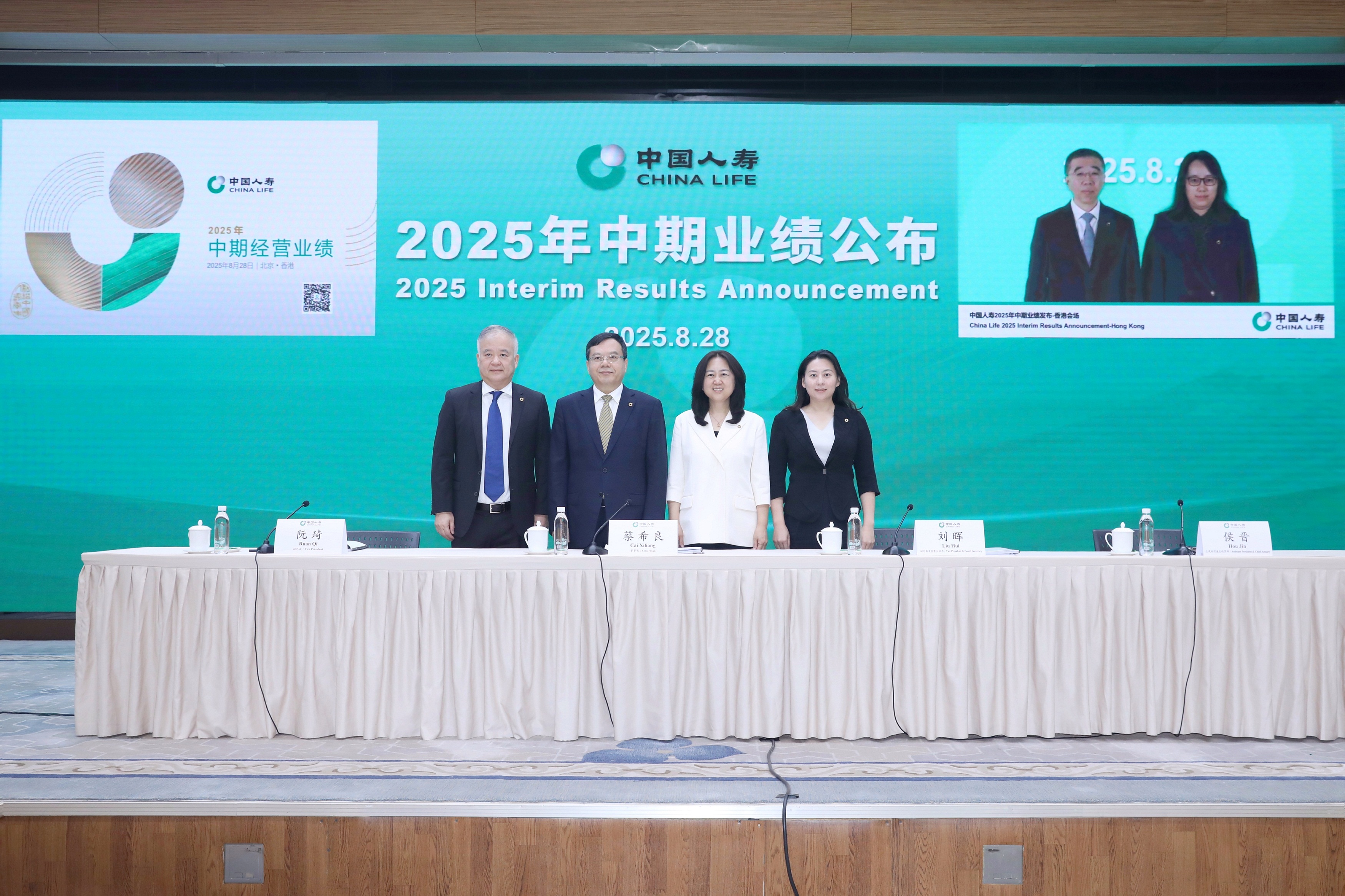
中期分红67.27亿元!下半年中国人寿怎么干|直击业绩会
Guo Ji Jin Rong Bao· 2025-08-28 12:21
Core Viewpoint - China Life Insurance has demonstrated strong performance in the first half of 2025, achieving significant growth in total premiums and net profit, while maintaining strategic focus amidst a complex market environment [1][3]. Financial Performance - In the first half of 2025, China Life's total premium income reached 525.088 billion yuan, a year-on-year increase of 7.3% [3]. - The net profit attributable to shareholders was 40.931 billion yuan, reflecting a growth of 6.9% compared to the previous year [1]. - Total assets and investment assets both surpassed 7 trillion yuan, standing at 7.29 trillion yuan and 7.13 trillion yuan respectively by the end of June 2025 [1]. Dividend Distribution - The board of directors proposed a mid-year cash dividend of 2.38 yuan per 10 shares (tax included), totaling 6.727 billion yuan in dividends [1]. Business Segments - The life insurance segment contributed 439.134 billion yuan, growing by 8.5% year-on-year, while health insurance premiums were 78.958 billion yuan, up by 2.0% [3]. - The individual insurance channel generated 400.448 billion yuan in premiums, a 2.6% increase, while the bank insurance channel saw a significant rise of 45.7%, reaching 72.444 billion yuan [3]. Strategic Outlook - The company remains optimistic about the long-term growth of the life insurance industry in China, citing large development space, significant demand for protection, and strong policy support as key factors [4]. - China Life is prepared for upcoming adjustments in predetermined interest rates, having established a comprehensive management system across various operational aspects [4]. Investment Strategy - As of mid-2025, investment assets grew by 7.8% compared to the end of 2024, with bond investments at 4.21 trillion yuan [7]. - The net investment income was 96.067 billion yuan, with a net investment yield of 2.78% [8]. - The company plans to maintain a flexible asset allocation strategy, focusing on high-quality dividend stocks and new economic sectors for long-term returns [8][9]. Market Focus - China Life has received a QDII quota of 5 million USD and is particularly attentive to the Hong Kong stock market, which has shown strong recovery and growth [9].


华泰证券资管拟以3200万元自购旗下权益产品
Zheng Quan Shi Bao Wang· 2025-08-25 08:34
Core Viewpoint - Huatai Securities Asset Management plans to invest up to 32 million yuan of its own funds into equity public funds, with a holding period of no less than one year, indicating confidence in the current market conditions and potential growth sectors [1] Group 1: Investment Strategy - The company will utilize no more than 32 million yuan for investments in equity public funds [1] - The investment holding period is set for a minimum of one year [1] Group 2: Market Outlook - The overall economic operation is approaching a mid-cycle bottom, suggesting a potential recovery phase [1] - The risk premium in the equity market remains at historically high levels, indicating attractive investment opportunities [1] Group 3: Focus Areas - The company will continue to focus on sectors such as advanced manufacturing, consumer goods, and healthcare, which are seen as promising growth areas [1]

中信证券:此轮行情高净值人群以及企业客户的参与热情明显更高
Ge Long Hui A P P· 2025-08-24 14:14
Group 1 - The current market rally shows increased participation from high-net-worth individuals and corporate clients [1] - In July 2025, A-share new accounts reached 1.9636 million, a year-on-year increase of 71% and a quarter-on-quarter increase of 19%, although still significantly lower than extreme situations in October last year and in 2015 [1] - High-net-worth individuals are shifting their focus to the equity market to invest in strategic emerging industries, as opportunities in traditional industries are relatively scarce [1] Group 2 - Corporate investment is also shifting from real industry investments to capital market investments, as evidenced by Jiangsu Guotai's announcement to use up to 12 billion yuan for entrusted wealth management and up to 1.83 billion yuan for securities investments, totaling over 13.8 billion yuan [1] - The company also announced the termination of a lithium-ion battery electrolyte project due to external conditions and industry environment changes [1] - At least 60 listed companies have announced plans to use idle funds for securities investments this year, with 8 companies planning to invest over 1 billion yuan each [1]


五大险企“点金”权益市场 布局路线图明晰
Xin Hua Wang· 2025-08-12 06:28
Core Viewpoint - The five major A-share listed insurance companies in China believe that the current equity market has strategic allocation value, despite market fluctuations and declining interest rates [1][3]. Group 1: Investment Performance - In 2021, the five major insurance companies achieved a total net profit of CNY 215.96 billion, with China Ping An, China Life, China Pacific Insurance, China Property & Casualty, and New China Life reporting net profits of CNY 101.62 billion, CNY 50.92 billion, CNY 26.83 billion, CNY 21.64 billion, and CNY 14.95 billion respectively [2]. - The investment yield for these companies remained around 5%, with New China Life achieving the highest total investment yield of 5.90% and China Property & Casualty having the highest net investment yield at 4.80% [2]. - The successful investment performance is attributed to a "barbell strategy," which involves combining two types of investment products with significantly different styles [2]. Group 2: Market Outlook - Insurance companies see the current market adjustment as a release of risks and an opportunity for long-term investment, with a belief that the equity market is showing strategic allocation value [3]. - The macroeconomic environment in 2022 is expected to support steady growth, providing a solid foundation for the equity market [3]. - Current market valuations are considered relatively low, with major indices like the Shanghai Composite Index and CSI 300 Index below the 30th percentile of their valuations over the past decade [3]. Group 3: Investment Strategy - The focus for future equity asset allocation will be on sectors aligned with national policy directions, such as carbon neutrality, digital economy, and healthcare [4][5]. - Companies are looking to capitalize on structural investment opportunities arising from traditional industries' valuation recovery and emerging strategic sectors like consumption upgrades and technological innovation [4][5]. - There is an emphasis on exploring investment opportunities in the Hong Kong market and diversifying equity investments [5].


低位加仓看好中长期发展 上市险企“点金”权益市场
Xin Hua Wang· 2025-08-12 06:19
Core Viewpoint - Insurance funds are significant institutional investors in the capital market, but the investment yield of major listed insurance companies in A-shares has decreased due to low long-term interest rates and market volatility, with future equity asset allocation expected to focus on sectors like consumption, technology, and new energy [1][2][4]. Group 1: Investment Performance - In the first half of the year, the total investment yield of the five major insurance companies decreased by 15.7% year-on-year, totaling 252.43 billion yuan [2][3]. - The total investment yield rates for the five major insurance companies as of June were: China Life Insurance at 5.5%, China Pacific Insurance at 4.21%, New China Life at 4.2%, China Taiping at 3.9%, and Ping An Insurance at 3.1%, all showing a decline compared to the previous year [2][3]. - The total investment assets of the five major insurance companies reached 13.56 trillion yuan, an increase of 6.57% from the beginning of the year [2]. Group 2: Future Investment Strategy - Insurance companies are optimistic about the strategic value of equity markets in the second half of the year, with expectations of economic resilience and gradual recovery driven by infrastructure investment [4][6]. - The focus for future investments will be on sectors such as consumption, technology, new energy, and healthcare, with a positive outlook on equity investments [6][7]. - Regulatory bodies have encouraged insurance funds to invest more in equity assets, emphasizing the importance of long-term investments to support the real economy [4][5]. Group 3: Investment Principles - Insurance companies are advised to prioritize principles over rigid plans, focusing on asset-liability matching and employing a barbell strategy to balance stable fixed-income investments with riskier assets [7]. - A diversified investment portfolio is recommended to achieve long-term stable returns across cycles [7].


理财子规模增速现断层:两头部机构告负 跟随者快步露锋芒
Xin Hua Wang· 2025-08-12 06:10
Core Insights - The banking wealth management market is gradually recovering in 2024, with most wealth management companies showing year-on-year growth in product scale and net profit, despite some companies experiencing declines [1][2][3] Group 1: Performance Overview - As of April 10, 2024, 16 wealth management companies have reported their annual performance, with some companies achieving over 30% growth in scale and more than 158% growth in net profit [1] - The total scale of the banking wealth management market reached 29.95 trillion yuan, with total investment assets of 32.13 trillion yuan, reflecting a year-on-year growth of 10.56% [6] - The largest wealth management companies, such as 招银理财 and 兴银理财, reported scale reductions, with 招银理财's scale decreasing by 786.86 billion yuan to 2.47 trillion yuan [2][3] Group 2: Profitability Trends -浦银理财 reported the highest net profit growth of 158.57%, increasing to 11.61 billion yuan, while 渝农商理财 saw a 44.12% increase in net profit [4] - 招银理财, 兴银理财, and 信银理财 were among the companies with net profits exceeding 2 billion yuan, although 招银理财 experienced a 14.14% decline in net profit [3][4] Group 3: Investment Strategies - Wealth management companies are adjusting their investment logic to focus on diverse asset allocation and strategies, particularly in a low-interest-rate environment [1][10] - The shift towards equity markets is evident, with companies like 中银理财 launching over 20 equity index-linked products, reflecting a trend towards passive investment strategies [7][10] Group 4: Channel Expansion - Wealth management companies are actively expanding their distribution channels, particularly through third-party sales, with significant growth in off-bank sales channels [8][10] - 民生理财 reported a 137.02% increase in off-bank sales, while 青银理财 doubled its off-bank distribution institutions [8] Group 5: Challenges and Future Outlook - The wealth management industry faces challenges such as the need for improved equity investment capabilities and the difficulty in obtaining licenses for small banks [9][10] - Future competition in the wealth management sector is expected to focus on both channel expansion and product innovation, with a need for diversified product offerings to enhance market share [9][10]
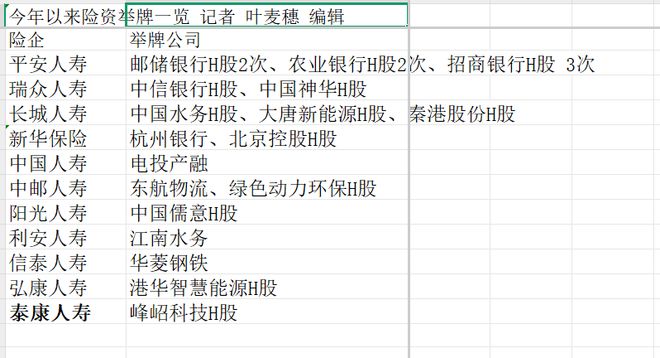
今年险资举牌已达22次,重点盯上这些领域
2 1 Shi Ji Jing Ji Bao Dao· 2025-08-09 12:23
Core Insights - Insurance capital is increasingly active in equity markets, with 22 instances of shareholding increases reported this year [1][6] - The preference of insurance capital is for undervalued, low-volatility, high-dividend, and high-certainty performance assets [1][6] Group 1: Recent Shareholding Activities - Hongkang Life has acquired a 5% stake in Honghua Smart Energy, marking its first shareholding increase of the year [4][5] - Other insurance companies, such as Taikang Life, have also participated in shareholding increases, with Taikang investing $25 million in Fengcai Technology's IPO, representing 8.69% of the total shares issued [5][6] - A total of 11 insurance companies have disclosed 22 shareholding increase announcements, surpassing the total for the previous year [6][10] Group 2: Sector Preferences - The majority of insurance companies are focusing on energy, public utilities, and banking sectors, with 9 instances of shareholding increases in bank stocks this year [8][9] - The characteristics of bank stocks, such as low volatility, high dividends, and low valuations, continue to attract insurance capital [9][10] - The average dividend yield of stocks targeted for shareholding increases in 2024 is 4.6%, the highest in recent years, indicating a shift towards high-dividend investments [10] Group 3: Market Conditions and Strategies - The current market environment, characterized by declining risk-free interest rates, makes high-dividend stocks particularly appealing to insurance companies seeking stable returns [10] - Insurance companies are increasingly looking for long-term equity investments to secure stable investment returns, reflecting a strategic shift in their investment approach [10]
从汉桑科技上市首日大涨 看银行理财打新“淘金术”
Zhong Guo Zheng Quan Bao· 2025-08-06 21:09
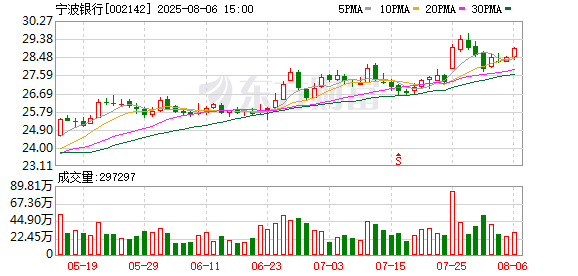
Core Viewpoint - The increasing participation of wealth management products in offline IPO subscriptions is driven by policy support and the need for enhanced returns in a low-interest-rate environment [1][3][4] Group 1: Company Overview - Hansang Technology officially listed on the ChiNext board on August 6, with an initial offering price of 28.91 CNY per share, reaching a peak price of 110 CNY on the first day and closing at 82.89 CNY [1] - Two wealth management products from Ningyin Wealth Management successfully participated in the offline subscription for Hansang Technology, indicating a trend of wealth management companies acting as Class A investors in IPOs [1][2] Group 2: Performance of Wealth Management Products - The "Ningying Balanced Incremental National Enterprise Dividend Mixed Day Open Wealth Management No. 6" product has an annualized return of 6.69% since its establishment on September 28, 2023, and a one-year annualized return of 9.08% [2] - The "Ningying Individual Stock Selection Mixed Open Wealth Management Product No. 1" has an annualized return of 7.77% since its establishment on August 27, 2021, and a one-year annualized return of 25.73% [2] Group 3: Market Participation Trends - Ningyin Wealth Management has been actively participating in IPOs, with its products being among the top in terms of the number of successful subscriptions [2] - Other wealth management companies, such as Everbright Wealth Management, are also participating in offline IPOs, indicating a broader trend in the industry [2] Group 4: Policy and Market Dynamics - The expansion of wealth management companies' participation in offline IPOs is supported by recent policy changes that provide equal treatment to bank wealth management products and public funds in IPO allocations [3] - The ongoing decline in interest rates is prompting asset management institutions to diversify their asset allocation strategies to enhance product returns [4]
网下打新 这家银行理财公司动作频频
Zhong Guo Zheng Quan Bao· 2025-08-06 16:00
Core Viewpoint - Hansang Technology officially listed on the Shenzhen Stock Exchange's Growth Enterprise Market with an initial price of 28.91 CNY per share, closing at 82.89 CNY, a rise of 186.72% on the first day of trading [2]. Group 1: Company Overview - Hansang Technology is a comprehensive supplier providing high-end audio products and technical solutions [3]. - The company had a significant price surge, reaching a high of 110 CNY during trading [2]. Group 2: Investment Participation - Two financial products from Ningyin Wealth Management participated in the offline subscription for Hansang Technology, each applying for 9 million shares at a price of 29.30 CNY per share [3]. - Ningyin Wealth Management has been actively participating in the equity market through various methods such as IPO subscriptions, private placements, and dividend investments [2][7]. Group 3: Market Trends - The trend of financial companies participating in the equity market is driven by continuous policy support and the need for enhanced returns in a low-interest-rate environment [7]. - In January, a policy was issued to treat bank wealth management products similarly to public funds in terms of participating in new stock subscriptions and private placements [7]. - As interest rates decline, wealth management funds are accelerating their entry into the market, seeking to diversify asset allocation and enhance product returns [7].
“买入”
中国基金报· 2025-08-06 05:39
Core Viewpoint - The stock ETF market experienced a net inflow of 1.357 billion yuan on August 5, with significant inflows into broad-based ETFs and Hong Kong stock market ETFs [2][4]. Group 1: Stock ETF Market Overview - As of August 5, the total scale of 1,166 stock ETFs in the market reached 3.80 trillion yuan, with an increase of 2.031 billion shares on that day [4]. - The net inflow for Hong Kong market ETFs and industry-themed ETFs was notable, amounting to 3.186 billion yuan and 1.447 billion yuan respectively [4]. - The Hong Kong Stock Connect Internet ETF led the inflows with 729 million yuan, while the recent inflow into the Hang Seng Technology Index exceeded 9.3 billion yuan [4]. Group 2: Sector-Specific Inflows - The top five sectors attracting capital inflows included Hong Kong pharmaceuticals (1.28 billion yuan), Hong Kong internet (730 million yuan), Hong Kong technology (710 million yuan), securities (400 million yuan), and Hong Kong finance (370 million yuan) [4]. - Specific products such as the Hong Kong Stock Connect Internet ETF, Hong Kong Innovation Drug ETF, and Hong Kong Stock Connect Innovation Drug ETF were particularly favored by investors [4]. Group 3: Outflows in Broad-Based ETFs - Despite the overall inflow in stock ETFs, broad-based ETFs experienced a net outflow of 3.624 billion yuan, with the Shanghai Stock 50 Index leading the outflows at 1.364 billion yuan [9]. - Analysts noted that as the Shanghai Index surpassed 3,300 points, some funds that had previously entered broad-based ETFs for bottom-fishing began to take profits [9]. Group 4: Market Sentiment and Future Outlook - According to Huaxia Fund, the current A-share market does not appear overheated, with trading activity indicators like turnover rates at historical average levels [10]. - The overall market valuation is considered low, and if liquidity and profit expectations improve, the market has strong upward momentum potential [11].