
柔性生产

Search documents
1-8月份工业企业利润增长0.9%,谁在推动这场“逆袭”?
Jing Ji Ri Bao· 2025-10-03 01:43
Core Insights - The industrial enterprises' profit growth has turned positive, with a 0.9% year-on-year increase from January to August, reversing a declining trend since May [1][2] - In August alone, profits surged by 20.4%, largely supported by a low base effect from the previous year when profits fell by 17.8% due to adverse weather and insufficient demand [2] - The recovery in profits is attributed to macro policies and market forces working in tandem, including large-scale equipment updates and consumption incentives [2] Profit Dynamics - The increase in profits is not solely due to low base effects; substantial positive changes in the industrial economy are also driving this growth [2] - The improvement in profit margins is more reliant on price increases and profit rate enhancements rather than volume growth [3] - The cost per hundred yuan of revenue has decreased by 0.20 yuan year-on-year, marking the first decline since July 2024 [3] Sector Performance - The equipment manufacturing sector has shown a profit increase of 7.2%, contributing 2.5 percentage points to the overall profit growth of industrial enterprises [3] - High-tech sectors such as artificial intelligence and industrial internet are emerging as new growth points, indicating a shift towards high-quality development [3] - Profits in raw material and consumer goods manufacturing are also improving, reflecting a recovery in the upstream and downstream industrial chains [3] Future Outlook - While the profit growth is a positive sign, challenges remain, including external uncertainties and insufficient domestic demand [4] - Continuous efforts in technological innovation, demand expansion, and environmental optimization are necessary to stabilize and enhance industrial profits [4] - The implementation of new policies aimed at stabilizing growth in key industries is expected to further strengthen the industrial economy [4]
越疆科技携多形态具身智能“超级工厂”平台化方案亮相工博会
Zhong Zheng Wang· 2025-09-27 05:41
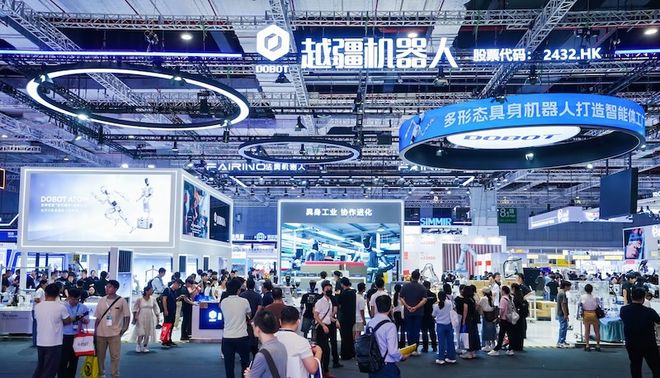
Core Insights - The 25th China International Industrial Expo, themed "New Quality in Industry, Boundless Intelligent Manufacturing," recently opened in Shanghai, showcasing advancements in industrial automation and robotics [1][2] - Yuejiang Technology presented its multi-form embodied intelligent "super factory" platform, featuring various types of robots including collaborative robots, bipedal humanoid robots, multi-legged robots, and wheeled humanoid robots [1][2] Company Highlights - Yuejiang Technology's embodied intelligent "super factory" integrates a "factory intelligent hub" that acts as a central brain, coordinating tasks and real-time scheduling among different robots [2] - The showcased robots are designed to perform a range of operations such as material handling, visual inspection, and precision assembly, demonstrating their collaborative capabilities [1][2] Industry Trends - The shift towards "flexible production" in industrial automation highlights the limitations of traditional single-function robots in cross-scenario adaptability and high-precision collaboration [2] - Yuejiang Technology's "embodied industrial" concept addresses these challenges by providing a distributed perception, centralized decision-making, and dynamic execution framework, which is essential for industrial upgrades amid rising labor costs [2]
未来工厂长啥样?工博会首发首展产品描绘未来工业图景
Zhong Guo Jing Ying Bao· 2025-09-26 10:23
Group 1 - The 25th China International Industry Fair (CIIF) has a significant focus on robotics, attracting over 400 participating companies and showcasing nearly 300 global debuts and 200 Chinese debuts of products [2] - The industrial robot market in China is projected to reach sales of 302,000 units in 2024, maintaining its position as the largest industrial robot market globally for 12 consecutive years [3] - The concept of "embodied intelligence" is being highlighted, with companies like Yujian Robotics showcasing a collaborative intelligent system that integrates various types of robots to perform tasks from perception to execution [3][6] Group 2 - Yujian Robotics reported a revenue of 153 million yuan in the first half of the year, marking a year-on-year growth of 27.1%, with a significant increase in the six-axis collaborative robot business, which grew by 46.7% and accounted for 61.2% of total revenue [4][5] - The company has achieved a global shipment of over 90,000 units of robots, surpassing the 100,000 mark by the end of August [5] - The "super factory" model developed by Yujian Robotics is based on a distributed perception and centralized decision-making framework, allowing for flexible production solutions without the need for extensive modifications to existing production lines [5][6] Group 3 - Yujian Robotics has initiated a collaborative action with 300 global manufacturing companies and experts to promote the integration of embodied intelligent robot technology into manufacturing environments, emphasizing data-driven technological evolution [6]

2025工博会:从产线到医院、从实验室到课堂,库卡自动化方案助力多产业价值链升级
Zhong Guo Qi Che Bao Wang· 2025-09-26 04:25
Core Viewpoint - KUKA China launched multi-scenario automation solutions during the 2025 Industrial Expo, targeting five key industries: aerospace, automotive, new energy, medical, and education, aiming to enhance industrial transformation and enable lean and flexible manufacturing [1]. Aerospace Industry - The aerospace manufacturing sector faces challenges such as production efficiency bottlenecks, quality consistency issues, and lengthy production line construction cycles. KUKA introduced a high-precision assembly system that integrates CoboManip robotic arms, sealing glue coating systems, and quality inspection modules for full automation from component handling to fuselage assembly, achieving a positioning accuracy of 0.05mm and a payload capacity of 125kg [4][5]. - KUKA's Quantec-2 series industrial robots, in conjunction with linear guides and AMR mobile robots, facilitate automated assembly and smart logistics for heavy components. The omniMove omnidirectional mobile platform, capable of carrying up to 90 tons, significantly enhances space utilization and operational efficiency [5][6]. Automotive Industry - KUKA has decades of experience in the automotive sector, providing flexible manufacturing systems that cover stamping, welding, painting, assembly, and new energy production lines. The Quantec-2, Fortec-2, and Titan-2 series robots have payload ranges from 100kg to 1500kg, showcasing significant advantages in size and performance [7]. - The automotive automation solutions incorporate advanced technologies such as ServoGun spot welding, BestFit door installation, and LaserTech laser processing, along with AI-driven 3D collision avoidance and adaptive installation modules, creating a high-speed, stable, and adaptable smart manufacturing loop [8][9]. New Energy Industry - In the new energy sector, KUKA provides end-to-end solutions for battery production, including cell synthesis, module assembly, and PACK processes, with the Quantec-2, Fortec-2 ultra, and SCARA robots offering high precision and rapid iteration capabilities. The demand for production robots is rapidly evolving due to the increasing penetration rate of new energy vehicles [12][13]. - KUKA's solutions also cater to solid-state and hydrogen fuel cell production, with a stacking system achieving ±0.02mm precision, significantly improving stack consistency and overall yield rates through AI visual inspection and adaptive systems [13][15]. Medical Industry - The medical sector faces challenges in cost control, operational efficiency, quality assurance, and patient satisfaction. KUKA, through its subsidiary Swisslog, offers smart medical solutions that cover new drug development, laboratory testing, factory production, in-hospital logistics, and surgical assistance systems [16][18]. - The Swisslog hospital logistics system includes track-based transport, box logistics, pharmacy automation, and medical waste management, achieving one-stop intelligent management of materials, with applications in over 850 hospitals globally [18][19]. Education Industry - KUKA's education initiatives focus on "industry-education integration," creating a new ecosystem for talent development. The program includes the introduction of German original textbooks and 51 core courses covering production technology maintenance, design management, and IT programming [25][26]. - The "New Craftsman Star" training camp aims to establish a dual-track pathway for internships and employment, enhancing collaboration between schools and enterprises, and fostering high-quality technical talent for the digital transformation of manufacturing [28][29]. Overall Impact - KUKA's automation solutions span critical sectors from aerospace to education, deeply integrating into the global high-end manufacturing system. As a core driver of Industry 4.0 evolution, KUKA is committed to empowering enterprises for smart manufacturing, flexible production, and digital management, while fostering a cross-industry collaborative ecosystem for sustainable development [30].

越疆推出多形态具身智能“超级工厂”平台化方案
2 1 Shi Ji Jing Ji Bao Dao· 2025-09-25 04:44
Core Viewpoint - The article highlights the unveiling of the world's first multi-modal embodied intelligent "super factory" solution by the company Yuejiang at the 2025 China International Industrial Fair, showcasing its advanced capabilities in industrial automation and robotics [1][2]. Group 1: Super Factory Solution - The "super factory" solution includes various types of intelligent robots such as collaborative robots, bipedal humanoid robots, multi-legged robots, and wheeled humanoid robots, all coordinated by a central "smart hub" [1][2]. - This solution demonstrates the ability to perform a full range of operations including material handling, visual inspection, and precision assembly through collaborative efforts among different robot types [1][2]. Group 2: Technological Advancements - Yuejiang's rapid technological breakthroughs stem from its unique experience of deploying over 100,000 collaborative robotic arms globally, providing it with invaluable real-world process data and insights into industrial pain points [1][3]. - The company emphasizes the importance of a reliable engineering system, which has been validated through extensive field experience, making its humanoid robots effectively "grown from the factory" [1][3]. Group 3: System Architecture - The "super factory" employs a centralized discussion and distributed execution architecture, allowing for seamless integration of various robot forms to meet industrial demands [2][3]. - The smart hub utilizes multi-modal perception devices to create comprehensive environmental models, enhancing decision-making capabilities and task planning for the robots [3]. Group 4: Market Positioning - Yuejiang's platform compatibility allows enterprises to integrate multi-modal robots without extensive modifications to existing production lines, facilitating quick deployment and collaboration [3]. - As industrial automation shifts towards flexible production, the limitations of traditional single-function robots are becoming more apparent, positioning Yuejiang as a leader in defining future factory architectures [3].
以多形态机器人领跑“具身工业”场景落地,越疆为何持续进化?
机器人大讲堂· 2025-09-23 13:24
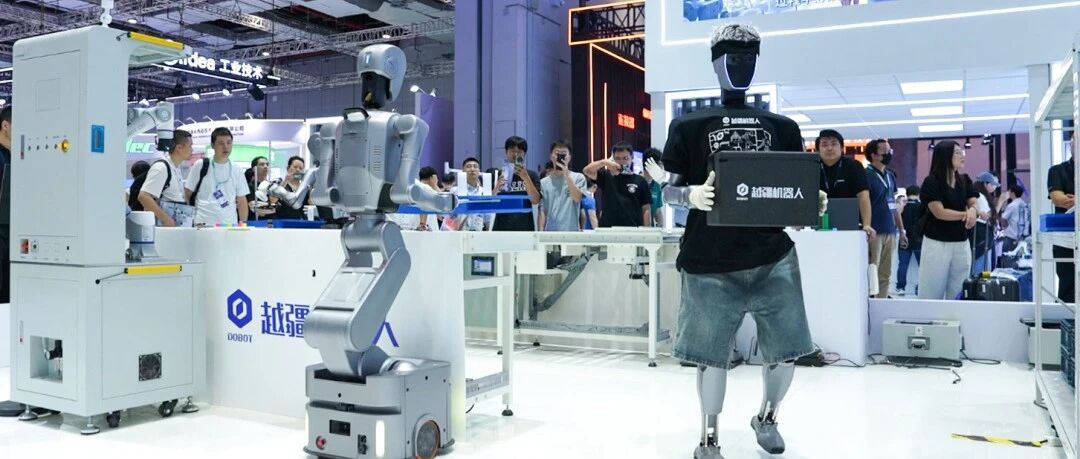
Core Viewpoint - The article emphasizes the evolution of robotics towards "embodied intelligence," highlighting the transition from single-function robots to multi-functional, high-precision collaborative robots that can adapt to various scenarios and collaborate across devices [1][3][5]. Group 1: Product Development and Innovation - At the 2025 China International Industry Fair, the company showcased a diverse range of robots, including humanoid robots and multi-legged robots, demonstrating a comprehensive product matrix that supports efficient collaboration and autonomous operations [3][5]. - The "embodied intelligence" concept is central to the company's strategy, leading to the development of a multi-modal robot platform that integrates various robotic forms for enhanced operational capabilities [5][7]. - The robots operate under a "distributed perception - centralized decision - dynamic execution" model, allowing for real-time task planning and execution across different robotic types [7][9]. Group 2: Technological Advancements - The company has achieved a global first in autonomous collaborative operations among multi-form robots, covering essential factory processes such as material sorting and precision assembly [9][11]. - The underlying technology architecture across all products is consistent, enabling significant technology reuse and capability extension, particularly in force control, motion planning, and visual perception [13][15]. - The integration of 2.5D/3D vision with tactile sensing has enhanced the robots' precision and adaptability, allowing them to perform complex tasks in various environments [17][19]. Group 3: Market Position and Future Outlook - The company has established itself as a leader in the collaborative robot sector, with over 90,000 units deployed globally, serving more than 80 Fortune 500 companies [30]. - With the continuous evolution of embodied intelligence technology, the company is positioned to become a significant player in the global robotics field, driving the transition from "Made in China" to "Intelligent Manufacturing in China" [30][28].
2025CIIF:越疆率先开启多形态机器人“具身工业”时代
Zheng Quan Ri Bao Wang· 2025-09-23 13:17
Core Insights - The 2025 China International Industrial Fair (CIIF) showcased Shenzhen Yujiang Technology Co., Ltd. as a leading player in the robotics industry, demonstrating a "super factory" concept with various types of robots working in unison [1] - Yujiang's approach focuses on "embodied intelligence" to create a collaborative intelligent system that integrates different types of robots, moving from traditional single-function robots to more advanced, integrated intelligent partners [1][2] Group 1: Technological Advancements - Yujiang has leveraged nearly a decade of technological accumulation, starting with collaborative robotic arms and emphasizing a dual approach of "self-research + scene implementation" [2] - The core innovation of the "super factory" is a centralized discussion and distributed execution architecture, allowing for efficient task planning and scheduling through a "super brain" [2] - The introduction of the DOBOTATOM bipedal robot marks a significant advancement, capable of multi-task collaboration across industrial scenarios and demonstrating high precision and low-latency control [3] Group 2: Market Position and Strategy - Yujiang has established a strong global presence, serving over 100 countries and collaborating with more than 80 Fortune 500 companies, which enhances its industry knowledge and technology development [3] - The platform's compatibility allows enterprises to integrate multiple types of robots without extensive modifications to existing production lines, promoting rapid deployment and scalability [4] - With advancements in humanoid robots and embodied intelligence technology, Yujiang is positioned to become a key player in the global smart manufacturing upgrade [4]

中国服装定制大会长沙举行 业内共探产业发展
Zhong Guo Xin Wen Wang· 2025-09-23 09:29
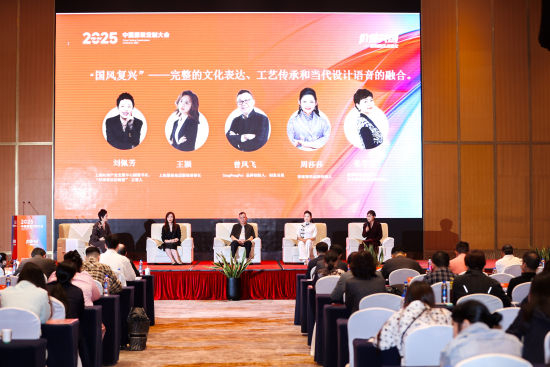
Core Insights - The 2025 China Customization Conference held in Changsha focused on "Value Co-Creation - Customized Ecological Evolution" and attracted over 500 industry leaders, design elites, and representatives of intangible cultural heritage [2] - The conference emphasized the transition of the customization industry from "scale growth" to "value enhancement," highlighting the importance of cultural empowerment and technological drive for achieving ecological prosperity [2] - Key discussions included the application boundaries of artificial intelligence in production by Zhejiang Shenfu CEO Wu Sisi, flexible production solutions by Jack Technology's Wang Chunyu, and the future of the customization industry as an ecosystem of collaboration emphasized by Customization Bank founder Zhou Yufeng [2] Industry Developments - The conference has been held in Changsha for three consecutive years, reinforcing the city's position as a hub in the national customization industry and injecting strong momentum of "fashion + culture + technology" into the regional economy [2] - This year's event featured the "Yiyang Night" AI intangible cultural heritage clothing release show and a static exhibition of intangible cultural heritage customized clothing, showcasing the transformation of traditional craftsmanship into industrial applications [2]
川金诺(300505) - 川金诺投资者关系活动记录表(2025年9月19日、9月22日)
2025-09-22 10:26
Group 1: Company Overview - The company has two production bases located in Kunming and Fangchenggang, with a flexible production model to adjust product structure based on market demand and profit margins [3] - Main products and designed production capacities include: - Kunming: Dicalcium phosphate 100,000 tons/year, Calcium hydrogen phosphate 150,000 tons/year, Calcium hydrogen phosphate III 150,000 tons/year, Heavy (rich) calcium 150,000 tons/year, Sodium fluorosilicate 10,000 tons/year - Fangchenggang: Heavy (rich) calcium 140,000 tons/year, Industrial wet-process purified phosphoric acid 150,000 tons/year (after technical transformation), Sodium fluorosilicate 15,000 tons/year [3] Group 2: Financial Performance - In the first half of 2025, the company achieved operating revenue of CNY 1.744 billion, a year-on-year increase of 27.91% [4] - Net profit attributable to shareholders reached CNY 177 million, a significant year-on-year increase of 166.51% [4] - Operating cash flow improved significantly, with a net amount of CNY 170 million, up 423.23% year-on-year [4] - Total assets as of the reporting period were CNY 3.669 billion, with total liabilities of CNY 1.029 billion, resulting in net assets of CNY 2.640 billion and a healthy asset-liability ratio [4] Group 3: Business Structure and Profitability - Phosphoric acid business contributed 51.36% of revenue, while feed-grade phosphates and phosphates accounted for 23.92% and 22.87% respectively [4] - The gross profit margin for the phosphate fertilizer segment was 29.52%, serving as a key driver for profit growth; feed-grade phosphates and phosphoric acid had gross profit margins of 17.60% and 9.86% respectively [4] Group 4: Future Plans and Investments - The company plans to gradually increase dividend payouts based on actual performance and national policy guidance [5] - Currently, there are no plans for capital market financing; future evaluations will consider strategic development needs and market conditions [5] - The Suez phosphate chemical project in Egypt is progressing as planned, with expected annual revenue contributions exceeding CNY 2 billion and net profits over CNY 300 million upon full production [6] - The project is strategically significant for enhancing market competitiveness and optimizing cost structure [6] Group 5: Resource Management - Phosphate resources for the Kunming base are sourced from surrounding areas, utilizing low-grade phosphate rock to produce high-quality phosphate concentrate, providing a price advantage [6] - The Fangchenggang base sources phosphate rock from overseas and northern China, leveraging port advantages for optimal procurement [6] Group 6: Strategic Adjustments - The company has decided to temporarily adjust its development strategy in the renewable energy sector while maintaining a long-term positive outlook on the industry [8]

推动人形机器人在汽车制造领域加速落地,有何深意?
Zhong Guo Qi Che Bao Wang· 2025-09-19 03:48
Group 1 - The core viewpoint is that humanoid robots are being promoted for accelerated application in automotive manufacturing and logistics, laying a solid foundation for the future trillion-level industry development [2][4] - The integration of humanoid robots into automotive manufacturing is seen as a crucial support for the transition from "Made in China" to "Intelligent Manufacturing in China" [3][4] - The automotive manufacturing industry is facing urgent demands for production mode transformation due to market challenges, and humanoid robots are positioned as a key solution to enhance efficiency and flexibility [4][5] Group 2 - Humanoid robots demonstrate significant advantages in precision tasks such as electrical circuit connections in automotive seats, improving assembly accuracy and efficiency by 40% [5][6] - The emergence of humanoid robots offers hope for flexible production in the electric vehicle sector, allowing for rapid adjustments to production processes based on vehicle information [5][6] - Collaboration between robot manufacturers and automotive companies is creating an integrated ecosystem that supports technological innovation and industry implementation [6][8] Group 3 - Despite the initial success of humanoid robots in automotive manufacturing, challenges remain in terms of technology and cost, with industrial humanoid robots costing between 500,000 to 800,000 yuan, which is 3-5 times that of traditional robotic arms [7][8] - The consensus among industry stakeholders is that humanoid robots have broad application prospects in automotive manufacturing and logistics [8][9] - The anticipated decrease in the cost of key components for humanoid robots is expected to facilitate their large-scale commercial use, potentially lowering the price of basic models to around 50,000 yuan in the next two to three years [8][9] Group 4 - The integration of humanoid robots into the automotive industry is expected to lead to a significant transformation, enabling companies to respond quickly to market changes and produce more personalized vehicles [9] - Humanoid robots are projected to be the core driving force behind the intelligent upgrade of the automotive industry, redefining production models and supply chain systems [9]
