
神经科学

Search documents
五项基于神经科学的有效管理策略
3 6 Ke· 2025-07-10 07:07
Core Insights - The article emphasizes that effective management is rooted in understanding how the brain operates, rather than merely applying new efficiency methods or feedback frameworks [3][12]. Group 1: Neuroscience Methods for Management - Multitasking is a myth; prioritization is a superpower of the brain. The prefrontal cortex, responsible for focus and decision-making, is energy-intensive and sensitive to overload. Cognitive overload can impair performance, and managers should protect their teams from chaos to preserve mental energy [5][6]. - Creativity requires space. The brain's creativity engine thrives in relaxed, non-judgmental environments. Continuous pressure can stifle insight, so leaders should allocate "blank time" for reflection and mindfulness [7][8]. - Coaching can enhance neural plasticity and performance. Effective coaching conversations can reshape neural pathways, activating networks for learning and problem-solving [8][9]. - Motivation is linked to the brain's reward system. Dopamine spikes with progress and connection, but over-reliance on rankings and conditional rewards can diminish intrinsic motivation. Recognizing effort and linking tasks to meaningful goals can activate the reward network [10][11]. - High-performance environments are characterized by psychological safety, which fosters clear thinking and risk-taking. Leaders who cultivate trust and fairness can enhance creativity and collaboration [11][12].

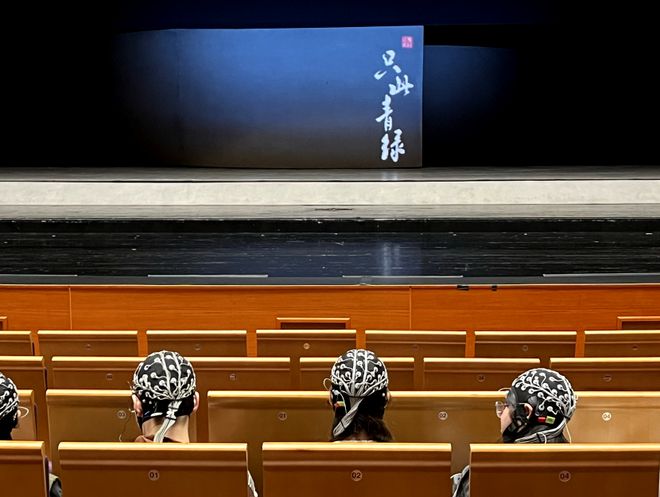
为何“现场观影更打动人”?清华“神奇发帽”剧场实验为你揭秘!
Xin Hua She· 2025-06-19 11:56
Core Insights - A recent experiment at Tsinghua University involved students wearing portable brain-computer interface systems, known as EEG caps, to capture their brain activity while enjoying a live performance, aiming to decode their aesthetic experiences [1][2][4] - This research marks the first application of non-invasive brain-computer interface technology in a real performance setting in China, providing insights into the neural activity patterns during art appreciation [1][4] Group 1: Research Objectives and Methodology - The primary goal of the experiment is to explore the neural activity patterns associated with aesthetic experiences during live performances, enhancing the understanding of why live viewing is more impactful [2][4] - The EEG caps worn by students are equipped with silver electrodes to collect brain signals, which are transmitted wirelessly to a data center for analysis of physiological responses during artistic experiences [4] Group 2: Technological Context and Applications - Brain-computer interface technology is a cutting-edge human-machine interaction tool that captures and decodes brain signals, enabling communication between the brain and machines [2] - The technology has seen rapid development and application in China, including uses in disease diagnosis, safety monitoring in high-risk jobs, rehabilitation, and treatment of neurological disorders like Parkinson's and epilepsy [2]
印度警方用“脑波读心”断案,被科学界质疑为“江湖骗术”
Hu Xiu· 2025-06-18 02:09
Group 1 - The article discusses the controversial use of Brainwave Oscillation Signature (BEOS) technology in the Indian judicial system, highlighting its implications for justice and ethics [1][5][25] - BEOS technology, developed by Axxonet, is based on the theory of "brain fingerprints" and has been used in over 700 cases since its introduction in the early 2000s [6][7] - Critics argue that BEOS lacks scientific validation and relies on flawed methodologies, raising concerns about its reliability as evidence in court [4][19][25] Group 2 - The Indian National Forensic Science University (NFSU) promotes BEOS as a humane alternative to torture, despite ongoing scientific skepticism [4][9] - The technology's application has been linked to economic interests, with procurement and training creating a financial incentive for its use [9][10] - The Indian government has positioned BEOS as a symbol of modernizing the justice system, despite the absence of empirical support for its effectiveness [10][11] Group 3 - Ethical concerns arise from the potential for coerced consent and the violation of the right against self-incrimination, as seen in various cases where suspects were pressured to undergo BEOS testing [22][24] - The lack of transparency regarding BEOS algorithms and the proprietary nature of the technology hinder independent verification and accountability [5][25][26] - The article emphasizes the need for a balance between technological advancement and the protection of human rights within the judicial framework [24][26]
“全脑开发”的神话该终结了
Bei Jing Qing Nian Bao· 2025-06-05 03:56
Core Viewpoint - The article highlights the emergence of a black market in education, where certain institutions exploit parental anxiety by promoting pseudoscientific concepts related to "whole brain development" and "neuroscience" for profit [2][3][4]. Group 1: Pseudoscientific Practices - Some educational institutions use outdated theories like "left and right brain division" to market their courses, employing gimmicks such as "blindfold reading" and "5-minute poetry memorization" to create myths [2][3]. - Claims that flashcard training can enable children to have photographic memory are unfounded, as they contradict basic cognitive principles [2][3]. - The notion of developing "super abilities" in children through these methods is fundamentally flawed and lacks scientific backing [3][4]. Group 2: Impact on Children - The mechanical stimulation from rapid flashcard sessions can harm the fragile cognitive systems of young children, rather than aiding their intellectual development [3]. - Excessive focus on rote memorization and abstract cognition deprives children of opportunities to engage with the world naturally, stifling their creativity and imagination [3][4]. - The pursuit of "superior intelligence" through these programs promotes a distorted value system that undermines genuine educational growth [3][4]. Group 3: Industry Dynamics - A complete black market chain exists, with unqualified teachers and counterfeit "international certification courses" being common [4]. - Educational tools, such as "brainwave headphones" and "smart storybooks," are sold at exorbitant prices despite their low production costs [4]. - Social media influencers contribute to this issue by promoting pseudoscience as replicable success formulas, exploiting parents' fears of missing critical developmental windows [4]. Group 4: Regulatory Recommendations - There is a need for systemic reforms to address these issues, including the establishment of a negative list for educational advertising to regulate false claims [4]. - Educational authorities should collaborate with research institutions to create guidelines that prohibit teaching methods that violate developmental principles [4]. - Parents must develop a rational understanding of cognitive development, recognizing that any training beyond a child's current capabilities poses significant risks [4][5]. Group 5: Reflection on Educational Values - The article emphasizes that the history of educational speculation shows that all unscientific educational myths will eventually collapse [5]. - It calls for a reevaluation of the belief in shortcuts to genius, advocating for a healthy educational evaluation system that respects individual growth [5].
华西医院专家谈脑机接口技术:非侵入式技术提升早期阿尔茨海默病诊断效率,侵入式技术切除脑胶质瘤实现突破
Mei Ri Jing Ji Xin Wen· 2025-05-22 08:00
Group 1: Industry Overview - Brain-computer interface (BCI) technology is advancing rapidly due to breakthroughs in artificial intelligence, neuroscience, and sensing technologies [1] - The Sichuan Provincial Economic and Information Technology Department has launched a plan to develop BCI products, aiming to complete the R&D of 3 invasive and 5 non-invasive BCI products by 2027 [1] - The plan also targets to serve over 50,000 medical patients annually by 2027 and to establish Sichuan as a national leader in BCI and human-computer interaction by 2030 [1] Group 2: Non-Invasive BCI Applications - Non-invasive BCI technology is expected to significantly improve the early diagnosis and treatment efficiency of Alzheimer's disease [2] - The technology aims to manage chronic diseases in the elderly through early screening and outpatient rehabilitation [2] - A project named "Swan Lake" has been developed for community-based early screening and non-drug interventions for mild cognitive impairment (MCI) [2][3] Group 3: Research Findings - Research involving over 3,000 elderly participants has shown that MCI patients exhibit abnormal frequency bands and network patterns [3] - Non-invasive BCI screening can achieve over 90% sensitivity using just 4 electrodes in a 5-10 minute test, enhancing the efficiency of MCI screening [3] - Non-invasive BCI techniques like transcranial magnetic stimulation (TMS) and transcranial electrical stimulation (TES) are being explored for outpatient rehabilitation of MCI [3] Group 4: Invasive BCI Innovations - Invasive BCI technology has achieved a breakthrough in the surgical treatment of gliomas, marking a significant advancement in neurosurgery [5][6] - The technology allows for real-time analysis of brain signals to differentiate tumor tissue from normal brain tissue, improving tumor resection rates [6] - The first successful application of invasive BCI technology for glioma surgery in China has been reported, showcasing its potential to enhance surgical outcomes [6][7] Group 5: Future Prospects - Invasive BCI technology not only maximizes safe tumor removal but also predicts tumor recurrence, potentially extending patient survival [7] - The industry is awaiting the development of mature products and technologies that could lead to transformative changes in medical practices [7]
著名神经科学家郭爱克院士去世,参会期间突发心脏骤停
第一财经· 2025-04-12 07:54
2025.04. 12 本文字数:851,阅读时长大约1分钟 作者 | 第一财经 钱童心 郭爱克院士治丧工作小组发布讣告称,中国科学院院士、国际著名神经科学家和生物物理学家、中国 科学院大学教授郭爱克因病医治无效,于2025年4月10日14时18分在浙江杭州逝世,享年85岁。 中国科学院脑科学与智能技术卓越创新中心方面向第一财经记者表示,郭爱克近日在桐乡参加学术会 议期间,突然在浴室晕倒,在送往杭州浙大二院后,因心脏骤停救治无效去世。 学界对此感到震惊和悲痛。中国科学院神经所一位郭爱克生前的同事对第一财经记者表示:"郭院士 人特别好,对于学术会议的邀请也总是有求必应。" 郭爱克曾先后在中国科学院生物物理研究所、中国科学院脑科学与智能技术卓越创新中心等机构工 作。他长期致力于神经科学前沿探索,在学习记忆、注意抉择及神经计算与控制等脑认知领域取得了 一系列原创性成果。 郭爱克还引领了在"基因-脑-行为"框架下系统解析智力本质的研究,推动了空间亚磁环境影响脑认知 功能的探索,促进了我国神经行为学、集群仿生学和微观神经联结组等多项智能交叉领域的布局与建 设。 2020年至2025年,郭爱克受聘上海大学脑-智科学院士工 ...
中国构建了人形机器人大工厂
Zheng Quan Shi Bao Wang· 2025-03-04 06:30
Core Insights - The development of robotics technology in China has made significant progress, reducing the gap with international advanced levels [1] - Over the past three years, China's industrial robot loading capacity has reached over 50% of the global total [1] - The establishment of humanoid robot factories serves as a core technological foundation, integrating intelligent algorithms to compensate for hardware system deficiencies [1] Industry Developments - The core technological foundation combines brain-like intelligence, neuroscience, and artificial intelligence technologies, creating a significant competitive barrier [1] - The general factory can quickly produce low-cost and relatively high-performance robotic systems to support the industrial and agricultural sectors in China [1]
