
非侵入式脑机接口产品

Search documents
东北证券:脑机接口聚焦落地 把握三大主线
智通财经网· 2026-02-09 06:20
Core Insights - The brain-computer interface (BCI) industry is transitioning from "technology validation to early commercialization," with the medical rehabilitation sector being the first to achieve large-scale implementation due to rigid demand and policy support [1] - The report suggests focusing on three categories of targets: leading companies in non-invasive product commercialization, clinical breakthrough targets in invasive/interventional technologies, and core component suppliers in the industry [1] Market Space - The global BCI market is projected to reach $2.62 billion in 2024, with a compound annual growth rate (CAGR) of 17.35% from 2025 to 2034, potentially exceeding $12.4 billion by 2034 [2] - The domestic market is also expanding steadily, with an expected size of 3.2 billion yuan in 2024, where non-invasive products will account for 82%. The China Electronic Information Industry Development Research Institute forecasts the domestic market to grow to 5.58 billion yuan by 2027 [2] Core Technology - The industry faces significant technological barriers concentrated in three areas: signal acquisition, decoding algorithms, and neural stimulation [3] - Leading overseas companies are advancing in clinical applications, with Neuralink completing 21 human implant surgeries and Synchron's vascular interventional BCI product receiving FDA approval. Domestic companies are catching up, achieving global breakthroughs such as the "Beinao No. 1" 128-channel semi-invasive system and the first interventional BCI human trial [3] Policy and Ecosystem - Continuous policy support is evident, with national "14th Five-Year" and "15th Five-Year" plans highlighting BCI as a key development area. 29 provinces and cities, including Zhejiang and Hubei, have included BCI rehabilitation projects in their medical insurance payment scope, accelerating clinical adoption [4] - The upstream core component localization process is speeding up, with domestic analog chips showing a 60% reduction in power consumption compared to similar overseas products. Downstream applications in medical rehabilitation and consumer electronics are beginning to form initial scales [4]

医药生物行业周报(20260112-0116):产业化进程加速,脑机接口发展进入快车道-20260116
Shanghai Securities· 2026-01-16 12:29
Investment Rating - The industry investment rating for the medical biology sector is "Hold" [2]. Core Insights - The report highlights significant advancements in the brain-computer interface (BCI) industry, emphasizing the acceleration of industrial development and the establishment of a robust innovation ecosystem [3][4]. - The Shanghai Municipal Government has released a plan to cultivate the BCI industry, aiming for clinical applications of semi-invasive and invasive BCI products by 2027, with a comprehensive application by 2030 [4]. - The report suggests that the BCI field is entering a rapid development phase, driven by the release of industry standards and supportive government policies [7]. Summary by Sections Industry Overview - The BCI industry is experiencing accelerated industrialization, with recent breakthroughs in invasive devices and the establishment of new treatment paradigms for conditions like epilepsy [4][6]. - The report notes the importance of integrating BCI technology with artificial intelligence and virtual reality to enhance product offerings and market reach [4]. Government Initiatives - The Shanghai action plan outlines key milestones, including the development of over five invasive and semi-invasive BCI products for clinical trials and the establishment of a national-level BCI industry development zone [4]. - The plan also emphasizes the need for collaboration between innovative entities and medical institutions to foster product development in various applications, including rehabilitation and education [4]. Investment Recommendations - The report recommends focusing on companies such as Innovation Medical, Aipeng Medical, and Sanbo Brain Science, which are positioned to benefit from the growing BCI market [7].
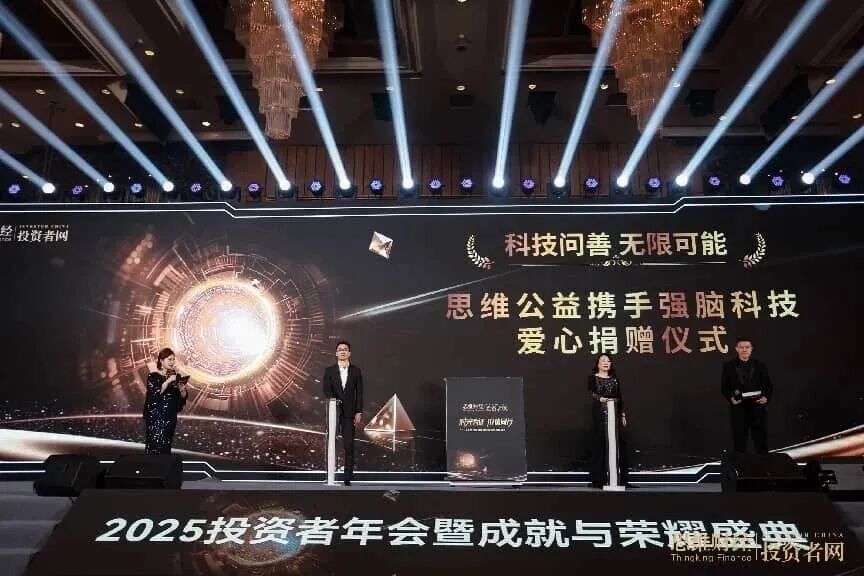
科技向善,无限可能:厚扬投资携手强脑科技共启思维公益2026新篇章
Xin Lang Cai Jing· 2026-01-15 14:09
Core Viewpoint - The initiative "Technology for Good" is transitioning from concept to action, with a focus on empowering disabled individuals through technology, marking a significant expansion of philanthropic efforts into the AI sector by the company [1][3]. Group 1: Philanthropic Initiatives - The company has a long-standing commitment to educational equity and child welfare, having supported various projects such as building hope primary schools in remote areas and donating nearly 280,000 yuan worth of Skechers shoes to rural children [2][6]. - The collaboration with Qiangnao Technology aims to enhance rehabilitation training and social integration for disabled individuals, leveraging Qiangnao's leadership in non-invasive brain-computer interface technology, which has achieved a valuation exceeding $1.3 billion and recently completed strategic financing of approximately 2 billion yuan [2][6]. Group 2: Future Directions - The company is evolving from being a resource supporter to a co-builder of the philanthropic ecosystem, intending to actively connect the Thinking Public Welfare platform with innovative technological forces [3][7]. - The company emphasizes that philanthropy is not just about giving but about co-creating value, aiming to create sustainable and replicable social value through the integration of investment, philanthropy, and technology [2][7].

翔宇医疗:脑机接口业务尚未实现规模化销售,对公司整体营收贡献较小
Cai Jing Wang· 2026-01-07 08:52
Core Viewpoint - Xiangyu Medical announced that its stock price experienced a cumulative deviation of 30% over three consecutive trading days on December 31, 2025, January 5, and 6, 2026 [1] Group 1: Business Overview - The company has established a comprehensive technology layout in the non-invasive brain-computer interface field, differing from mainstream invasive technology routes [1] - Although the company has formed a preliminary foundation in technology, products, and channels, the promotion of related product bidding and sales has been lagging [1] Group 2: Sales and Revenue - As of the end of 2025, the non-invasive brain-computer interface business has not achieved scaled sales, contributing minimally to the company's overall revenue [1]

脑机接口风口起!伟思医疗连续2日涨停,涨幅20.01%,封板资金1.73亿元
Sou Hu Cai Jing· 2026-01-06 02:20
Core Viewpoint - The market is actively speculating on Weisi Medical, which has seen a 20.01% increase and has hit the trading limit for two consecutive days, driven by the brain-computer interface (BCI) concept [1] Company Summary - Weisi Medical has a strong product and technology reserve in the non-invasive brain-computer interface field, covering key technologies such as EEG signal acquisition, interference correction, transmission analysis, machine learning algorithms, and non-invasive electrodes [1] - The company has established a closed-loop neuro-rehabilitation system that encompasses the entire cycle of "diagnosis—treatment—rehabilitation" [1] Industry Summary - A breakthrough in BCI implantation technology has been achieved by Huashan Hospital affiliated with Fudan University, marking the successful completion of the first clinical trial for the first domestically produced and second globally available fully implanted, wireless, and fully functional BCI product [1] - Elon Musk's Neuralink plans to start large-scale production of BCI devices in 2026, aiming for nearly fully automated surgical procedures [1] - Merge Labs, supported by OpenAI CEO Sam Altman, is splitting off to focus on new technology routes that utilize ultrasound to read brain activity [1] - The BCI sector has been included in China's "14th Five-Year Plan" as a future industry, with the National Medical Insurance Administration requiring proper coding for innovative medical consumables like BCIs [1] - The National Medical Products Administration is set to implement industry standards for medical devices using BCI technology by 2026 [1]

脑机接口迈向产业化:从“实验室”走向“门诊室”
Shang Hai Zheng Quan Bao· 2025-12-26 18:58
Core Insights - The brain-computer interface (BCI) industry is rapidly advancing, with significant clinical applications emerging, particularly for high-level paraplegics who can now control devices using their thoughts [4][5][6] - The establishment of the "Brain Intelligence World" in Shanghai marks a significant step in creating a hub for BCI technology, integrating research, clinical trials, and industry collaboration [9][11] - The industry is experiencing a surge in investment and innovation, driven by supportive policies, technological breakthroughs, and the integration of artificial intelligence [10][17] Industry Development - The BCI industry is transitioning from laboratory research to real-world applications, with a clear clinical pathway and increasing commercialization [4][5] - By 2025, China aims to be the second country globally to enter the clinical trial phase for invasive BCI technologies, with significant advancements already reported [5][6] - The market is witnessing a proliferation of innovative companies, with several expected to receive regulatory approval for their products by 2026 [6][11] Technological Advancements - Invasive BCI technologies have reached a critical development point, leading to a notable increase in clinical trials and applications [5][6] - Non-invasive BCI products are also becoming more accessible, with clinics opening in major cities to cater to patients with various neurological conditions [7][10] - Future applications of BCI technology are expected to expand into areas such as visual restoration for the blind and addiction treatment, with clinical trials anticipated to start by 2026 [8][14] Investment Trends - Investment in the BCI sector has intensified, with significant funding rounds reported, including a notable A-round financing of over 300 million RMB for a leading company [11][17] - The investment landscape is shifting towards a focus on clinical viability and regulatory compliance, reflecting a growing interest from both medical and tech investors [17] - The Shanghai government and various organizations are actively fostering the BCI ecosystem, aiming to position the region as a global leader in BCI innovation [11][16] Policy Support - The Chinese government has released multiple supportive policies to promote the BCI industry, emphasizing the importance of technological breakthroughs and the establishment of industry standards [9][13] - By 2027, the goal is to achieve significant advancements in BCI technology and establish a robust industrial framework, with a focus on creating globally influential companies [13][14] - The integration of BCI with artificial intelligence is seen as a critical factor for future growth, with expectations for deeper collaboration between the two fields [14][15]
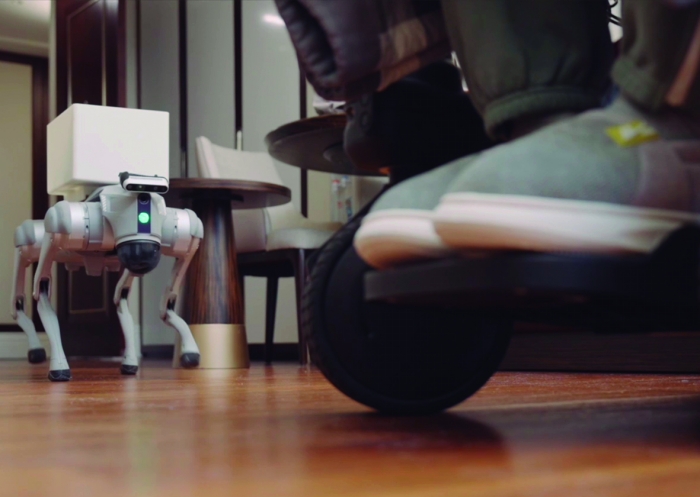
上海押注“未来”,具身智能、量子计算、脑机接口又传好消息
Di Yi Cai Jing Zi Xun· 2025-12-08 12:13
Core Insights - Shanghai is focusing on six key areas for future industry development, including future manufacturing, future information, future materials, future energy, future space, and future health [1] - The city has seen significant advancements in robotics, quantum computing, and brain-machine interfaces, with milestones such as the production of the 5000th general-purpose embodied robot by Zhiyuan Robotics [1][5] - The Shanghai Future Industry Fund has been established to support disruptive innovation and interdisciplinary collaboration, with a total scale of approximately 15 billion yuan and investments in 18 sub-funds [7][9] Group 1: Robotics and Quantum Computing - Zhiyuan Robotics has achieved a milestone with the mass production of its 5000th general-purpose embodied robot, validating its capability for large-scale delivery and setting the stage for future production goals [1] - Shanghai's quantum technology company has completed several million yuan in angel financing, indicating strong investor interest in the quantum computing sector [1] Group 2: Brain-Machine Interfaces - The 2025 Brain-Machine Interface Conference showcased new invasive and non-invasive products from seven companies, highlighting the rapid development in this field [1] - The Shanghai Future Industry Fund is actively involved in the brain-machine interface sector, focusing on creating a systematic approach to talent and technology development [8] Group 3: Strategic Measures and Support - Shanghai has introduced measures to accelerate the innovation of frontier technologies and cultivate future industries, aiming to establish industry clusters and nurture around 20 leading enterprises by 2027 [1][5] - The city is leveraging its strong technological foundation and resource endowment to strategically position itself in emerging fields such as artificial intelligence, regenerative medicine, and quantum technology [2][5] Group 4: Investment and Ecosystem Development - The Future Industry Fund employs a dual investment model, combining direct investments in early-stage projects with the establishment of sub-funds to create a comprehensive investment ecosystem [7][9] - The fund has already made significant investments in key areas such as controlled nuclear fusion, AI models, and biomedicine, with a focus on maximizing the impact of its investments [9]

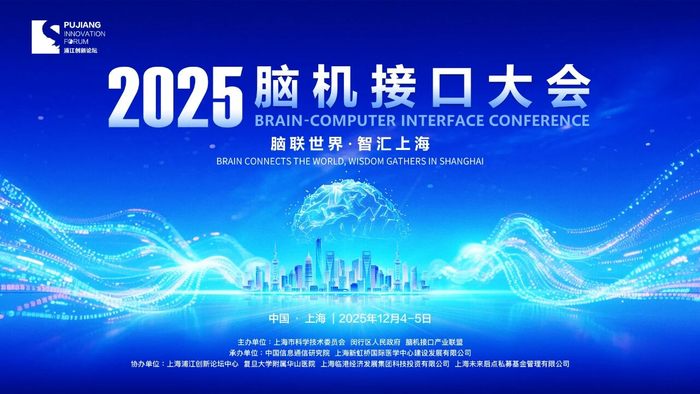
2025脑机接口大会即将开幕,这场新闻通气会详解大会亮点内容
第一财经网· 2025-12-01 09:27
Core Insights - Shanghai is leading the development of brain-computer interface (BCI) technology in China, with significant breakthroughs and a strategic plan for industry growth by 2025 [3][4][6] Industry Development - Shanghai has launched the "Brain-Computer Interface Future Industry Cultivation Action Plan (2025-2030)", focusing on medical-grade applications and strategic product development [3] - The city has achieved several milestones, including the initiation of clinical trials for the first domestic implantable BCI and the first real-time Chinese language decoding trial [4] - The establishment of the "Brain Intelligence World" industrial cluster in the Minhang District aims to create a comprehensive ecosystem for BCI innovation, integrating research, clinical resources, and industry collaboration [4][7] Upcoming Events - The 2025 BCI Conference will take place on December 4-5, featuring various activities such as developer forums, competitions, and investment conferences to enhance resource connectivity [5][10] - The conference will showcase new products from leading BCI companies and facilitate in-depth exchanges among global BCI professionals [6][11] Policy and Support - The Minhang District has introduced specific policies to support BCI industry growth, including substantial financial incentives for leading enterprises and startups [8][9] - A public service platform for BCI medical devices is being established to provide comprehensive support for testing, certification, and clinical trials [15][16] Clinical Collaboration - Fudan University Huashan Hospital is implementing a phased clinical cooperation strategy to ensure patient safety while accelerating technology validation and product deployment [17][18] - The hospital has set up a "BCI Clinic" to offer one-stop consulting services for innovative companies, streamlining the transition from laboratory to clinical application [18] Investment and Future Outlook - The investment forum during the BCI Conference aims to create a deep integration of technology, capital, and clinical applications, establishing a new paradigm for BCI industry development [20][21] - The forum will also focus on attracting overseas talent and fostering early-stage BCI startups through targeted project presentations and discussions [21]
浙江七部门联手推20条药械改革新政
Zhong Guo Xin Wen Wang· 2025-11-11 07:05
Core Viewpoint - Zhejiang Province has launched 20 specific reform measures to enhance the quality of the pharmaceutical and medical device industry, aiming for high-quality development through comprehensive regulatory reforms [1][5]. Group 1: Reform Measures - The implementation plan focuses on five key areas to enhance innovation capabilities, including strengthening the "three medical" collaborative mechanism and improving intellectual property protection [1]. - Zhejiang will optimize the review and approval process for drug changes and implement a "research-review linkage" for medical devices, reducing the review time for major changes to within 60 working days [2]. - A key product list will be compiled to provide comprehensive communication and guidance services for products in critical areas such as cancer and cardiovascular diseases, as well as for urgently needed and rare disease medications [3]. Group 2: Regulatory Capacity Building - The province will advance the research and application of new regulatory tools, standards, and methods, including evaluating the maturity of artificial intelligence medical device algorithms [3]. - The plan aims to enhance the overall safety level and innovation capabilities of drug regulation in Zhejiang, targeting international advanced standards by 2035 [1]. Group 3: Broader Implications - The reforms are expected to significantly promote the high-quality development of Zhejiang's pharmaceutical industry and provide a model for national regulatory reforms in the pharmaceutical and medical device sectors [5].

脑机接口医械论坛
2025-10-16 15:11
Summary of Key Points from Conference Call Records Company and Industry Overview - **Company**: Xiangyu Medical - **Industry**: Brain-Computer Interface (BCI) Technology Core Insights and Arguments - **Focus on Non-Invasive BCI Technology**: Xiangyu Medical specializes in non-invasive brain-computer interface technology, developing five major research and development systems, including BCI acquisition devices, algorithms, and rehabilitation products, with plans to launch related products between late 2025 and 2026 [1][2] - **Applications in Rehabilitation**: The primary applications of Xiangyu Medical's non-invasive BCI products are in rehabilitation, targeting post-operative recovery, high-level paraplegia, Alzheimer's disease, and other clinical challenges through a multi-channel wireless EEG acquisition system and seven algorithms for high-precision signal acquisition and processing [1][4] - **Self-Developed Hardware**: The company has developed a complete set of self-researched chips, electrodes, and acquisition devices, obtaining two Class II medical device registration certificates, which establish a solid foundation and high barriers to entry in the industry [1][5] - **Government Support**: The Ministry of Industry and Information Technology's implementation opinions on promoting innovation in the brain interface industry provide top-level design and reduce policy uncertainty, which Xiangyu Medical is actively leveraging to accelerate product launch processes [1][8] Additional Important Content - **Clinical Applications and Collaborations**: As of the latest statistics, 87 hospitals have applied Xiangyu Medical's BCI products, utilizing various cooperation models, including research project collaborations and the establishment of BCI wards [10] - **Market Commercialization Stage**: The commercialization of BCI products is still in its early stages, with few certified products on the market. Xiangyu Medical plans to launch 27 products in 2025 and potentially 70-80 products in 2026 [9][14] - **Technological Advancements**: The company has achieved breakthroughs in hardware development, including high-precision, high-signal quality acquisition devices, and various electrode models to meet different customer needs [5][11] - **Future Growth and Revenue Projections**: Xiangyu Medical is optimistic about rapid revenue growth in the coming years, with over 100 devices shipped, valued conservatively at 200-300 million yuan, expected to convert into sales revenue depending on certification progress and hospital procurement rhythms [14] Competitive Landscape - **Other Companies in the BCI Field**: Aipeng Medical is also active in the BCI sector, focusing on brain state monitoring systems, insomnia treatment systems, and ADHD behavior management systems, utilizing AI technology to enhance product competitiveness [3][15][17] - **Market Potential for Cognitive Disorders**: The market potential for cognitive disorders, particularly Alzheimer's disease, is significant, with approximately 43.77 million patients in China, indicating a vast opportunity for BCI applications in this area [33] Challenges and Future Directions - **Technical Bottlenecks**: The industry faces challenges such as signal-to-noise ratio, packaging processes, and the need for multi-modal information fusion, which are critical for future development [31][45] - **Regulatory and Market Dynamics**: The current regulatory environment and market dynamics, including the need for certification and pricing strategies, will significantly impact the commercialization and adoption of BCI products [40][41] This summary encapsulates the key points from the conference call records, highlighting the strategic direction, technological advancements, market potential, and challenges faced by Xiangyu Medical and the broader BCI industry.