私募市场

Search documents
普信集团(TROW.US)盘前大涨!获高盛(GS.US)10亿美元投资 携手拓展私募市场业务
Zhi Tong Cai Jing· 2025-09-04 13:13
Core Viewpoint - Goldman Sachs (GS.US) is set to invest up to $1 billion in T. Rowe Price Group (TROW.US), marking a significant partnership aimed at expanding private market offerings to retail investors, with T. Rowe Price's stock rising over 7% in pre-market trading following the announcement [1]. Group 1: Investment Details - Goldman Sachs will acquire up to 3.5% of T. Rowe Price's shares through a series of open market purchases, making it one of the top five shareholders of the asset management firm [1]. - This investment represents Goldman Sachs' only external investment in an asset management company [1]. Group 2: Market Context - The collaboration comes at a time when traditional asset management firms are increasingly seeking to enter the alternative asset space, which has been dominated by leading private equity firms [1][2]. - T. Rowe Price has faced challenges since 2022, with significant outflows from its funds due to market downturns and a shift towards low-cost index funds and ETFs [2]. Group 3: Future Plans - T. Rowe Price and Goldman Sachs plan to launch a co-branded retirement fund by mid-2026, which will include investments from Oak Hill Advisors and Goldman Sachs' private market strategies [3]. - The partnership aims to provide tailored investment solutions for high-net-worth individuals and lower-wealth clients, with plans to introduce two new strategies encompassing private equity, credit, and infrastructure [3].


金融时报:科技股发出警告,AI叙事开始动摇,风险正蔓延至“看不见”的角落
美股IPO· 2025-08-24 06:29
Core Viewpoint - The recent sell-off in tech stocks serves as a warning signal, indicating that risks are shifting from a market heavily reliant on a few tech giants to the private credit sector funding AI infrastructure, which could threaten overall market stability if leading tech stocks falter [1][2]. Group 1: Market Structure and Performance - The impressive performance of global stock markets this year has been largely driven by a few tech giants, with Nvidia's market capitalization reaching $4.3 trillion, equivalent to 1.5 times the total market cap of the UK's FTSE 100 index [3]. - The top 10 companies in the U.S. account for approximately 40% of the S&P 500 index's weight and have contributed one-third of the index's revenue growth over the past year [3]. - This extreme concentration has led to significant market divergence, with the S&P 500 index rising by 9.5% this year, while the Russell 2000 index, which tracks small-cap stocks, has only increased by 4.2% [4]. Group 2: AI Investment Concerns - There are growing doubts about the sustainability of the AI narrative, with OpenAI's CEO acknowledging the presence of a "bubble" in AI investments and warning that many investors may incur significant losses [6][7]. - A report from MIT revealed that approximately 95% of organizations investing in AI have seen "zero returns," with only 5% of pilot projects generating actual value, raising concerns for investors hoping for transformative outcomes from AI [7][8]. Group 3: Private Market Risks - The article highlights that risks extend beyond publicly traded stocks, with a concerning trend of substantial funding for AI coming from opaque private markets [9]. - It is estimated that global spending on AI infrastructure will approach $3 trillion over the next three years, with tech giants like Amazon and Alphabet potentially covering only half of these costs [9]. - The remaining funding gap will primarily be filled by private equity, private credit, and venture capital, with UBS reporting that private credit has become a "key engine" for AI growth, with risk exposure in private debt markets surging by $100 billion to approximately $450 billion by early 2025 [10]. - As retail and pension fund investments continue to flow into private markets, there is a growing concern that these markets are sowing the seeds of overheating risk, which could have broader implications for the financial system if specialized lending institutions begin to fail [11].


科技股发出警告:AI叙事开始动摇,风险正蔓延至“看不见”的角落
华尔街见闻· 2025-08-23 11:48
Core Viewpoint - The recent sell-off in tech stocks serves as a warning about their high valuations and indicates a potential risk that has permeated the private equity market, which has been funding the AI boom [1][2]. Group 1: Market Structure and Performance - The market is heavily reliant on a few tech giants, with companies like Nvidia having a market capitalization of $4.3 trillion, which is 1.5 times the total market cap of the UK's FTSE 100 index [3]. - The top 10 companies in the U.S. account for approximately 40% of the S&P 500 index's weight and contributed one-third of the index's revenue growth over the past year [3]. - There is a significant disparity in market performance, with the S&P 500 index rising by 9.5% this year, while the Russell 2000 index, which tracks small-cap stocks, only increased by 4.2% [4]. Group 2: AI Narrative and Investment Returns - Concerns about the AI narrative are growing, with industry leaders acknowledging the presence of a "bubble" and "irrational exuberance" in the market [5][6]. - A report from MIT indicates that approximately 95% of organizations investing in AI have seen "zero returns," with only 5% of pilot projects generating actual value [6][7]. Group 3: Private Market Dynamics - The funding for AI development is increasingly coming from opaque private markets, with an estimated $3 trillion expected to be spent on AI infrastructure globally over the next three years [8]. - Private equity, private credit, and venture capital are expected to fill the funding gap, with UBS reporting a $100 billion increase in private debt exposure to AI, reaching approximately $450 billion by early 2025 [9]. - The influx of funds into private markets raises concerns about overheating risks, as these markets are no longer just a public stock market issue but have spread throughout the private sector [10].


美国证交会主席阿特金斯:需谨慎进入私募市场。
news flash· 2025-07-18 11:46
Group 1 - The core viewpoint emphasizes the need for caution when entering the private equity market, as stated by SEC Chairman Gary Gensler [1] Group 2 - The SEC is highlighting potential risks associated with private market investments, suggesting that investors should conduct thorough due diligence [1] - The statement reflects a broader regulatory concern regarding the transparency and liquidity of private equity compared to public markets [1]
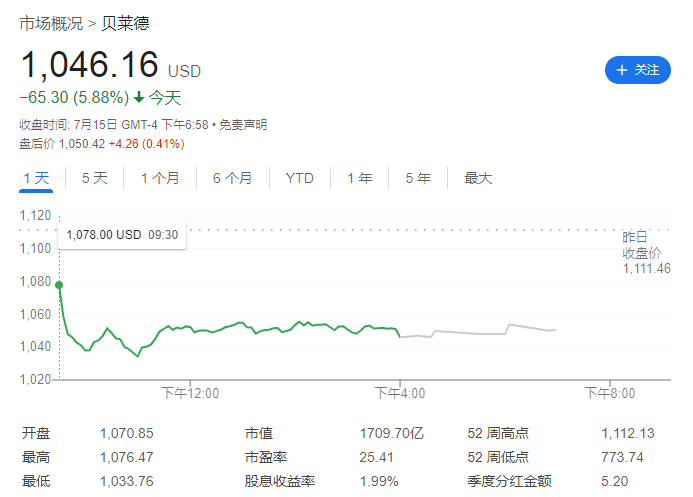
“一家亚洲客户”二季度撤资520亿美元!贝莱德股价重挫
Hua Er Jie Jian Wen· 2025-07-16 01:50
Core Viewpoint - BlackRock's second-quarter performance was negatively impacted by significant redemptions from a major Asian client, leading to a 5.9% drop in stock price and disappointing revenue figures [1][3]. Group 1: Financial Performance - BlackRock reported second-quarter revenue of $5.42 billion, falling short of analysts' expectations of $5.45 billion [1]. - Despite the redemption challenges, the company achieved a net client inflow of $68 billion, resulting in a record total assets under management of $12.53 trillion, an 18% year-over-year increase [4]. - The net profit for the quarter increased from $1.5 billion to $1.59 billion, representing a 6.5% growth, with adjusted earnings per share of $12.05, exceeding market expectations of $10.78 [4]. Group 2: Client Redemptions and Market Concerns - The primary cause of the revenue shortfall was a $52 billion partial redemption by an Asian institutional client, raising concerns about potential further withdrawals [3]. - Market analysts express worries regarding the uncertainty surrounding this client's future investment decisions, which has negatively affected stock performance [3]. Group 3: Strategic Initiatives - BlackRock is actively expanding its private equity business to drive fee growth, with a notable acquisition of HPS Investment Partners expected to be completed by July 1 [4][5]. - The CEO of BlackRock, Larry Fink, emphasized that the recent acquisition will enhance client relationships and is seen as the beginning of a stronger growth phase for the company [5].
据华尔街日报:美国总统特朗普料将在未来数日签署关于401(K)计划的行政命令,推动将401(k)退休账户向私募市场开放。
news flash· 2025-07-15 22:03
Core Viewpoint - The article reports that President Trump is expected to sign an executive order in the coming days to open 401(k) retirement accounts to private market investments [1] Group 1 - The executive order aims to enhance investment options for 401(k) plans by allowing access to private market opportunities [1] - This move could potentially increase the capital flow into private markets, benefiting private equity and venture capital firms [1] - The initiative reflects a broader trend of seeking higher returns for retirement savings amid low interest rates [1]
美国总统特朗普料将在未来数日签署关于401(K)计划的行政命令。此举将推动401(K)退休账户向私募市场开放。(华尔街日报)
news flash· 2025-07-15 22:01
Core Viewpoint - The upcoming executive order by President Trump is expected to open 401(k) retirement accounts to private market investments, potentially transforming the retirement savings landscape [1] Group 1 - The executive order is anticipated to be signed in the coming days [1] - This move aims to enhance investment options for 401(k) account holders by allowing access to private market opportunities [1]
万亿美元资管巨头:全球LP对私募市场仍持乐观态度
Zhong Guo Ji Jin Bao· 2025-07-01 05:07
Core Insights - Wellington Management's survey indicates that despite geopolitical risks, global limited partners (LPs) remain optimistic about private equity market allocations [1][2] Group 1: Survey Findings - 96% of LPs plan to increase (53%) or maintain (43%) their private equity market allocations in the coming year, with only 4% intending to reduce their allocations [2] - 51% of LPs believe that hybrid strategies combining public and private markets can enhance overall portfolio performance, with 63% considering such strategies [2] - The primary advantage of hybrid strategies is seen as having a more comprehensive investment perspective (19%), followed by easier access to research and insights (16%) [2] Group 2: Market Sentiment - 45% of respondents view higher return potential as the main advantage of private equity market allocations, reflecting continued optimism despite previous market challenges [3] - 10% of LPs reduced their private equity market allocations in the past 12 months, while 48% believe political uncertainty will have the most significant impact on the private equity market in the next year [4] - The highest proportion of respondents increasing private equity allocations in the past year comes from the U.S. at 73%, with Europe and the Middle East showing 65% and 64% respectively [4] Group 3: Asset Diversification - Many LPs are diversifying their asset allocations, moving from traditional concentrated strategies to more diversified approaches, including secondary private equity markets and growth assets [4] - This diversification aims to achieve liquidity advantages and mitigate interest rate volatility risks [4]
贝莱德(BLK.US)大幅上调2030年营收目标 私募和加密资产成未来增长引擎
智通财经网· 2025-06-12 12:21
Group 1 - The core objective of BlackRock is to achieve annual revenue exceeding $35 billion by 2030, up from $20 billion in 2024, and to double its market value from approximately $140 billion to $280 billion [1] - BlackRock aims to raise a total of $400 billion in private markets by 2030, with a focus on expanding its presence in the private market and digital asset sectors [1] - The company plans to manage $700 billion in insurance-related assets by 2030, positioning itself as the largest third-party manager in the balance sheet insurance asset space [1] Group 2 - BlackRock's strategy includes significant investments in private asset companies, having spent around $28 billion over the past year to catch up with established players like Blackstone and Carlyle [1] - The company targets managing at least $50 billion in crypto assets over the next 15 years and aims to introduce digital asset ETF products in Europe and Canada based on its U.S. operational experience [1] - The CFO of BlackRock indicated that the ongoing expansion in private, digital assets, and active ETFs will enhance the overall fee structure and positively impact the company's profitability [2] Group 3 - BlackRock has set a financial target of achieving an adjusted operating profit of $15 billion by 2030, significantly higher than the projected $8 billion for 2024 [2] - The company anticipates a compound annual growth rate (CAGR) of 10% in revenue [2]

GCM Grosvenor(GCMG) - 2025 Q1 - Earnings Call Transcript
2025-05-07 15:02
Financial Data and Key Metrics Changes - GCM Grosvenor reported strong results in Q1 2025, exceeding profitability expectations with total fundraising of $2.9 billion, the highest quarterly level in over two years [6][10] - Total private markets management fees increased by 20% year over year, with fee-related revenue growing by 12% and adjusted EBITDA rising by 26% [10][22] - Adjusted net income grew by 30% year over year, reflecting solid financial performance [10] Business Line Data and Key Metrics Changes - Infrastructure fundraising accounted for approximately half of the total fundraising, with a final close of nearly $500 million for the second infrastructure advantage fund, IAF II, which reached a total size of $1.3 billion, nearly 50% larger than its predecessor [7][10] - Private equity fundraising contributed over $720 million, including the final close of the private equity co-invest fund, GCF III, which totaled approximately $615 million [8][10] - Absolute return strategies (ARS) business performance was relatively flat but positively viewed by clients due to the drop in equity markets [11] Market Data and Key Metrics Changes - The firm raised $1.6 billion for absolute return strategies since the start of 2024, with a strong late-stage pipeline compared to previous years [12] - The carried interest balance grew to $865 million, an 11% increase from a year ago, indicating strong earnings potential [12][26] - The firm expects full-year private markets fee-related revenue to grow in the mid-single-digit range of 5% to 8% compared to 2024 [15] Company Strategy and Development Direction - GCM Grosvenor announced two strategic initiatives: a joint venture called Grove Lane targeting individual investors and a strategic partnership in Japan [13][21] - The firm aims to leverage its core strengths in open architecture investing and client-centric approaches to develop tailored investment solutions [13] - The company is focused on doubling fee-related earnings (FRE) from 2023 levels by the end of 2028 [15] Management's Comments on Operating Environment and Future Outlook - Management acknowledged uncertainty related to trade and tax policy, which may keep deployment and transaction levels depressed in the short term [14] - Despite market volatility, the firm remains confident in its ability to achieve fundraising goals for 2025, projecting it to exceed 2024's total of $7.1 billion [9][15] - The management expressed optimism about the long-term growth potential in the individual investor channel, both domestically and internationally [37] Other Important Information - The firm maintained a healthy quarterly dividend of $0.11 per share, with a 3.5% dividend yield and room for future growth [26][27] - The company continues to repurchase shares under its authorization plan to manage dilution [27] Q&A Session Summary Question: What are the key drivers to get back to the 10% plus range for private markets management fee expectations? - Management indicated that factors affecting revenue realization include how much of the funds raised go directly to fee-paying AUM and the speed of deployment from committed capital [29][30] Question: What are the biggest opportunities internationally? - Management noted significant opportunities globally, emphasizing the individual investor channel as a tremendous opportunity both in the US and abroad [35][37] Question: How does the company view the potential for endowments to reduce their private equity positions? - Management stated that the company is insulated from endowment pullbacks in private markets commitments, as it represents a small part of AUM [56] Question: What is the rationale behind the Grove Lane joint venture structure? - Management explained that the structure allows for attracting solid talent and provides ownership incentives, which can enhance team quality and results over time [66][68]