美国经济下行

Search documents
鲍威尔与特朗普矛盾再升级,哪些因素可能触发美联储降息?
Xin Hua Cai Jing· 2025-06-20 09:30
Group 1: Federal Reserve's Monetary Policy - The Federal Reserve maintained the federal funds rate target range at 4.25% to 4.50% for the fourth consecutive time, with minimal incremental information from the meeting [1] - Market expectations for a rate cut in September have risen to 58.9%, with a 42.6% chance of another cut in December [4] Group 2: Economic Indicators - The U.S. economy is projected to face "stagflation" by 2025, with a real growth rate of only 1.4% and inflation at 3.1% [2] - Employment data shows structural weaknesses despite strong wage growth, with leading indicators suggesting a potential decline in employment numbers [2] - Consumer spending is showing signs of weakness, with May retail sales declining by 0.9%, worse than the expected contraction of 0.7% [3] Group 3: Investment Outlook - Corporate investment is expected to continue declining, with weak manufacturing PMI and new orders indicating a downturn in non-residential investment growth [3] - The real estate sector is facing challenges such as weak housing demand and high financing rates, making improvements unlikely in the near term [3] Group 4: Factors Influencing Future Rate Cuts - Key triggers for potential rate cuts include rapid deterioration in consumer and employment data, risks in corporate bonds, and the upcoming concentrated issuance of U.S. Treasury bonds [6] - Barclays suggests that labor market weakness, diminishing tariff impacts on inflation, and declining consumer spending will be critical factors influencing future policy [7]

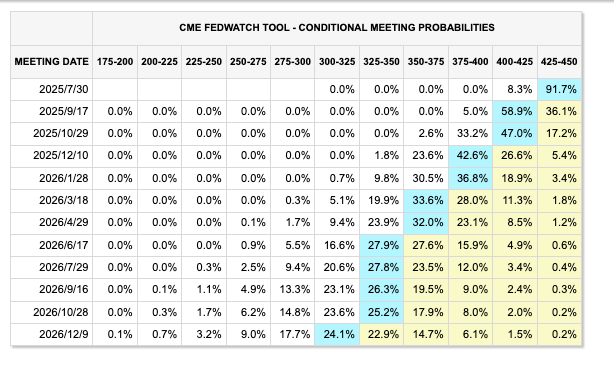
美联储6月货币政策会议点评与展望:关税对通胀传导路径不明,美联储仍将继续观望
Dong Fang Jin Cheng· 2025-06-19 08:05
Group 1: Federal Reserve's Monetary Policy - The Federal Reserve maintained the federal funds rate target range at 4.25% to 4.5%, aligning with market expectations[2] - The dot plot indicates two expected rate cuts of 25 basis points this year, unchanged from March, but the number of officials not expecting cuts has increased[2] - Economic outlook revisions show a decrease in GDP growth expectations and an increase in unemployment and PCE inflation forecasts for the next two years[2] Group 2: Inflation and Tariff Impact - Powell expressed concerns about tariffs potentially raising prices and creating persistent inflationary pressures, with uncertainty about the overall impact of tariffs on inflation[2][6] - The uncertainty index for U.S. trade policy decreased to 5846.74, returning to March levels, indicating reduced negative impacts from tariff policies[6] - Despite stable employment data, inflation risks are heightened, with expectations of noticeable inflation increases in the coming months[8] Group 3: Economic Indicators - The U.S. unemployment rate remains stable at 4.2%, with non-farm payrolls showing a decline, reflecting a moderate economic slowdown[7] - Recent data indicates a significant drop in retail sales by 0.9% in May, the largest decline in two years, and a 0.2% decrease in industrial output[12] - Initial jobless claims rose to 248,000, the highest since October 2024, suggesting increasing difficulty in the labor market[12]
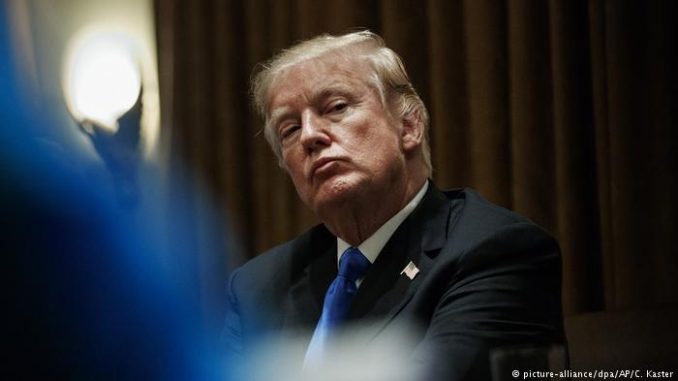
特朗普再次敦促鲍威尔降息
Sou Hu Cai Jing· 2025-06-18 16:09
Group 1 - President Trump has publicly urged Federal Reserve Chairman Jerome Powell to lower interest rates, suggesting that a reduction could allow for cheaper debt purchases and that rates should be two percentage points lower than current levels [2] - The market generally anticipates that the Federal Reserve will maintain the federal funds rate in the range of 4.25% to 4.50% during the June meeting, despite Trump's calls for a reduction [2] - The Federal Reserve's rationale for keeping rates steady is the potential for a rebound in inflation, although recent economic data indicates that inflation rates in the U.S. are steadily declining without significant rebounds [2] Group 2 - Maintaining high interest rates for an extended period is viewed as a mistake, with concerns that it could negatively impact the U.S. economy and accelerate its downturn [3] - Lowering interest rates is seen as a necessary step to reduce the financing costs of U.S. national debt, especially in light of ongoing fiscal deficits that may increase the national debt scale [2]
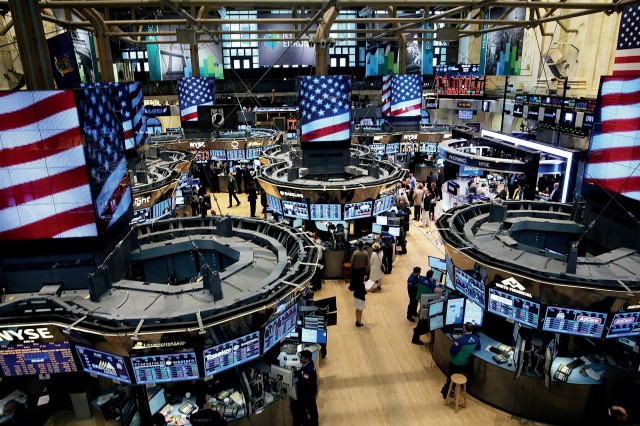
美国4月经济数据延续下行趋势
Sou Hu Cai Jing· 2025-05-15 13:31
Group 1 - The core viewpoint indicates that the U.S. economy is experiencing a downward trend, as evidenced by the significant decline in retail sales and PPI data [2] - April retail sales in the U.S. dropped sharply from a previous value of 1.5% to 0.1%, reflecting weak consumer spending [2] - The Producer Price Index (PPI) year-on-year decreased from 3.4% to 2.4%, and the month-on-month PPI fell from 0% to -0.5%, suggesting a potential future decline in Consumer Price Index (CPI) [2] - The New York Fed manufacturing index for May worsened from -8.1 to -9.2, indicating continued contraction in the manufacturing sector [2] - Initial jobless claims remained stable at 229,000, suggesting that the labor market has not yet shown significant deterioration [2] Group 2 - Current economic uncertainty in the U.S. is leading to hesitancy in consumer spending and business investment, potentially creating a vicious cycle of economic decline [3] - Even President Trump has acknowledged the possibility of the U.S. economy entering a recession [3]
美国4月CPI数据小幅下降
Sou Hu Cai Jing· 2025-05-13 13:19
然而,美联储迟迟不采取降息行动,这势必会使已经出现的美国经济的下行趋势更加严重,从而导致未 来美联储在美国经济出现加速下行时不得不采取更加激进的降息措施。 当前美国经济面临的最大问题就是不确定性。当经济的不确定性上升时,企业对未来的经营无所适从, 个人消费者则更加倾向于减少消费。而且一旦这种不确定性深入人心就很难在短期内得以恢复。这将导 致美国经济的冷却,甚至陷入衰退。 JerryZang 免责声明:本文内容及观点仅供参考,不构成任何投资建议。投资者据此操作,风险自担。一切有关市 场的准确信息,请以相关官方公告为准。市场有风险,投资需谨慎。 5月13日公布的数据显示,美国4月CPI年率从前值2.4%小幅下降至2.3%,继续稳步下行。美国4月CPI月 率虽然从前值-0.1%上升至0.2%,但是上升幅度不及预期的0.3%。这反映出美国经济的通货膨胀率并未 出现明显的反弹。 同时公布的美国4月核心CPI年率与上月持平,仍然维持在2.8%。美国4月核心CPI月率从前值0.1%上升 至0.2%,但是同样升幅不及预期的0.3%。 笔者认为,上述最新的美国4月CPI数据比市场普遍担心的通货膨胀率的大幅上升要好得多,支撑美联 ...