职业本科教育

Search documents
“第一批吃螃蟹”的职业本科生|一线
吴晓波频道· 2025-07-09 15:40
Core Viewpoint - The article discusses the challenges and shortcomings of vocational undergraduate education in China, highlighting the gap between theoretical knowledge and practical skills, as well as the low recognition of vocational degrees in the job market [1][15][50]. Group 1: Current State of Vocational Education - The "招本" plan from Zhengzhou Railway Vocational Technical College has gained attention, with 45 undergraduate students enrolled in specialized programs [3][4]. - The employment rate for graduates from this college has consistently exceeded 90% over the past three years, contrasting sharply with the overall employment rate of 55.5% for 2024 college graduates [7]. - The rapid growth of vocational education is evident, with the establishment of 32 new vocational undergraduate institutions in the first half of the year, bringing the total to 87 nationwide [8]. Group 2: Student Experiences and Challenges - Many students, like Xiao Wang and Xiao Zhang, express disappointment with their vocational education, feeling unprepared for the job market and often abandoning their fields of study [11][15]. - The curriculum often mimics traditional undergraduate programs, focusing heavily on theory rather than practical training, leading to a lack of engagement and interest among students [14][15]. - Graduates from vocational programs face challenges in job applications, as many employers do not recognize vocational degrees, leading to a sense of insecurity among graduates [16][15]. Group 3: Institutional Differences and Development - There is a notable divide between public and private vocational institutions, with private institutions often leading the way in innovation and exploration [29][30]. - The article highlights the disparity in educational quality and outcomes between economically developed regions and less developed areas, with regions like the Pearl River Delta showing superior vocational education standards [30][31]. - The article emphasizes the need for deeper reforms in vocational education to avoid the "new wine in old bottles" phenomenon, stressing the importance of top-level design and alignment with market needs [50][51].


越来越多毕业生反向“镀金”学技能
第一财经· 2025-07-06 06:35
Core Viewpoint - The article discusses the increasing trend of undergraduate students returning to vocational education to acquire practical skills, highlighting the structural mismatch between theoretical knowledge and practical skills in the job market [1][2][3][4][5]. Group 1: Vocational Education Trends - Zhengzhou Railway Vocational and Technical College has included undergraduate students in its admissions for specific programs, indicating a shift towards attracting higher-educated individuals [1]. - Guangdong Lingnan Vocational Technical College reported over 150 undergraduate students returning for skill certification in the past two years, with a focus on fields like psychological counseling and health management [2]. - The emergence of "university technician classes" in institutions like Qingdao Technician College has seen significant enrollment, with about one-third of students holding undergraduate degrees [2]. Group 2: Employment and Skills Demand - According to a survey by Zhaopin, 52.2% of graduates believe that returning to vocational training enhances employment opportunities, reflecting a strong market demand for specialized skills [3]. - There is a structural contradiction between the high theoretical knowledge of many graduates and the practical skills required by employers, particularly as industries transition towards higher-end, intelligent, and green practices [4]. Group 3: Rise of Vocational Bachelor's Programs - The introduction of vocational bachelor's programs in 2019 has led to a significant increase in the number of such institutions, with 87 vocational bachelor's schools currently in operation [5]. - The popularity of vocational bachelor's programs is rising among students and parents, as evidenced by increasing admission scores and the choice of high-achieving students to enroll in these programs [5].
2025高考志愿新选择:57所新本科院校带来哪些机遇?
Yang Shi Wang· 2025-06-25 09:52
Group 1 - The Ministry of Education has announced the establishment of 57 new undergraduate institutions this year, including 36 vocational schools and 3 new research universities [1] - Vocational undergraduate institutions have shown strong performance in recent admissions, with many exceeding the scores of traditional undergraduate programs, indicating a close link between regional industrial development and talent cultivation [3] - The planned enrollment scale for vocational undergraduate institutions this year is set to reach 550,000, marking a rapid development from the first batch of "vocational undergraduate universities" established in 2019, with a total of 87 such institutions now in existence [4] Group 2 - New research universities differ from traditional institutions by focusing on a small number of specialized disciplines aimed at key national technology sectors, ensuring closer alignment with industry needs [6] - Dongfang University of Technology in Ningbo, Zhejiang, is concentrating on six cutting-edge technology fields, with plans to enroll 70 students in its first undergraduate cohort [6]
“本科扩容”成为2025年中国高等教育发展关键词 | 新本科学校特点梳理↓
Yang Shi Wang· 2025-06-25 04:06
Group 1 - The core focus of the article is on the expansion of higher education in China, particularly the establishment of new undergraduate institutions and the rise of vocational undergraduate education since 2025 [1][3] - As of June 23, 2025, the Ministry of Education has announced 57 new undergraduate institutions, including 36 vocational schools and 3 new research-oriented universities [1][3] - The plan aims to increase the enrollment scale of vocational undergraduate institutions to 550,000 by 2025, reflecting a rapid development in vocational education since the first vocational undergraduate universities were established in 2019 [4][6] Group 2 - Vocational undergraduate institutions emphasize practical skills and are designed to meet the demand for high-skilled talent in the workforce, with a focus on hands-on training [7][16] - The vocational undergraduate programs are not merely extensions of associate degrees but are systematically restructured to ensure that their diplomas hold the same value as traditional undergraduate degrees [7][16] - Key performance indicators for vocational undergraduate programs include 100% completion of practical training projects and at least 50% of total course hours dedicated to practical teaching [9][11] Group 3 - Many vocational undergraduate institutions have shown impressive admission scores, often exceeding those of traditional undergraduate programs, indicating a shift in perception regarding vocational education [12][15] - For instance, Shenzhen Vocational University achieved a maximum admission score of 600 in the physics category, surpassing the provincial control line by 158 points [14] - The rise in admission scores for vocational programs reflects the growing alignment between regional industrial development and talent cultivation [15] Group 4 - New research-oriented universities are characterized by a focused curriculum aimed at key national technology sectors, with a small and specialized academic structure [25][27] - Ningbo Oriental University of Technology plans to recruit 70 students in 2025, focusing on cutting-edge fields such as artificial intelligence and smart manufacturing, with personalized mentorship from experienced professors [27][29] - The Bay Area University in Guangdong aims to recruit 80 students, offering a diverse range of programs and emphasizing interdisciplinary collaboration to meet the needs of modern industries [31][32]
六年探索路,职业本科闯出了一条怎样的赛道
Zhong Guo Qing Nian Bao· 2025-06-23 02:41
Core Insights - The article discusses the development and challenges of vocational undergraduate education in China, highlighting the establishment of 51 vocational undergraduate institutions that have successfully enrolled students as of 2024 [2][4]. Group 1: Development of Vocational Undergraduate Education - The Chinese government initiated vocational undergraduate education trials in 2019, leading to the establishment of 51 vocational undergraduate institutions by 2024, marking a stable development phase [2][3]. - The first "Vocational Undergraduate Frontier Forum" was held to discuss the positioning, quality, and future development of vocational undergraduate education [1][2]. Group 2: Quality and Challenges of Vocational Undergraduate Institutions - The quality of education in the 51 vocational undergraduate institutions is under scrutiny, with challenges in funding, resource distribution, and practical training facilities [3][4]. - Despite a growing number of enrollments, the institutions face pressure from traditional views on vocational education and competition from prestigious universities [4][5]. Group 3: Employment Outcomes and Industry Alignment - Graduates from vocational undergraduate programs are expected to meet industry demands, with specific training tailored to sectors like pharmaceuticals and oil [8][10]. - The initial employment rate for graduates from Zhejiang Pharmaceutical Vocational University reached 98.01%, indicating strong industry alignment [8]. Group 4: Future Directions and Industry Collaboration - The article emphasizes the need for deeper collaboration between vocational institutions and industries to address the "hot school, cold enterprise" issue, ensuring that educational programs meet real-world needs [9][11]. - Companies like Huawei are increasingly involved in vocational education, indicating a shift towards a dual approach where schools adapt to industry requirements [11].
职业本科:不是普通本科“复制版”,也不是专科教育“加强版”
Zhong Guo Qing Nian Bao· 2025-06-08 22:12
Core Points - The Ministry of Education has approved 32 new vocational universities, bringing the total to 83, indicating a rapid development of vocational undergraduate education [1] - The focus of vocational education is to cultivate skilled talents that meet the needs of economic and social development, aligning with national strategies for building a strong education and technology system [1][3] - Experts emphasize the importance of integrating education with industry to enhance the relevance and effectiveness of vocational training [5][7] Group 1: Development of Vocational Education - The approval of 23 vocational undergraduate universities marks a significant step in the expansion of vocational education in China [1] - The 2014 State Council document initiated the exploration of undergraduate vocational education, aiming to transform some regular universities into application-oriented institutions [1][2] - The vocational undergraduate education aims to produce graduates with higher theoretical knowledge and technical skills compared to traditional undergraduate and associate degree programs [2] Group 2: Industry Integration - The integration of education and industry is crucial for aligning vocational training with market needs, as highlighted by various educational leaders [5][6] - The focus on specific industries, such as manufacturing and technology, is evident in the curriculum of newly established vocational universities [3][6] - Successful models, like the collaboration between vocational schools and local industries, demonstrate the effectiveness of practical training and real-world experience for students [7][8] Group 3: Future Directions - The concept of "new dual high" emphasizes high-quality integration of education and industry, guiding vocational institutions towards modern educational frameworks [6] - The need for vocational education to adapt to trends such as smart, green, and high-end industries is highlighted, necessitating innovative approaches in curriculum design [8] - The establishment of specialized vocational universities, such as the proposed Heilongjiang Agricultural Engineering Vocational University, reflects a targeted approach to meet regional industry demands [8]
职业本科,高考新宠
21世纪经济报道· 2025-06-04 02:38
Group 1 - The article discusses the establishment of 23 new vocational undergraduate institutions in China, which is part of a broader initiative to enhance vocational education and meet the growing demand for skilled talent in the economy [2][4][6] - By 2025, the enrollment scale of vocational undergraduate education is expected to reach at least 10% of the higher vocational education enrollment scale, translating to approximately 500,000 students annually, compared to only about 90,000 in 2023 [2][4] - The new vocational undergraduate institutions are primarily established from high-quality public higher vocational colleges, particularly those recognized as "Double High" institutions, which are expected to attract a significant number of high school graduates [5][6] Group 2 - The article highlights the historical context of vocational education in China, noting that the push for undergraduate vocational education has only been in place for about a decade, with the first pilot institutions approved in 2019 [4][5] - The quality of education at these new institutions is emphasized, with many having strong historical backgrounds and high rankings in vocational education, which contributes to favorable enrollment conditions [6][9] - The article mentions the significant talent gap in the manufacturing sector, predicting a shortfall of nearly 30 million skilled workers by 2025, which underscores the importance of vocational education in addressing this issue [9][10] Group 3 - The vocational undergraduate programs are designed to focus on practical skills and applications, with a shift away from traditional academic assessments like thesis writing, reflecting a different evaluation mechanism compared to regular undergraduate programs [11][12] - The article notes that vocational undergraduate institutions are increasingly offering specialized programs in collaboration with industries, which enhances employability for graduates, with some students securing jobs even before graduation [14][15] - The enrollment strategies for vocational undergraduate programs are diversifying, including pathways for both high school graduates and vocational school students, which broadens access to vocational education [15][16]
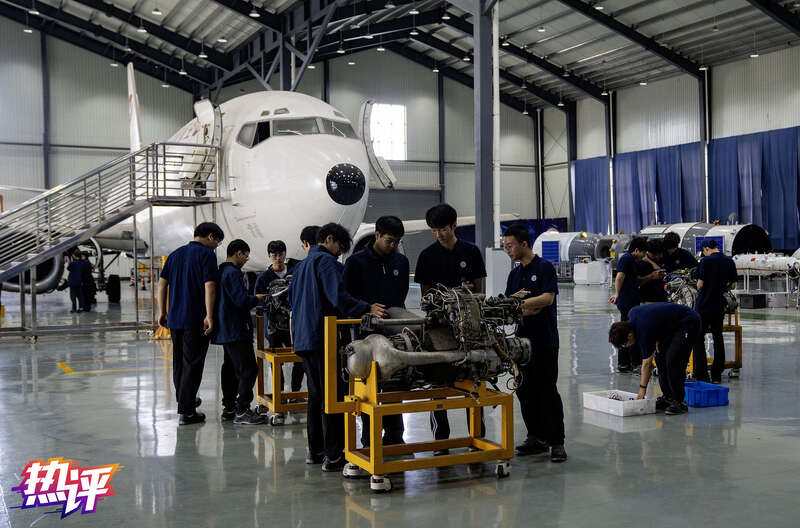
新设立大学主要是职业本科 意味着什么?
Yang Shi Xin Wen Ke Hu Duan· 2025-05-25 01:45
Core Viewpoint - The establishment of new vocational undergraduate institutions in China is aimed at enhancing vocational education and addressing the demand for skilled talent in the labor market [1][3]. Group 1: New Vocational Institutions - On May 22, the Ministry of Education announced the approval of 32 new undergraduate institutions, with over 70% being vocational colleges [1]. - The focus on vocational undergraduate institutions is part of a broader strategy to improve the structure of higher education and meet the needs of a skills-based society [1][3]. Group 2: Policy and Goals - The 2021 policy document from the Central Committee and State Council aims for vocational undergraduate education to have an enrollment scale not less than 10% of higher vocational education by 2025, although current progress is still lacking [3]. - There is a need to control the establishment of new general undergraduate institutions while encouraging vocational ones, as many vocational schools have been focusing on升学 (academic advancement) rather than vocational training [3][4]. Group 3: Changing Perceptions - Recent trends show that high-scoring students are increasingly choosing vocational undergraduate programs over traditional ones, recognizing the value of practical skills for employment [4]. - The emphasis on maintaining a vocational education focus and fostering partnerships with industries is crucial for the acceptance and success of vocational institutions [4][5]. Group 4: Future Prospects - Some vocational undergraduate programs have already surpassed traditional undergraduate programs in admission scores, indicating a potential shift in perception and value of vocational education [5].
城市24小时 | 被上海反超,深圳能否守位“外贸第一城”
Mei Ri Jing Ji Xin Wen· 2025-05-24 14:01
Core Points - Shenzhen's total import and export volume for the first four months of 2025 reached 1.39 trillion yuan, a decrease of 1.0% year-on-year, with exports at 829.34 billion yuan (down 7.0%) and imports at 565.22 billion yuan (up 9.4%) [1] - Shanghai's foreign trade for the same period was 1.40 trillion yuan, an increase of 1.0% year-on-year, with exports at 629.02 billion yuan (up 13.8%) and imports at 775.82 billion yuan (down 7.4%) [1] - Shanghai has maintained a lead over Shenzhen in foreign trade, with Shanghai's total import and export volume for Q1 2025 at 1.005385 trillion yuan (down 2.7%) compared to Shenzhen's 990.104 billion yuan (down 2.8%) [1] - In 2024, Shenzhen's foreign trade volume surged to 4.5 trillion yuan, a year-on-year increase of 16.4%, surpassing Shanghai's 4.27 trillion yuan [1] Trade Dynamics - Shenzhen's foreign trade dependency ratio exceeded 120% in 2024, indicating a higher sensitivity to global economic fluctuations compared to Shanghai [2] - In April 2025, Shenzhen's trade with major partners showed mixed results, with imports and exports to ASEAN and the US declining by 4.1% and 22.6% respectively, while trade with Taiwan and the EU increased by 29.4% and 8.1% [2] - Despite challenges, Shenzhen's trade showed resilience with a total of 404.61 billion yuan in April, a year-on-year increase of 3.8%, marking two consecutive months of positive growth [2] Policy Responses - Both Shenzhen and Shanghai have initiated measures to stabilize foreign trade, including encouraging companies to expand globally and invest in research and development to enhance product competitiveness [5] - Shenzhen's municipal government has emphasized the need to adapt to changing circumstances and attract foreign investment to meet economic targets [5] Future Outlook - The competition between Shenzhen and Shanghai for the title of "Foreign Trade First City" remains uncertain, with both cities contributing significantly to China's foreign trade stability [6]

教育部拟同意设置一批高校,23所公办职业本科获公示
Xin Jing Bao· 2025-05-23 09:00
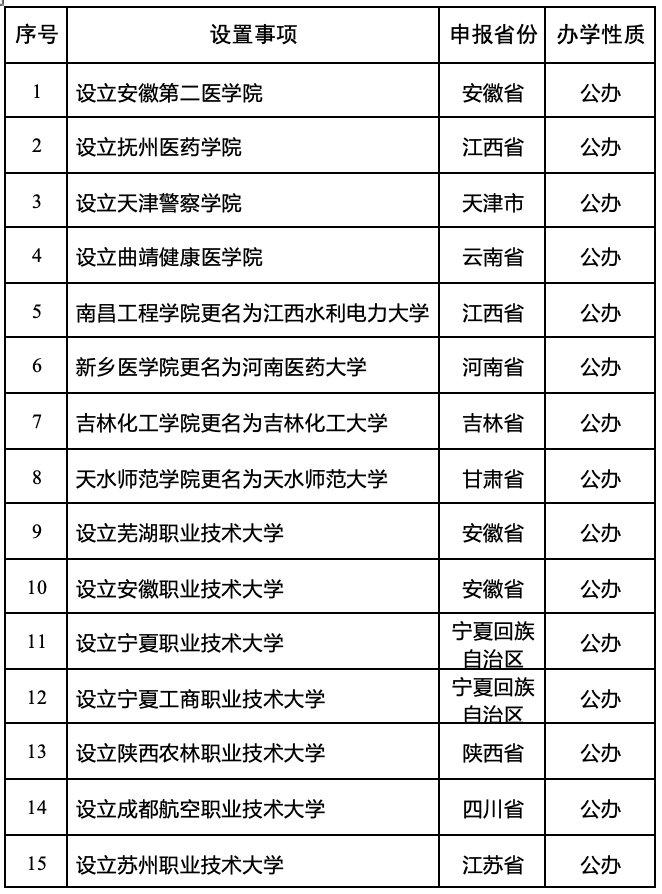
Core Points - The Ministry of Education has announced the proposed establishment of 32 new higher education institutions, including 23 public vocational undergraduate colleges [1][2] - Since 2019, the government has been promoting the upgrade of vocational colleges to vocational universities at the undergraduate level [1][2] - The target for vocational undergraduate education enrollment is set to be no less than 10% of the enrollment scale of higher vocational education by 2025 [2] Summary by Category Proposed Vocational Undergraduate Institutions - The list includes institutions such as Wuhu Vocational Technical University, Anhui Vocational Technical University, and Ningxia Vocational Technical University among others [1][3][4] - The total number of vocational undergraduate universities is expected to exceed 80 with the recent approvals [2] Other Institutional Changes - Four new public institutions are proposed: Anhui Second Medical College, Fuzhou Medical College, Tianjin Police College, and Qujing Health College [2][3] - Four existing institutions are undergoing name changes, including Nanchang Engineering College to Jiangxi Water Resources and Electric Power University [2][3] - One independent college, Shaoxing University Yuanpei College, is transitioning to Shaoxing University of Technology [2][3]