AI inference

Search documents
全球半导体:尽管三星扩大普通 DRAM 产能,供应短缺仍将持续-Global Semiconductors-Supply Shortage to Persist despite Samsung’s Commodity DRAM Expansion
2025-12-03 02:16
Summary of Conference Call on Global Semiconductors and Samsung Electronics Industry Overview - The semiconductor industry is currently facing a supply shortage, which is expected to persist despite Samsung Electronics' expansion in commodity DRAM production [1][4][6]. Key Company: Samsung Electronics - Samsung Electronics is reallocating 30-40% of its 1anm HBM3E capacity to 1bnm capacity for conventional DRAM due to the higher profitability of conventional DRAM, which has reached 60% [1][2]. - The company is focusing on producing DDR5, LPDDR5X, and GDDR7 memory types as part of this transition [2]. - HBM3E pricing is projected to decline by over 30% next year, prompting Samsung to prioritize conventional DRAM production [2]. Core Insights - Samsung is expected to prioritize migrating legacy nodes of 1znm and below to 1bnm rather than converting 1anm capacity currently allocated to HBM3E production [3]. - If Samsung converts 25kwpm of HBM capacity into 1bnm, it could increase its commodity DRAM capacity by 15%, from 530kwpm to 610kwpm, although actual bit growth will be lower due to the time required for full conversion [3]. - The overall memory supply shortage is anticipated to continue, driven by strong demand for AI inference [6]. Price Projections - Commodity DRAM price growth is projected to moderate in the second half of 2026, while HBM supply shortages may resurface [1][4]. Risks - Potential risks that could impact Samsung's share price include: - Delays in HBM shipment approvals to key customers [9]. - Weaker-than-expected PC sales affecting NAND demand [9]. - Aggressive investments by competitors in memory semiconductors impacting prices [9]. - Intensified competition in the handset market reducing margins for Samsung [9]. - Major appreciation of the Korean won affecting earnings [9]. Valuation - The 12-month target price for Samsung Electronics is set at W170,000, based on a sum-of-the-parts (SOTP) methodology referencing global peers [8]. Conclusion - The semiconductor industry, particularly in the context of Samsung Electronics, is navigating a complex landscape of supply shortages and shifting production priorities, with significant implications for pricing and profitability in the coming years.
X @Ansem
Ansem 🧸💸· 2025-11-10 18:14
AI Infrastructure Challenges - Power is identified as the primary constraint for AI development currently [1] - Cooling technologies are undergoing significant advancements to accommodate increasing GPU Thermal Design Power (TDP) and Megawatt-class racks [1] - Shortages are occurring in Printed Circuit Board (PCB) manufacturing for GPUs/ASICs [1] - Optical technology is rapidly expanding to support the transition from 100 Megawatt (MW) to over 1 Gigawatt (GW) data centers [1] - Storage and memory demands are surging due to AI inference and video/image generation [1]
A Look Inside the FASTEST Data Center in the WORLD
Matthew Berman· 2025-10-31 17:25
What if you built a chip, but it was the size of a dinner plate that is 50 times the size of a traditional chip. This is Cerebras' wafer scale engine. And the size is not just for show.It's that big. So, they can hold the memory on the chip itself, vastly reducing the latency. This allows the chip to be up to 30 times faster than a traditional chip.To house this behemoth of a chip, Cerebrus built out an incredible data center in Oklahoma City, and the CEO took me on a tour. This data center has two gigantic ...


X @Cointelegraph
Cointelegraph· 2025-10-29 13:15
Decentralized AI - Telegram founder Pavel Durov unveils Cocoon, a decentralized network for private AI inference [1] - Cocoon is built on TON [1]
Qualcomm announces new data center AI chips to target AI inference
Youtube· 2025-10-27 14:25
Core Viewpoint - Qualcomm is pivoting towards AI chips, specifically targeting the inference market, with plans to launch new data center AI chips in 2026 and has announced its first major customer, a Saudi-backed AI startup called Humane [1][6]. Group 1: Market Opportunity - Qualcomm aims to capture a portion of the nearly $6 trillion to $7 trillion expected in data center spending through 2030, with even a 5% market share potentially transforming its business [3]. - The company believes the inference market, which involves running AI models, will be enormous, as it is utilized billions of times daily [2]. Group 2: Product Offering - Qualcomm's new products will include complete server systems based on their hexagon neural processing unit (NPU) chips, which are already used in billions of smartphones globally [4]. - The NPU chips will feature 768 gigabytes of memory per card, surpassing the offerings from Nvidia and AMD in similar rack settings, which is crucial for running larger AI models [4][5]. Group 3: Competitive Landscape - Qualcomm's entry into the AI chip market comes as major players like Nvidia and AMD dominate, but there is a growing demand for alternatives, particularly in the inference market [6]. - The company has indicated that even competitors like Nvidia and AMD could become customers for some of its components, highlighting the potential for collaboration despite competition [6]. Group 4: Cost Efficiency - Qualcomm emphasizes that its chips will offer a lower total cost of ownership (TCO) due to their power efficiency compared to traditional GPUs, which consume significantly more power [9]. - The company has not yet provided specific pricing details but aims to position its products as more cost-effective solutions for hyperscalers [8][9].


Could This Semiconductor Leader Become the New Face of Artificial Intelligence (AI)?
The Motley Fool· 2025-10-26 22:00
Core Insights - Nvidia has been the dominant player in the AI semiconductor market, holding an estimated 80% market share, but faces emerging competition that could challenge its position [2][12] - Broadcom is positioning itself as a significant competitor in the AI chip market, particularly with its custom application-specific integrated circuits (ASICs) designed for AI inference applications [4][8] Company Performance - Nvidia reported $41 billion in revenue in the last quarter, while Broadcom's AI revenue was $5.2 billion, indicating a substantial gap [4] - Broadcom's AI revenue grew by 63% year-over-year, surpassing Nvidia's 56% growth in data center revenue, suggesting a shift in market dynamics [6][12] Market Trends - The demand for AI inference applications is increasing, outpacing the need for AI model training, which is beneficial for Broadcom's custom processors [7][8] - By 2030, it is projected that 80% of chips performing AI inference tasks will be ASICs, a significant increase from 15% last year, indicating a growing market for Broadcom [12] Strategic Partnerships - Broadcom has secured a deal with OpenAI to design and deploy 10 gigawatts of custom AI processors from 2026 to 2029, potentially adding $100 billion to its revenue during this period [10][11] - The company has a strong revenue backlog of $110 billion, which is expected to grow further due to recent contracts, including the one with OpenAI [11] Competitive Positioning - Broadcom holds a 70% share in the custom AI processor market and aims to increase its overall AI chip market share to 24% by 2027, more than doubling its estimated share of 11% in 2025 [13] - The company's growth potential is underscored by its price/earnings-to-growth (PEG) ratio of 0.55, indicating it may be undervalued relative to its growth prospects [15][16]

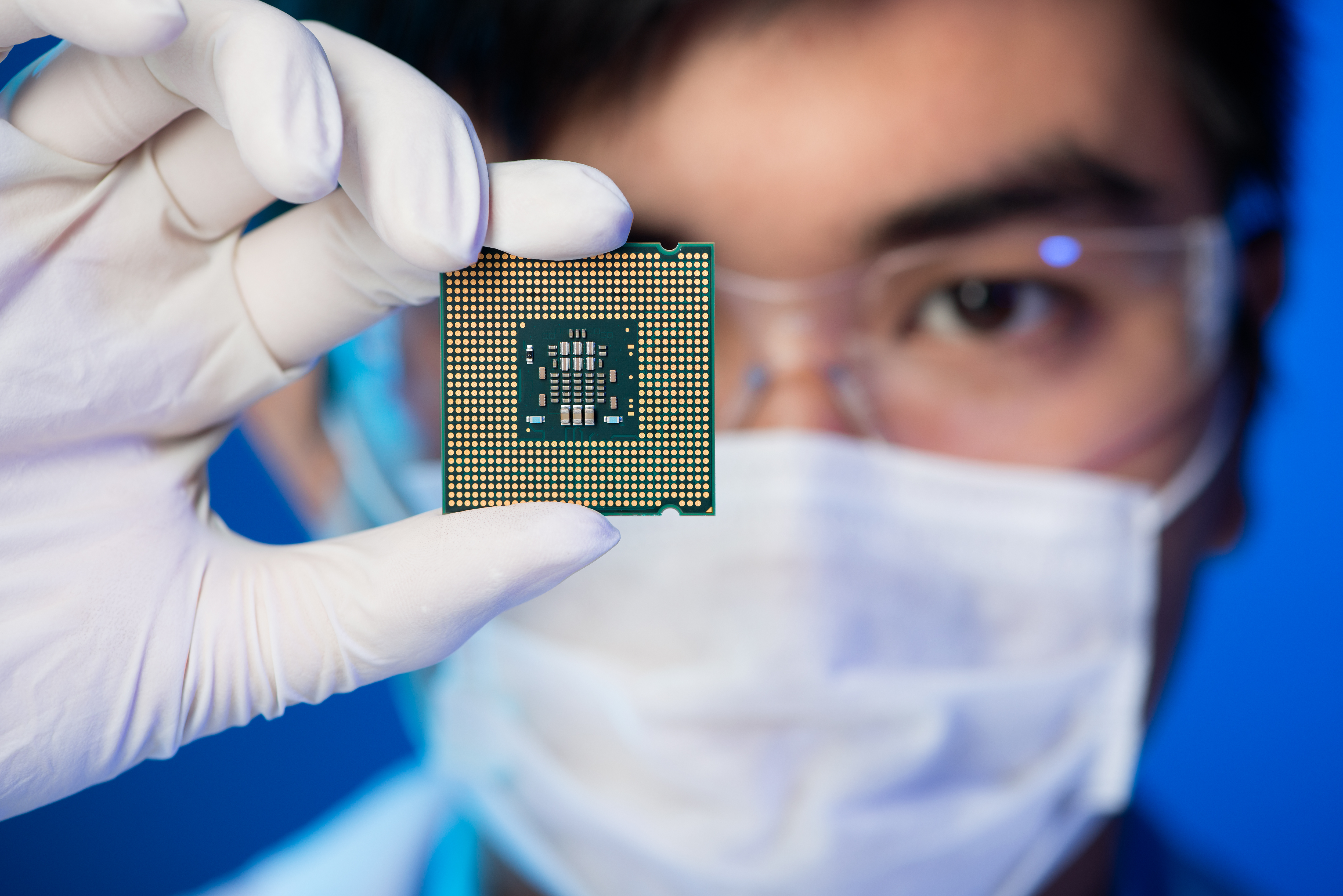
Intel's 3Q Takeaways: NVIDIA Partnership, Government Cash, and What It Means for the Future
247Wallst· 2025-10-24 12:58
Core Insights - Intel is strengthening its partnership with NVIDIA to enhance its AI inference strategy and broaden its role in hybrid computing [1] Group 1: Partnership and Strategy - The collaboration aims to leverage NVIDIA's AI capabilities alongside Intel's hardware to create a more robust AI inference solution [1] - This partnership is expected to position Intel more competitively in the rapidly evolving AI market [1] Group 2: Hybrid Computing - Intel's expanded role in hybrid computing will focus on integrating AI technologies into its existing product lines [1] - The initiative is part of a broader strategy to address the growing demand for AI-driven solutions across various industries [1]


亚洲科技 - 存储行业:2026 年 vs 超级周期-Asia Technology-Memory – 2026 vs. Super Cycles
2025-10-24 01:07
Summary of Conference Call on Memory Industry and Key Companies Industry Overview - The current memory cycle is experiencing an upturn driven by rising hyperscaler capital expenditures and AI inference, leading to increased valuations and focus on the cycle's durability [1][2][3] - Historical patterns indicate that memory cycles often repeat but do not follow a predictable schedule, making it essential to build resilient portfolios [3][4] Key Companies Discussed Samsung Electronics (005930.KS) - Price target raised from W111,000 to W120,000, reflecting an 8% increase [5][27] - Expected EPS growth of 11% for 2026, driven by favorable memory pricing [8][31] - Anticipated DRAM pricing growth of 38% YoY in 2026, up from a previous estimate of 25% [30] - Management guidance suggests a strong outlook for OLED shipments, particularly with the upcoming iPhone 18 foldable launch [30][32] SK Hynix (000660.KS) - Price target increased from W480,000 to W570,000, indicating an 18% rise [5][27] - EPS estimates raised by 27% for 2026, supported by a favorable memory pricing cycle [8][43] - Anticipated DRAM price increases of 20% QoQ in 4Q25 and 22-30% YoY in 2026 [23] Core Insights and Arguments - Memory stocks historically peak 4-8 months before earnings peak, suggesting a contrarian approach may be beneficial when identifying exit points [8][15] - The current market rally is largely driven by AI capital expenditures, with significant implications for memory demand [28] - The average performance of memory stocks has been approximately 178% year-to-date, indicating strong market sentiment [10] - Analysts believe that the consensus is underestimating the potential for a sharp upturn in memory pricing, with a historical average performance of 48% earnings upgrades for Asian memory stocks this year [11][19] Additional Important Points - The memory industry is characterized by high volatility, and while current valuations are not particularly attractive, they do not predict future returns effectively [19] - The potential for margin pressure exists in downstream hardware stocks due to rising input costs [20] - The market is currently optimistic about AI infrastructure spending, which is expected to drive demand for memory products [14][28] - Risks include the possibility of a slowdown in capital expenditures and the unpredictability of market trends, particularly in the AI sector [25][29][44] Financial Projections - Revenue expectations for Samsung Electronics are revised to W330.5 billion for FY25 and W391.1 billion for FY26, with net income projected to reach W38.3 billion in FY25 and W73.9 billion in FY26 [34][36] - For SK Hynix, the financial outlook is similarly positive, with significant increases in EPS and price targets reflecting a robust memory pricing environment [43][44] This summary encapsulates the key points from the conference call regarding the memory industry and the performance outlook for Samsung Electronics and SK Hynix, highlighting the cyclical nature of the market and the impact of AI on future demand.
Intel(INTC) - 2025 Q3 - Earnings Call Transcript
2025-10-23 22:02
Financial Data and Key Metrics Changes - In Q3, the company reported revenue of $13.7 billion, exceeding guidance and up 6% sequentially [19] - Non-GAAP gross margin was 40%, four percentage points better than guidance, driven by higher revenue and a favorable mix [20] - Earnings per share for Q3 were $0.23, compared to guidance of break-even EPS, due to higher revenue and stronger gross margin [20] - Operating cash flow was $2.5 billion, with gross CapEx of $3 billion and positive adjusted free cash flow of $900 million [21] Business Line Data and Key Metrics Changes - Intel products revenue was $12.7 billion, up 7% sequentially, driven by strong demand in both client and server segments [22] - Client Computing Group (CCG) revenue was $8.5 billion, up 8% quarter-over-quarter, supported by a stronger pricing mix and Windows 11-driven refresh [22] - Data Center and AI (DCAI) revenue was $4.1 billion, up 5% sequentially, driven by improved product mix and higher enterprise demand [23] - Intel Foundry revenue was $4.2 billion, down 4% sequentially, but operating loss improved by $847 million due to favorable comparisons [25][26] Market Data and Key Metrics Changes - The company noted that customer purchasing behavior and inventory levels are healthy, with industry supply tightening materially [18] - The client consumption total addressable market (TAM) is expected to approach 290 million units in 2025, marking two consecutive years of growth [23] - Demand for server CPUs is expected to grow due to the rapid expansion of AI infrastructure and underinvestment in traditional infrastructure [24] Company Strategy and Development Direction - The company is focused on rebuilding its market position through AI and enhancing its x86 architecture to meet new computing demands [9][10] - A new Central Engineering Group has been created to unify engineering functions and improve product development efficiency [10] - The company aims to position itself as a compute platform of choice for AI inference workloads, with plans to launch successive generations of inference-optimized GPUs [13] Management's Comments on Operating Environment and Future Outlook - Management expressed cautious optimism regarding macroeconomic conditions and the potential for CPU TAM growth in 2026 [18] - The company is committed to improving its competitive position and addressing supply constraints while managing customer demand effectively [18][45] - Management highlighted the importance of building long-term trust with customers in the Foundry business and ensuring reliable performance and yield [40][41] Other Important Information - The company received significant funding from the U.S. government and strategic investments from Nvidia and SoftBank Group, strengthening its cash position [21] - The company plans to prioritize deleveraging and maintain a disciplined approach to capital expenditures [51] Q&A Session Summary Question: On the Foundry side, do any of the collaborative announcements or equity investments contribute to increased confidence? - Management noted that partnerships, particularly with SoftBank, are expected to drive demand for Foundry capacity, and progress on technology nodes is encouraging [33] Question: Can you walk us through the gross margin dynamics for 2026? - Management indicated that while Altera's absence will be a headwind, improvements in Foundry gross margins are expected as the product mix shifts towards leading-edge technologies [36] Question: How are conversations with customers regarding Foundry commitments progressing? - Management emphasized the importance of demonstrating yield improvement and reliability to build customer trust and secure commitments [40] Question: Where is the shortage in server CPUs coming from? - Management stated that shortages are widespread, particularly in Intel 10 and 7, and are exacerbated by substrate shortages in the market [45] Question: Is the outlook for demand outpacing supply focused on server or client products? - Management confirmed that both segments are experiencing tight supply, with expectations of peak shortages in Q1 [48] Question: How has the improved cash position influenced investment strategies? - Management indicated that while deleveraging remains a priority, there is flexibility to increase CapEx if demand justifies it [51] Question: Can you provide an update on the Nvidia relationship and product timing? - Management highlighted the collaboration with Nvidia as a significant opportunity to expand the total addressable market without cannibalizing existing products [72]
Intel Introduces Leading Edge Data Center GPU: Will it Boost Prospect?
ZACKS· 2025-10-15 16:21
Core Insights - Intel Corporation has launched a new GPU chip named Crescent Island, specifically designed for AI inference workloads, reflecting the shift in the AI ecosystem from training large models to real-time application [1][7] - The global AI inference market is projected to reach $97.24 billion in 2024, with a compound annual growth rate of 17.5% from 2025 to 2030, indicating a significant growth opportunity for Intel [3] - Intel's new GPU is based on the Xe architecture, optimized for cost and energy efficiency, and supports a wide range of data types, making it suitable for various inference applications [2] Competitive Landscape - Intel faces strong competition in the AI inference market from NVIDIA and AMD, with NVIDIA's products offering high speed and efficiency, while AMD's MI350 Series GPU has set new benchmarks in generative AI [4][5] - The competitive pressure from NVIDIA's Blackwell line and AMD's offerings presents challenges for Intel as it seeks to expand its AI portfolio [7] Financial Performance - Intel's stock has increased by 62.3% over the past year, outperforming the industry growth of 30.5% [6] - The company's shares currently trade at a price/book ratio of 1.48, which is lower than the industry average of 37.33, indicating potential undervaluation [8] - Earnings estimates for 2025 have remained unchanged, while estimates for 2026 have declined over the past 60 days, suggesting some uncertainty in future performance [9]