
mRNA技术

Search documents
中国创新药迈入全球化临界点,云顶新耀擘画进阶新篇
2 1 Shi Ji Jing Ji Bao Dao· 2025-12-23 09:23
Core Insights - By 2025, China's innovative pharmaceutical industry is projected to have a market size ranking second globally, with approximately 30% of innovative drugs in development worldwide [1] - The total amount of foreign licensing for domestic innovative drugs has surpassed $100 billion, doubling compared to 2024 [1] - The shift from a Western-dominated landscape in biopharmaceutical innovation is evident, as Chinese biotech companies have outperformed their U.S. counterparts in stock price growth over the past year [1] Industry Development - The past decade has seen significant reforms in drug regulation, fostering an ecosystem for innovation and facilitating capital flow, supported by China's large population and manufacturing capabilities [1] - Despite impressive growth, challenges remain, including the total market capitalization of Chinese biotech companies being less than 15% of their U.S. counterparts and lower upfront licensing fees [1] Commercialization Strategies - Leading innovative pharmaceutical companies are advancing towards the global value chain, with firms like Kangfang Biotech transitioning from licensing revenue to self-driven commercialization [2] - Companies are focusing on both global product development and establishing scalable commercialization platforms, which is becoming a core strategy for Chinese biotech firms [2] Global Competition - Chinese pharmaceutical companies are transitioning from "fast-followers" to "first movers," evidenced by significant business development deals with major international firms [3] - The emergence of mRNA technology is notable, with several Chinese companies making strides in this area, including clinical trials for mRNA-based vaccines [3][4] Market Dynamics - The commercialization of innovative drugs in China is accelerating, with 56 innovative drugs approved by the National Medical Products Administration in the first eight months of 2025 [6] - Successful commercialization is critical, as only about 5% of drugs entering clinical trials make it to market, and only 20% of those achieve profitability [6] Future Outlook - Companies like CloudTop are aiming to enhance their commercialization capabilities and expand their product pipelines significantly by 2030, with projected revenues exceeding 15 billion yuan [4][11] - The industry is expected to see a consolidation of platform companies with revenues between 5 billion to 10 billion yuan, indicating a shift in the commercialization landscape [9][10]
BioNTech Closes Acquisition of CureVac N.V. Including Subsequent Offering Period to Strengthen its Unique Position in the mRNA Field
Globenewswire· 2025-12-18 09:45
Core Viewpoint - BioNTech has successfully completed the acquisition of CureVac, enhancing its mRNA technology capabilities and supporting its oncology strategy [1][6]. Group 1: Acquisition Details - The acquisition of CureVac was finalized on December 18, 2025, with the subsequent offering period for CureVac shares expiring at 12:01 a.m. Eastern Time on the same day [1]. - A total of 195,341,219 CureVac shares, representing approximately 86.75% of the outstanding shares, were tendered in the exchange offer [3][6]. - BioNTech plans to complete the compulsory acquisition of the remaining CureVac shares in January 2026 as part of a post-offer reorganization [3][6]. Group 2: Strategic Implications - The acquisition aims to complement BioNTech's proprietary technologies in mRNA design, delivery formulations, and manufacturing, thereby strengthening its position in the global mRNA industry [1][6]. - BioNTech's oncology strategy focuses on mRNA-based cancer immunotherapy candidates and a bispecific antibody candidate, pumitamig (BNT327/BMS986545), developed in collaboration with Bristol Myers Squibb [1][6]. - The merger is seen as a synergy of two pioneering German mRNA firms, contributing to the country's innovation agenda [2]. Group 3: Management and Operations - Following the acquisition, the Management Board of CureVac SE will consist of BioNTech executives, while former CureVac board members have resigned [2]. - CureVac will continue its existing organizational processes to ensure business continuity, while BioNTech will conduct strategic and operational analyses for future organizational setup [2][6].



mRNA疫苗为何如此强大?Cell论文揭秘:核苷修饰的mRNA与LNP完美协作,缺一不可
生物世界· 2025-12-18 00:28
Core Viewpoint - The research published by the University of Pennsylvania reveals that the strong immune response triggered by mRNA vaccines is a result of the synergistic interaction between two core components: modified mRNA and lipid nanoparticles (LNP), which together guide the immune system to produce effective germinal center responses, leading to the generation of durable neutralizing antibodies and memory B cells [1][2][18]. Group 1: Mechanism of mRNA Vaccines - mRNA vaccines deliver mRNA encoding viral proteins to human cells, prompting them to produce viral antigens and train the immune system. Early studies indicated that unmodified mRNA could cause excessive inflammatory responses, which scientists mitigated through nucleotide modifications [5][6]. - The study challenges the traditional view that modified mRNA is "immune-silent," demonstrating that mRNA components can induce the production of type I interferons (IFN-α and IFN-β), which activate dendritic cells (DC) and enhance the differentiation of follicular helper T (Tfh) cells, crucial for germinal center responses [8][9]. Group 2: Role of Lipid Nanoparticles (LNP) - LNPs, typically seen as mere carriers for mRNA, possess significant adjuvant activity, directly regulating the transcriptional program of dendritic cells and promoting Tfh cell differentiation [10][11]. - LNPs induce dendritic cells to express soluble CD25, which neutralizes IL-2, a cytokine that inhibits Tfh cell differentiation, thereby facilitating Tfh cell development [11]. - The study shows that LNPs enhance immune signaling locally at the injection site, explaining their high efficiency and safety [11][12]. Group 3: Synergistic Effects of mRNA and LNP - The research indicates that both mRNA and LNP components are essential for optimal immune responses. Using LNP alone with recombinant proteins resulted in weaker immune reactions compared to the combination with modified mRNA [13][14]. - The presence of mRNA enhances the quality of Tfh cells, making them more likely to produce IFN-γ and IL-21, which are critical for B cell responses, ultimately leading to stronger neutralizing antibody titers [13][14]. Group 4: Implications for Future Vaccine Design - This study not only elucidates the mechanisms behind the success of mRNA vaccines but also provides a blueprint for the design of next-generation vaccines. Adjustments to mRNA modifications or LNP components could precisely regulate the type and intensity of immune responses [16][18]. - The principles derived from this research could extend to cancer vaccines or infectious disease vaccines, enabling more effective immunotherapies [16].

腾讯入局押注下一代RNA制药;三大国家队资本罕见联手押注汽车芯片“特色工艺” | 每周十大股权投资
Sou Hu Cai Jing· 2025-12-15 08:14
Financing Transactions - Hongxin Biotech completed Series A financing, attracting top venture capital firms such as IDG Capital, Jingwei Venture Capital, and Tencent Investment, indicating strong market confidence in China's original RNA platform technology [1] - Jita Semiconductor completed Series D financing with investments from CITIC Capital, China International Capital Corporation, and China Electronics, highlighting its strategic position in the national semiconductor industry chain [2] - Weilian Star completed Series C financing of 400 million RMB, with investors including Hongtai Fund and CICC, focusing on next-generation communication applications in the 5G-A/6G era [3] - Zongwei Technology completed Series C financing of several hundred million RMB, with investments from Innovation Works and BlueRun Ventures, recognized as a key player in industrial automation [4] - Yundongchu Technology completed Series C financing of 500 million RMB, with a strong lineup of investors, establishing itself as a leader in commercializing quadruped robots [5] - Beidou Zhili completed Series B financing of several hundred million RMB, with investments from GAC Group and Shangqi Capital, recognized for its integration of high-precision positioning and intelligent cockpit technologies [6] - Houmo Intelligent completed Series B financing, focusing on a disruptive "storage-computing integration" architecture to challenge traditional chip performance [7] - Unconventional AI raised $475 million in seed funding from top venture capital firms, exploring AI simulation computing based on semiconductor physical properties [8] - Castelion completed $350 million in Series B financing, with significant investment from Silicon Valley funds, focusing on hypersonic technology [9] - BlossomHill Therapeutics completed $48 million in B+ financing, addressing drug resistance in cancer and autoimmune diseases through innovative drug design [10]
mRNA一哥带来的教训:野心、机遇与现实
3 6 Ke· 2025-12-11 23:17
Core Insights - Moderna's ambitious vision of becoming a leading pharmaceutical company has faced significant setbacks, with its market value plummeting by 90% from its peak of nearly $200 billion to under $10 billion [1][2] - The company's challenges stem from both internal strategic miscalculations and external political pressures, particularly following the COVID-19 pandemic [6][9] Group 1: Ambition and Market Dynamics - Moderna initially thrived due to the rapid development and approval of its mRNA COVID-19 vaccine, which generated $18.471 billion in revenue in 2021, propelling it into the top 20 global pharmaceutical companies [3][4] - The company aimed to leverage its mRNA technology to create a "respiratory vaccine empire" and tackle cancer with personalized vaccines, but overestimated the technology's immediate applicability beyond COVID-19 [4][5] - The failure of the CMV vaccine in Phase III trials, which had a potential market size of $2-5 billion, further eroded investor confidence and led to a significant drop in stock price [5][10] Group 2: Strategic Missteps and Financial Pressure - Moderna's aggressive expansion strategy post-COVID led to a fourfold increase in employee count from 1,500 to nearly 6,000 and substantial investments in global production facilities, resulting in over $1 billion in losses [6][7] - The company's R&D expenses surged from $496 million in 2019 to $4.845 billion in 2023, reflecting a reckless spending approach driven by overconfidence in mRNA technology [6][7] - Internal attempts to implement cost control measures were rejected, leading to a lack of accountability and vulnerability to external policy changes [7][8] Group 3: External Challenges and Regulatory Environment - Political and regulatory shifts, including the withdrawal of a dual COVID/flu vaccine application, have compounded Moderna's difficulties, as the FDA's new requirements necessitate additional clinical trials [8][9] - The political landscape has become increasingly hostile towards mRNA vaccines, with significant funding cuts and public scrutiny affecting the entire sector [9][12] - Despite holding over $4 billion in cash reserves and ongoing revenue from its COVID-19 vaccine, the uncertainty surrounding its pipeline and external pressures leaves Moderna's future precarious [11][12]

沃森生物董事长李云春:以科学家精神做全球公共卫生的“中国贡献”
Quan Jing Wang· 2025-12-07 09:56
Core Viewpoint - The article discusses the transformation of China's biopharmaceutical industry and highlights the role of Watson Bio in this transition, emphasizing the importance of scientific spirit and innovative practices in overcoming industry challenges [2][3]. Group 1: Scientific Spirit - The biopharmaceutical industry in China is transitioning from "catching up" to "leading," requiring a scientific spirit characterized by patriotism, innovation, pragmatism, dedication, collaboration, and education [2]. - The balance between urgent public health needs and the long-term, high-risk nature of biopharmaceutical R&D is crucial, with the scientific spirit serving as an internal stabilizer [2]. - Watson Bio invests over 20% of its annual revenue in R&D, adopts a data-driven approach, collaborates with academic institutions, and focuses on public health issues [2][3]. Group 2: Role of the Company - Watson Bio's bivalent HPV vaccine has received prequalification from the World Health Organization, marking a significant step in making vaccines accessible [3]. - The company aims to evolve from a "supplier" to a "solution partner," emphasizing technology transfer, joint R&D for regional diseases, and ecosystem building for accessibility solutions [3]. Group 3: mRNA Platform - Watson Bio has established four core technology platforms, including mRNA technology, which allows for rapid vaccine development [4]. - The mRNA platform fundamentally changes the vaccine R&D paradigm, reducing development time from years to months through modular design and rapid iteration [4]. - The strategic focus of the mRNA platform includes creating a rapid response system for emerging infectious diseases and expanding into precision medicine for cancer treatment [4].


暴跌95%!裁员10%!这家mRNA巨头的断臂、贷款与豪赌
Xin Lang Cai Jing· 2025-11-28 04:37
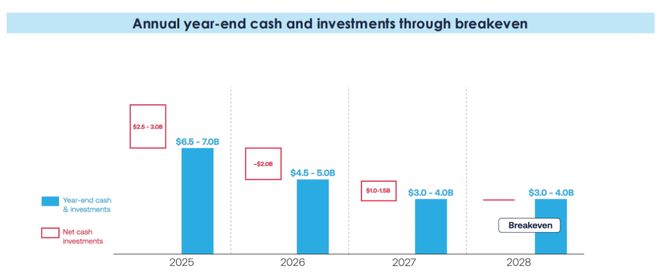
Core Insights - Moderna has announced a three-year strategic plan aiming for cash flow balance by 2028, focusing on oncology for new growth opportunities [1][5]. Financial Performance - In Q3 2024, Moderna reported revenue of $1 billion, a 45% decline compared to the same period in 2023, with a net loss of $200 million [3]. - The revenue from COVID-19 vaccines accounted for $971 million, while the recently approved RSV vaccine contributed only $2 million [3]. - The company has revised its 2025 revenue guidance down to $1.6 billion to $2 billion, reducing the upper limit by $200 million [3]. Stock Performance - Moderna's stock has plummeted over 95% from its peak of $484.47 in 2021, with a market cap dropping to approximately $9 billion by November 2025 [4]. Cost Management and Restructuring - To address losses, Moderna has reduced cash cost expectations for 2026 and 2027 to approximately $4.2 billion and $3.5 billion to $3.9 billion, respectively [5]. - The company has implemented a 10% workforce reduction and terminated four projects to streamline operations [5]. Vaccine Development Focus - Moderna plans to continue expanding its vaccine portfolio over the next three years, introducing three new seasonal vaccines: flu, COVID/flu combination, and norovirus vaccines [5]. - The company aims to leverage its experience from COVID-19 vaccine sales to promote other seasonal vaccines [9]. Oncology Pipeline - Long-term, Moderna is shifting its R&D focus towards oncology, with plans to invest more in this area post-2028 [10]. - The oncology pipeline includes personalized cancer vaccines, cancer antigen therapies, TCE therapies, and cell therapies [11]. Key Oncology Projects - mRNA-4157, a personalized mRNA cancer vaccine, has shown promising results in clinical trials, reducing the risk of recurrence and death in melanoma patients by 49% when combined with pembrolizumab [13]. - Moderna is preparing for the commercial production of mRNA-4157 at a dedicated facility in Massachusetts [13]. Conclusion - Moderna is navigating a challenging transition period, focusing on cost management and strategic realignment towards oncology to achieve cash flow balance and long-term growth [14].
Maravai LifeSciences (NasdaqGS:MRVI) 2025 Conference Transcript
2025-11-19 11:02
Summary of Maravai LifeSciences Conference Call Company Overview - **Company**: Maravai LifeSciences (NasdaqGS:MRVI) - **Industry**: Life Sciences Tools and Diagnostics Key Points and Arguments Management Changes and Business Restructuring - New management team and CEO have been in place for about five months, focusing on restructuring the business to adapt to a post-COVID environment [4][3] - Over $50 million in annualized expenses are being removed through reduced headcount, facility rationalization, and lower capital expenditures [4][5] - The organization has become leaner with instilled financial discipline to ensure effective spending [4][5] Financial Guidance and Revenue Outlook - Guidance was suspended in Q2 to reassess the business, but reinstated for Q3, projecting $49 million for Q4, indicating a significant sequential increase [6][7] - The company is focused on returning to revenue growth and achieving positive EBITDA and cash flow generation [5][6] Sales and Commercial Strategy - Positive trends observed in October, particularly in GMP consumables and CDMO orders, with biotech funding showing signs of improvement [9][10] - The sales team is concentrating on larger orders (over $25,000), which constitute about 60% of revenue, while smaller orders are less impactful [10][11] - The company is enhancing sales tools and business intelligence to improve revenue generation [12][10] Product Development and Innovation - A strategic shift towards fewer, more impactful products, such as ModTail technology, which enhances mRNA protein expression durability [14][15] - Introduction of IVT kits for discovery customers, with plans for further product rollouts in 2026 [15][18] - The MockViral kits and mass spec analytical services are driving growth in the BST business, with expectations for high single-digit growth rates [19][20] Market Trends and Regional Performance - Strong growth in the Americas and Europe, with a muted performance in China due to previous tariff issues [19][26] - The company anticipates growth in China, particularly in the BST segment, as relationships with suppliers strengthen [26][27] CDMO Business and Capacity Utilization - Increased demand for CDMO services as programs move to clinical stages, with a focus on technical expertise and responsiveness [28][29] - The company is exploring options for utilizing excess capacity built during the COVID period, particularly in light of onshoring trends [29][30] Financial Projections for 2026 - Projected revenue from vaccine-related CleanCap products is estimated at $10 million to $20 million annually starting in 2026 [31][32] - Orders in hand are reportedly higher than the previous year, with a high degree of confidence in their realization [35][36] - Positive trends in biotech funding are expected to translate into increased demand within six months [42][43] Cost Management and Profitability - The company has downsized by 25% of its headcount, centralizing operations to improve decision-making and reduce costs [45][46] - The business is structured for scalability, allowing for increased profitability without significant additional operating expenses [46][44] Additional Important Insights - The focus on impactful product development and strategic customer engagement is expected to drive future growth [14][38] - The company is optimistic about capturing market opportunities in mRNA and oncology sectors over the next 12-18 months [38][39]

近期流感发病率上升,如何展望后续走势?
2025-11-14 03:48
Summary of Key Points from the Conference Call Industry Overview - The conference call discusses the influenza industry, specifically focusing on the trends and projections for the flu season in 2025, with a particular emphasis on the H3N2 strain and its implications for public health and vaccine strategies. Core Insights and Arguments - **Early Flu Season**: The flu outbreak in 2025 is anticipated to occur earlier than usual, primarily due to the H3N2 strain, which has a higher mutation rate and lower herd immunity compared to the previous year's H1N1 strain. The peak is expected between mid-November and the end of December, with a smaller scale than in 2023 [1][2][4]. - **Detection and Treatment**: Current detection methods include nucleic acid testing and rapid tests that can differentiate between subtypes. The main antiviral medications are Oseltamivir and Marbofloxacin, with sufficient hospital reserves. However, there are concerns about Oseltamivir resistance, while no resistance to Marbofloxacin has been reported domestically [5][6][7]. - **Impact of Vaccination**: The flu vaccination rate in China is gradually increasing, particularly among school-aged children. Price sensitivity is a significant factor affecting vaccination willingness, with 100 yuan being a critical price point for younger populations [11][16]. - **Vaccine Technology**: There are two main types of flu vaccines: split vaccines and subunit vaccines. The latter has a higher purity and fewer side effects, although both types show similar effectiveness against H3N2 [10]. The potential for mRNA technology in flu vaccines is highlighted, offering rapid response capabilities and the possibility of developing combination vaccines [18]. - **Future Risks**: The flu season in 2026 may face dual risks from H1N1 and B-type influenza, depending on the prevalence of B-type flu in 2025. The immune barrier from previous infections or vaccinations typically lasts about six months but does not completely disappear [9][21]. Additional Important Content - **Flu Trends**: The fluctuation in flu incidence is influenced by various factors, including virus mutation, climate, vaccination rates, and herd immunity. The recent cold weather and declining immunity levels have contributed to the current surge in cases [8]. - **Global Context**: Internationally, early flu cases have increased compared to previous years, but there is no evidence suggesting that the overall scale will exceed that of 2023 [14]. - **Public Health Recommendations**: It is recommended to expand free vaccination coverage to high-risk groups, such as public service workers and staff in nursing homes, to enhance overall protection [17]. This summary encapsulates the critical points discussed in the conference call regarding the influenza landscape for 2025, highlighting the importance of vaccination, treatment options, and the anticipated trends in flu incidence.
新冠疫情时代的终结:辉瑞(PFE.US)拟清仓BioNTech(BNTX.US)股份
Xin Lang Cai Jing· 2025-11-13 11:29
Core Viewpoint - Pfizer is seeking to sell its remaining stake in COVID-19 vaccine partner BioNTech, marking the end of a highly profitable collaboration during the pandemic [1] Group 1: Pfizer's Actions - Pfizer plans to sell approximately 4.55 million American Depositary Receipts (ADRs) at a price range of $108 to $111.70 per share, potentially generating about $508 million if priced at the upper limit [1] - The company recently acquired obesity startup Metsera Inc. for $10 billion, aiming to replace declining COVID-19 business revenues with a new weight-loss drug [1] Group 2: BioNTech's Transition - BioNTech is returning to its original focus on cancer treatment research, utilizing accumulated funds to support its studies [1] - The company has entered into a collaboration agreement with Bristol Myers Squibb valued at up to $11.1 billion [1]
