双抗

Search documents
MNC巡礼:三星生物会议要点
Haitong Securities International· 2026-03-20 11:07
Investment Rating - The report does not provide a specific investment rating for Samsung Biologics [1] Core Insights - Samsung Biologics achieved a revenue growth of 30.3% in 2025, exceeding the previous guidance of 25-30%. The revenue growth guidance for 2026 is set at 15-20%, with potential upward revisions due to contributions from the U.S. facility and foreign exchange movements. The cumulative contract value surpassed USD 21.2 billion by the end of 2025 [2][4] - The company is focused on capacity expansion, particularly with the new U.S. facility and Plant 5 in Korea, which is expected to achieve high utilization rates once commercial production begins [2][4] - Samsung Biologics differentiates itself in the biologics manufacturing sector through superior quality, achieving a batch success rate of 99% compared to the industry average of 95%, and faster delivery times, completing plant construction in 24 months versus the industry average of 3-4 years [3][5] Summary by Sections 2025 Performance Review and 2026 Outlook - Samsung Biologics reported a revenue growth of 30.3% in 2025, with a cumulative contract value exceeding USD 21.2 billion. The company has set a revenue growth guidance of 15-20% for 2026, which may be revised upwards post-acquisition of the U.S. facility [2][4] Strategic Priorities for Plant 5 and the New U.S. Facility - The new U.S. facility is expected to start commercial production in Q2 2026, with plans for equipment upgrades and potential expansion from 60,000 liters to 200,000 liters. Plant 5 in Korea is on track to achieve over 80% utilization after ramp-up [2][4] Differentiation in Biologics Manufacturing - Samsung Biologics views Lonza and Fujifilm as key competitors and focuses on quality and speed as differentiators. The company employs a "cookie-cutter" model for plant construction, allowing for quicker market entry [3][5] Strategy and Outlook for ADCs and Other New Modalities - The company is well-positioned to capture market share in the ADC sector, with plans to offer end-to-end services starting in Q1 2027. The dedicated ADC facility is already under construction [5] U.S. vs. Korea Manufacturing Pricing - Manufacturing costs in the U.S. are higher due to labor costs being approximately double those in Korea. Samsung Biologics plans to pass some of these costs onto clients, anticipating lower margins for U.S. operations compared to its Korean facility [5] Long-Term Industry Capacity Oversupply - The company does not foresee a significant supply overhang in the industry for at least the next five years, citing stagnant productivity from large pharmaceutical companies and a continued trend towards outsourcing as key factors sustaining demand for CDMO services [2][5]
同源康医药-B(02410.HK):同源康生物引入若干投资者满足营运资金需求
Ge Long Hui· 2026-02-27 12:21
Core Viewpoint - The company is undergoing a capital increase for its subsidiary, Tongyuan Kang Biological, which will result in a significant reduction of its ownership stake and the subsidiary will no longer be a part of the group [1][2] Group 1: Capital Increase Details - The company and existing shareholders have entered into a capital increase agreement to raise approximately RMB 83.5 million, increasing the registered capital of Tongyuan Kang Biological from approximately RMB 14.0 million to about RMB 20.49 million [1] - Following the capital increase, the company's equity interest in Tongyuan Kang Biological will decrease from approximately 57.14% to 39.03% [1] - The capital increase is considered a disposal transaction due to the reduction in the company's shareholding [1] Group 2: Business Implications - Tongyuan Kang Biological is a biopharmaceutical company focused on dual antibodies, tri-antibodies, and ADC, operating independently from the group's core business [2] - The capital increase is expected to provide operational funding for Tongyuan Kang Biological, which is in its early stages and will require significant capital before commercialization [2] - The terms of the capital increase agreement were negotiated fairly and are based on normal commercial terms, considering the operational funding needs of Tongyuan Kang Biological and the contributions expected from investors [2]
中国创新药 2025 “破圈”全球
Guo Ji Jin Rong Bao· 2025-12-29 03:13
Core Insights - 2025 marks a pivotal year for China's innovative pharmaceuticals, with a significant increase in international collaborations and licensing agreements, indicating a shift from a pharmaceutical giant to a stronghold in the industry [1][3] - The total amount of outbound licensing agreements exceeded $100 billion, with upfront payments reaching $8.1 billion, showcasing a transition to multi-layered cooperation models [1][3] - China's biopharmaceutical market remains the second largest globally, with innovative drugs accounting for approximately 30% of global research, reflecting a critical leap from following to competing on a global scale [1][3] Internationalization - The internationalization of China's pharmaceutical industry saw explosive growth in 2025, highlighted by a surge in business development (BD) transactions and the popularity of "A+H" listings [3][4] - The total amount of outbound licensing for innovative drugs reached over $100 billion, a 75% increase from 2024, indicating a shift from merely selling products to actively engaging in global markets [3][4] - Notable BD transactions include significant agreements between major Chinese pharmaceutical companies and international firms, such as a $12.5 billion deal between Hengrui Medicine and GSK [3][4] Innovation - In 2025, advancements in cutting-edge technologies such as antibody-drug conjugates (ADC) and dual antibodies have shown promising results in cancer treatment [7][8] - The third-generation ADC technology has become mainstream, with significant efficacy demonstrated in treating solid tumors [7] - The dual antibody sector continues to lead, with Chinese companies achieving remarkable results in clinical trials, such as a 91% improvement in progression-free survival compared to existing treatments [8] Policy Support - The policy support for innovative drugs in China has reached unprecedented levels, with a notable increase in the number of approved innovative drugs [10][11] - The National Medical Products Administration approved 69 innovative drugs in 2025, a 44% increase from the previous year, covering various therapeutic areas [10] - The payment system for innovative drugs has been significantly upgraded, enhancing accessibility and affordability for patients [10][11] Mergers and Acquisitions - The pharmaceutical sector has seen a surge in mergers and acquisitions, with over 400 transactions announced globally, totaling approximately $111 billion, marking a 50% increase from 2024 [13][14] - Domestic mergers also showed strong activity, with significant deals indicating a shift towards quality improvement and resource consolidation among leading companies [13][14] - The trend reflects a transition from scale expansion to enhancing quality and efficiency, with companies focusing on high-value clinical pipelines [14]



医药生物行业跟踪周报:2026年战略性布局创新药,其性价比高-20251228
Soochow Securities· 2025-12-28 13:26
Investment Rating - The report maintains an "Accumulate" rating for the pharmaceutical and biotechnology industry [1] Core Insights - The number of innovative drugs listed in China continues to grow, with domestic products accounting for approximately half of the total market share. The R&D capabilities for innovative drugs in China are also increasing, attracting global attention. Notably, the number and value of domestic innovative drug business development (BD) transactions have reached new highs, with ADC, bispecific antibodies, small nucleic acids, and CAR-T being the four key R&D directions to watch in 2026 [15][21][22] - The Chinese innovative drug market has seen a significant increase in the number of new drug applications (NDA), with domestic products making up a growing proportion. From 2017 to 2024, the number of innovative drugs listed in China rose from 41 to 92, with domestic products accounting for 50% of the total by 2024 [17][21] - The report highlights that the license-out transaction volume and total amount for Chinese companies reached $92.03 billion in the first three quarters of 2025, a 77% increase compared to the total for 2024. The upfront payment for license-out transactions has also surpassed the total financing amount in the primary market for the same period [22][25] Summary by Sections Industry Trends - The A-share pharmaceutical index has shown a year-to-date increase of 14.29%, while the Hang Seng Healthcare Index has surged by 62.29% [3][8] - The report notes that the pharmaceutical sector has experienced fluctuations, with raw materials and medical devices showing positive growth [8] R&D Progress and Company Dynamics - The report provides an overview of the R&D progress for innovative and modified drugs, including approvals and clinical applications [5] - It lists key companies to watch in various sub-sectors, including innovative drugs, research services, and medical devices, with specific recommendations for companies like Innovent Biologics, Hengrui Medicine, and WuXi AppTec [11][12] Market Insights and Regulatory Observations - The report tracks the price-to-earnings ratio of the pharmaceutical index, noting that it is currently lower than historical averages [5] - It emphasizes the importance of the regulatory environment and market dynamics in shaping the future of the pharmaceutical industry [5]


创新药大爆发
Bei Jing Shang Bao· 2025-12-10 12:13
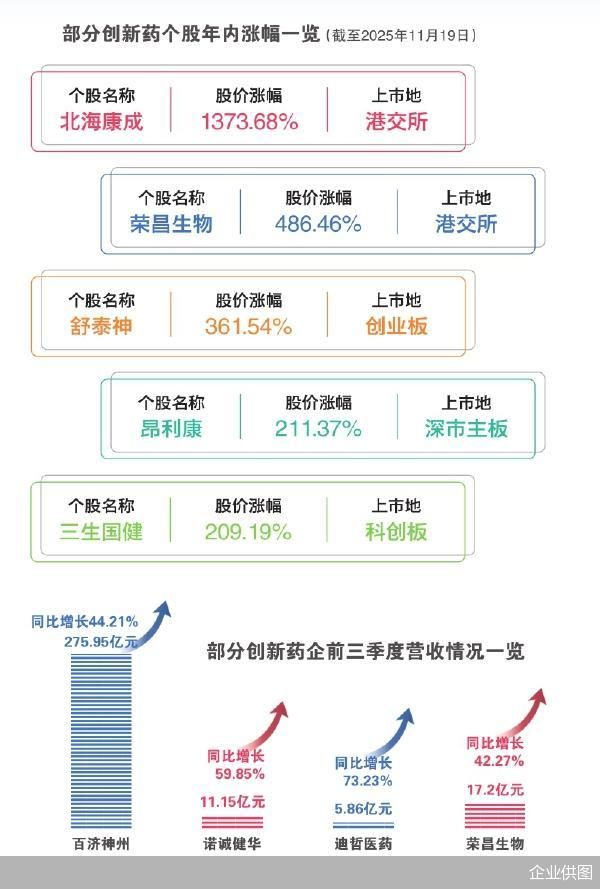
Core Insights - The agreement between 3SBio and Pfizer, involving a $1.25 billion upfront payment and a total transaction value of $6 billion, highlights the growing interest in China's innovative pharmaceuticals sector, marking a "DeepSeek moment" for the industry [1] - The capital market has recognized the potential of innovative drug companies, with the Hong Kong innovative drug index surging over 100% and the A-share innovative drug sector also showing significant gains [3][4] - The number of innovative drug companies with a market capitalization exceeding 100 billion yuan has reached eight, indicating a robust growth trend in the sector [4] Market Performance - The Hong Kong innovative drug index has increased by 110.75% from April 9 to November 19, while the A-share innovative drug sector rose by 47.82% during the same period [3] - Individual stocks have shown remarkable performance, with companies like 3SBio seeing a year-to-date increase of 393.34% as of November 19 [4] Financial Highlights - 3SBio's partnership with Pfizer includes milestone payments that could reach up to $48 billion, setting a record for upfront payments in the domestic innovative drug sector [4] - BeiGene reported a revenue of 27.595 billion yuan for the first three quarters of the year, a 44.2% increase year-on-year, marking its transition from a loss-making to a profitable entity [5] Policy and Regulatory Environment - The growth of China's innovative drug sector is closely linked to supportive government policies, including streamlined clinical trial approval processes and financial incentives for innovation [6][7] - Recent policies have facilitated the listing of innovative drug companies, with nearly ten companies submitting applications to the Hong Kong Stock Exchange in November alone [6] Technological Advancements - Chinese pharmaceutical companies are demonstrating global competitiveness in cutting-edge fields such as dual antibodies and ADCs, with several products achieving significant clinical milestones [7] - The approval of innovative traditional Chinese medicine products has also contributed to the sector's growth, with multiple new drugs receiving clinical trial approvals this year [8] Business Development Trends - The surge in business development (BD) transactions has been a catalyst for the current innovative drug market rally, with significant deals reported, including a $12 billion upfront payment from Takeda to Innovent [8] - The investment landscape is evolving from short-term speculative behavior to more structured and strategic investments, reflecting a shift in investor focus towards clinical data and commercial viability [10][11] Future Outlook - The innovative drug sector is expected to continue its growth trajectory, driven by long-term, high-quality R&D investments and the realization of clinical value [13] - The industry is characterized by a "double ten law," indicating a long development cycle and substantial financial investment, necessitating ongoing funding and strategic resource allocation [14][15]


医药行业跟踪报告:医保商保“双目录”落地,关注支付端增量
Shanghai Aijian Securities· 2025-12-10 02:34
Investment Rating - The report rates the pharmaceutical and biotechnology industry as "Outperforming the Market" [1][8]. Core Insights - The report highlights a significant increase in the success rate of negotiations for high-value innovative drugs, with the 2025 National Medical Insurance Directory adding 114 new drugs, including 50 innovative drugs, and achieving a negotiation success rate of 88%, up from 76% in 2024 [3]. - The introduction of a commercial insurance drug directory marks a new phase in healthcare, aiming to create a multi-layered insurance system that complements basic medical insurance, with 19 innovative drugs included in the first version [3]. - The report emphasizes the potential for Chinese innovative drugs to expand internationally, with a focus on ADCs, bispecific antibodies, small nucleic acids, and weight-loss drugs as key investment opportunities [3]. Summary by Sections Industry Performance - The SW Pharmaceutical and Biotechnology Index decreased by 0.74% in the week of December 1-7, underperforming the Shanghai and Shenzhen 300 Index, which increased by 1.28% [2]. - Within the pharmaceutical sector, the drug distribution (+6.48%) and offline pharmacy (+1.85%) segments performed relatively well, while raw materials (-2.54%), vaccines (-1.62%), and CXO (-1.29%) segments showed weaker performance [2]. National Medical Insurance Directory - The 2025 version of the National Medical Insurance Directory will officially implement on January 1, 2026, with a total of 3,253 drugs included, enhancing coverage for critical areas such as oncology, chronic diseases, mental health, rare diseases, and pediatric medications [3]. - Notably, 105 of the newly added drugs are exclusive products, including 98 Western medicines and 7 traditional Chinese medicines [3]. Commercial Insurance Drug Directory - The first version of the commercial insurance innovative drug directory includes 19 drugs, focusing on high clinical value and significant patient benefits, which are beyond the scope of basic medical insurance [5]. - This directory includes treatments for rare diseases, cancer therapies, and Alzheimer's disease, establishing a foundation for the development of a multi-tiered medical insurance system [3][5]. Investment Recommendations - The report suggests a positive outlook for the international expansion of Chinese innovative drugs and recommends monitoring ADCs, bispecific antibodies, small nucleic acids, and weight-loss drugs for investment opportunities [3]. - Key companies to watch include Yiming Biotechnology-B, WuXi AppTec, Maiwei Biotechnology-U, Kelun-Biotech, and Kangfang Biotech [3].
君实生物:从创新突破到全球突围
Shang Hai Zheng Quan Bao· 2025-12-02 00:44
Core Insights - Junshi Bioscience has transformed from a small laboratory in Zhangjiang, Shanghai, to a leading player in the global biopharmaceutical industry, with over 50 innovative drug pipelines in just 13 years [1][2] - The company's core product, the PD-1 monoclonal antibody Toripalimab, has gained global recognition, becoming the first self-developed innovative biopharmaceutical from China to receive FDA approval [1][2] R&D and Innovation - Junshi Bioscience shifted from "single-point breakthroughs" to "platform innovation," focusing on multiple therapeutic areas and developing a robust pipeline of over 50 new drugs [4][5] - The company has successfully developed Toripalimab, which addresses local high-incidence cancers and has broken the monopoly of imported drugs in China [2][4] - The company plans to advance several innovative drugs, including JS212 and JS213, into clinical trials by 2025, aiming for a comprehensive drug pipeline [5][6] Global Expansion and Commercialization - Junshi Bioscience is transitioning from a "R&D-focused company" to a "full-chain operator," with a strong emphasis on internationalization as a key highlight for the next five years [6] - The company has established a commercial network covering over 80 countries through partnerships and self-built teams, aiming to penetrate emerging markets in Southeast Asia [6][7] - The production capabilities at the Shanghai Lingang base support the company's ambition for global commercialization, with a fully autonomous production process [6] Market Position and Future Outlook - The success of Toripalimab marks a significant shift in the landscape of Chinese innovative drugs, moving from "importing" to "exporting" [1][2] - The company aims to redefine treatment boundaries with next-generation therapies, including bispecific antibodies and antibody-drug conjugates, supported by AI-assisted research [5][6] - Junshi Bioscience is committed to pushing more products into late-stage clinical trials and registration phases during the 14th Five-Year Plan period [5][6]

创新药行业,再迎百亿美元重磅交易
21世纪经济报道· 2025-10-22 05:32
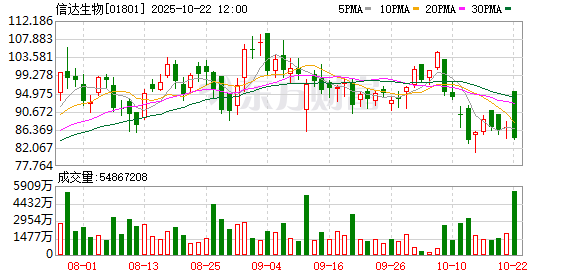
Core Viewpoint - The article highlights a significant global strategic collaboration between Innovent Biologics and Takeda Pharmaceutical, focusing on the development of innovative cancer therapies, particularly in the fields of tumor immunology and antibody-drug conjugates, with a total deal value potentially reaching $11.4 billion [1][5][19]. Summary by Sections Collaboration Details - Innovent Biologics and Takeda will co-develop the next-generation IO cornerstone therapy IBI363 and will commercialize it in the U.S. under a shared governance model, with Takeda leading the development efforts [1][9]. - Innovent will grant Takeda commercialization rights for IBI363 outside of Greater China and the U.S., while Takeda will have exclusive rights for IBI343 in regions outside Greater China [1][9][12]. Financial Aspects - Innovent will receive an upfront payment of $1.2 billion, including a $100 million premium strategic equity investment, with potential milestone payments bringing the total deal value to $11.4 billion [1][5]. - The agreement includes a revenue-sharing model, where both companies will share profits or losses from the U.S. market at a 40/60 ratio [9]. Market Context - The global oncology drug market is projected to exceed $200 billion, driven by unmet clinical needs and technological advancements, with a compound annual growth rate (CAGR) of over 20% expected for next-generation technologies like bispecific antibodies and ADCs over the next five years [5][15]. - The shift from the "PD-1 dividend period" to a "next-generation technology-driven period" is emphasized, indicating a transition in market dynamics [5][13]. Product Pipeline - IBI363 is a globally innovative PD-1/IL-2α-bias bispecific antibody that has shown promising clinical results in various cancer types, including immune-resistant lung cancer and melanoma [7][8]. - IBI343 is a novel CLDN18.2-targeting ADC that is currently undergoing Phase III clinical trials in China and Japan for gastric cancer [11][12]. - IBI3001, a first-in-class ADC targeting B7-H3 and EGFR, is in Phase I clinical trials and demonstrates multiple anti-tumor mechanisms [11][12]. Industry Trends - The article notes that multinational pharmaceutical companies are increasingly seeking partnerships with Chinese biotech firms to access innovative therapies, particularly in oncology, as they face pressures from patent expirations and competition from biosimilars [15][16]. - The trend of cross-border collaborations is on the rise, with a significant increase in the number of deals involving Chinese companies, particularly in the oncology sector [17][19].

114亿美元!信达与武田达成合作 肿瘤药市场能否迎“王炸”?
2 1 Shi Ji Jing Ji Bao Dao· 2025-10-22 04:49
Core Viewpoint - Cinda Biologics has entered a significant global strategic partnership with Takeda Pharmaceutical to accelerate the global development of two late-stage investigational drugs, leveraging Cinda's innovation in tumor immunology and antibody-drug conjugates (ADC) alongside Takeda's extensive experience in global oncology drug development [1] Group 1: Partnership Details - The collaboration will focus on the joint development of the next-generation IO cornerstone therapy IBI363 (PD-1/IL-2α-bias) and its commercialization in the U.S., with Takeda leading the efforts [1][6] - Cinda will receive an upfront payment of $1.2 billion, including a $100 million premium strategic equity investment, with potential milestone payments bringing the total deal value to up to $11.4 billion [1] - Cinda will grant Takeda exclusive commercialization rights for IBI363 outside Greater China and the U.S., as well as exclusive rights for IBI343 (CLDN18.2 ADC) outside Greater China [1][9] Group 2: Market Context - The global oncology drug market is experiencing a shift from the "PD-1 dividend period" to a "next-generation technology-driven period," with a focus on unmet clinical needs and technological iterations such as dual antibodies and ADCs [4][11] - The oncology market has surpassed $200 billion, with a projected compound annual growth rate (CAGR) exceeding 20% over the next five years, driven by the penetration of next-generation technologies [2] Group 3: Product Insights - IBI363 is a globally innovative PD-1/IL-2α-bias dual-specific antibody fusion protein, showing promising results in various cancers, including immune-resistant lung cancer and melanoma [5][10] - IBI343 is an innovative CLDN18.2-targeting ADC, currently in Phase III clinical trials for gastric and gastroesophageal junction cancers, having received breakthrough therapy designation from the NMPA and FDA [8] - IBI3001, a first-in-class dual-targeting ADC, is in Phase I clinical trials and demonstrates multiple anti-tumor mechanisms [8][9] Group 4: Strategic Implications - The partnership reflects a broader trend where multinational pharmaceutical companies are seeking to mitigate patent cliff pressures by acquiring innovative pipelines from biotech firms, particularly in the oncology sector [12] - The collaboration is seen as a typical case of Chinese biotech firms leveraging technological differentiation to penetrate global mainstream markets, potentially reshaping the valuation framework for Chinese innovative drugs [12][15]
申万宏源:首予再鼎医药“买入”评级 目标价35.2港元
Zhi Tong Cai Jing· 2025-09-24 01:59
Core Viewpoint - The report from Shenwan Hongyuan indicates that Zai Lab (09688) is expected to achieve non-GAAP operating profit by Q4 2025, driven by the commercialization of products and localized production [1] Financial Projections - Revenue projections for Zai Lab from 2025 to 2027 are estimated at $553 million, $802 million, and $1.203 billion respectively, with net profit attributable to the parent company expected to be -$134 million, $15 million, and $173 million for the same years [1] - The target price set at HKD 35.2 implies a 39% upside potential, reflecting confidence in the company's innovative pipeline [1] Product Portfolio and Commercialization - Zai Lab is a global biopharmaceutical company in the commercialization stage, with seven products approved in China, including four oncology products and one immunology product [2] - Since the approval of its first commercial product, Niraparib, in 2019, Zai Lab has seen significant sales growth, with total revenue projected to reach $399 million in 2024, a 50% increase year-on-year [3] New Product Development - The company has submitted applications for new products, including KarXT and TF ADC, to the NMPA, with plans to submit for Bemarituzumab for 1L gastric cancer in the second half of the year [3] - Zai Lab anticipates revenue could reach $2 billion by 2028, supported by the sales of existing products and the approval of new products [3] Expansion of Indications - Efgartigimod, the first FcRn antagonist globally, has received approvals for multiple indications, with sales expected to reach $94 million in 2024, reflecting an 835% year-on-year growth [4] - The company is exploring additional indications for Efgartigimod, which could broaden its market reach across various medical fields [4] Global Pipeline Development - Zai Lab is actively expanding its global pipeline, focusing on ADCs and bispecific antibodies, with several products showing potential for first-in-class (FIC) or best-in-class (BIC) status [5] - The company plans to initiate global pivotal studies for ZL-1310, which has shown promising clinical activity and safety [5]