元宇宙

Search documents
罗马元宇宙集团拟租赁香港物业用作办公室
Zhi Tong Cai Jing· 2025-12-24 07:33
Group 1 - The company, Roma Metaverse Group (08072), has announced a lease agreement for office space in Hong Kong, effective from March 27, 2026, to March 26, 2029, for a duration of three years [1] - The leased property is located at 39 Gloucester Road, Wan Chai, Hong Kong, specifically on the 11th floor, rooms 1101-4 [1] - The board of directors believes that entering into this lease agreement for the new headquarters and primary business location in Hong Kong is in the best interest of the group, considering factors such as office space, location, rent, and other commercial terms [1] Group 2 - The terms of the lease agreement were determined through fair negotiations between the landlord and the tenant, with the rent based on current market rates for comparable properties in the vicinity [1] - The board considers the terms of the lease to be fair and reasonable, aligning with the overall interests of the company and its shareholders [1]
争夺万亿级冰雪经济,东北能否再次站上风口赢回底气?
Nan Fang Du Shi Bao· 2025-12-23 05:32
Core Insights - The article highlights the booming ice and snow economy in Harbin and the broader Northeast region of China, with significant investments and developments aimed at capitalizing on this trend [1][4]. Consumption Trends - Harbin Ice and Snow World has seen a surge in consumer spending, with a daily revenue of 23,000 yuan from a creative store within the park [2]. - The overall tourism data for the 2024-2025 ice season indicates that Heilongjiang province is expected to receive over 135 million domestic and international visitors, a year-on-year increase of 18.5%, with total spending reaching 211.72 billion yuan, up 30.7% [2]. Industry Developments - Notable companies like Bosideng are investing in the region, with plans to establish a production base in Harbin, investing 1 billion yuan, and launching a co-branded down jacket series that is projected to generate nearly 200 million yuan in sales in its first year [4][5]. - The ice and snow economy is fostering a diverse range of industries, including equipment manufacturing and technology, with companies reporting significant increases in sales and orders due to the rising popularity of winter sports [5][6]. Regional Impact - Surrounding cities like Daqing and Qiqihar are experiencing a tourism boom, with visitors drawn to their unique cultural offerings and proximity to Harbin, leading to increased visitor numbers and revenue growth [6][7]. - Local governments are adapting to modern tourist demands by enhancing services and creating unique experiences, such as themed cafes and cultural events, to attract visitors [7]. Economic Benefits - The ice and snow economy is generating substantial direct and indirect economic benefits, including job creation and enhanced regional brand value, with experts emphasizing the importance of these effects beyond immediate financial returns [8][9]. - The development of the ice and snow economy is seen as a catalyst for broader economic growth, with potential for investment in related sectors and improvements in local infrastructure [9].
还没种树就想摘果?元宇宙产业园为何不温不火
Jing Ji Ri Bao· 2025-12-23 02:16
Core Viewpoint - The metaverse industry parks are currently underperforming, with many enterprises facing challenges in technology and investment, indicating a long road ahead for sustainable development in the metaverse sector [1][4][5]. Group 1: Industry Overview - The metaverse, seen as the next generation of the internet, combines technologies like VR, AR, and AI for real-time interaction with the physical world [1]. - Since the concept gained popularity in 2021, there has been a surge in the establishment of metaverse industry parks across various regions, with 137 parks reported to be under construction or completed nationwide [2]. - Major cities like Beijing, Shanghai, and Shenzhen have a significant number of these parks, reflecting local governments' eagerness to capitalize on the digital economy [2]. Group 2: Current Challenges - Many existing metaverse parks are struggling with weak investment attraction and low operational effectiveness, leading to a lack of strong returns for resident companies [4][6]. - Some parks have not transitioned from conceptual stages to practical applications, with a focus on technology demonstration rather than integration with local cultural and commercial resources [4][5]. - The overall state of the metaverse industry is characterized by immature technology, unclear business models, and insufficient short-term profitability, causing companies to be cautious about investing in these parks [7]. Group 3: Factors Contributing to Underperformance - The underperformance of metaverse parks is attributed to multiple factors, including premature hype, blind capital influx, improper operational strategies, and uneven policy resource allocation [5][6]. - There is a tendency for capital to concentrate in easily understandable areas, leading to inefficiencies and wasted investments when the initial excitement fades [5][6]. - Many parks are populated by low-tech enterprises that do not effectively leverage core technologies, resulting in a lack of sustainable business models [6][7]. Group 4: Recommendations for Improvement - To address the challenges, it is essential to adopt a phased development approach, moving from early breakthroughs to deeper integration with the economy [8]. - Local governments and enterprises should reassess the development models of metaverse parks, focusing on integrating new technologies and fostering collaboration among various stakeholders [8][9]. - Parks should prioritize real-world problem-solving and value creation rather than chasing conceptual trends, with an emphasis on developing a skilled workforce and innovative ecosystems [8][9].
由虚入实!上海“元宇宙创新生态”加速成型
Huan Qiu Wang Zi Xun· 2025-12-23 01:36
来源:科技日报 卢力媛 科技日报记者 王春 当前,元宇宙技术正加速从概念走向产业实践,成为驱动实体经济数字化转型的重要引擎。破解技术瓶 颈、构建协同生态,成为全球元宇宙产业高质量发展的关键命题。 在上海青瞳视觉科技有限公司(以下简称"青瞳视觉"),演员一个细微的肩部抖动被亚毫米级精度的光 学相机精准捕捉,这份数据将用于训练千里之外工厂里的人形机器人。 戴上VR眼镜,上海宝信软件股份有限公司(以下简称"宝信软件")的技术专家正远程"走进"千里之外 的钢铁厂加热炉区。炉内温度、板坯位置、出炉时间等数据以三维可视化形式实时呈现在眼前。这套基 于工业元宇宙的远程监控系统,将设备故障处理时间从以往的半小时以上缩短到分钟级,更重要的是, 它正在将高危险性的工业场景转化为安全的数字实验场。 这是"2025元宇宙创新大会"上展示的上海元宇宙创新生态一角。近日,科技日报记者随大会企业集中采 访活动,走访上海多家元宇宙企业。从黄浦区的沉浸式体验到张江的硬件制造,从漕河泾的内容创作到 宝山的工业应用,一条以"硬技术"支撑"软场景"、以"虚能力"赋能"实产业"的清晰路径正在形成。 实现核心工具链自主化 元宇宙的虚实连接,离不开关键技 ...
元宇宙产业园为何不温不火
Zhong Guo Jing Ji Wang· 2025-12-22 22:21
Core Viewpoint - The metaverse, once seen as the next generation of the internet, is currently facing challenges in development, with many industrial parks underperforming and struggling to create sustainable growth [1][2]. Group 1: Current State of Metaverse Industrial Parks - As of 2023, there are 137 metaverse industrial parks under construction or completed across China, with a concentration in economically developed regions like Beijing, Shanghai, and Shenzhen [2]. - Many parks have transitioned from conceptual exploration to operational phases, but several remain stagnant, failing to meet initial expectations [2][3]. - Existing parks often exhibit weak investment attraction and low satisfaction among resident companies, leading to a lack of effective economic benefits [4]. Group 2: Challenges Faced by the Metaverse Industry - The metaverse industry is hindered by multiple factors, including speculative capital influx, poor operational strategies, and uneven policy resource allocation [5][6]. - Many parks focus excessively on technical demonstrations without integrating local cultural or commercial resources, resulting in ineffective industry ecosystems [4][6]. - The industry is characterized by a lack of collaboration among companies, significant disparities in scale and technology, and a general decline in business performance [7]. Group 3: Recommendations for Future Development - The development of metaverse industrial parks should follow a phased approach, emphasizing long-term integration with the economy rather than short-term gains [8]. - Local governments and enterprises need to reassess development models, focusing on real-world applications that create tangible value rather than pursuing speculative concepts [8][9]. - Establishing innovation alliances and training programs is essential to address key technological bottlenecks and foster a skilled workforce to support the metaverse ecosystem [8][9].
黄仁勋二代上位了
投资界· 2025-12-22 08:27
Core Viewpoint - The article discusses the significant roles of Huang Renxun's children, Huang Shengbin and Huang Minshan, in NVIDIA, highlighting their contributions to the company's strategic focus on artificial intelligence and robotics, as well as the unique approach of Huang Renxun in nurturing his children within the family business [5][6][21]. Group 1: Company Performance and Market Position - NVIDIA's net profit is projected to soar from $4.368 billion in the fiscal year 2023 to $72.88 billion in the fiscal year 2025, with its stock price increasing 12 times since the beginning of 2023 [5]. - As of December 15, NVIDIA's total market capitalization reached $4.25 trillion (30 trillion RMB), making it the highest among global listed companies, surpassing Apple and Google [5]. - Huang Renxun's wealth has reached $152 billion (1.07 trillion RMB), placing him as the eighth richest person globally, significantly ahead of Li Ka-shing, whose wealth is less than one-third of Huang's [5]. Group 2: Family Involvement in Business - Huang Renxun's children, Huang Shengbin and Huang Minshan, both work at NVIDIA, which is atypical for Silicon Valley tech billionaires, who often do not involve their children in their companies [6][7]. - Huang Shengbin serves as the product line manager for NVIDIA's robotics business, indicating a strategic focus on AI applications, particularly in robotics [9]. - Huang Minshan is the senior product marketing director for NVIDIA's Omniverse and robotics business, responsible for marketing strategies and developer support [9][15]. Group 3: Career Paths of Huang Shengbin and Huang Minshan - Huang Shengbin, after studying marketing and cultural studies, initially worked in Taiwan before returning to the U.S. to pursue an MBA at NYU Stern, where he graduated in April 2022 and joined NVIDIA shortly after [11][13]. - Huang Minshan has been with NVIDIA for over five years, starting as an intern while pursuing her MBA in London, and has held multiple positions, eventually becoming the senior product marketing director [15][17]. Group 4: Unique Parenting Approach - Huang Renxun's parenting style involves allowing his children to explore their interests before joining the family business, which is seen as a unique approach among Chinese entrepreneurs [21][22]. - During a company meeting, Huang Renxun addressed concerns about nepotism, stating that he believes no parent would recommend a child who could embarrass them, and noted that many second-generation employees outperform their parents [21].


上海7家机构联合发力XR 产业迎全周期金融赋能与全链布局
Sou Hu Cai Jing· 2025-12-21 23:35
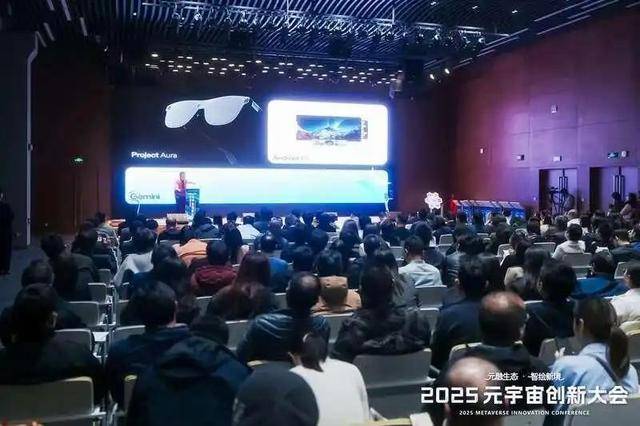
Core Insights - Shanghai Future Industry Fund, in collaboration with six other professional institutions, has launched a joint support plan to empower the XR (Extended Reality) industry through a dual-driven model of "financial empowerment + industrial aggregation" [3] - This initiative aligns with the policy directives of the "Three-Year Action Plan for the Innovative Development of the Metaverse Industry (2023-2025)" and the "Shanghai Action Plan for Cultivating the 'Metaverse' New Track" [3] - The financial support system, centered around a 10 billion yuan fund, aims to create a comprehensive financial service system covering the entire lifecycle of enterprises, from startups to mature companies [3] Financial Support System - The financial support system is designed with a "patient capital" philosophy, addressing the high R&D and long-cycle characteristics of the XR industry [3] - It focuses on three stages of enterprise growth: early-stage support for technology transformation, growth-stage optimization of financing channels, and mature-stage facilitation of exit pathways [3][4] - The system encourages the use of diverse financial tools such as technology innovation corporate bonds and intellectual property asset securitization to expand funding [3][4] Industry Layout - Shanghai aims to build a complete XR industry chain ecosystem, driven by whole machine products, from core components to terminal applications [4] - The collaboration with leading AR company XREAL and Google on the AI smart glasses Project Aura exemplifies the full-chain layout, involving core hardware development and supply chain participation from companies like Luxshare Precision and Longqi Technology [4][5] - The industry chain construction emphasizes three key areas: core technology breakthroughs, manufacturing system upgrades, and ecological collaborative development [4][5] Market Potential - By 2027, the scale of Shanghai's smart terminal industry is expected to exceed 300 billion yuan, with AI new terminals reaching a scale of millions of units, providing substantial market support for the XR industry chain [5] - The joint plan identifies industrial metaverse and large-space experiences as core breakthrough areas, promoting the large-scale application of XR technology [5] - XR technology has already been integrated into the entire process of intelligent manufacturing, with examples including the safety metaverse factory by Baowu Carbon and the virtual manufacturing capabilities of Haier Washing Appliances [5]
50城获中央财政补助 消费“三新”试点全面启动
Chang Jiang Shang Bao· 2025-12-21 23:12
Core Viewpoint - The Ministry of Commerce and the Ministry of Finance have issued a notification to implement pilot programs for new consumption formats, models, and scenarios in 50 cities, with significant financial support allocated to enhance consumer spending and stimulate economic growth [1][2]. Group 1: Financial Support and Implementation - The pilot program will provide financial subsidies of 400 million yuan for super-large cities, 300 million yuan for large cities, and 200 million yuan for other cities over a two-year implementation period [1][2]. - A competitive evaluation process was conducted, resulting in the selection of 50 cities, including Beijing, Shanghai, and Wuhan, to participate in the pilot program [2]. Group 2: Objectives and Strategic Directions - The initiative aims to combine consumer promotion with improving living standards, positioning local authorities as leaders in reforming consumption systems [2]. - The program focuses on three core areas: enhancing the first-release economic service system, innovating diverse service consumption scenarios, and promoting cross-industry collaborations with well-known IPs [4]. Group 3: Innovation and Development - The policy encourages the establishment of multi-level product launch platforms and supports innovative product showcases in various sectors, including fashion and electronics [4]. - It promotes the integration of digital technologies like AI and the metaverse with cultural and tourism sectors to create new consumption scenarios [4]. - The initiative also supports the development of night economy zones and the optimization of shopping centers to enhance consumer experiences [4]. Group 4: Cross-Industry Collaborations - The notification encourages collaborations between quality consumer resources and well-known IPs, leveraging digital entertainment and cultural heritage to create immersive shopping experiences [5]. - It aims to foster local cultural characteristics by integrating traditional resources with modern consumption trends, promoting new flagship stores and products [5].
上海元宇宙:全链协同构建虚实融合新生态
Sou Hu Cai Jing· 2025-12-20 17:59
张江科学城聚焦智能终端整机与关键部件研发,构建了从芯片到终端的完整产业链。这里集聚了 XREAL、歌尔、恒玄等龙头企业,以及显耀显示、青瞳视觉等细分领域"隐形冠军"。例如,XREAL连 续三年登顶全球消费级AR眼镜销量榜,其最新产品XREAL 1s搭载自研空间计算芯片,实现500英寸随 身巨幕与实时2D转3D功能;小派科技推出的Crystal Super VR头显,以单眼3840×3840分辨率、140°视 场角刷新行业标杆;青瞳视觉则通过全栈自研动作捕捉系统,为影视、医疗等领域提供亚毫米级精度支 持。张江的硬件集群不仅为元宇宙提供了底层技术支撑,更通过"整机牵引"模式,带动上下游企业协同 创新。 上海通过"黄浦—漕河泾—张江"的区域联动,实现了场景、软件、硬件的闭环生态。例如,黄浦区的大 空间体验项目依赖漕河泾的内容创作能力与张江的硬件支持;漕河泾的游戏企业则通过张江的AR/VR 设备拓展交互边界;张江的硬件厂商则与黄浦区的文旅、医疗场景深度融合,推动技术落地。此外,上 海还通过制度创新护航生态发展:成立元宇宙产业基金矩阵,聚焦早期项目与颠覆性技术;发布多项团 体标准,推动数字电视国家工程研究中心参与国际标 ...
Pantera 合伙人:加密 VC 回归专业和理性,下一个投资风口在哪?
Xin Lang Cai Jing· 2025-12-20 08:56
Group 1: Current State of Crypto Investment - Pantera Capital partners discussed the current state of crypto investment, highlighting a record total funding of $34 billion this year, while transaction numbers have decreased by nearly half compared to 2021 and 2022 [1][2] - The decline in transaction volume is attributed to a shift from speculative investments in altcoins to more institutional and professional funding sources, leading to higher quality and larger individual investments [1][2] - The emergence of clearer exit strategies, such as Circle's IPO, has provided investors with a more defined path for realizing returns on their investments [2] Group 2: Digital Asset Trusts (DATs) - The introduction of Digital Asset Trusts (DATs) reflects a maturation in the market's understanding of digital assets, transitioning from simple speculation to active management aimed at generating returns [3][4] - The cooling interest in DATs indicates a shift towards valuing the execution capabilities of management teams, suggesting a return to rational investment practices [4] - The future of DATs may involve integration into project foundations, allowing for more professional asset management tools [4] Group 3: Future Investment Trends - Key areas for future investment include tokenization and zero-knowledge proof (ZK-TLS) technology, which are seen as long-term trends with significant potential for innovation and efficiency [5] - Tokenization is viewed as a transformative process that can create new financial products and risk management models, while ZK-TLS technology addresses data integrity issues in blockchain applications [5] - The rise of stablecoins is identified as a critical application in the tokenization space, facilitating global payments and enhancing accessibility to crypto markets [5] Group 4: Market Dynamics and Predictions - The discussion on public chains indicates that while the frenzy of new Layer 1 (L1) chains may subside, existing chains will continue to thrive based on their communities and ecosystems [10][12] - The debate on token lock-up periods emphasizes the need for alignment between founders and investors, with a consensus that a reasonable lock-up period is essential for project development [11] - The potential for privacy as a marketable feature is contested, with differing views on its value proposition in the context of institutional needs versus consumer expectations [9][10]