《原神》

Search documents
热门游戏角色被制作成盗版侵权手办,江苏宜兴法院判处三名涉案人员有期徒刑
Yang Zi Wan Bao Wang· 2026-02-27 12:50
Core Viewpoint - The digital cultural industry, characterized by the integration of digital technology and culture, is rapidly developing, with significant revenue growth projected for 2025 [1] Group 1: Industry Overview - The National Bureau of Statistics forecasts that by 2025, the revenue of large-scale cultural and related enterprises in China will reach 15.2 trillion yuan, with 16 sub-industries exhibiting new cultural business characteristics generating over 6.8 trillion yuan [1] - The game peripheral merchandise industry is highlighted as an important branch of the emerging cultural industry, facing challenges from new types of infringement [1] Group 2: Legal Case Summary - A recent case in Yixing City involved a toy company producing infringing figurines, resulting in fines and prison sentences for the defendants, with terms ranging from two years to five years and two months [2] - The prosecution established that the infringing figurines were substantially similar to the original character designs, leading to a clear delineation of IP protection boundaries for game intellectual property [2] - The case exemplifies the proactive role of the judiciary in protecting innovation and combating new forms of intellectual property crime [2] Group 3: Details of Infringement - The investigation revealed a black market chain for counterfeit figurines, leading to the arrest of individuals involved in production and sales, with over 60,000 infringing figurines produced, including 16,000 of the "Klee" character from the game "Genshin Impact" [3] - The toy company also produced numerous illegal figurines related to other games and anime IPs, with one individual responsible for managing inventory and shipping [3] Group 4: Court Rulings - The Yixing City People's Court found the toy company guilty of copyright infringement, imposing a fine of 130,000 yuan, while individual defendants received prison sentences and additional fines [4] - The court ruled that the toy company must compensate over 250,000 yuan for the illegal sales of the infringing "Klee" figurines, affirming the protection of registered artistic works [4]
all in AI的字节,顺手抄了丁磊的后路
Sou Hu Cai Jing· 2026-02-19 09:54
Core Viewpoint - The competition in the AI sector during the Spring Festival has overshadowed the music industry, where ByteDance's "Soda Music" is rapidly gaining market share, posing a significant threat to NetEase's "NetEase Cloud Music" [2][44]. Group 1: Market Dynamics - The top four free apps on the App Store are all AI-related, while "Soda Music" ranks fifth, indicating a shift in user interest towards AI applications [2]. - "Soda Music" has reached nearly 140 million monthly active users, growing from 120 million to 130 million between September and November 2025, representing a year-on-year increase of 90.7% [6]. - The daily active users of "Soda Music" have surpassed those of "NetEase Cloud Music," which has only seen a 1.5% year-on-year growth in monthly active users, indicating stagnation after over ten years of operation [7][8]. Group 2: Competitive Strategies - ByteDance's growth strategy for "Soda Music" leverages organic traffic from Douyin (TikTok), with 82.1% of its monthly active users coming from the platform, creating a new music consumption habit [12]. - In contrast, NetEase Cloud Music is struggling with community engagement dilution, as its once-vibrant comment sections have become less meaningful due to a shift in user behavior towards Douyin [15][16]. - NetEase's strategy to support independent musicians has not compensated for the lack of access to major music licenses, limiting its appeal to mainstream users [20]. Group 3: Challenges Faced by NetEase - NetEase Cloud Music's revenue for 2025 was 7.76 billion yuan, a slight decline from 8 billion yuan in 2024, indicating a contraction rather than growth [24]. - The competitive landscape in gaming is also shifting, with NetEase's game revenue growth slowing down, highlighting a broader issue of stagnation across multiple business segments [28]. - The company faces pressure from various fronts, including music, gaming, AI, and e-commerce, with a lack of cohesive strategy leading to vulnerabilities [31][32]. Group 4: Strategic Implications - The traditional strategy of slow, quality-focused development may not be effective in the fast-paced AI era, where speed and scale are critical [35]. - NetEase's lack of an integrated ecosystem compared to competitors like ByteDance and Tencent limits its ability to compete effectively in the AI and music markets [37]. - The urgency for NetEase to adapt and find a new narrative is critical, as the competitive landscape continues to evolve rapidly [40][45].



中国春节,世界年味
Huan Qiu Shi Bao· 2026-02-13 23:01
Core Perspective - The article highlights the innovative ways in which the Chinese Spring Festival is being celebrated abroad, showcasing cultural performances and digital experiences that enhance global understanding of Chinese traditions [1]. Group 1: Cultural Performances - The Yingge dance, a visually striking folk dance from Guangdong, has gained international recognition, with performances attracting over 700,000 spectators in London during the 2024 Spring Festival [2][4]. - The Yingge dance's appeal lies in its strong rhythm and ability to transcend language barriers, creating a festive atmosphere that resonates with local audiences [4]. - The upcoming performance in Hawaii aims to systematically convey the spirit of the Yingge dance, incorporating storytelling elements to enhance audience engagement [4][5]. Group 2: Technological Integration - The introduction of robots in the Spring Festival parade on the Champs-Élysées in Paris marked a significant innovation, captivating audiences with their synchronized movements and interactions [6][8]. - The collaboration between local teams and performance groups aimed to seamlessly integrate robotic displays with traditional cultural performances, emphasizing the harmony between technology and tradition [8][9]. - This initiative is seen as a way to showcase how technology can support and enhance the dissemination of traditional culture rather than replace it [9]. Group 3: Digital Cultural Experiences - Chinese video games are increasingly incorporating Spring Festival customs and intangible cultural heritage, providing a new platform for cultural exchange [10]. - The game "Nishuihan" features collaborations with renowned artists to integrate traditional Chinese opera into its gameplay, allowing global players to experience Chinese culture interactively [10][11]. - Other games, such as "Genshin Impact," have also successfully blended traditional elements with modern gameplay, enhancing the global appeal of Chinese cultural narratives [11][12]. - The game "Love and Deep Space" has utilized original content to merge traditional aesthetics with contemporary design, further promoting Chinese cultural symbols internationally [12].

米哈游,一笔回报100亿
3 6 Ke· 2026-02-13 10:05
Core Viewpoint - MiniMax has experienced a remarkable stock price surge since its debut on the Hong Kong stock market on January 9, reaching a market capitalization of over HKD 200 billion following the release of its new model M2.5, which has drawn significant attention and investment returns for its backers, particularly miHoYo, which has seen a substantial profit from its early investment [1][3][6]. Group 1: MiniMax's Performance and Market Response - MiniMax's stock price increased by over 13% on February 13, 2023, following the announcement of its new model M2.5, which is said to match the performance of Claude Opus 4.6 [1][2]. - The market responded quickly, with MiniMax's market capitalization exceeding HKD 200 billion [3]. - The company has achieved a unique position in the Chinese large model landscape, having gone from establishment to IPO in just four years [2]. Group 2: Investment and Returns - miHoYo, a gaming company, was one of the angel investors in MiniMax, investing at a post-money valuation of USD 200 million, and has since seen its investment return exceed 100 times [4][6]. - miHoYo's stake in MiniMax increased to 7.34% during subsequent funding rounds, and it currently holds approximately 5.24% of the company post-IPO, translating to a book value of nearly RMB 10 billion [5][6]. - Other notable investors in MiniMax include Hillhouse Capital, IDG Capital, Sequoia China, Alibaba, Tencent, and several others, indicating a broad and significant backing for the company [6]. Group 3: miHoYo's Financial Performance - miHoYo has disclosed that it has paid a total of RMB 15 billion in taxes from 2021 to 2025, reflecting its substantial revenue growth [11]. - In 2021, miHoYo reported a revenue of RMB 27.34 billion and a net profit of RMB 16.145 billion, with tax contributions increasing from RMB 1.8 billion in 2021 to a projected RMB 15 billion by 2025 [11][12]. - The company has made significant investments in various sectors, including technology and gaming, and has been actively involved in the IPO process of other companies [12][14].

米哈游,一笔回报100亿
投资界· 2026-02-13 07:28
Core Viewpoint - MiniMax has achieved a market capitalization exceeding 200 billion HKD since its listing on the Hong Kong stock exchange, driven by the launch of its new model M2.5, which has garnered significant market attention and investor returns [2][3]. Group 1: MiniMax's Market Performance - MiniMax's stock price surged over 13% on February 13, 2023, following the announcement of its M2.5 model, which is comparable to Claude Opus 4.6 in performance [3]. - The company reached a market valuation of over 200 billion HKD shortly after its IPO, marking a significant milestone in the tech industry [2][3]. Group 2: Investment Landscape - MiHoYo, a gaming company, was a key angel investor in MiniMax, investing at a post-money valuation of 200 million USD, and has seen its investment return exceed 100 times [4][5]. - Other notable investors in MiniMax include Hillhouse Capital, IDG Capital, Sequoia China, Alibaba, Tencent, and several others, indicating a strong backing from prominent venture capital firms [5]. Group 3: MiHoYo's Financial Contributions - MiHoYo has disclosed that it will contribute a total tax of 150 billion CNY over five years from 2021 to 2025, showcasing its significant financial impact [10][11]. - The company's tax contributions have increased from 1.8 billion CNY in 2021 to a projected 150 billion CNY by 2025, reflecting its rapid revenue growth [10]. Group 4: MiHoYo's Investment Strategy - MiHoYo has diversified its investment portfolio, backing various innovative projects, including brain-computer interfaces and private space ventures, indicating a forward-thinking investment approach [12][13]. - The company has positioned itself as a significant player in the venture capital space, actively engaging with young, tech-driven entrepreneurs [13].

游戏出海:密码与远方
Ren Min Ri Bao· 2026-02-13 02:36
Group 1 - The core viewpoint of the articles highlights the significant growth of China's gaming industry in overseas markets, with self-developed games generating over $20.4 billion in sales, marking a 10.23% year-on-year increase, and continuing a trend of exceeding 100 billion RMB in revenue for six consecutive years [1] - Notable games such as "Black Myth: Wukong," "Genshin Impact," and "Yanyun Sixteen Sounds" are becoming vehicles for the dissemination of traditional Chinese culture, successfully bridging cultural gaps through shared emotional narratives [1] - The concept of "emotional commonality" is emphasized, where stories of individuals challenging fate resonate across different cultures, showcasing the potential for Chinese narratives to connect with global audiences [1] Group 2 - "Black Myth: Wukong" employs a clever translation strategy, retaining unique cultural meanings through transliteration of terms like "Wukong" and "Jin'gu Bang," and opting for "Loong" instead of "Dragon" to reflect cultural differences [2] - "Genshin Impact" takes a different approach by creating diverse regions like "Liyue" and "Mondstadt," allowing global players to find familiar cultural entry points, while also producing a documentary series that combines traditional crafts with game elements, achieving over 30 million views globally [2] - Despite the challenges of high development costs, long production cycles, and a shortage of multidisciplinary talent, the rich heritage of Chinese traditional culture is seen as fertile ground for creating successful games [3] - The number of items listed as intangible cultural heritage by UNESCO in China is the highest in the world, presenting opportunities for games to serve as new forms of cultural expression and windows for international audiences to understand Chinese culture [3]
中国独角兽排行榜2025
泽平宏观· 2026-02-12 16:06
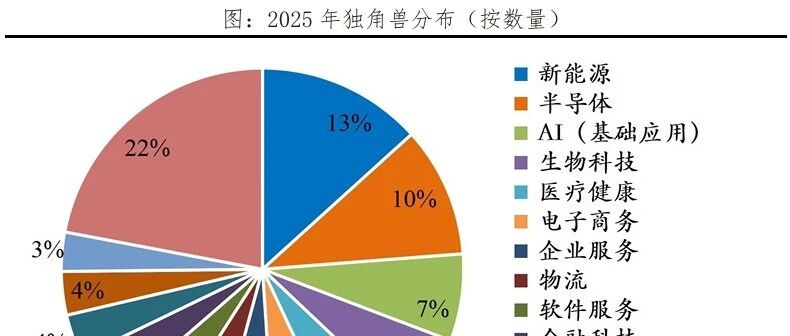
Core Insights - The 2025 China Unicorn Rankings report highlights a slowdown in primary financing, a surge in secondary listings in Hong Kong, and explosive growth in three key sectors: AI, new energy, and robotics [3][5]. Financing and Market Trends - As of May 2025, the total scale of Chinese unicorns reached 8.46 trillion yuan, a slight increase of 0.23% from 2024 [3]. - The number of new unicorns is insufficient to fully replace those that have gone public, with notable companies like Mixue Ice Cream and Horizon Robotics achieving pre-IPO valuations exceeding 60 billion yuan [3]. - The trend of unicorns choosing to list in Hong Kong is significant, with 60% of unicorns opting for this route between April 2024 and April 2025, and 67% of these companies seeing an increase in market value post-IPO [4][33]. Sectoral Growth - The unicorn landscape is dominated by three core areas: AI applications, emerging technologies (commercial aerospace, biotechnology, AI+AR), and cultural exports through social media and gaming [5][14]. - In the AI sector, there are 39 unicorns, with a total valuation of 262.2 billion yuan, making it the leading area of growth [6][8]. - The intelligent driving sector is also thriving, with companies like Yihang Intelligent achieving valuations in the hundreds of billions [11]. Regional Insights - Hangzhou and Shenzhen are emerging as strongholds for new unicorns, while Beijing and Shanghai remain foundational for innovation [4][20]. - Beijing leads with 65 unicorns valued over 3 trillion yuan, accounting for 35.6% of the national total [23]. - Shenzhen has 30 unicorns with a total valuation of 926.9 billion yuan, showing a 13% increase from 2024 [29]. IPO Trends - The number of unicorns going public has decreased, with 40 companies listing between April 2024 and April 2025, totaling a market value of 104.2 billion USD, down from 54 companies and 168.2 billion USD in 2024 [33][34]. - The average market value of listed unicorns has also declined, with Hong Kong becoming the preferred market for smaller unicorns [36][38]. Cultural and Gaming Exports - The cultural export sector is gaining traction, with companies like ByteDance and Xiaohongshu leading the way in global user engagement and revenue growth [17][18]. - The gaming industry is also a significant contributor to cultural exports, with titles like "Black Myth: Wukong" achieving nearly 1 billion USD in revenue [18][19].
从玩家到创作者,UGC的淘金热真的来了吗?
3 6 Ke· 2026-02-11 13:22
Core Insights - The UGC (User Generated Content) model in the gaming industry is experiencing significant growth, driven by technological advancements and a shift in player demographics, particularly among Generation Z [3][21][26] - Major gaming titles like "Genshin Impact," "Peacekeeper Elite," and "Egg Party" are successfully integrating UGC features, leading to increased player engagement and revenue generation [1][12][18][26] Group 1: UGC Model Development - The UGC model has been around for years but is now entering a prime growth phase due to lower barriers to entry and increased support from game developers [4][21] - Historical examples of successful UGC projects, such as "Counter-Strike" and "Dota," highlight the potential impact of user-generated content on the gaming landscape [4][25] - The evolution of UGC tools has made it easier for creators to develop content, with advancements in AI technology further simplifying the process [21][23] Group 2: Case Studies of UGC Implementation - "Egg Party" initially launched with a mobile UGC editor that faced limitations as creator demand grew, leading to the introduction of a more advanced PC editor [8][9][12] - "Peacekeeper Elite" started with a robust UGC editor aimed at experienced developers, but has since evolved to lower the entry barrier and attract a wider range of creators [14][16] - "Genshin Impact" launched its UGC feature with a focus on accessibility, allowing players with no prior experience to create content easily [18][20] Group 3: Market Trends and Future Potential - The gaming market is facing challenges such as saturation and declining player engagement, which UGC can help alleviate by enhancing social interaction and content diversity [21][25] - The integration of AI in game development is expected to further reduce costs and improve efficiency for creators, making UGC more appealing [21][23] - The current environment is ripe for the emergence of new game genres driven by UGC, similar to how "MOBA" and "auto chess" transformed the industry [25][28]

《心动小镇》「受难记」
雷峰网· 2026-02-10 03:33
Core Viewpoint - The article discusses the transformation of "Heartopia" from a struggling project facing dissolution to a successful game that significantly boosted the company's stock price and market position, highlighting the importance of strategic pivots and resource management in the gaming industry [1][3][44]. Group 1: Company Challenges and Strategic Decisions - In mid-2023, the company's stock price plummeted from 113 HKD to 7.4 HKD, resulting in a market value loss of over 90% [3]. - Faced with continuous failures in new game launches and tight cash flow, the founder decided to cut the "Heartopia" project, which had been in development for seven years without significant output [5]. - A group of veteran employees intervened to save the project, leading to a drastic reduction in team size from nearly 100 to under 50, with all marketing resources eliminated to focus solely on development [5][18]. Group 2: Development and Market Position - By 2026, "Heartopia" achieved significant success, topping charts in several countries and gaining over 10 million new users, with the company's stock price recovering [6][38]. - The project initially struggled due to a lack of clear gameplay direction and high development costs, leading to three consecutive years of losses from 2021 to 2023 [15][16]. - The company reported revenues of 27.03 billion RMB in 2021, 34.31 billion RMB in 2022, and 33.89 billion RMB in 2023, with net losses decreasing from -9.17 billion RMB in 2021 to -0.83 billion RMB in 2023 [16]. Group 3: Game Design and Player Engagement - The redesign of "Heartopia" focused on creating a relaxed gaming experience, allowing players to engage without pressure, contrasting with typical mobile game mechanics that incentivize constant play [22][23]. - The game eliminated gender distinctions in character creation, promoting inclusivity and social interaction among players [25]. - The monetization strategy involved selling cosmetic items and furniture, which became a form of social currency within the game, leading to the emergence of a secondary market for in-game construction services [34]. Group 4: Financial Recovery and Future Outlook - In 2024, the company reported revenues of 50.1 billion RMB, a 47.9% increase year-on-year, and a net profit of 8.9 billion RMB, marking a significant financial turnaround [36]. - The transparency of the company's financial reporting has been noted as a factor in retaining key talent and building trust within the industry [37]. - The success of "Heartopia" serves as a case study for the gaming industry, demonstrating that smaller teams can achieve significant results through innovative design and strategic resource management [45][47].

2026,离职游戏人生存指南
3 6 Ke· 2026-02-09 12:14
Core Insights - The gaming industry has undergone significant changes, transitioning from a phase of rapid expansion to a prolonged period of stabilization and uncertainty, leading many individuals to reconsider their career paths and explore alternative opportunities [2][3][4] - The narrative highlights the diverse experiences of former gaming professionals who have transitioned into various fields, emphasizing that a career in gaming does not have to define one's identity or future [2][3][4] Group 1: Industry Dynamics - The gaming industry has created myths and opportunities but has never guaranteed stability, with projects often being canceled and team structures frequently changing [2][3] - As of 2024, the industry is expected to move away from aggressive growth, entering a phase of reflection and adjustment, which has resulted in layoffs and voluntary departures [2][3] - The experiences of individuals in the industry reveal a common theme: the need to redefine personal and professional identities beyond the confines of gaming [2][3][4] Group 2: Individual Experiences - Janson's journey illustrates the challenges faced in large gaming companies, where project failures often stem from misalignment between company capabilities and project demands [3][4][9] - The narrative of Sweet Rice Wine highlights the toxic work environment in certain project teams, where unhealthy competition and poor management practices led to a decline in mental well-being [24][30][31] - Summer's experience reflects the pressures of the gaming industry, where high expectations and project instability can lead to burnout, prompting a shift towards a more stable career in academia [42][54][62] Group 3: Career Transitions - Many former gaming professionals have successfully transitioned to diverse fields, such as consulting, academia, and independent game development, showcasing the versatility of skills acquired in the gaming industry [21][37][56] - The stories of individuals like Janson and Sweet Rice Wine emphasize the importance of finding a work environment that aligns with personal values and well-being, rather than merely pursuing high salaries [21][37][56] - The ongoing trend of individuals leaving the gaming industry for more stable and fulfilling careers suggests a broader reevaluation of work-life balance and job satisfaction within the sector [2][3][4]