AGI

Search documents
引爆港股A股两地行情,市场为何「抢购」MiniMax?
36氪· 2026-01-09 08:57
Core Viewpoint - MiniMax's successful listing on the Hong Kong Stock Exchange has ignited enthusiasm in the AI sector, with significant stock price increases and market capitalization exceeding HKD 100 billion [3]. Group 1: Market Performance - MiniMax's stock surged by 109% on its debut, leading to a market capitalization surpassing HKD 100 billion [3]. - The AI sector in both Hong Kong and A-shares experienced a notable rally, with companies like iFlytek Medical Technology and Fourth Paradigm seeing increases of approximately 20% and 7%, respectively [5]. - MiniMax's public offering was met with overwhelming demand, achieving 1,837 times oversubscription for the public tranche and 37 times for the international tranche, potentially raising around HKD 55.4 billion through the exercise of the greenshoe option [5]. Group 2: Company Performance - MiniMax reported a revenue of USD 53.44 million for the first nine months of 2025, reflecting a year-on-year growth of 174.7% [6]. - The company has over 200 million personal users across more than 200 countries and regions, with over 70% of revenue coming from international markets [6]. - MiniMax's M2 model became the first Chinese model on OpenRouter to exceed a daily token consumption of 50 billion, indicating its significant usage [7]. Group 3: Business Strategy - MiniMax's CEO emphasizes the concept of "model as product," asserting that the core product in the era of large models is the model itself, rather than applications or APIs [11][12]. - The company has shifted its focus from a dual emphasis on models and products to prioritizing model capabilities, believing that improved model performance will naturally enhance product quality [13]. - MiniMax's revenue model is evolving, with a notable increase in paid user growth, particularly in AI-native applications, as the company anticipates a convergence of B2B and B2C markets [16][18]. Group 4: Financial Health - MiniMax boasts a cash reserve exceeding USD 1.1 billion, allowing for over 53 months of operational sustainability without additional fundraising [24]. - The company's gross margin has improved significantly, moving from -24.7% in 2023 to 23.3% in the first nine months of 2025, while adjusted net losses have only slightly increased despite substantial revenue growth [24][25]. - The company has achieved a remarkable 15-fold increase in paid users for AI-native products within two years, demonstrating effective scaling and cost management [18][26]. Group 5: Organizational Structure - MiniMax employs 385 staff, with an average age of 29 and 73.8% being R&D personnel, showcasing a high talent density and efficient output [26]. - The company utilizes AI to enhance productivity, with over 80% of its code generated by AI, reflecting a commitment to innovation and efficiency [27]. - MiniMax's strategic vision remains consistent since its inception, focusing on long-term goals and maintaining a strong organizational structure to adapt to market changes [28][29].

【财经分析】开年港股IPO“AI浪潮”——从智谱到MiniMax的价值与分化
Xin Hua Cai Jing· 2026-01-09 08:49
Core Insights - The capital market is showing strong interest in AI companies, with significant IPO activities in the sector, indicating a shift towards the commercialization and industrialization of China's AI industry [1][2] Group 1: IPO Activities and Market Response - Wall Street's enthusiasm for AI is evident as domestic GPU company Birun Technology and large model companies Zhipu and MiniMax have successfully listed on the Hong Kong Stock Exchange [1][2] - Birun Technology raised 55.83 billion HKD, marking the largest fundraising project since the implementation of Chapter 18C by the Hong Kong Stock Exchange [2] - Zhipu's market capitalization reached 579 billion HKD on its first trading day, while MiniMax saw its stock surge over 90%, with a market cap exceeding 900 billion HKD [2] Group 2: Investor Sentiment and Market Trends - The market is highly optimistic about the capabilities of large model companies, with Zhipu's public offering receiving 1159.46 times subscription and MiniMax's offering attracting over 283.1 billion HKD in subscriptions [2][3] - Investors recognize the potential for domestic companies to emerge as global leaders in technology innovation and commercialization [3] Group 3: Business Models and Revenue Streams - Zhipu's business model features a "dual-drive" approach, with localized deployment contributing approximately 85% of its revenue and a gross margin of 59% [3] - MiniMax operates a unique "B+C dual-drive" model, with over 71% of its revenue coming from the consumer side and a 160% year-on-year growth in business-to-business revenue, achieving a gross margin of 69.4% [4] Group 4: Future Outlook and Strategic Directions - The AI industry is expected to transition towards a phase where both technology innovation and commercialization are prioritized, as indicated by the successful IPOs of large model companies [5] - The focus of competition in AI foundational models is shifting from the size of parameters to the ability to understand how the world operates [5] - The domestic AI large model industry is anticipated to enter a new stage characterized by "independent deep cultivation + global breakthrough" under national strategic guidance [6]
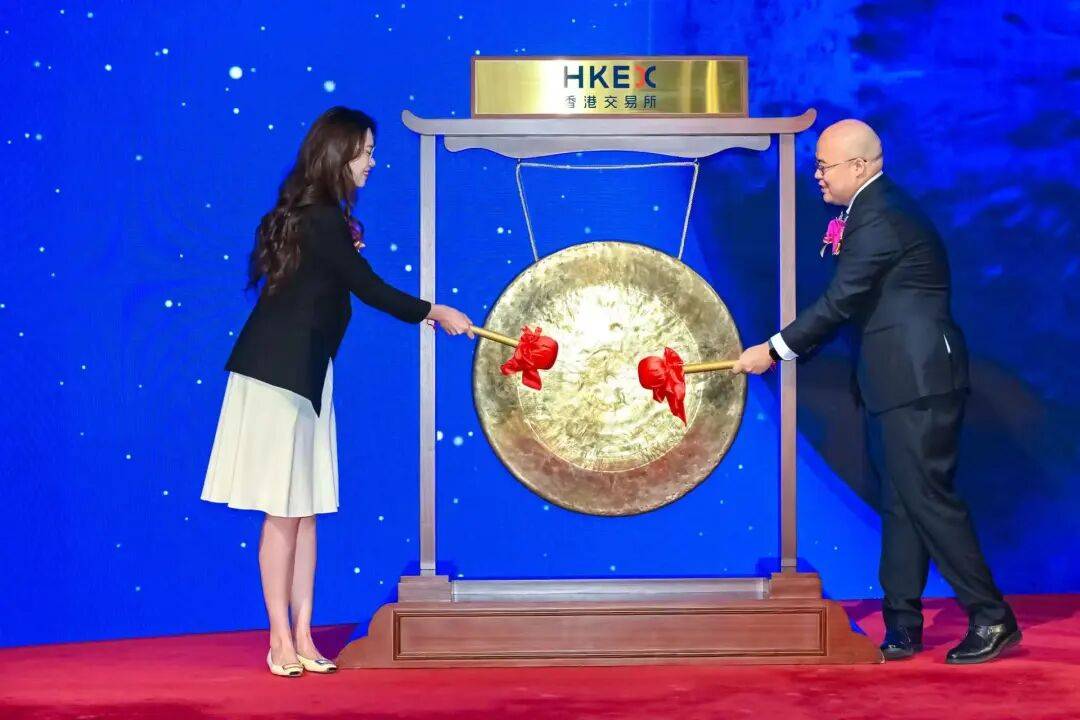
刚刚!MiniMax敲钟上市
Xin Lang Cai Jing· 2026-01-09 08:37
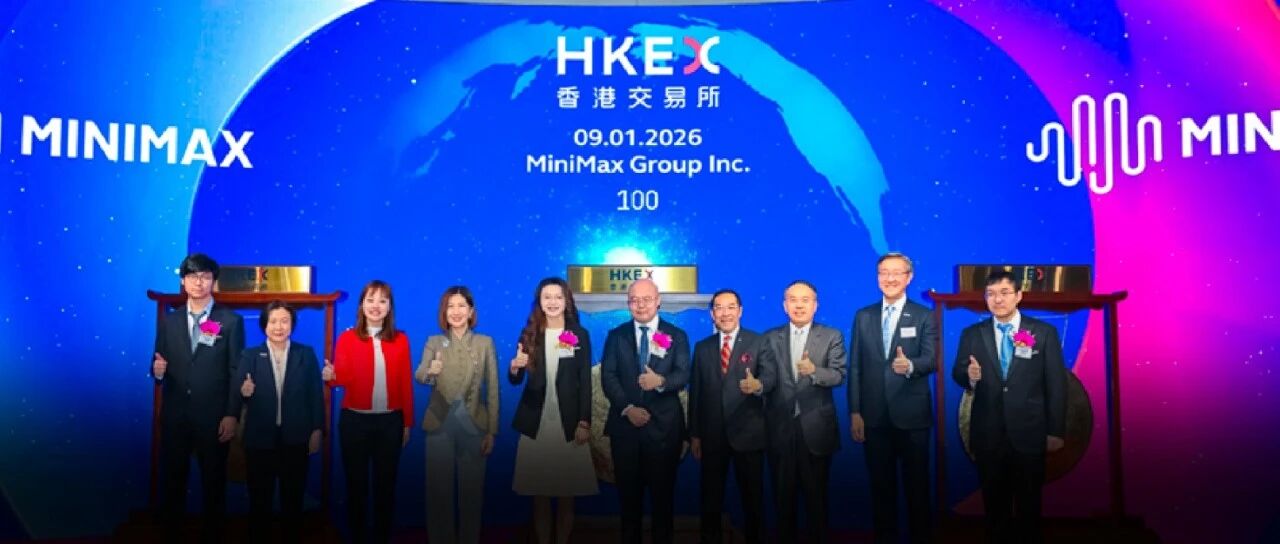
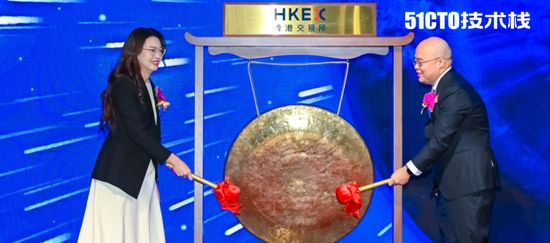
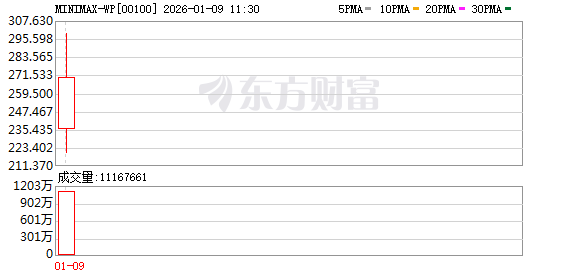
Core Viewpoint - MiniMax has successfully launched its IPO on the Hong Kong Stock Exchange, achieving a market capitalization of approximately HKD 82.7 billion, marking a significant milestone in the Chinese AI sector [3][6]. Group 1: IPO and Market Performance - MiniMax's IPO was priced at HKD 165, with an opening price of HKD 235.4, reflecting a 42.67% increase from the issue price [3]. - The stock reached a peak of HKD 270.8, contributing to a total market value of around HKD 82.7 billion [3][6]. - The company attracted 14 cornerstone investors, raising a total of USD 350 million (approximately HKD 272.3 million) [5]. Group 2: Company Overview and User Base - Founded in January 2022, MiniMax focuses on developing general artificial intelligence (AGI) technologies, with a product lineup that includes MiniMax M1, M2, and various AI applications [7][13]. - The company has over 2.12 billion individual users across more than 200 countries and regions, with over 100,000 enterprises and developers utilizing its services [7]. - MiniMax's overseas revenue accounts for over 70% of its total income, indicating a strong global presence [12]. Group 3: Financial Performance - MiniMax's revenue for 2023 was USD 3.46 million, with projections for 2024 showing a dramatic increase to USD 30.52 million, representing a year-on-year growth of 782.2% [8][9]. - For the first nine months of 2025, the company reported revenue of USD 53.44 million, a 175.07% increase compared to the previous year [9]. - The gross margin improved from -24.7% in 2023 to 12.2% in 2024, and further to 23.3% in the first nine months of 2025 [11]. Group 4: Research and Development - MiniMax has invested heavily in R&D, with expenditures reaching USD 180 million in 2025, which is 337.4% of its total revenue [26]. - The company has a young workforce, with an average employee age of 29 and a significant portion of its team being recent graduates [28]. - Over 80% of the company's code is reportedly generated by AI, showcasing its commitment to integrating AI into its operational processes [32]. Group 5: Product Development and Innovation - MiniMax has made significant advancements in multi-modal AI technologies, including text, audio, and video capabilities [13][24]. - The company’s latest models, such as MiniMax M2 and M2.1, have achieved top rankings in various benchmarks, indicating strong performance in the AI model landscape [17][22]. - MiniMax's AI products have been widely adopted, with its video generation platform, Hai Luo AI, producing over 590 million videos [25].
2026到2032是“颠簸期”,马斯克危言耸听?AI对普通人有3大影响
Sou Hu Cai Jing· 2026-01-09 07:02
Group 1 - The core viewpoint emphasizes that the transition to a new era driven by artificial intelligence (AI) will bring both opportunities and challenges, with a predicted seven-year period of coexistence between prosperity and turmoil [1] - The rapid development of AI is likened to a "supersonic tsunami of change," indicating that the pace of transformation will be unprecedented compared to previous technological advancements [1][3] - By 2030, the emergence of superintelligent AI could lead to a societal restructuring where traditional job roles are significantly altered or replaced, raising questions about human adaptability to these changes [3][5] Group 2 - Companies are currently experiencing a surge in innovation and investment in AI, with a focus on integrating AI capabilities to enhance decision-making and operational efficiency [6] - The shift towards AI-driven business models will likely result in a significant reduction in labor costs, posing a threat to traditional companies that may struggle to compete [5][6] - The need for individuals to adapt their skill sets and mindsets is critical, as the AI era demands a transition from being mere knowledge retainers to becoming knowledge creators [7] Group 3 - The integration of AI into business processes is expected to free individuals from routine tasks, allowing them to focus on creativity and higher-level decision-making, similar to how leading companies operate at the top of their industry [6] - The future workforce will require continuous learning and skill enhancement, particularly in areas that AI cannot easily replicate, such as creativity and social interaction [7][9] - The importance of human relationships and emotional intelligence will become increasingly significant in a world where AI handles many technical tasks [9][10]

抨击AI炒作、曝企业需求为先,Anthropic 联创:模型提 0.01 性能就血赚,算力烧钱但值!
AI前线· 2026-01-09 07:00
Core Insights - Anthropic was founded by seven former core members of OpenAI, focusing on AI safety and reliability as core advantages rather than burdens [2][3] - The company aims to be a leader in AI safety, emphasizing transparency about risks associated with their models, such as Claude's behavior in extreme scenarios [3][12] - Anthropic has adopted a cautious approach to spending and algorithm efficiency, contrasting with competitors like OpenAI, which has committed $1.4 trillion to computing resources [3][15] Company Background - Anthropic was established during the COVID-19 pandemic by individuals who had previously worked on significant projects at OpenAI, including GPT-2 and GPT-3 [6][7] - The founding team shared a vision of creating a company that prioritizes AI safety and reliability, leading to the decision to leave OpenAI [9][10] Business Strategy - Anthropic's internal value system emphasizes "don't believe the hype," focusing on delivering real value to B2B clients rather than seeking attention [3][12] - The company has successfully partnered with major cloud platforms like Microsoft, Amazon, and Google, indicating strong demand from enterprise clients [3][17] - Anthropic has invested $500 billion in building data centers in New York and Texas to support its infrastructure needs [14] Market Position - The company has experienced demand for its models that often exceeds its computational supply capacity, highlighting its competitive position in the market [17][24] - Anthropic's approach to AI safety and reliability has positioned it favorably among enterprise clients, who prioritize these attributes [25][26] Future Outlook - Anthropic is considering an IPO in 2026 but has no specific plans to announce at this time [23] - The company is committed to responsible capital management, ensuring that every dollar spent contributes to better and safer models [21][22] - The ongoing evolution of AI technology and its integration into business processes remains a critical area of focus for the company [18][19]

创业仅4年,从天使轮12亿到市值800亿,MiniMax刚刚IPO
创业邦· 2026-01-09 04:44
Core Viewpoint - MiniMax, an AI model unicorn, successfully went public on the Hong Kong Stock Exchange, achieving a market capitalization of over HKD 800 billion and raising approximately HKD 55.4 billion, reflecting strong investor interest and a significant growth trajectory in the AI sector [3][4]. Group 1: Company Overview - MiniMax was founded by Yan Junjie, a former vice president at SenseTime, and has developed popular AI applications such as Glow, Talkie, and Hai Luo AI, serving over 2.12 million users and 100,000+ enterprise clients globally [5][6]. - The company has achieved remarkable growth, with its valuation skyrocketing from USD 170 million at the angel round to USD 4.2 billion before its IPO, demonstrating a rapid ascent in the competitive AI landscape [6][21]. Group 2: IPO and Market Reception - The IPO was met with overwhelming demand, with a subscription rate of 1837 times for the public offering, setting a record for tech IPOs on the Hong Kong Stock Exchange [4]. - Institutional participation was robust, with over 460 institutions involved, indicating a strong belief in MiniMax's business model and growth potential [4]. Group 3: Business Model and Revenue Streams - MiniMax operates a dual business model, with 70% of its revenue coming from consumer (C-end) products and 30% from enterprise (B-end) services, reflecting a balanced approach to market engagement [30]. - The company has successfully monetized its C-end products, with Talkie and Hai Luo AI generating significant revenue, contributing to a total revenue increase of 175% year-on-year in the first three quarters of 2025 [33][30]. Group 4: Financial Performance - MiniMax reported a revenue of USD 53.4 million in the first three quarters of 2025, with a gross margin improvement from -23% in 2023 to 23% in 2025, showcasing operational efficiency and effective cost management [45][46]. - The company has accumulated cash and investments totaling USD 1.1 billion, providing a strong financial foundation for future growth and innovation [45]. Group 5: Competitive Landscape - MiniMax is positioned in a competitive environment against major players like ByteDance and Tencent, focusing on global market expansion and innovative product offerings to differentiate itself [53]. - The company has established a diverse customer base, reducing reliance on a few large clients, which enhances its revenue stability and risk resilience [49].
763亿港元,大模型公司最大规模IPO!MiniMax登陆港交所,开盘前大涨50%
Sou Hu Cai Jing· 2026-01-09 04:28
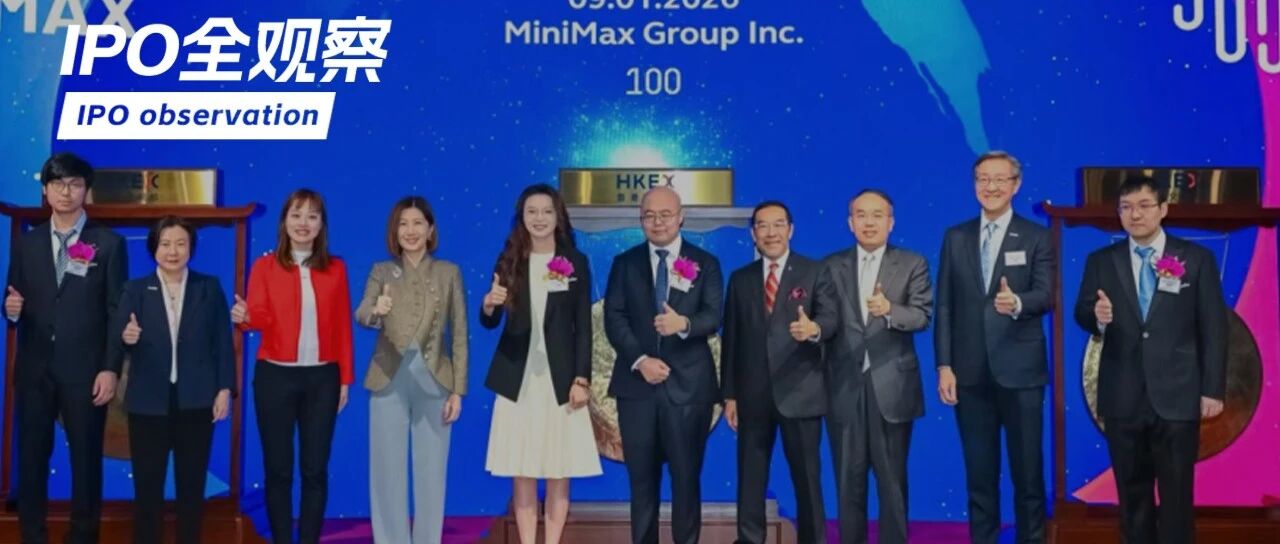
Core Viewpoint - MiniMax has successfully completed its IPO on the Hong Kong Stock Exchange, raising approximately 5.54 billion HKD (around 4.965 billion RMB) by issuing about 33.58 million shares at the upper price limit of 165 HKD per share [1][2]. Group 1: IPO Details - The final offering price was set at 165 HKD, with a price range of 151 HKD to 165 HKD [2]. - The public offering was oversubscribed by 1,837 times, while the international offering saw a 37 times oversubscription [2]. - In the after-hours trading, MiniMax's stock reached a peak of 211.2 HKD per share, closing at 205.6 HKD, marking an increase of nearly 25% [3]. Group 2: Company Background and Growth - MiniMax was founded less than four years ago and has rapidly evolved from a startup to a publicly listed company [3]. - The company has attracted significant investments from notable institutions such as MiHoYo, Alibaba, Tencent, and others, raising over 1.5 billion USD in total funding [3]. - The CEO, Yan Junjie, emphasized the company's commitment to advancing AI technology and its ambition to contribute to the industry's growth [3]. Group 3: Technological Advancements - MiniMax has focused on a dual approach of developing both consumer and enterprise-level AI applications, achieving a user base of over 212 million [9]. - The company has made significant breakthroughs in various AI modalities, including speech, video, and text, with its M2.1 model ranking first among open-source models in coding tasks [7][9]. - The strategy of parallel development across multiple modalities is aimed at achieving Artificial General Intelligence (AGI) [10][11]. Group 4: Organizational Efficiency - MiniMax's organizational structure emphasizes a high degree of diversity and a flat hierarchy, with 73.8% of its workforce in research and development and an average age of 29 [22][25]. - The company utilizes AI agents to enhance productivity, with over 80% of its code being generated by AI, fundamentally altering its cost structure [22]. - The company has achieved a competitive research and development efficiency, spending approximately 500 million USD, which is only 1% of OpenAI's expenditure during the same period [26]. Group 5: Market Reception and Future Outlook - MiniMax's IPO set a record for institutional subscriptions in Hong Kong, with over 460 participating institutions and an oversubscription rate exceeding 70 times [29]. - The CEO views the IPO as a new starting point, aiming for continued growth at a pace similar to the past four years [30].
暴涨超80%!MiniMax上市
Zheng Quan Shi Bao· 2026-01-09 03:35
1月9日,成立仅四年的人工智能大模型企业MiniMax(稀宇科技,0100.HK)正式登陆港交所。这家以"Intelligence with Everyone"为愿景的年轻企业,凭 借全模态自研技术和全球化商业布局在一众大模型初创企业中脱颖而出,成为全球最快IPO的大模型企业。而上市背后,则是多家创投机构的一路鼎力支 持。 行情数据显示,MiniMax当天大幅高开,随后持续走高,盘中一度涨超80%,截至发稿,涨幅仍有60%以上,总市值超过800亿港元。 | 今开 235.400 | | 最高 | 299.000 | | 成交量 | 955.83万股 | | --- | --- | --- | --- | --- | --- | --- | | 昨收 165.000 | | 最低 | 220.000 | | 成交额 | 21.36亿 | | 换手率 3.13% | | 市盈(TTM) | 亏损 | | 总市值 | 820.43亿 | | 分时 王日 | 日K | 周K | 月K | 室K | 年K | 更多v | | 295.600 | | | | | | 79.15% | | 258.600 | | | | ...
暴涨超80%!MiniMax上市
证券时报· 2026-01-09 03:20
1月9日,成立仅四年的人工智能大模型企业MiniMax(稀宇科技,0100.HK)正式登陆港交所。这家以"Intelligence with Everyone"为愿景的年 轻企业,凭借全模态自研技术和全球化商业布局在一众大模型初创企业中脱颖而出,成为全球最快IPO的大模型企业。而上市背后,则是多 家创投机构的一路鼎力支持。 行情数据显示,MiniMax当天大幅高开,随后持续走高,盘中一度涨超80%,截至发稿,涨幅仍有60%以上,总市值超过800亿港元。 | ■ini■ax主要投资机构 | | | --- | --- | | 投资机构类型 | 机构名称 | | 互联网及大厂 | 阿里巴巴、米哈游、腾讯、小红书等 | | VC/PE机构 | 红杉、IDG资本、基石资本、高瓴创投等 | | 国资或政府引导基金 | 中国人寿、安徽金控中金、苏州中金上汽基金、 上海国方、上海国投、央视融媒体等 | | 基石投资者 | 汇添富、易方达、ADIA、泰康人寿等 | | 数据来源: MiniMax招股说明书 | | "公司非常年轻,就连董事会成员的年纪都在30岁左右。在快速迭代的人工智能行业,这是吸引我们关注的一大因素。"基石 ...

红杉中国郑庆生:MiniMax成功的核心所在是对AGI的坚定信仰和长期主义精神
IPO早知道· 2026-01-09 02:52
红杉中国副总裁李广平,红杉中国合伙人郑庆生,MiniMax创始人兼CEO闫俊杰,红杉中 国副总裁董瀛,红杉中国投资经理张凯,MiniMax副总裁薛子钊。 本文为IPO早知道原创 作者| Stone Jin 微信公众号|ipozaozhidao 据 IPO 早 知 道 消 息 , MiniMax Group Inc. ( 以 下 简 称 "MiniMax" ) 于 2026 年 1 月 9 日 正 式 以"0100"为股票代码在港交所主板挂牌上市,成为史上IPO规模最大的AI大模型公司。 成立至今,MiniMax已获得多家战略投资方和一线机构的投资和支持。其中, 红杉中国在2023年7 月参与了MiniMax的A+轮融资,并在此后多轮加持,这也是迄今为止红杉中国在大模型领域投资金 额最大的项目之一。IPO前,红杉中国持有MiniMax 3.81%的股份,为第三大财务投资方。 红杉中国副总裁李广平介绍称,红杉中国在2021年底开始系统性研究生成式AI,是最早关注并开始 投资AIGC领域的机构。 2022年前后,在红杉中国内部的研究框架中,已经非常明确地把 AI 视为 未来最重要、且发展速度最快的底层能力。 "从结 ...