M2.1模型

Search documents
摩根大通首次覆盖MINIMAX给予增持评级 目标价700港元
Xin Lang Cai Jing· 2026-02-10 04:37
Core Viewpoint - Morgan Stanley initiates coverage on MINIMAX-WP with an "Overweight" rating and a target price of 700 HKD, indicating a potential upside of 36% [1] Company Summary - MINIMAX stands out due to its rare global presence, with over 70% of its revenue generated from international markets [1] - The company's M2.1 model is recognized as a global leader in programming and intelligent agent tasks [1] Financial Projections - Morgan Stanley forecasts a compound annual growth rate (CAGR) of 138% for the company's revenue from 2026 to 2030 [1] - The company is expected to reach breakeven by 2029, positioning it as a preferred choice to capitalize on the $1.4 trillion global AI market opportunity by 2030 [1]
摩根大通:给予MiniMax增持评级 目标价700港元
Jin Rong Jie· 2026-02-10 04:30
Core Viewpoint - Morgan Stanley initiates coverage of MiniMax-WP (00100.HK) with an "Overweight" rating and a target price of HKD 700, indicating a potential upside of 36% [1] Group 1: Company Overview - MiniMax stands out with a rare global presence, with over 70% of its revenue derived from international markets [1] - The M2.1 model of MiniMax is recognized as a global leader in programming and intelligent agent tasks [1] Group 2: Business Growth Potential - MiniMax has a balanced business portfolio across consumer applications, generative media, and B2B API, supporting strong growth potential [1] - Revenue is projected to grow at a compound annual growth rate (CAGR) of 138% from 2026 to 2030, with expectations to reach breakeven by 2029 [1] Group 3: Market Opportunity - MiniMax is viewed as a top pick to capitalize on the $14 trillion global AI market opportunity by 2030 [1]
摩通:给予MiniMax增持评级 目标价700港元
Ge Long Hui· 2026-02-10 03:57
Core Viewpoint - Morgan Stanley initiates coverage of MiniMax-WP (0100.HK) with an "Overweight" rating and a target price of HKD 700, indicating a potential upside of 36% [1] Company Summary - MiniMax stands out due to its rare global presence, with over 70% of its revenue generated from international markets [1] - The M2.1 model of MiniMax is recognized as a global leader in programming and intelligent agent tasks, supporting a balanced business portfolio across consumer applications, generative media, and B2B APIs [1] - The company is projected to achieve a compound annual growth rate (CAGR) of 138% in revenue from 2026 to 2030, with expectations to reach breakeven by 2029 [1] Industry Summary - MiniMax is viewed as a key player to capitalize on the global AI market opportunity, which is expected to reach USD 14 trillion by 2030 [1]
国联民生证券:Agent时代大模型正进化为“自主员工” 建议关注MiniMax-WP(00100)和智谱
智通财经网· 2026-02-09 08:22
Core Insights - The report from Guolian Minsheng Securities highlights the evolution of large models from "chat tools" to "autonomous employees" in the Agent era, suggesting that companies mastering core algorithms and industry interfaces will benefit significantly from the rise of intelligent automation [1] Group 1: Market Trends - As of February 2, 2026, Clawdbot has surpassed 130,000 stars on GitHub and its official website has over 2 million visits, making it one of the fastest-growing open-source technology projects recently [1] - The emergence of "AI-only communities" like Moltbook, which quickly amassed a million agent accounts, indicates a natural increase in request density and API triggers, leading to a significant rise in API call frequency and token throughput [1] Group 2: Model Cost Efficiency - The importance of unit cost for models is increasing, as complex tasks often require multiple stages of interaction, leading to a significant increase in model call frequency and context complexity [2] - Agent services designed for complex tasks may consume up to ten times more tokens compared to basic chat interactions, making the "unit cost × unit output" a critical factor for scalability [2] Group 3: Model Features - The M2.1 model from MiniMax aims to address the high token cost in automated programming, with a pricing structure approximately 8% of that of Claude Sonnet, and introduces a high-frequency refresh mechanism for productivity in heavy development scenarios [3] - M2.1's long text capability allows it to handle ongoing context, accommodating longer documents and reducing logical breaks due to truncation [4] - The model's reasoning and programming capabilities make it suitable for production systems, emphasizing the importance of cost-effectiveness in high-frequency applications [5] Group 4: Multi-Modal Capabilities - As agents enter office and production environments, inputs are increasingly derived from visual information such as screenshots, PDFs, and tables, rather than just text [6] - MiniMax's multi-modal capabilities enhance the agent's ability to understand interfaces, extract key information, and execute steps or code, facilitating "visual-driven automation" [7]

国联民生证券:Agent时代大模型正进化为“自主员工” 建议关注MiniMax-WP和智谱
Zhi Tong Cai Jing· 2026-02-09 08:20
Core Insights - The report from Guolian Minsheng Securities highlights the evolution of large models from "chat tools" to "autonomous employees," indicating that companies mastering core algorithms and industry interfaces are poised to benefit significantly from the intelligence-driven era [1] Group 1: Market Trends - As of February 2, 2026, Clawdbot has surpassed 130,000 stars on GitHub and its official website has accumulated over 2 million visits, making it one of the fastest-growing open-source technology projects recently [1] - The emergence of "AI-only communities" like Moltbook, which quickly amassed a million agent accounts, indicates a natural increase in request density and API triggers, leading to a significant rise in API call frequency and token throughput [1] Group 2: Model Cost Efficiency - The importance of unit cost for models is increasing, as complex tasks require multiple stages of interaction, leading to a significant increase in model call frequency and complexity [2] - The "unit cost of the model × unit output" becomes critical for the scalability of agent products, as multi-round reasoning and tool collaboration can linearly amplify costs [2] Group 3: Model Features - The M2.1 model from MiniMax aims to address the high token cost pain points faced by developers in automated programming, with a pricing structure approximately 8% of Claude Sonnet's [3] - The innovative "5-hour reset quota" mechanism allows for high-frequency productivity in heavy development scenarios, breaking away from traditional daily or monthly limits [3] Group 4: Long Text Capability - M2.1's long text capability is designed for real-world workflows, allowing it to handle continuous context, including tool calls, historical information, and constraints, thus reducing logical breaks due to truncation [4] Group 5: Reasoning and Programming Skills - In products like Clawdbot, the model is utilized for coding, code modification, judgment, and validation, with M2.1 being a cost-effective choice for production systems and high-frequency calls [5] - The ability to convert strong capabilities into frequently usable productivity at a lower cost is identified as MiniMax's competitive advantage [5] Group 6: Multi-Modal and Visual Execution - As agents enter office and production environments, inputs are increasingly derived from visual information such as screenshots, PDFs, tables, and charts, rather than solely from text [6] - MiniMax's multi-modal capabilities enhance agents' understanding of interfaces, enabling them to extract key information and output executable steps or code, thus facilitating "visual-driven automation" [7]
国联民生证券:Agent时代大模型正进化为“自主员工” 建议关注MiniMax-WP(00100)和智谱(02513)
智通财经网· 2026-02-09 08:17
Core Viewpoint - The report from Guolian Minsheng Securities highlights the evolution of large models from "chat tools" to "autonomous workers," indicating that companies mastering core algorithms and industry interfaces are likely to benefit significantly from the rise of intelligent automation [1] Group 1: Market Trends - As of February 2, 2026, Clawdbot has surpassed 130,000 stars on GitHub and its official website has accumulated over 2 million visits, making it one of the fastest-growing open-source technology projects recently [1] - The emergence of "AI-only communities" like Moltbook, which quickly gathered a million agent accounts, indicates a higher request density and more frequent API triggers, leading to a significant increase in API call frequency and token throughput [1] Group 2: Model Cost Efficiency - The importance of unit cost for models is increasing, as complex tasks require multiple stages of interaction, leading to a significant rise in model call frequency and complexity [2] - The "unit cost × unit output" metric is critical for the scalability of agent products, as multi-round reasoning and tool collaboration can exponentially increase costs [2] Group 3: Model Features - The M2.1 model aims to address the high token cost faced by developers in automated programming, with a pricing structure approximately 8% of that of Claude Sonnet [3] - M2.1's long text capability allows it to handle "continuous memory," accommodating longer documents and more intermediate results, thus reducing logical breaks due to truncation [4] - M2.1 is designed for tasks involving code writing, modification, judgment, and validation, making it a cost-effective choice for production systems with high-frequency calls [5] Group 4: Multi-Modal Capabilities - In the agent era, inputs are increasingly derived from visual information such as screenshots, PDFs, tables, and charts, rather than just text [6] - MiniMax's multi-modal capabilities enhance the agent's ability to understand interfaces, extract key information, and output executable steps or code, facilitating "visual-driven automation" [7]
国联民生证券:模型单位成本重要性不断提升 多模态与“视觉执行”走向前台
智通财经网· 2026-02-04 06:26
Core Insights - The report from Guolian Minsheng Securities highlights the evolution of large models from "chat tools" to "autonomous employees" in the agent era, emphasizing the importance of model unit costs as tasks become more complex and require multiple stages of interaction [1][2]. Group 1: Model Cost and Efficiency - In traditional dialogue paradigms, a single interaction requires only a few model calls, whereas workflow paradigms involve multiple stages, leading to a significant increase in model call frequency and complexity [2]. - The agent services designed for complex tasks may consume tens of times more tokens compared to basic chat, making the unit cost of models critical for scalability [2][3]. - MiniMax's M2.1 model is noted for its efficiency and cost advantages, being priced at approximately 8% of Claude Sonnet's costs, which addresses the high token cost pain points faced by developers [3]. Group 2: Long Text and Reasoning Capabilities - The M2.1 model's strong long-text capabilities allow it to handle extensive workflows, accommodating more intermediate results and reducing logical breaks due to truncation [3]. - The model is designed for automated execution and error correction, making it suitable for production systems where it can write, modify, and validate code effectively [3]. Group 3: Multi-Modal and Visual Execution - The entry of agents into office and production scenarios has shifted input sources from pure text to include visual information such as screenshots, PDFs, and tables [4]. - MiniMax's multi-modal capabilities enhance the agent's ability to understand interfaces, extract key information, and output executable steps or code, facilitating "visual-driven automation" [4]. - This capability allows for tasks such as automatic form filling, error identification from screenshots, and data extraction from charts, improving deliverability and reducing manual intervention [4].
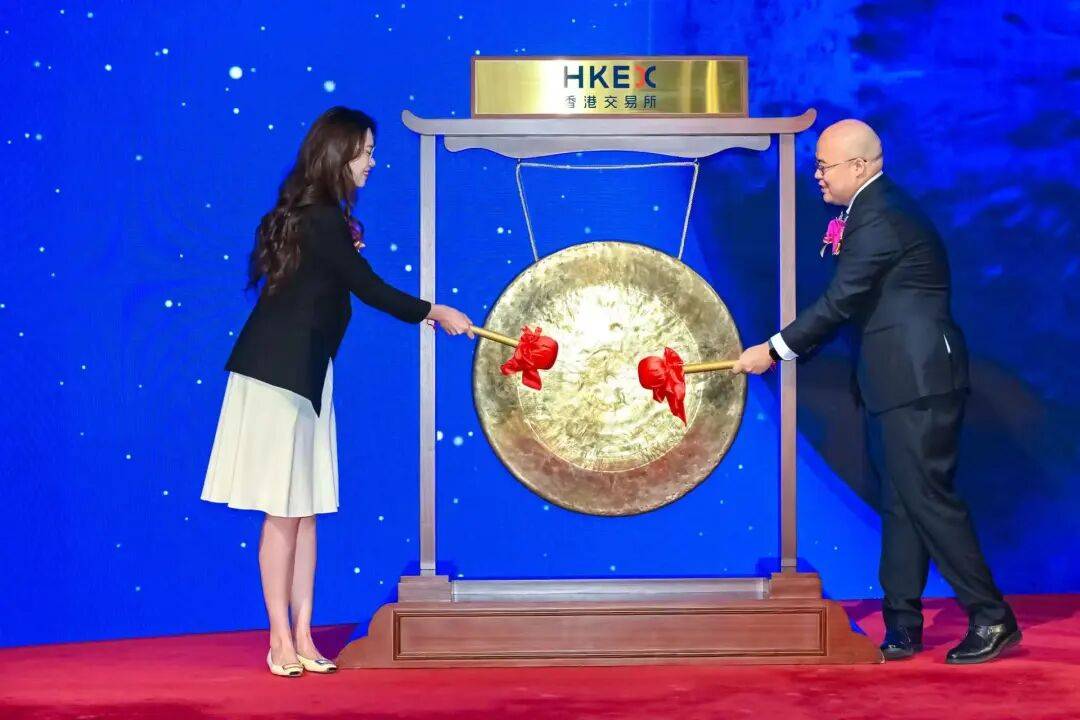
763亿港元,大模型公司最大规模IPO!MiniMax登陆港交所,开盘前大涨50%
Sou Hu Cai Jing· 2026-01-09 04:28
Core Viewpoint - MiniMax has successfully completed its IPO on the Hong Kong Stock Exchange, raising approximately 5.54 billion HKD (around 4.965 billion RMB) by issuing about 33.58 million shares at the upper price limit of 165 HKD per share [1][2]. Group 1: IPO Details - The final offering price was set at 165 HKD, with a price range of 151 HKD to 165 HKD [2]. - The public offering was oversubscribed by 1,837 times, while the international offering saw a 37 times oversubscription [2]. - In the after-hours trading, MiniMax's stock reached a peak of 211.2 HKD per share, closing at 205.6 HKD, marking an increase of nearly 25% [3]. Group 2: Company Background and Growth - MiniMax was founded less than four years ago and has rapidly evolved from a startup to a publicly listed company [3]. - The company has attracted significant investments from notable institutions such as MiHoYo, Alibaba, Tencent, and others, raising over 1.5 billion USD in total funding [3]. - The CEO, Yan Junjie, emphasized the company's commitment to advancing AI technology and its ambition to contribute to the industry's growth [3]. Group 3: Technological Advancements - MiniMax has focused on a dual approach of developing both consumer and enterprise-level AI applications, achieving a user base of over 212 million [9]. - The company has made significant breakthroughs in various AI modalities, including speech, video, and text, with its M2.1 model ranking first among open-source models in coding tasks [7][9]. - The strategy of parallel development across multiple modalities is aimed at achieving Artificial General Intelligence (AGI) [10][11]. Group 4: Organizational Efficiency - MiniMax's organizational structure emphasizes a high degree of diversity and a flat hierarchy, with 73.8% of its workforce in research and development and an average age of 29 [22][25]. - The company utilizes AI agents to enhance productivity, with over 80% of its code being generated by AI, fundamentally altering its cost structure [22]. - The company has achieved a competitive research and development efficiency, spending approximately 500 million USD, which is only 1% of OpenAI's expenditure during the same period [26]. Group 5: Market Reception and Future Outlook - MiniMax's IPO set a record for institutional subscriptions in Hong Kong, with over 460 participating institutions and an oversubscription rate exceeding 70 times [29]. - The CEO views the IPO as a new starting point, aiming for continued growth at a pace similar to the past four years [30].

计算机行业周报 20251229-20251231:港股 AI 热门新股全梳理!-20260104
Shenwan Hongyuan Securities· 2026-01-04 13:07
Investment Rating - The report maintains a positive outlook on the industry, indicating a "Buy" rating for the sector [1]. Core Insights - The report highlights significant developments in the semiconductor and AI sectors, particularly focusing on companies like Wallran Technology and TianShu Intelligent Chip, which are preparing for IPOs and showcasing innovative GPU products [3][28]. - The report emphasizes the rapid growth of revenue in AI-related businesses, with companies like Zhipu and MiniMax leading the way in large model commercialization [39]. Summary by Sections Wallran Technology - Wallran Technology is set to launch its IPO on January 8, 2026, and has developed a range of GPGPU chips and intelligent computing solutions, with significant revenue growth from 0.499 million in 2022 to 58.9 million in 2025H1 [3][4]. - The company has a strong team with backgrounds from major tech firms like AMD and Huawei, focusing on GPGPU architecture and software platforms [4][5]. - Wallran's core products include the BR106 and BR110 series, with a sales volume of 9,344 units for BR106 in 2024 and a projected revenue of 1.24 billion from orders [26][21]. TianShu Intelligent Chip - TianShu Intelligent Chip commenced its IPO process on December 30, 2025, and has developed a comprehensive product line for AI computing, including the TianGai series for training and the ZhiKai series for inference [28][32]. - The company has achieved significant milestones, including the launch of its second-generation training product, TianGai Gen 2, and has a strong financial backing from notable investors [29][32]. - The average selling price for TianGai products is between 30,000 to 40,000 yuan, while ZhiKai products average around 10,000 yuan [34]. Zhipu - Zhipu has established itself as a leader in the B-end localization deployment of AI models, achieving a revenue of 310 million in 2024, with a year-on-year growth of 150.9% [42]. - The company focuses on a comprehensive AI model suite, including language, multi-modal, and intelligent agent models, with a strong emphasis on R&D and high gross margins in localized deployments [41][44]. - Zhipu's models have been adopted by over 8,000 institutional clients, showcasing its significant market presence [47]. MiniMax - MiniMax, founded in 2021, emphasizes efficient model architecture and rapid commercialization of AI products, with a significant portion of its revenue coming from overseas markets [39][50]. - The company has released several innovative products, including the Hailuo AI video generation platform and the M2 series models, which enhance coding capabilities across multiple programming languages [50]. - MiniMax's business model focuses on direct sales and expanding its distribution network, with a notable decrease in revenue concentration from its top clients over recent years [36].


国泰海通|传媒:大模型公司上市推进,看好AI技术发展与商业落地
国泰海通证券研究· 2025-12-31 08:48
Core Viewpoint - The article highlights the progress of two native large model companies, MiniMax and Zhipu Huazhang, in their Hong Kong stock listings, emphasizing their deep technical accumulation in AI research and the emergence of monetizable business models, indicating a growing scale in China's AI large model sector [1][2]. Group 1: MiniMax - MiniMax has been engaged in AI large model research since early 2022, with its latest M2.1 model showing significant improvements over its predecessor M2, even outperforming models like Gemini 3 Pro and GPT-5.2 in certain benchmarks [2][3]. - The company reported a revenue of $53.437 million for the first three quarters of 2025, marking a 175% year-on-year increase, with a significant portion of revenue (71%) coming from AI native products and enterprise services [2][3]. - MiniMax's Talkie/Xingye application ranks second globally in monthly active users (MAU) within its niche, while its video generation product, Hailuo 2.3, is gaining widespread recognition and is becoming a new growth driver for the company [2][3]. Group 2: Zhipu Huazhang - Zhipu Huazhang's latest large language model, GLM-4.7, aligns with Claude Sonnet4.5, and the company has developed a comprehensive model matrix including reflective, multimodal, and agent models [3]. - The company generated revenue of 191 million yuan in the first half of 2025, reflecting a 325% year-on-year growth, with its primary revenue source being the MaaS (Model as a Service) business model [3]. - Zhipu Huazhang's business model includes both standardized cloud deployment and customized local deployment, catering to a diverse range of industries and regions [3]. Group 3: Industry Insights - Both companies have demonstrated significant revenue growth, with MiniMax and Zhipu Huazhang investing heavily in R&D to support technological advancements, with MiniMax's R&D expenses reaching $180 million (337% of revenue) and Zhipu Huazhang's R&D expenses at 1.595 billion yuan (8.35 times its revenue) in the respective periods [3]. - The article suggests that the ongoing development and iteration of AI technology will continue to create investment opportunities as these companies advance their commercial applications [2][3].