全国统一大市场

Search documents
从严惩治证券犯罪 维护资本市场安全
Zhong Guo Zheng Quan Bao· 2026-01-19 21:11
Group 1 - The Supreme People's Procuratorate emphasizes the need to utilize legal power to support high-quality development and maintain economic and financial security [1] - Strict punishment for serious economic crimes, including smuggling of strategic minerals, is mandated to protect national strategic interests [1] - Collaboration with financial regulatory authorities to combat illegal financial activities, including illegal fundraising and financial fraud, is highlighted to ensure stable financial operations and protect public property [1] Group 2 - Focus on strengthening domestic circulation and building a robust domestic market while ensuring equal legal protection for various business entities [2] - Emphasis on judicial protection of intellectual property rights, particularly in emerging technologies such as artificial intelligence and data [2] - The need for enhanced supervision and correction of prominent issues in enterprise-related law enforcement is stressed to promote a fair business environment [2]
增长5%!2025年中国GDP跨越140万亿元关口
Xin Lang Cai Jing· 2026-01-19 19:14
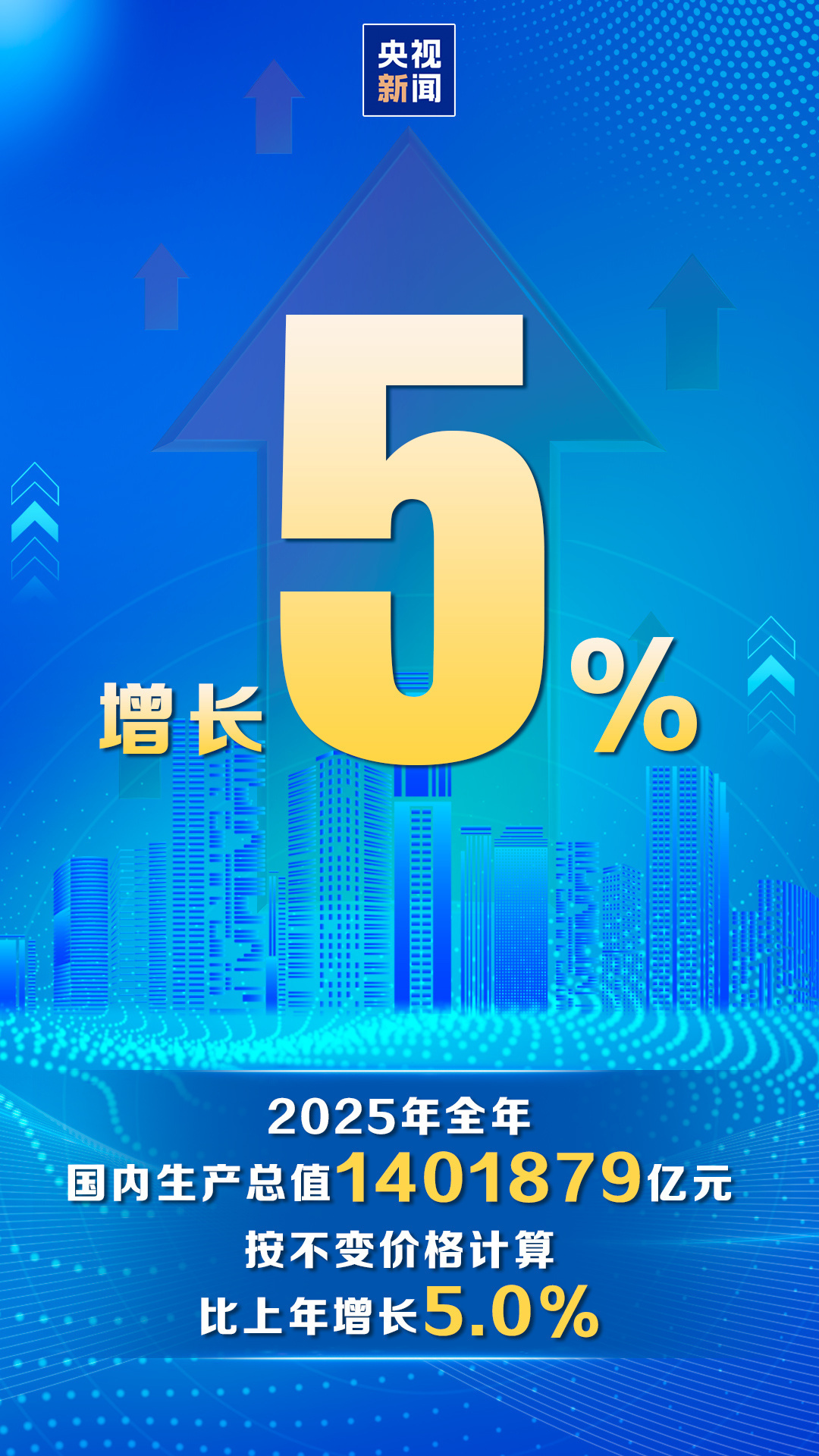
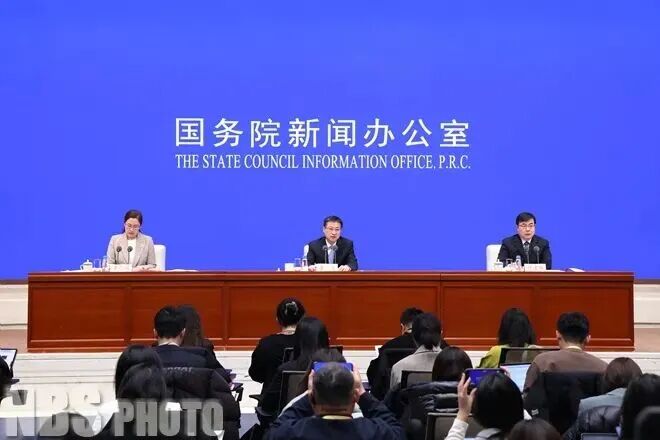
分季度看,一季度国内生产总值同比增长5.4%,二季度增长5.2%,三季度增长4.8%,四季度增长 4.5%。 这一年,我国始终坚定不移走高质量发展道路,经济呈现向优向好发展势头。2025年,规模以上高技术 制造业增加值占规模以上工业增加值比重升到17.1%,最终消费支出对经济增长贡献率超过五成。我国 货物进出口总额比上年增长3.8%。民生保障有力有效,居民人均可支配收入实际增长5.0%,与经济增 长同步。 新华社北京1月19日电 (记者 王雨萧 张晓洁) 国家统计局19日发布数据显示,2025年中国国内生产总 值(GDP)1401879亿元,首次跃上140万亿元新台阶,按不变价格计算,比上年增长5.0%。 "2025年,面对国内外经济环境的复杂变化,国民经济运行顶压前行、向新向优,高质量发展取得新成 效,经济社会发展主要目标任务圆满实现,'十四五'胜利收官。"国家统计局局长康义当天在国新办发 布会上说。 "也要看到,外部环境变化影响加深,国内供强需弱矛盾突出,经济发展中老问题、新挑战仍然不 少。"康义说,下阶段,要实施更加积极有为的宏观政策,持续扩大内需、优化供给,做优增量、盘活 存量,因地制宜发展新质生产力 ...
2025年我国GDP同比增长5.0%
Xin Lang Cai Jing· 2026-01-19 17:08
这一年,我国始终坚定不移走高质量发展道路,经济呈现向优向好发展势头。2025年,规模以上高技术 制造业增加值占规模以上工业增加值比重升到17.1%,最终消费支出对经济增长贡献率超过五成。我国 货物进出口总额比上年增长3.8%。民生保障有力有效,居民人均可支配收入实际增长5.0%,与经济增 长同步。 新华社电 国家统计局19日发布数据显示,2025年中国国内生产总值(GDP)1401879亿元,首次跃上 140万亿元新台阶,按不变价格计算,比上年增长5.0%。 "2025年,面对国内外经济环境的复杂变化,国民经济运行顶压前行、向新向优,高质量发展取得新成 效,经济社会发展主要目标任务圆满实现,'十四五'胜利收官。"国家统计局局长康义当天在国新办发 布会上说。 分季度看,一季度国内生产总值同比增长5.4%,二季度增长5.2%,三季度增长4.8%,四季度增长 4.5%。 (来源:劳动午报) "也要看到,外部环境变化影响加深,国内供强需弱矛盾突出,经济发展中老问题、新挑战仍然不 少。"康义说,下阶段,要实施更加积极有为的宏观政策,持续扩大内需、优化供给,做优增量、盘活 存量,因地制宜发展新质生产力,纵深推进全国统一大 ...
中国GDP突破140万亿元
Jiang Nan Shi Bao· 2026-01-19 14:45
"也要看到,外部环境变化影响加深,国内供强需弱矛盾突出,经济发展中老问题、新挑战仍然不 少。"康义说,下阶段,要实施更加积极有为的宏观政策,持续扩大内需、优化供给,做优增量、盘活 存量,因地制宜发展新质生产力,纵深推进全国统一大市场建设,推动经济实现质的有效提升和量的合 理增长,确保"十五五"开好局、起好步。 (来源:新华社) "2025年,面对国内外经济环境的复杂变化,国民经济运行顶压前行、向新向优,高质量发展取得新成 效,经济社会发展主要目标任务圆满实现,'十四五'胜利收官。"国家统计局局长康义当天在国新办发 布会上说。 分季度看,一季度国内生产总值同比增长5.4%,二季度增长5.2%,三季度增长4.8%,四季度增长 4.5%。 这一年,我国始终坚定不移走高质量发展道路,经济呈现向优向好发展势头。2025年,规模以上高技术 制造业增加值占规模以上工业增加值比重升到17.1%,最终消费支出对经济增长贡献率超过五成。我国 货物进出口总额比上年增长3.8%。民生保障有力有效,居民人均可支配收入实际增长5.0%,与经济增 长同步。 国家统计局1月19日发布数据显示,2025年中国国内生产总值(GDP)140187 ...
“十五五”改革攻坚,上海将有这些新举措
Xin Lang Cai Jing· 2026-01-19 14:04
Group 1 - The core viewpoint of the article emphasizes Shanghai's strategic role in driving innovative reforms and opening up during the 14th Five-Year Plan period [3][5][6] - The proposal outlines key reforms aimed at deepening the market-oriented allocation of factors, including the elimination of barriers in resource acquisition and government procurement [3][5] - It highlights the construction of a new open economic system, focusing on aligning with international high-standard trade rules and expanding service sector openness [6][11] Group 2 - The article discusses the enhancement of international technological innovation centers, including reforms in high-tech talent immigration and major scientific infrastructure [7][9] - It mentions the importance of reforming state-owned enterprises to improve their core functions and competitiveness [12] - The proposal includes measures to improve public health systems and the governance of public hospitals, emphasizing a collaborative approach to healthcare [12][13]


2025年破坏社会主义市场经济秩序犯罪案件增长
Xin Lang Cai Jing· 2026-01-19 14:04
Core Viewpoint - The meeting highlighted a decrease in criminal case filings in first-instance courts by 2025, while crimes disrupting the socialist market economy are increasing by 2.2% [1] Group 1: Criminal Case Trends - Criminal case filings are expected to continue declining, but specific crimes related to market economy disruption are on the rise [1] - Notable increases in case filings include: - Bid rigging: up 50% - Issuing false invoices: up 32% - Loan fraud: up 20% - Bribery by non-state employees: up 20% - Contract fraud: up 11% - Production and sale of substandard products: up 10% - Illegal business operations: up 9% [1] Group 2: Judicial and Market Regulation - The meeting emphasized the need to utilize criminal, civil, and administrative judicial functions to punish behaviors that disrupt market order and violate principles of integrity [1] - There is a focus on addressing "involution" competition through judicial research, enhancing anti-monopoly and anti-unfair competition laws to promote fair competition [1] - Courts are urged to adhere to power boundaries and resolve issues related to the misuse of administrative and criminal measures in economic disputes [1] Group 3: Support for Private Economy - Continuous implementation of the Private Economy Promotion Law and related measures is required to protect enterprise property rights and legal interests [2] - The establishment of a long-term mechanism for preventing and correcting abuses of power is essential to foster a law-based business environment [2] - There is a call for strong supervision to correct the abuse of power that restricts competition, promoting the construction of a unified national market [2]
传化智联:公司在27个省(区、市)完成了72个项目的网络布局
Zheng Quan Ri Bao Zhi Sheng· 2026-01-19 13:13
Core Viewpoint - The announcement by the company highlights the significant opportunity presented by the National Development and Reform Commission's release of the "Guidelines for the Construction of a National Unified Market" in 2025, which is expected to enhance the logistics sector as a strategic pillar for the national unified market [1] Company Summary - The company has over 20 years of experience in operating road logistics infrastructure and has established a network of 72 projects across 27 provinces, regions, and municipalities [1] - The company aims to leverage its advantages to build an efficient circulation system for the flow of production materials and consumer goods, thereby helping manufacturing enterprises reduce costs and improve efficiency in their logistics supply chains [1]

2025全年与12月宏观经济数据
Guan Tong Qi Huo· 2026-01-19 12:33
Report Summary 1. Report Industry Investment Rating No relevant information provided. 2. Core Viewpoint In 2025, facing complex changes in the domestic and international economic environment, China's national economy withstood pressure, moved forward, and achieved new results in high - quality development under the strong leadership of the Party Central Committee and the implementation of various policies, successfully fulfilling the main goals and tasks of economic and social development and concluding the "14th Five - Year Plan" victoriously [4]. 3. Summary by Directory Macroeconomic Data - **GDP**: The annual GDP was 1,401,879 billion yuan, a 5.0% increase at constant prices. The added values of the primary, secondary, and tertiary industries increased by 3.9%, 4.5%, and 5.4% respectively. Quarterly GDP growth rates were 5.4% in Q1, 5.2% in Q2, 4.8% in Q3, and 4.5% in Q4. The Q4 GDP increased by 1.2% quarter - on - quarter [5]. - **Industry**: The annual added value of large - scale industries increased by 5.9%. The added values of the mining, manufacturing, and power sectors increased by 5.6%, 6.4%, and 2.3% respectively. The added values of equipment manufacturing and high - tech manufacturing increased by 9.2% and 9.4% respectively. In December, the added value of large - scale industries increased by 5.2% year - on - year and 0.49% month - on - month [5]. - **Services**: The annual service industry added value increased by 5.4%. In December, the service industry production index increased by 5.0% year - on - year. The business activity index and business expectation index of the service industry increased in December [6]. - **Consumption**: The annual total retail sales of consumer goods were 501,202 billion yuan, a 3.7% increase. Online retail sales increased by 8.6%. In December, total retail sales of consumer goods increased by 0.9% year - on - year and decreased by 0.12% month - on - month. The annual service retail sales increased by 5.5% [7]. - **Investment**: The annual fixed - asset investment (excluding rural households) was 485,186 billion yuan, a 3.8% decrease. Real estate development investment decreased by 17.2%. In December, fixed - asset investment (excluding rural households) decreased by 1.13% month - on - month [8]. - **Import and Export**: The annual total goods import and export volume was 454,687 billion yuan, a 3.8% increase. Exports were 269,892 billion yuan, a 6.1% increase, and imports were 184,795 billion yuan, a 0.5% increase. In December, the total import and export volume increased by 4.9% year - on - year [9]. - **Prices**: The annual CPI was flat compared to the previous year. The core CPI increased by 0.7%. The annual PPI decreased by 2.6%, and the annual purchase price of industrial producers decreased by 3.0% [10]. - **Employment**: The annual average urban survey unemployment rate was 5.2%. In December, it was 5.1%. The total number of migrant workers increased by 0.5% [11]. - **Income**: The annual per - capita disposable income of national residents was 43,377 yuan, a 5.0% nominal increase. After deducting price factors, the real growth was also 5.0%. The per - capita consumption expenditure increased by 4.4% [12]. - **Population**: The year - end national population was 1,404.89 million, a decrease of 3.39 million. The birth rate was 5.63‰, the death rate was 8.04‰, and the natural growth rate was - 2.41‰. The urbanization rate was 67.89%, an increase of 0.89 percentage points [13]. Economic Growth and Business Climate Index No specific summary content other than the index names such as GDP quarterly growth rate, sub - industry GDP growth rate, and PMI index is provided [16]. Industrial Production No specific summary content other than the names of indicators such as industrial added value, power generation, steel production, coal production, railway freight volume, and Keqiang Index is provided [18]. Import and Export No specific summary content other than the names of indicators such as import and export amounts, growth rates, main export country growth rates, and export quantity and price indices is provided [23]. Investment No specific summary content other than the names of indicators such as real estate investment, infrastructure investment, manufacturing investment, and real estate - related indicators is provided [25]. Consumption No specific summary content other than the names of indicators such as total retail sales of consumer goods, automobile and petroleum product retail sales, furniture and building decoration material retail sales, and per - capita disposable income is provided [26]. Finance No specific summary content other than the names of indicators such as M1 and M2 growth rates, M2 - M1 growth rate difference and CPI, loan and social financing total, and corporate and household medium - and long - term loan amounts is provided [32]. Inflation No specific summary content other than the names of indicators such as CPI, PPI, and prices of pork and vegetables is provided [34].
预期目标圆满实现!2025年各项经济数据公布→
Jin Rong Shi Bao· 2026-01-19 11:33
据介绍,初步核算,2025年全年国内生产总值(GDP)1401879亿元,按不变价格计算,比上年增长 5.0%。 "2025年,面对国内外经济环境的复杂变化,我国国民经济运行顶压前行、向新向优,高质量发展取得 新成效,经济社会发展主要目标任务圆满实现,'十四五'胜利收官。"1月19日,在国新办举行的新闻发 布会上,国家统计局局长康义介绍2025年国民经济运行情况。 1401879亿元 "放眼全球,我国经济,贡献率预计达到30%左右。"康义表示。 71488万吨 粮食增产丰收 全年全国粮食总产量71488万吨,比上年增加838万吨,增长1.2%。 全年猪牛羊禽肉产量10072万吨,比上年增长4.2%,首次超过1亿吨。 5.9% 工业生产较快增长 全年全国规模以上工业增加值比上年增长5.9%。 分三大门类看,采矿业增加值增长5.6%,制造业增长6.4%,电力、热力、燃气及水生产和供应业增长 2.3%。 装备制造业增加值增长9.2%,高技术制造业增加值增长9.4%。3D打印设备、工业机器人、新能源汽车 产品产量分别增长52.5%、28.0%、25.1%。 5.4% 服务业平稳增长 全年服务业增加值比上年增长5.4% ...
视频丨重磅经济数据发布 2025年我国国内生产总值突破140万亿元
Yang Shi Xin Wen Ke Hu Duan· 2026-01-19 08:17
0:00 国家统计局1月19日发布数据显示,2025年,面对国内外经济环境的复杂变化,在以习近平同志为核心的党中央坚强领导下,各地区各部门深入贯彻 落实党中央、国务院决策部署,坚定不移贯彻新发展理念、推动高质量发展,统筹国内国际两个大局,统筹发展和安全,实施更加积极有为的宏观政策, 纵深推进全国统一大市场建设,国民经济运行顶压前行、向新向优,高质量发展取得新成效,经济社会发展主要目标任务圆满实现,"十四五"胜利收官。 初步核算,全年国内生产总值1401879亿元,按不变价格计算,比上年增长5.0%。分产业看: 第一产业增加值93347亿元,比上年增长3.9%; 第二产业增加值499653亿元,增长4.5%; 第三产业增加值808879亿元,增长5.4%。 分季度看: 一季度国内生产总值同比增长5.4%; 二季度增长5.2%; 三季度增长4.8%; 四季度增长4.5%。 从环比看,四季度国内生产总值增长1.2%。 一、粮食增产丰收,畜牧业稳定增长 全年全国粮食总产量71488万吨,比上年增加838万吨,增长1.2%。其中,夏粮产量14975万吨,下降0.1%;早稻产量2851万吨,增长1.2%;秋粮产量 536 ...