
工业互联网

Search documents
曾经他们说,中国不高端
Xin Lang Cai Jing· 2025-12-28 03:56
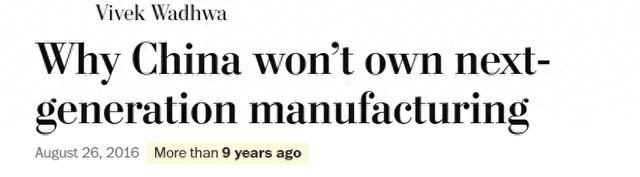
Core Viewpoint - The article critiques a 2016 prediction that China would not dominate next-generation manufacturing, highlighting how this view has been proven wrong as China's manufacturing sector continues to thrive and innovate in the face of challenges [1][2]. Summary by Sections China's Manufacturing Landscape - China's manufacturing sector has not only survived but is at the forefront of global industrial digital transformation, countering earlier predictions of its decline [2][12]. - The International Federation of Robotics reported that by 2025, China will have over 2 million industrial robots in operation, accounting for nearly half of the global total, solidifying its position as the world leader in this field [3]. Technological Advancements - Chinese companies are increasingly developing their own robotic technologies, improving their market share in critical components like control systems and servos, and are now significant players in the global market [5][8]. - The ability to rapidly scale production and refine prototypes in real industrial environments has become a core competitive advantage for China, shifting the focus from merely having advanced algorithms to actual implementation and scalability [8][10]. Engineering Talent and Education - China boasts the largest and most comprehensive engineering talent pool globally, with over 5 million STEM graduates entering the workforce annually, and a growing emphasis on quality in engineering education [9][10]. - Major Chinese companies like Huawei and BYD leverage their engineering talent as a core asset, investing heavily in R&D to create a complete chain from basic research to engineering realization [10]. Global Manufacturing Role - China's manufacturing ecosystem is characterized by a robust industrial system, efficient infrastructure, and a large market, which collectively provide a competitive edge beyond just low labor costs [15][18]. - The narrative around China's manufacturing has shifted from being seen as a laggard to a formidable competitor, with its role in global supply chains evolving as it moves up the value chain [15][18]. Future Outlook - The article concludes that China's manufacturing capabilities are not only viable but are essential in the global context, as the country continues to adapt and innovate despite past criticisms [18][19].

全国首套采装、运输、排土、选煤多环节无人化智慧矿山协同系统在华能北方魏家峁煤矿投运
Xin Lang Cai Jing· 2025-12-27 18:42
(来源:内蒙古日报) 转自:内蒙古日报 该系统深度融合5G通信、北斗高精定位、人工智能与工业互联网等前沿技术,构建了一套由35立方米 远程操控电铲、220吨级无人驾驶矿卡、远程操控平路机以及大型智能干法湿法联合工艺选煤厂组成的 多环节协同作业系统。露天煤矿多环节系统性无人流水线,以重点生产区域人员"零进入",保障工人远 离高危、粉尘、噪音等艰苦作业环境,实现了本质安全与生产效率的双重跃升。 (张永贵 王峰) 12月24日,全国首套采装、运输、排土、选煤多环节无人化智慧矿山协同系统在华能北方魏家峁露天煤 矿投入运行,标志着我国露天煤矿智能化建设实现了从单机智能向多环节系统协同自主作业的历史性跨 越。 ...
工业和信息化部部署2026年重点工作 深入整治“内卷式”竞争
Shang Hai Zheng Quan Bao· 2025-12-27 02:03
在产业结构优化方面,会议作出部署:一方面要优化提升传统产业。强化标准引领,推动设备更新、工 艺升级、数智赋能、管理创新。深入实施制造业卓越质量工程。打造一批服务型制造领军品牌。促进工 业与文旅融合发展。深入实施安全生产治本攻坚三年行动。另一方面要培育壮大新兴产业和未来产业。 打造集成电路、新型显示、新材料、航空航天、低空经济、生物医药等新兴支柱产业。支持人工智能攻 关。有序开展卫星物联网等新业务商用试验。创建首批国家新兴产业发展示范基地,建设一批创新型产 业集群。开展未来产业重点细分赛道创新任务揭榜挂帅,完善具身智能、元宇宙等的创新发展政策。加 强6G技术研发。 推进"人工智能+制造"专项行动 强创新方面,会议要求,2026年要攻克一批带动产业发展的核心技术,做强一批高水平制造业中试平 台,打造全国制造业中试服务网络。加快培育全国一体化技术市场,推进科技成果"先使用后付费"改革 试点。实施国家高新区新赛道培育行动,推动国家新型工业化示范区建设。优化国防科技工业布局。 促融合方面,会议要求,推动信息化和工业化深度融合。建设一批高质量行业数据集,形成一批重点行 业数字化转型场景图谱,创建高标准数字园区,深化中小企 ...
2026年工信领域十方面重点工作明确
Zhong Guo Zheng Quan Bao· 2025-12-26 21:05
Group 1 - The national industrial and information technology work conference emphasized ten key areas for achieving a good start in the 14th Five-Year Plan by 2026, focusing on stabilizing the industrial economy, enhancing industrial chain resilience, and fostering emerging industries [1][2] - The conference highlighted the need to consolidate the industrial economy's positive momentum by implementing a new round of growth support plans for ten key industries and stabilizing effective investment in manufacturing [1][2] - There is a strong emphasis on enhancing the resilience and safety of industrial chains through high-quality development actions and promoting the development of characteristic mineral resource industries [1][2] Group 2 - Accelerating the enhancement of industrial technological innovation capabilities is a priority, with efforts to tackle core technologies and strengthen high-level manufacturing pilot platforms [2][3] - The optimization of traditional industries will be pursued through standard leadership, equipment upgrades, and management innovation, alongside the promotion of service-oriented manufacturing brands [2][3] - The cultivation of emerging and future industries, including integrated circuits, new materials, and artificial intelligence, is essential, with plans to establish national demonstration bases for emerging industries [2][3] Group 3 - The integration of information technology and industrialization will be deepened, with initiatives to create high-quality industry data sets and promote digital transformation in key industries [3][4] - Industrial green and low-carbon development will be promoted through energy-saving renovations and the establishment of standards for carbon footprint accounting [3][4] - The conference also focused on the high-quality development of the information and communication industry, including broadband upgrades and the development of mobile IoT networks [3][4] Group 4 - The cultivation of quality enterprises will be prioritized, with the aim of nurturing "little giant" companies and national-level industrial clusters [4] - Improving industry governance effectiveness is crucial, with plans to implement series of industrial and information technology development plans and to curb low-quality competition [4]
工业和信息化部部署2026年重点工作
Shang Hai Zheng Quan Bao· 2025-12-26 18:58
Core Insights - The national industrial and information technology work conference held on December 25-26 outlined key tasks for 2026, focusing on stabilizing growth, enhancing innovation, promoting integration, optimizing governance, and preventing risks to achieve qualitative and quantitative improvements in the industrial economy [1] Group 1: Stabilizing Growth - The primary task for 2026 is to stabilize growth in the industrial economy, with a focus on implementing a new round of ten key industry growth plans and supporting major industrial provinces [1] - There will be an emphasis on increasing the supply of green products, trendy products, and products for the elderly, while systematically cultivating a lineup of high-quality consumer goods [1] - Enhancing the resilience and safety of industrial chains is crucial for stabilizing growth, with actions planned for high-quality development of key industrial chains and promoting the development of characteristic mineral resource industries [1] Group 2: Optimizing Industrial Structure - The conference called for optimizing and upgrading traditional industries through standard guidance, equipment updates, process upgrades, digital empowerment, and management innovation [2] - There will be a focus on nurturing emerging and future industries, including integrated circuits, new displays, new materials, aerospace, low-altitude economy, and biomedicine, along with support for artificial intelligence initiatives [2] - The establishment of national emerging industry development demonstration bases and innovative industrial clusters is planned, alongside innovation tasks in future industry segments [2] Group 3: Strengthening Innovation - The goal for 2026 includes overcoming core technologies that drive industrial development and strengthening high-level manufacturing pilot platforms [3] - The creation of a national integrated technology market and the promotion of a "pay after use" reform for technological achievements are key initiatives [3] - The conference emphasized the need for deep integration of information technology and industrialization, with the establishment of high-quality industry data sets and digital transformation scenarios [3] Group 4: Optimizing Governance - The conference highlighted the need to accelerate the implementation of the "14th Five-Year" series of plans in the industrial and information technology sector and to address "involution" competition [4] - There will be a focus on enhancing the supply capacity of high-quality standards and fostering the development of "little giant" enterprises and national-level specialized industrial clusters [4] - Promoting green and low-carbon development in the industrial sector is also a priority, with initiatives for energy-saving transformations and the establishment of national green factories and industrial parks [4]
北路智控:公司目前暂未涉及航空航天相关业务
Zheng Quan Ri Bao· 2025-12-26 13:35
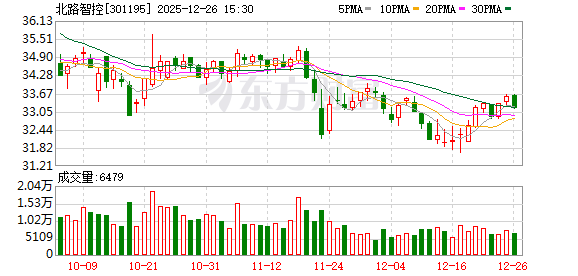
(文章来源:证券日报) 证券日报网讯 12月26日,北路智控在互动平台回答投资者提问时表示,公司当前聚焦于工业互联网领 域,业务重心主要围绕地下矿山等深地经济场景及智慧化工等场景开展,目前暂未涉及航空航天相关业 务。此外,公司参股的广州爱浦路网络技术有限公司(简称"广州爱浦路"),其核心网产品可应用于保 密通信、卫星通信等领域。广州爱浦路已在南京设立了全资子公司——南京爱浦路卫星通信科技有限公 司,相关信息可通过其官网及工商登记信息查询。 ...
【前瞻分析】2025年中国煤矿机械行业进口及出口外贸情况分析
Sou Hu Cai Jing· 2025-12-26 12:13
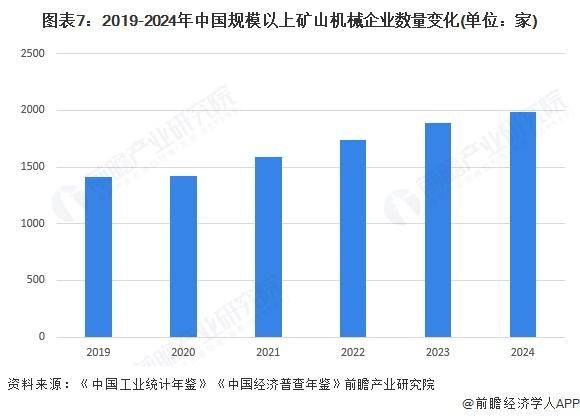
Industry Overview - The number of large-scale mining machinery enterprises in China has shown a growth trend, with 1,887 enterprises in 2023 and an estimated 1,987 enterprises in 2024 [1] - Coal mining machinery, as a core segment of mining machinery, holds a significant proportion of the total number of mining machinery enterprises [1] Market Outlook - The coal mining machinery industry serves as an upstream provider for coal enterprises, ensuring their healthy and stable development [3] - Despite a gradual decline in the proportion of coal energy consumption, the total coal consumption continues to increase annually, maintaining coal's foundational role in China's energy security [3] - The domestic coal mining machinery market is expected to grow steadily, driven by factors such as new coal mine capacity, equipment upgrades, and the integration of advanced technologies like AI and big data [3] - The market for coal mining machinery is projected to grow at a compound annual growth rate (CAGR) of 5.3% from 2025 to 2030, reaching approximately 176.7 billion yuan by 2030 [3] Import and Export Overview - The total import and export value of the coal mining machinery industry is expected to increase to $4.396 billion in 2024, representing a year-on-year growth of 12.0% [5] - The import value is projected to be $658 million, while the export value is expected to reach $3.739 billion, resulting in a trade surplus of $3.081 billion [5] - For the period of January to September 2025, the total import and export value and trade surplus are estimated at $3.815 billion and $2.977 billion, respectively [5] Export Trends - From 2021 to 2024, the export value of coal mining machinery products has shown an upward trend, with an expected export value of $3.739 billion in 2024, marking a year-on-year increase of 22.6% [7] - For the period of January to September 2025, the export value is projected to be $3.396 billion [7]
工信部:要系统推进6G技术研发、标准研制和应用培育 深入实施工业互联网和人工智能融合赋能行动
Xin Hua Cai Jing· 2025-12-26 11:35
新华财经北京12月26日电 12月25日晚,全国信息通信监管工作会在京召开。会议全面贯彻党的二十大 和二十届历次全会精神,深入贯彻落实中央经济工作会议精神,认真落实全国工业和信息化工作会议部 署要求,总结"十四五"时期工作,分析未来五年形势挑战,研究部署信息通信业"十五五"时期重点任 务。 会议强调,要准确把握"十五五"时期我国发展所处的历史方位,紧紧围绕强国建设、民族复兴伟大目 标,不断彰显行业担当、贡献行业力量。要充分发挥规划的引领作用,高标准高质量制定实施"十五 五"行业发展等系列规划。要充分发挥需求的导向作用,系统推进6G技术研发、标准研制和应用培育, 深入实施工业互联网和人工智能融合赋能行动。要充分发挥网络的基础作用,推动地面与空间网络、国 内与国际网络协同发展,统筹推动算力布局、算力结构、算力调度等升级优化。要充分发挥市场的载体 作用,完善市场准入、公平竞争等基础制度,提升平台经济常态化监管水平,综合整治行业非理性竞 争。要充分发挥服务的关键作用,持续做好"信息通信暖心服务十件实事",强化个人信息保护,全面推 进人工智能赋能反诈治理,健全断路、断网、断电等极端场景下应急通信托底机制。要充分发挥安全 ...
工信部:系统推进6G技术研发、标准研制和应用培育,统筹推动算力布局、算力结构、算力调度等升级优化
Mei Ri Jing Ji Xin Wen· 2025-12-26 10:49
Core Viewpoint - The meeting emphasized the importance of accurately understanding China's historical position during the "14th Five-Year Plan" period, focusing on national strength and the great goal of national rejuvenation, while highlighting the industry's responsibilities and contributions [1] Group 1: Development Planning - The meeting called for high standards and quality in the formulation and implementation of the "14th Five-Year" industry development plans [1] - It stressed the need to leverage planning as a guiding role in the industry [1] Group 2: Technological Advancement - The meeting highlighted the systematic promotion of 6G technology research and development, standard formulation, and application cultivation [1] - It emphasized the integration of industrial internet and artificial intelligence to empower actions [1] Group 3: Network Infrastructure - The meeting underscored the importance of promoting the coordinated development of terrestrial and space networks, as well as domestic and international networks [1] - It called for the optimization of computing power layout, structure, and scheduling [1] Group 4: Market Regulation - The meeting aimed to improve market access and fair competition systems, enhancing the regulatory level of platform economy [1] - It emphasized the need for comprehensive rectification of irrational competition in the industry [1] Group 5: Service Enhancement - The meeting focused on continuing to provide "ten practical matters for warm-hearted information communication services," strengthening personal information protection [1] - It called for the comprehensive advancement of artificial intelligence in fraud governance and the establishment of emergency communication mechanisms in extreme scenarios [1] Group 6: Security Assurance - The meeting stressed the importance of strengthening the security protection of key information infrastructure in the industry [1] - It called for the construction of a network and data security assurance system that aligns with the characteristics of new industrial development [1]
工业和信息化部召开全国信息通信监管工作会
Zheng Quan Shi Bao Wang· 2025-12-26 10:39
人民财讯12月26日电,12月25日晚,全国信息通信监管工作会在京召开。会议强调,要准确把握"十五 五"时期我国发展所处的历史方位,紧紧围绕强国建设、民族复兴伟大目标,不断彰显行业担当、贡献 行业力量。要充分发挥规划的引领作用,高标准高质量制定实施"十五五"行业发展等系列规划。要充分 发挥需求的导向作用,系统推进6G技术研发、标准研制和应用培育,深入实施工业互联网和人工智能 融合赋能行动。要充分发挥网络的基础作用,推动地面与空间网络、国内与国际网络协同发展,统筹推 动算力布局、算力结构、算力调度等升级优化。要充分发挥市场的载体作用,完善市场准入、公平竞争 等基础制度,提升平台经济常态化监管水平,综合整治行业非理性竞争。要充分发挥服务的关键作用, 持续做好"信息通信暖心服务十件实事",强化个人信息保护,全面推进人工智能赋能反诈治理,健全断 路、断网、断电等极端场景下应急通信托底机制。要充分发挥安全的保障作用,加强行业关键信息基础 设施安全保护,构建与新型工业化发展规律特点相适应的网络和数据安全保障体系,以高水平安全护航 高质量发展。 ...