全球治理倡议

Search documents
环球圆桌对话:在践行全球治理倡议中汇聚“南方力量”
Huan Qiu Wang· 2025-11-09 22:51
Group 1 - The core idea of the news is the importance of global governance initiatives that emphasize multilateralism and cooperation among Global South countries, aiming to reshape international order and governance systems [2][10][11] - The Global South is not a homogeneous entity; it requires countries to articulate their cultural narratives and seek common ground for cooperation [1][3] - The Global South's rise is characterized by a shift from passive participation in a system designed by others to a proactive stance advocating for a development model centered on national agency [8][9] Group 2 - The global governance initiative proposed by China aims to create a more inclusive and equitable international order, opposing unilateralism and promoting multilateralism [10][11] - The emergence of a Global South consensus is rooted in shared experiences and principles such as independence, fairness, and cooperation, reflecting a collective awakening to the need for reform in the post-war international order [7][12] - Platforms like BRICS and the African Union serve as experimental grounds for new ideas related to justice, innovation, and sustainable development, highlighting the collaborative spirit among Global South nations [6][11]
基本实现中国式现代化的关键阶段——“十五五”时期中国经济社会发展的战略擘画
Shang Hai Zheng Quan Bao· 2025-11-07 19:10
Core Points - China is committed to expanding high-level opening-up, leveraging its vast market to create positive spillover effects for global cooperation [1] - The country aims to enhance international cooperation through platforms like the Asian Infrastructure Investment Bank and the Belt and Road Initiative, promoting infrastructure development in partner countries [2] - China is deepening South-South cooperation, establishing a $4 billion global development fund to support projects in over 60 countries, benefiting more than 30 million people [3] - The nation emphasizes the importance of maintaining the authority of the United Nations and its principles, actively participating in peacekeeping and international cooperation [5] - China is advocating for a new type of major power relations, promoting multilateralism and opposing unilateralism and hegemony [6][7] - The country is focused on enhancing global governance, particularly in trade and finance, committing to a fair and just international economic order [10] - China is taking a leading role in ecological governance, pledging to reduce greenhouse gas emissions by 7%-10% from peak levels by 2035 [11] - The nation is actively participating in emerging field governance, including artificial intelligence and internet governance, promoting international cooperation [12][13] - China is promoting cultural exchange and mutual learning among civilizations, emphasizing the importance of respecting cultural diversity [14][15] - The country is committed to building a community with a shared future for mankind, aligning its development goals with global interests [19][20][21] - The Belt and Road Initiative has become a significant platform for international cooperation, with numerous infrastructure projects enhancing connectivity and economic development [22][23]
奋力开创中国式现代化建设新局面——智库报告解读“十五五”时期中国经济社会发展蓝图
Xin Hua She· 2025-11-07 17:11
Core Viewpoint - The "14th Five-Year Plan" has significantly advanced China's economic and social development, showcasing a unique model of modernization that combines long-term planning with substantial achievements [2][3] Group 1: Historical Context - The "14th Five-Year Plan" has led to remarkable improvements in China's comprehensive national strength and living standards, creating a rare combination of rapid economic growth and long-term social stability [2] - China has successfully implemented a series of long-term plans, which is a unique aspect of its modernization journey compared to global practices [2] Group 2: Key Principles for Development - The report emphasizes six fundamental principles that will guide China's economic and social development during the "15th Five-Year Plan" period, including the importance of the Communist Party's leadership, prioritizing people-centered development, and focusing on high-quality growth [4][5][6] - The principles also highlight the need for comprehensive reform, effective market and government interaction, and a balanced approach to development and security [6] Group 3: Global Impact - China aims to contribute to global development, security, governance, and civilization, promoting a community with a shared future for mankind [7][8] - As a major engine of global economic growth, China contributes approximately 30% to global growth and maintains its position as the largest trading nation [8] - China's commitment to international peace is demonstrated through its significant contributions to UN peacekeeping efforts, reinforcing its role as a stabilizing force in a turbulent world [9] Group 4: Governance and Civilization - The report outlines China's initiative for global governance reform, aiming to provide a new direction for international cooperation and governance systems [10] - The establishment of "International Day of Civilizational Dialogue" reflects China's commitment to promoting cultural exchange and mutual understanding among nations [12] - The concept of building a community with a shared future has been recognized in various international forums, indicating its significance in global discourse [12]
新华时评|让世界更好了解“十五五”战略擘画
Xin Hua She· 2025-11-07 14:53
Core Viewpoint - The report titled "Key Stages of Achieving Chinese-style Modernization" outlines the strategic planning for China's economic and social development during the "15th Five-Year Plan" period, emphasizing the importance of systematic planning and implementation to navigate complex global changes and enhance high-quality development [1][2]. Group 1: Strategic Planning - The formulation and continuous implementation of five-year plans are highlighted as a significant experience of the Chinese Communist Party in governance, showcasing a political advantage of socialism with Chinese characteristics [1]. - The "15th Five-Year Plan" is positioned as a critical phase for solidifying the foundation of socialist modernization and advancing the "two-step" strategic arrangement of the new era [2]. Group 2: Development Principles - The report emphasizes the necessity of adhering to comprehensive party leadership, prioritizing the people, promoting high-quality development, deepening reforms, and balancing effective markets with proactive government roles [2]. - It outlines the fundamental guarantees, value pursuits, primary tasks, driving forces, strategic pathways, and important safeguards for building a modern socialist country [2]. Group 3: Global Engagement - China aims to pursue modernization that balances domestic needs with global expectations, emphasizing peace, openness, cooperation, and justice during the "15th Five-Year Plan" period [2]. - The commitment to high-level openness and sharing development opportunities with the world is reiterated, aiming to contribute to global stability and certainty [3].
王毅同格鲁吉亚外长博乔里什维利会谈
Xin Hua She· 2025-11-07 14:06
Core Points - The meeting between Wang Yi, a member of the Political Bureau of the CPC Central Committee and Foreign Minister, and Georgian Foreign Minister Bokeria highlights the longstanding friendship and cooperation between China and Georgia over the past 33 years [1] - China expresses its willingness to strengthen strategic mutual trust, continue traditional friendship, and deepen mutually beneficial cooperation with Georgia, aiming for further development of bilateral relations [1] - Georgia reaffirms its commitment to the One China policy and expresses support for China's global governance initiatives, indicating a desire to enhance collaboration on international and regional affairs [1]
“环球南方对话·中非圆桌论坛”在南非举行
人民网-国际频道 原创稿· 2025-11-07 03:21
Core Viewpoint - The "Global South Dialogue: China-Africa Roundtable Forum" held in Johannesburg emphasizes the importance of strengthening South-South cooperation and enhancing global governance through shared experiences and institutional innovation [1][2][9]. Group 1: Forum Overview - The forum marks the 25th anniversary of the China-Africa Cooperation Forum, highlighting the deepening collaboration between China and Africa through initiatives like the Belt and Road [1]. - The event gathered numerous representatives from politics, academia, and media to discuss global governance, media roles, and China-Africa cooperation [1]. Group 2: Key Messages from Speakers - Zhang Wei, Deputy Editor of Global Times, noted that China's economic resilience and potential provide new opportunities for China-Africa cooperation in pursuing modernization [2]. - Fidile Mkwanazi, Acting Director of the South African National School of Government, emphasized that the dialogue is part of a growing network for reflection, determination, and knowledge sharing [5]. - Busani Nkaweni, Director of the University of Johannesburg's Public Policy and African Studies Center, stated that the global governance initiative aims to create a more inclusive and equitable international system based on principles of sovereignty, mutual respect, and common development [7][8]. Group 3: Discussion Topics - The forum included discussions on three main topics: "China-Africa Consensus: Southern Power in Global Governance," "Media's Role in Promoting Development," and "Capacity Building: China-Africa Cooperation in Agriculture, Trade, and Technology Innovation" [12]. - Yang Ou, Director of the Africa Center of People's Daily, suggested that media should document and narrate the achievements of China-Africa cooperation and foster a foundation for mutual understanding [12]. Group 4: Collaborative Vision - Participants agreed on the necessity for Southern countries to unite in cooperation, deepen understanding through exchange, and shape the future through innovation [13]. - The forum highlighted the significance of collective efforts in amplifying the "Southern narrative" on the global stage, ensuring that the voices and needs of developing countries are respected and addressed [13].

“全球南方媒体伙伴”机制成立大会暨第十三届全球视频媒体论坛在西安举行
Shan Xi Ri Bao· 2025-11-07 00:56
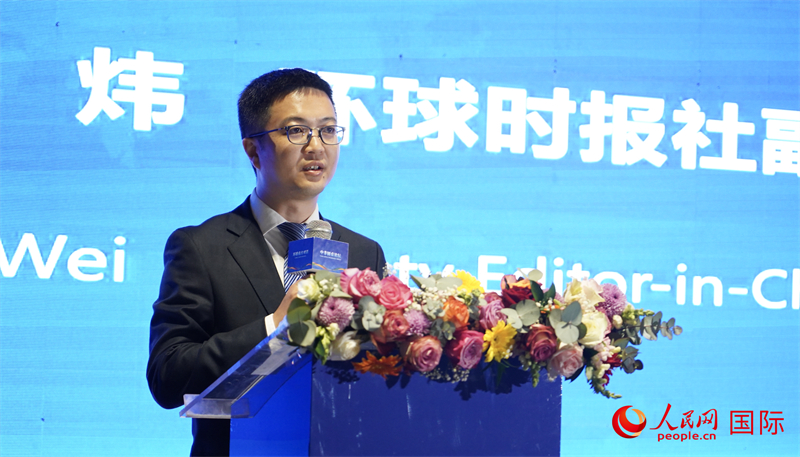
11月6日,"全球南方媒体伙伴"机制成立大会暨第十三届全球视频媒体论坛在西安举行。巴基斯坦 总统扎尔达里、斯里兰卡总统迪萨纳亚克、乌拉圭总统奥尔西致贺信。陕西省委书记赵一德,中宣部副 部长、中央广播电视总台台长慎海雄出席活动并致辞。省长赵刚出席。 赵一德对出席活动的各位嘉宾表示欢迎,向关心支持陕西发展的海内外朋友表示感谢。他说,新时 代以来,在习近平文化思想的战略指引下,陕西积极顺应媒体发展规律和演进趋势,加快构建全媒体传 播体系,注重提升媒体交互融合的传播力、媒体内容生产的原创力、媒体参与治理的穿透力、媒体赋能 开放的影响力,努力为高质量发展现代化建设提供强大精神力量和舆论支持。当前陕西正按照中共二十 届四中全会部署,持续深化主流媒体系统性变革。希望以此次活动为契机,与各国媒体在内容创作、技 术创新、人才培养、平台共建等方面进一步加强合作交流,推动媒体事业取得更大发展、文明互鉴取得 更大成效。 慎海雄在致辞中说,当今世界进入新的动荡变革期,习近平主席提出全球治理倡议。这一倡议,直 指全球南方国家最迫切的现实诉求。中央广播电视总台发起成立"全球南方媒体伙伴"机制,与中外媒体 同行共同探讨全球治理的媒体责任。正 ...
丁薛祥出席贝伦气候峰会并致辞
Xin Hua She· 2025-11-06 22:31
新华社巴西贝伦11月6日电(记者 陈威华 赵博超)当地时间11月6日,习近平主席特别代表、中共 中央政治局常委、国务院副总理丁薛祥在巴西贝伦出席《联合国气候变化框架公约》第30次缔约方大会 贝伦气候峰会并致辞。 丁薛祥转达习近平主席对巴西举办峰会的良好祝愿,赞赏巴西作为COP30主席国为积极推进全球气 候治理作出的重要贡献,预祝大会圆满成功。 与会期间,丁薛祥会见了联合国秘书长古特雷斯。丁薛祥表示,当前多边主义和联合国工作面临前 所未有的挑战。不管国际形势如何变化,中方都将坚持真正的多边主义,继续全力支持联合国在国际事 务中的核心地位和作用,推动各国加强对话合作,为世界和平发展事业作出更大贡献。中方坚定不移走 绿色发展道路,愿同各方加强沟通合作,共同推动建设人与自然和谐共生的美丽世界。古特雷斯感谢中 方始终支持联合国工作,表示中国不仅是全球气候治理关键引领者,也是世界和平和多边主义的重要支 柱。习近平主席提出的全球治理倡议对完善改革现有全球治理体系非常重要,联合国期待同中国进一步 密切协作。 当天,丁薛祥应邀出席巴西总统卢拉主持的"永远的热带雨林基金"主题午宴并致辞,表示近年来中 国热带雨林地区生态环境保护和 ...
与天下同利 为世界注入稳定性正能量 李强出席第八届中国国际进口博览会开幕式并发表主旨演讲
Jie Fang Ri Bao· 2025-11-06 01:46
Core Viewpoint - The China International Import Expo (CIIE) serves as a vital bridge connecting the Chinese economy with the global market, showcasing the vitality of China's large-scale market as participation reaches a historical high this year [1][2]. Group 1: Economic Cooperation and Trade - The CIIE emphasizes the importance of "mutual benefit" in international trade, countering unilateralism and protectionism that disrupt global economic order [2]. - Three key principles for international economic activities were shared: 1. Upholding equality and mutual benefit to solidify common interests [2]. 2. Maintaining moral integrity to ensure international fairness and justice [2]. 3. Promoting governance reform to enhance the international trade rule system [2]. Group 2: China's Economic Development - The recent approval of the "14th Five-Year Plan" by the Communist Party's Fourth Plenary Session injects certainty into China's economic and social development [3]. - China is committed to high-quality development and will contribute significantly to global economic growth [3]. - The country will continue to pursue high-level opening-up and expand institutional openness, particularly in the service sector [3]. Group 3: International Participation - The opening ceremony was attended by representatives from 155 countries, regions, and international organizations, highlighting the global interest in the CIIE [3]. - Foreign leaders expressed that the CIIE plays a crucial role in promoting open cooperation and shared development opportunities with China [5].
美国学者:对华关税“回旋镖效应”显现 美国经济陷孤立
Zhong Guo Xin Wen Wang· 2025-11-06 00:11
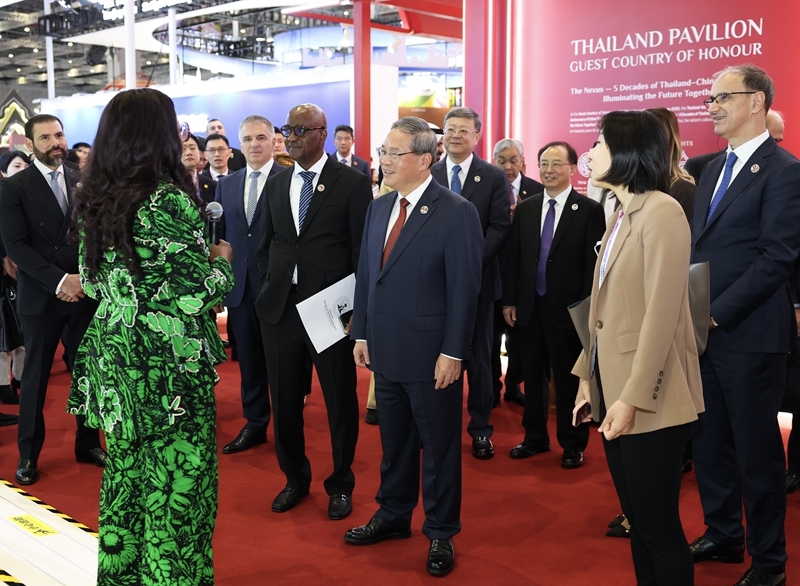
Core Viewpoint - The measures taken by the U.S. over the past decade to contain China, including tariffs and technology restrictions, have not achieved their intended goals and have instead resulted in a "boomerang effect," isolating the U.S. economy [1][3]. Group 1: U.S. Economic Policy - The U.S. has imposed unilateral tariffs and technology bans on China, aiming to punish leading Chinese enterprises and maintain its global dominance [3]. - These strategies have backfired, leading to economic isolation for the U.S. and creating adversaries [3]. Group 2: China's Response and Global Initiatives - China has consistently upheld a multilateral trade system centered around the World Trade Organization (WTO) [3]. - Initiatives proposed by China, such as the Global Development Initiative and Global Security Initiative, reflect its pursuit of common prosperity [3][4]. Group 3: Global Challenges and Technological Contributions - The real challenges facing the world include ecological crises and development imbalances, with "security development" relying on green and digital transformation to enhance global welfare [3]. - China is positioned to provide essential green technologies in various sectors, including solar energy, wind power, and electric vehicles, demonstrating its commitment to offering global public goods [4]. Group 4: U.S.-China Relations - The U.S. should view China's rise as an opportunity for cooperation in global governance rather than a threat [4]. - The goal should not be to elevate one nation over another or to harm other countries for self-gain [4].