全球发展倡议

Search documents
李强出席全球发展倡议高级别会议
Xin Hua Cai Jing· 2025-09-24 02:16
Core Points - The meeting held on September 23 in New York focused on the Global Development Initiative proposed by President Xi Jinping, emphasizing the importance of multilateralism and cooperation for sustainable development [1][2][3] Group 1: Global Development Initiative - The Global Development Initiative has over 130 participating countries and international organizations, highlighting its status as a widely accepted international public good [1] - The initiative aims to address current global challenges by promoting development and cooperation among nations [2] Group 2: Key Proposals - China proposes to create a stable and open international development environment, advocating for multilateralism and free trade [2] - The initiative emphasizes the need for balanced and inclusive development partnerships, particularly addressing the needs of developing countries [2] - There is a focus on fostering innovative development through international technological cooperation and opposing protectionist measures [2] - The initiative promotes sustainable green development and collaboration in new energy industries to achieve harmony between humanity and nature [2] Group 3: China's Commitment - China commits to being a supporter and promoter of common development, increasing investment in global development, and enhancing technological cooperation [3] - The country will not seek special treatment in current and future WTO negotiations, reinforcing its role as a responsible developing nation [3] - The meeting participants expressed support for China's initiatives, including the Global Development Initiative and the Belt and Road Initiative, recognizing China's leadership in global governance reform [3]
“中国倡议正转化为实际成果”(环球热点)
Ren Min Ri Bao Hai Wai Ban· 2025-09-23 22:50
八月十九日,在肯尼亚内罗毕非洲之星铁路运营有限责任公司机务运转整备场,中肯两国铁路工作者在 机车前站列并组成"3000"字样,以纪念蒙内铁路实现安全运营三千天。 新华社记者 杨 光摄 近日,由河南师范大学政治与公共管理学院、世界和平与发展研究院与中国世界政治研究会联合主办的 第五届世界和平与发展高端论坛在河南师范大学举办。来自清华大学、中国社会科学院、中共中央党校 (国家行政学院)、中国人民大学、厦门大学等多所高校与科研院所的专家学者汇聚一堂,围绕推动构 建更加公正合理的国际新秩序、推动全球治理体系改革、构建人类命运共同体等议题展开交流对话。 当前,全球南方群体性崛起是世界大变局的鲜明标志。从第三届"一带一路"国际合作高峰论坛,到和平 共处五项原则发表70周年纪念大会,从中阿合作论坛第十届部长级会议,到中非合作论坛北京峰会,中 国一系列重大外交行动表明,中国始终心系全球南方、扎根全球南方。中国通过多边机制与活动,努力 扩大全球治理格局中的发展中国家声量。 做世界多极化进程主要推动者 近年来,中国提出构建人类命运共同体重大理念,以及高质量共建"一带一路"、全球发展倡议、全球安 全倡议、全球文明倡议、全球治理倡议 ...


重振全球发展伙伴关系的具体实践
Ren Min Ri Bao· 2025-09-23 22:01
(作者为乌干达发展观察中心执行主任,本报记者邹松采访整理) (文章来源:人民日报) 该项目精准对接乌干达农牧渔业需求,通过杂交水稻种植、作物及畜牧新品种引进等技术培训,直接提 升了乌干达农民的生活水平和自主发展能力。这种合作模式推动发展成果更好地惠及基层民众,体现了 坚持发展优先、坚持以人民为中心的发展思想。 近年来,乌干达水稻单产不断创下新纪录,粮食作物品类和加工水平明显提升。这种看得见、摸得着的 成果,彰显了全球发展倡议坚持行动导向的理念原则。其成功的关键在于将中国减贫经验与乌干达本地 实际相结合,例如狐尾小米的引进以及稻鱼共生的尝试,兼顾生态效益与经济效益,体现了人与自然和 谐共生的思想。 实践证明,全球发展倡议通过机制创新与务实行动,能够有效弥合全球发展鸿沟。当前倡议框架下已开 展1100多个项目,覆盖减贫、粮食安全、可持续发展等多个领域。希望未来进一步加强技术转移与知识 共享,让更多国家从中国方案中受益。 中国—联合国粮农组织—乌干达南南合作项目通过三方协同机制,将技术转移、能力建设与市场对接相 结合,助力乌干达农户实现生产力跃升。该项目生动诠释了全球发展倡议的"六个坚持"理念原则,为破 解全球发展 ...
鉴往知来,书写全球治理新篇章(大使随笔)
Ren Min Ri Bao· 2025-09-22 22:16
Group 1 - The 80th anniversary of the United Nations is being commemorated, emphasizing China's commitment to the UN's ideals and its role in maintaining international order and contributing to global peace and development [1] - The significance of the Chinese People's War of Resistance against Japanese Aggression is highlighted as a crucial part of the global anti-fascist struggle, showcasing China's sacrifices for humanity and world peace [1] - The establishment of the United Nations post-World War II is recognized as a pivotal decision by the international community, with China being a founding member and the first signatory of the UN Charter [1] Group 2 - The current international landscape is described as turbulent, necessitating a reflection on history and a commitment to multilateralism and cooperation [2] - China, in collaboration with the UN and other member states, has organized various commemorative activities to enhance global understanding of its contributions to World War II [2] - The importance of the UN as a platform for multilateralism and global governance is emphasized, with a call to strengthen its role amidst rising unilateralism and hegemony [2] Group 3 - A global governance initiative proposed by China aims to address the increasing governance deficit, promoting principles such as sovereign equality, adherence to international law, and a people-centered approach [3] - This initiative is seen as a significant contribution to global governance reform, aligning with the UN Charter's principles and reflecting China's commitment to multilateralism [3] - China expresses willingness to collaborate with other nations to implement various global initiatives, reinforcing the vision of building a community with a shared future for humanity [3]
共同开辟和平、安全、繁荣、进步的光明前景 ——解码全球治理倡议的世界意义
Ren Min Ri Bao· 2025-09-22 22:15
Core Viewpoint - The global governance initiative proposed by President Xi Jinping aims to build a more just and reasonable global governance system, emphasizing the importance of multilateralism, equality among nations, and a people-centered approach [1][2][3]. Group 1: Global Governance Initiative - The global governance initiative is a significant international public product from China, following previous initiatives on development, security, and civilization [1]. - The initiative focuses on the reform and improvement of the global governance system, addressing the pressing question of how to construct such a system in the context of changing international power dynamics [2][3]. - The principles of the initiative include respect for sovereignty, adherence to international law, and a commitment to multilateralism [4]. Group 2: International Response - The initiative has received positive responses from various countries, including support from leaders such as the President of Serbia and the Prime Minister of Malaysia, who recognize its relevance to current global governance challenges [5]. - The initiative is seen as a timely response to the rising challenges of unilateralism and protectionism, emphasizing the need for effective governance concepts and systems [11][12]. Group 3: China's Role in Global Governance - China positions itself as a key player in global governance, advocating for the inclusion of emerging markets and developing countries in decision-making processes [2][4]. - The initiative aligns with China's long-standing diplomatic principles, emphasizing peace, cooperation, and shared development [10][12]. - China's contributions to global governance are increasingly recognized, with the initiative addressing the need for diverse approaches and new voices in international decision-making [12][14].
让和平的阳光照亮世界
Xin Hua She· 2025-09-22 00:55
Group 1 - The core message emphasizes the universal aspiration for peace and the need for collective action to maintain it, especially in light of ongoing global conflicts and humanitarian crises [1][2] - The theme for International Day of Peace 2025, "Act Now, Build a Peaceful World," reflects a response to the current turbulent international situation and calls for global cooperation in peacekeeping efforts [1][2] - China has a historical commitment to peace, demonstrated through its participation in UN peacekeeping missions, having sent over 50,000 personnel in 35 years, making it the largest contributor among permanent members of the UN Security Council [2] Group 2 - China's peace development approach is enshrined in its constitution, highlighting its unique position as a major power dedicated to peace and security [2] - Various global initiatives proposed by China, such as the Global Security Initiative and Global Governance Initiative, aim to promote world peace and foster a community with a shared future for humanity [2] - The emphasis on dialogue and negotiation in resolving international disputes showcases China's responsible role in addressing global conflicts [2]
陈刚会见亚太空间合作组织秘书长江辉
Guang Xi Ri Bao· 2025-09-21 01:31
Core Insights - The meeting between Chen Gang, Secretary of the Autonomous Region Party Committee, and Jiang Hui, Secretary-General of the Asia-Pacific Space Cooperation Organization, highlights the importance of collaboration in artificial intelligence and aerospace technology between Guangxi and ASEAN countries [1][2] Group 1: Economic and Technological Development - Guangxi is positioned as a frontier for China's open cooperation with ASEAN, actively implementing initiatives related to artificial intelligence and global governance [1] - The region aims to leverage national initiatives such as the AI capability construction plan and the high-level construction of the Western Land-Sea New Corridor to enhance its technological development [1] Group 2: Collaboration and Opportunities - The Asia-Pacific Space Cooperation Organization has been actively collaborating with member countries in space science exploration and technology development, achieving positive results [2] - There is a strong desire to utilize Guangxi's unique geographical advantages to promote the integration of artificial intelligence and aerospace technology, creating more application scenarios and attracting international participation in space cooperation projects [2]
“全球治理倡议秉持多边主义原则,符合联合国宪章宗旨”——访联合国副秘书长李军华
Xin Hua She· 2025-09-21 01:28
Group 1 - The core viewpoint emphasizes China's commitment to multilateralism and the importance of maintaining a UN-centered international system and international order based on international law [1][2] - China's global governance initiatives, including the Global Development Initiative, Global Security Initiative, Global Civilization Initiative, and the concept of building a community with a shared future for mankind, reflect a strong emphasis on multilateral cooperation and addressing global challenges that no single country can solve alone [1] - The UN welcomes initiatives that promote peace, development, and dignity for all, highlighting the timeliness of China's proposals in the context of increasing climate change, widening wealth gaps, ongoing conflicts, and rapid technological advancements [1] Group 2 - China plays a significant role in promoting the purposes and principles of the UN Charter as a founding member and permanent member of the Security Council, being the second-largest contributor to the UN's regular and peacekeeping budgets [2] - Chinese peacekeeping personnel have participated in some of the most challenging UN peacekeeping operations, demonstrating China's commitment to maintaining world peace and security [2] - Through South-South cooperation and innovative financing mechanisms, China has enhanced and expanded the influence of the UN, exemplified by the China-UN Peace and Development Fund, which supports over 200 projects in more than 100 countries [2]
学习手记 | 让和平的阳光照亮世界
Xin Hua She· 2025-09-21 01:10
Group 1 - The core message emphasizes the universal aspiration for peace and the need for collective action to maintain it, as highlighted by Xi Jinping's statements on International Peace Day [2][3] - The theme for International Peace Day 2025, "Act Now, Build a Peaceful World," reflects the response to the current turbulent international situation and calls for global cooperation in maintaining peace [3] - China has a historical understanding of the value of peace and development, advocating for cooperation over confrontation and promoting peace through action [3][4] Group 2 - Xi Jinping has articulated several global initiatives, including the Global Security Initiative and Global Governance Initiative, aimed at maintaining world peace and promoting common development [4] - China is the only major country that has enshrined peaceful development in its constitution and has a strong record in peacekeeping, having dispatched over 50,000 personnel for UN peacekeeping missions [4] - The commitment to peace is reiterated in various speeches, with a focus on dialogue and negotiation to resolve conflicts, showcasing China's responsible role on the global stage [4]
铭记共同历史 开创共赢未来
人民网-国际频道 原创稿· 2025-09-20 03:13
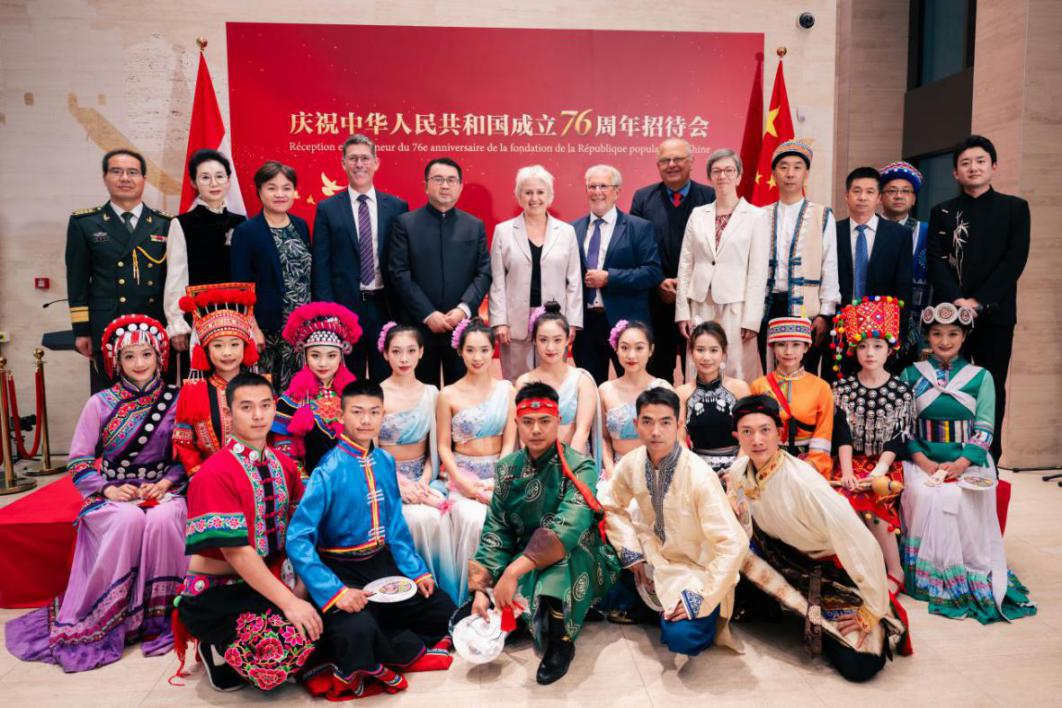
Group 1 - The event celebrated the 76th anniversary of the founding of the People's Republic of China and the 80th anniversary of the victory in the Chinese People's War of Resistance against Japanese Aggression and the World Anti-Fascist War [1][2] - The Chinese Ambassador emphasized the importance of historical memory regarding World War II and highlighted China's significant contributions to the war effort, as well as the support received from other nations [2] - The event included a photo exhibition on China's anti-Japanese war, performances by artists from Yunnan, and showcased Chinese books and cultural products [8] Group 2 - The bilateral relationship between China and Luxembourg has developed steadily over more than 50 years, with increasing cooperation and cultural exchanges [6] - Luxembourg is projected to remain the largest destination for Chinese direct investment in the EU in 2024, indicating strong economic ties [6]