
不能腐

Search documents
让新型腐败隐性腐败无所遁形
Xin Lang Cai Jing· 2025-12-24 18:49
Group 1 - The core message emphasizes the importance of maintaining a persistent and determined approach to anti-corruption efforts, highlighting the need for comprehensive measures to combat new and hidden forms of corruption [1][2] - The introduction of evidence guidelines is a significant step for disciplinary inspection and supervision agencies to enhance the quality of investigations into new and hidden corruption cases, providing a clear and actionable framework for evidence collection [1][2] - The guidelines aim to improve the standardization, rule of law, and regularization of investigation and evidence collection processes, addressing challenges in identifying and proving new forms of corruption [1][3] Group 2 - The anti-corruption campaign has been unprecedented since the 18th National Congress, with a focus on maintaining the Party's integrity and effectiveness, despite ongoing challenges from individuals engaging in new forms of corruption [2] - The need for innovative approaches and methods in anti-corruption work is highlighted, with an emphasis on leveraging technology and data analysis to enhance the detection of corruption [3] - Engaging the public in the anti-corruption effort is crucial, encouraging citizen participation in supervision and reporting to create a comprehensive network against corruption [3] Group 3 - Strengthening the capabilities of disciplinary inspection and supervision personnel is essential for the effective implementation of the evidence guidelines, combining strict management with encouragement for proactive engagement [4] - Continuous training, assessment, and supervision of personnel are necessary to ensure a deep understanding of policy and execution standards, preventing misinterpretation and implementation issues [4] - The commitment to anti-corruption efforts must be unwavering, with a focus on systematic governance and the integration of various strategies to enhance the effectiveness of anti-corruption measures [4]
中央纪委国家监委驻农业农村部纪检监察组与气象部门新提任司局级干部以集体廉政谈话形式开展纪律教育
Xin Lang Cai Jing· 2025-12-24 14:46
Core Points - The central theme of the news is the collective integrity education conducted for newly appointed officials in the meteorological department, emphasizing higher standards and stricter requirements for their roles [1][2]. Group 1: Integrity Education - The integrity education aims to guide officials to adhere to higher standards and stricter requirements in their duties [1]. - The emphasis is on maintaining loyalty and implementing the "two safeguards" with a focus on political discipline and regulations [1]. - There is a call for a strong commitment to cleanliness, with stricter disciplinary requirements and a focus on risk prevention and power regulation [1]. Group 2: Practical Implementation - Officials are encouraged to demonstrate a pragmatic work style and achieve tangible results while fulfilling their dual responsibilities in party governance [1]. - The importance of understanding the values behind their roles, particularly the question of "for whom" they serve, is highlighted [1]. - Strengthening institutional frameworks to deter corruption and enforcing strict disciplinary measures are also emphasized [1].
省纪委监委理论学习中心组深入学习习近平法治思想
Shan Xi Ri Bao· 2025-12-20 00:05
Core Viewpoint - The meeting emphasizes the importance of deeply understanding and implementing Xi Jinping's rule of law thought, focusing on the "twelve persistences" to enhance the standardization, legalization, and normalization of disciplinary inspection and supervision work [1][2] Group 1 - The provincial disciplinary inspection and supervision agencies are urged to apply legal thinking and methods to strengthen discipline and anti-corruption efforts, ensuring high-quality supervision and law enforcement to support the construction of a rule-of-law society in Shaanxi [1] - The meeting highlights the need to focus on the decisions made by Xi Jinping and the Central Committee regarding the improvement of the legal system, promoting lawful administration, and accelerating the establishment of a rule-of-law society [2] - There is a call to enhance legal awareness, thinking, and literacy among officials, ensuring that work is conducted according to legal authority, rules, and procedures throughout all aspects of supervision and accountability [2] Group 2 - The meeting stresses the organic unity of governing the country by law and governing the Party by regulations, aiming to improve the mechanisms for integrating discipline and law [2] - It emphasizes the importance of addressing corruption and misconduct that affects the public, focusing on resolving urgent issues faced by the people and protecting their legal rights [2] - The initiative to advance the standardization, legalization, and normalization of disciplinary inspection work is highlighted, with an aim for inspectors to become models of respecting and abiding by laws and regulations [2]
海南这五年:让清廉成为自贸港的鲜明底色
Zhong Guo Xin Wen Wang· 2025-12-18 06:45
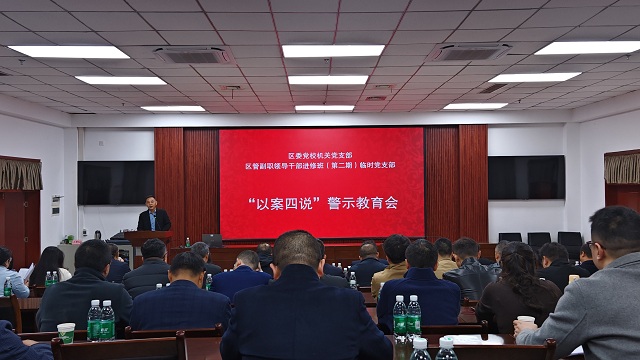
Core Viewpoint - The construction of a clean and transparent environment is essential for the development of Hainan Free Trade Port, with a focus on establishing a long-term mechanism to prevent corruption and promote integrity [1][9]. Group 1: Anti-Corruption Measures - Hainan has seen significant anti-corruption efforts, with multiple high-ranking officials being prosecuted, reflecting the central government's strong stance against corruption [2]. - Since 2022, Hainan has investigated 19,462 cases and disciplined 17,622 individuals, reinforcing the anti-corruption momentum [3]. - The province has focused on grassroots corruption, particularly in rural collective asset management, recovering over 20.66 million yuan [2][3]. Group 2: Preventing Corruption - Hainan has established a "Supervision One Network" to address overlapping responsibilities among departments, improving governance and resolving historical issues [4][5]. - The network has processed over 103,000 cases, enhancing efficiency in supervision and problem resolution [5]. - The "machine management" approach has been implemented to streamline bidding processes, resulting in savings of 6.256 billion yuan across 1,832 projects [6]. Group 3: Promoting Integrity - Hainan is fostering a culture of integrity through educational initiatives, including warning sessions for leaders that emphasize the consequences of corruption [7][8]. - The province has integrated traditional cultural elements into its integrity education, creating a cultural park focused on promoting clean governance [8][9]. - Continuous efforts are being made to ensure that the construction of the Hainan Free Trade Port aligns with the principles of law and integrity, aiming for sustainable development [9].
坚定笃行“四心”强监督 助推辽宁公安现代化
Xin Hua Wang· 2025-12-11 06:14
Group 1 - The 20th Central Committee's Fourth Plenary Session is a significant meeting that outlines a five-year development blueprint for advancing Chinese-style modernization and emphasizes the importance of the Party's self-revolution in leading social revolution [1] - The meeting signals a strong commitment to the ongoing process of strict governance of the Party and the determination of the Central Committee, led by Xi Jinping, to carry out a great self-revolution [1] Group 2 - The Provincial Commission for Discipline Inspection and Supervision plays a crucial role in implementing strict governance of the Party within the public security system and is a key practitioner of the Party's self-revolution [2] - The focus is on internalizing the spirit of the plenary session into political consciousness, thought consciousness, and action consciousness, emphasizing the importance of the "Four Hearts" [2] Group 3 - Political loyalty is fundamental for the discipline inspection and supervision agencies, and it is essential for the public security institutions to implement the spirit of the plenary session [3] - The supervision work must align with the strategic deployment of the plenary session, ensuring that political supervision is integrated with core public security tasks [3][4] Group 4 - The discipline inspection and supervision agencies must adhere to the Party's absolute leadership and focus on key areas such as national security and social governance [4] - Political supervision should be dynamic and responsive to new challenges in the modernization of public security work [4] Group 5 - The emphasis is on self-revolution and strengthening internal construction within the discipline inspection and supervision agencies, ensuring high standards and strict requirements throughout the process [5] - Continuous improvement in political judgment, understanding, and execution is necessary to enhance the effectiveness of supervision [5] Group 6 - The belief in victory is essential for implementing the plenary session's spirit and for the public security institutions to fulfill their mission [7] - The focus is on recognizing the long-term and complex nature of the anti-corruption struggle and maintaining a high-pressure stance against corruption [7][8] Group 7 - The need for systematic treatment of issues within the public security system is highlighted, integrating problem-oriented, goal-oriented, and effect-oriented approaches throughout the supervision process [9] - The establishment of a collaborative supervision system is crucial for addressing deep-rooted issues and ensuring effective governance [9] Group 8 - The importance of perseverance in implementing the plenary session's spirit and the need for continuous efforts in strict governance of the Party are emphasized [10] - Maintaining a high-pressure environment against corruption and focusing on key areas of power concentration and resource allocation are critical [10][11] Group 9 - The need for a comprehensive approach to prevent corruption, including strict enforcement of regulations and the establishment of long-term mechanisms, is emphasized [11][12] - The integration of ideological and political work into the supervision process is essential for fostering a culture of integrity within the public security system [12] Group 10 - The focus on precision in supervision and the pursuit of excellence in the discipline inspection and supervision work is highlighted [13] - The importance of detailed planning and adherence to legal standards in the supervision process is emphasized to ensure effective governance [13][14]
笔谈丨因地制宜加强廉洁文化建设
Zhong Yang Ji Wei Guo Jia Jian Wei Wang Zhan· 2025-11-27 00:24
Group 1 - The core viewpoint emphasizes the importance of strengthening the construction of a clean culture in the new era as a foundational project to promote a system that discourages corruption, prevents corruption, and fosters a desire not to be corrupt [1] - The article highlights the need to deeply explore local historical and cultural resources that embody clean governance, including stories of honest officials and local moral examples, to educate and guide party members and officials [1] - It stresses the significance of red resources as valuable spiritual wealth for the party, containing excellent conduct such as hard work and integrity, which should be utilized to inspire party members [1] Group 2 - The article discusses the necessity of uniting various forces to form a collaborative effort in building a clean culture, emphasizing that it is a comprehensive system project requiring joint management [2] - It calls for the establishment of a responsibility list for clean culture construction, ensuring that all levels of party committees take on the main responsibility and integrate it into anti-corruption work [2] - The need for collaboration with relevant functional departments to develop clean units in various sectors, such as government, enterprises, schools, and hospitals, is also highlighted [2] Group 3 - The article advocates for innovative forms and methods to enhance the attractiveness and dissemination of clean culture, including the development of engaging cultural products and activities [3] - It suggests expanding the channels for spreading clean culture by leveraging technology and social media to create a comprehensive communication matrix [3] - The use of immersive and interactive methods, such as digital museums and VR experiences, is recommended to increase participation and engagement among officials and the public [3]
重庆分层分类做实警示教育得意之笔 | 让党员干部受警醒明底线知敬畏
Zhong Yang Ji Wei Guo Jia Jian Wei Wang Zhan· 2025-11-17 00:35
Core Viewpoint - The article emphasizes the importance of innovative warning education methods in Chongqing's anti-corruption efforts, focusing on case-based education to enhance the awareness and adherence of party members to regulations and ethics [11][12]. Group 1: Warning Education Implementation - Chongqing's Nanchuan District has initiated case-based education programs to alert party members about ethical and legal boundaries through real-life examples [2]. - The city has conducted a total of 19,200 warning education sessions this year, reaching 1.08 million party members [2]. - The municipal discipline inspection and supervision agencies are committed to deepening warning education as a key strategy to prevent corruption [11]. Group 2: Case Resource Utilization - The municipal discipline inspection agencies are transforming case resources into educational materials, establishing a mechanism for layered and categorized application of cases [3][5]. - A total of 23 warning education films have been produced, focusing on typical cases of serious violations by municipal leaders [5]. - The agencies are continuously updating a library of typical cases to enhance the educational resources available [5]. Group 3: Targeted Education Approaches - Warning education is tailored to different levels, positions, and age groups of party members to address specific corruption risks [6][7]. - The education includes a focus on the "key minority" and young cadres, utilizing relatable cases to instill a sense of compliance and integrity [7]. - The municipal agencies are actively disseminating information about typical cases through various platforms to reinforce the message of strict governance [6]. Group 4: Innovative Educational Formats - The Chongqing High-tech Zone has opened a new integrity education base that uses immersive teaching methods to enhance the impact of warning education [8]. - Various innovative formats, such as debates and interactive courses, have been introduced to make the education more engaging and effective [8][9]. - The agencies are leveraging multimedia tools to create a comprehensive warning education network that appeals to a broader audience [9]. Group 5: Continuous Improvement and Effectiveness - The article stresses the need for precision in warning education to avoid superficiality and ensure effectiveness [12][13]. - A systematic approach to analyzing and categorizing cases is essential for identifying underlying issues and improving the educational impact [12]. - The focus is on transforming lessons learned from cases into practical guidance for party members to prevent future misconduct [13].

一周“纪”事丨以风清气正政治生态引领形成良好发展环境
Zhong Yang Ji Wei Guo Jia Jian Wei Wang Zhan· 2025-11-14 00:30
Group 1 - The core message emphasizes the importance of advancing comprehensive and strict governance of the Party, alongside anti-corruption efforts, as highlighted by Xi Jinping during his recent inspections in Hainan and Guangdong [1][3] - Xi Jinping stressed the need for a political ecosystem that is clean and upright, which is essential for creating a favorable development environment [1][2] - The role of disciplinary inspection and supervision agencies is crucial in promoting the Party's self-revolution and ensuring the implementation of major decisions made by the Party Central Committee [1][2][4] Group 2 - The publication of "An Overview of Xi Jinping's Economic Thought" serves as a significant resource for Party members and officials to understand the economic guidelines for high-quality development [2] - The emphasis on integrating Xi Jinping's economic thought into the work of disciplinary inspection agencies aims to support the broader economic and social development goals [2][4] - Continuous efforts in anti-corruption and maintaining a high-pressure stance are necessary to ensure the Party's integrity and effectiveness in governance [3][4]
构建“三位一体”廉洁生态 为高质量发展注入“廉动力”
Xin Hua Ri Bao· 2025-11-10 07:13
Core Viewpoint - Binhai Tobacco integrates the concept of "preventive governance" into corporate governance, emphasizing the construction of a clean culture as a long-term, systematic project to foster a sustainable "clean power" for high-quality development [1][5]. Group 1: Risk Control and Cultural Development - The company views clean governance as an "ecological project" that requires long-term efforts, aiming to deepen the value recognition of "not wanting to be corrupt" among employees [2]. - Binhai Tobacco implements a full-cycle management approach to clean governance, embedding clean requirements into all business processes and clearly defining disciplinary "red lines" and "bottom lines" [2][3]. - The cultivation of a culture that recognizes "cleanliness as value" is a core task, utilizing storytelling and recognition of role models to internalize the concept among employees [2]. Group 2: Empowerment System and Educational Initiatives - Binhai Tobacco adopts a precise education approach, tailoring training for different employee groups to enhance their awareness and ability to resist corruption [3][4]. - The company implements a grid-based prevention mechanism to proactively identify and address potential risks, establishing a responsive grassroots supervision network [4]. - An immersive nurturing environment is created to instill clean culture deeply, utilizing both online and offline educational activities to engage employees [4]. Group 3: Long-term Mechanisms and Evaluation - The company emphasizes the need for a robust mechanism to ensure the sustainability of clean culture initiatives, avoiding short-term effects [5]. - Binhai Tobacco is exploring the establishment of a performance evaluation system for clean culture, focusing on quantifiable indicators to assess the effectiveness of its initiatives [6]. - The ongoing optimization of the "education, prevention, and nurturing" ecosystem aims to create a positive political ecology within the company, enhancing its resilience and vitality for high-quality development [6].
新华时评·聚焦“十五五”规划建议|保持反腐败永远在路上的清醒坚定
Xin Hua She· 2025-11-03 10:37
Group 1 - The core message emphasizes the importance of maintaining a clear and firm stance on anti-corruption as a means to ensure high-quality development and effective governance [1][2] - The "14th Five-Year Plan" period is highlighted as a time when the quality and scientific level of party building will steadily improve, providing strong support for Chinese-style modernization [1] - The need for continuous and effective implementation of the Central Eight Regulations and the eradication of various unhealthy practices is stressed, alongside the importance of addressing formalism and bureaucratism [2] Group 2 - The proposal calls for a comprehensive approach to anti-corruption, focusing on preventing corruption through a combination of deterrence, inability, and unwillingness to engage in corrupt practices [2][3] - The current anti-corruption landscape is described as severe and complex, with a significant emphasis on targeting corruption in areas with concentrated power, funds, and resources [3] - The importance of enhancing the supervision system of the party and state to prevent the abuse of power and eliminate conditions conducive to corruption is underscored [2]