红色资源

Search documents
历史的现场 生动的课堂(解码·思政课怎么上)
Ren Min Ri Bao· 2026-01-21 22:35
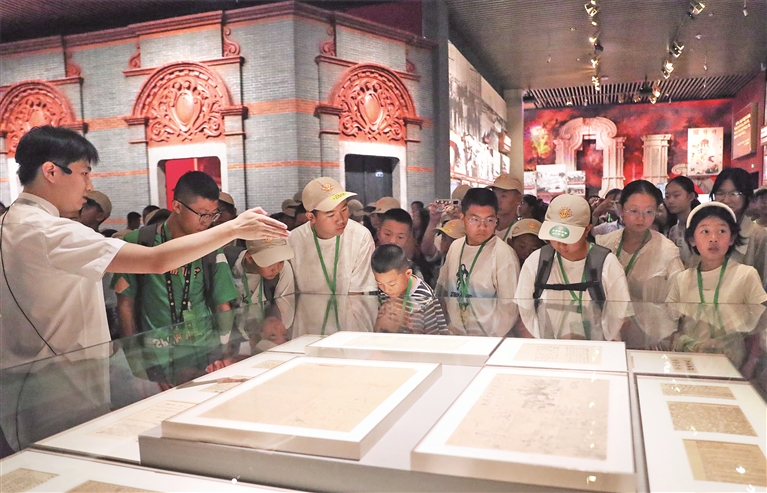
Core Viewpoint - Shanxi Province is innovatively integrating red resources and traditional Chinese culture into ideological and political education, breaking classroom boundaries and enhancing the appeal and effectiveness of these courses through new media [1][2][9] Group 1: Innovative Teaching Approaches - A special ideological and political class was held at the school history museum in Taiyuan, allowing students from different grades to engage in mutual questioning and collective thinking [2] - The "walking ideological and political class" is part of Shanxi's "New Era Soul Cultivation Project" and aims to promote integrated reforms in ideological education across all educational levels [2][8] - Shanxi has developed 67 "Great Ideological and Political Class" practical teaching bases, supporting collaboration between schools and museums to enhance course quality [4] Group 2: Thematic Education - In Yangquan City, ideological education is categorized into three themes: red for patriotism, green for ecological civilization, and blue for industrial technology [6][7] - Teachers are designing courses that allow students to engage with local resources, such as tea picking, to better understand new development concepts [6] - The integration of ideological education into various subjects is being promoted, with a focus on moral education through practical experiences [7] Group 3: Experiential Learning - Students participate in immersive experiences, such as visiting historical sites related to the Anti-Japanese War, to deepen their understanding of national history and ideals [8] - Activities like hiking to memorial sites and performing revolutionary plays in the community are being organized to instill patriotism and moral values [8][9] - The provincial education department is promoting the "walking ideological and political class" initiative to enhance students' connection to their national identity and historical consciousness [8][9]
用兵团精神助推思政课内涵式发展
Xin Lang Cai Jing· 2026-01-11 18:13
Core Viewpoint - The integration of the "Bingtuan Spirit" into ideological and political education in universities is essential for enhancing teaching quality and fostering a new generation aligned with contemporary values [1][2][3]. Educational Practice Significance - The incorporation of the Bingtuan Spirit into ideological education responds to the need for reform and aligns with the intrinsic desires of youth for growth and success [2]. - This integration serves as a dynamic vehicle for patriotism education, helping students appreciate the sacrifices made by revolutionary predecessors and understand their historical context and mission [2][3]. Ideological Foundation - The Bingtuan Spirit embodies the core values of the Communist Party, reinforcing the commitment to socialism and communism among students through tangible historical examples [3]. Practical Insights - The approach of using the Bingtuan Spirit in ideological education reflects a unified understanding of educational principles and youth cognition, addressing systemic issues while focusing on the mission of cultivating responsible citizens [4]. - The educational strategy emphasizes a progression from knowledge recognition to value recognition, tailored to the unique characteristics of the border region [5]. - The activation of resources and the use of technology are crucial for expanding the scope of ideological education, ensuring that red resources are effectively utilized and integrated into modern teaching methods [5][6]. Methodological Insights - Utilizing red resources as a core material for ideological education solidifies the foundation for its development, ensuring that content is relevant and engaging [7]. - The "Three Comprehensive Education" approach promotes a holistic educational framework, integrating ideological education with various academic and extracurricular activities [7]. - Emphasizing "staying true to the original aspiration while innovating" is vital for invigorating ideological education, combining traditional values with modern teaching techniques [8].
【热点思考】系统推进工运史料建设 赋能青少年思想政治教育
Xin Lang Cai Jing· 2026-01-04 20:04
Core Viewpoint - The construction of labor movement historical materials and their innovative application in youth ideological and political education is a significant project for nurturing and cultivating the next generation, reflecting the glorious history of the Communist Party leading the working class in their struggles and advancements [1][6]. Summary by Relevant Sections Historical Significance - The history of the labor movement is a crucial part of the Communist Party's history, documenting the journey of the working class from awakening and struggle to becoming the masters of the nation. This historical material not only preserves historical memory but also contains rich ideological and spiritual connotations, helping youth understand the historical logic of the Communist Party's success and enhancing their political, ideological, and emotional recognition of the Party [1][2]. Educational Value - Labor movement historical materials embody the spirit of dedication, hard work, and innovation, playing an irreplaceable role in guiding youth to establish correct views on labor and profession, and fostering a craftsman spirit. They serve as important resources for educating youth about the justness and inevitability of the Party's leadership in the labor movement and help cultivate collective spirit, teamwork awareness, and discipline [2][3]. Systematic Construction - To maximize the role of labor movement historical materials in youth education, a comprehensive, systematic, scientific, and open construction and utilization system is needed. This includes implementing a rescue and digitization project for historical materials, establishing a database, and conducting oral history interviews with veterans and pioneers [3][4]. Talent Development - A specialized talent team proficient in labor movement history and modern communication technology is essential. This includes hiring veterans and experts as external counselors and establishing a "Labor Movement History Lecture Group" to enhance the teaching capabilities of educators [4][5]. Practical Strategies - The integration of labor movement historical materials into youth ideological and political education requires innovative mechanisms and methods. This involves developing specialized teaching resources, immersive educational experiences, and a comprehensive media platform to engage youth actively [5][6]. Collaborative Mechanism - Establishing a collaborative mechanism involving various departments and organizations is crucial for the effective application of labor movement historical materials in education. This includes integrating museums and exhibition halls into youth social practice bases and promoting cooperation between universities and labor history museums [6].
笔谈丨因地制宜加强廉洁文化建设
Zhong Yang Ji Wei Guo Jia Jian Wei Wang Zhan· 2025-11-27 00:24
Group 1 - The core viewpoint emphasizes the importance of strengthening the construction of a clean culture in the new era as a foundational project to promote a system that discourages corruption, prevents corruption, and fosters a desire not to be corrupt [1] - The article highlights the need to deeply explore local historical and cultural resources that embody clean governance, including stories of honest officials and local moral examples, to educate and guide party members and officials [1] - It stresses the significance of red resources as valuable spiritual wealth for the party, containing excellent conduct such as hard work and integrity, which should be utilized to inspire party members [1] Group 2 - The article discusses the necessity of uniting various forces to form a collaborative effort in building a clean culture, emphasizing that it is a comprehensive system project requiring joint management [2] - It calls for the establishment of a responsibility list for clean culture construction, ensuring that all levels of party committees take on the main responsibility and integrate it into anti-corruption work [2] - The need for collaboration with relevant functional departments to develop clean units in various sectors, such as government, enterprises, schools, and hospitals, is also highlighted [2] Group 3 - The article advocates for innovative forms and methods to enhance the attractiveness and dissemination of clean culture, including the development of engaging cultural products and activities [3] - It suggests expanding the channels for spreading clean culture by leveraging technology and social media to create a comprehensive communication matrix [3] - The use of immersive and interactive methods, such as digital museums and VR experiences, is recommended to increase participation and engagement among officials and the public [3]
用好用活红色资源 筑牢年轻干部作风建设根基
Shan Xi Ri Bao· 2025-09-16 11:28
Core Points - The emphasis on the importance of red resources as a valuable spiritual asset for the Communist Party of China, which should be well protected, managed, and utilized [1][2][3] - The role of young cadres in the development of the Party and the nation, highlighting the significance of their conduct and moral character [1][2] - The necessity of using red resources to strengthen the ideological and moral training of young cadres, ensuring they are equipped to contribute to national rejuvenation [2][3][4] Summary by Sections Red Resources and Party Character - Red resources encompass both material forms such as revolutionary sites and spiritual forms like revolutionary culture and red genes, serving as a rich educational tool for party character development [2] - The cultivation of ideal beliefs and moral qualities is essential for young cadres, with red resources providing a foundation for strengthening their party character [2][4] Historical Education and Practical Application - Utilizing red resources is crucial for deepening historical education and reinforcing the party's foundational values, which can guide young cadres in their duties [3][4] - The integration of red resources into party history education enhances the learning experience, making it more engaging and impactful for young cadres [3] Conduct and Ethical Standards - The historical achievements and revolutionary spirits represented by red resources serve as benchmarks for young cadres, promoting a culture of integrity and public service [4][5] - The implementation of the Central Eight Regulations is highlighted as a significant measure for improving party conduct and fostering a positive political environment [5]
理论视野丨用好红色资源 赓续红色血脉
Zhong Yang Ji Wei Guo Jia Jian Wei Wang Zhan· 2025-07-31 00:29
Core Viewpoint - The importance of red resources as a carrier of the Party's fine traditions and revolutionary spirit, which plays a significant role in guiding young people to establish correct worldviews, outlooks on life, and values [4][6][9]. Group 1: Red Resources and Education - Red resources serve as a vivid teaching material and valuable asset for learning Party history, emphasizing the need to protect, manage, and utilize these resources effectively [7][9]. - The promotion of red resources through activities such as visiting historical sites and storytelling helps to instill the Party's glorious traditions and excellent conduct among Party members and the public [4][8]. Group 2: Historical Significance - The year 2025 marks the 80th anniversary of the victory in the Chinese People's War of Resistance Against Japanese Aggression, highlighting the historical achievements of the Chinese people under the leadership of the Communist Party [5]. - Red resources encapsulate the struggles and sacrifices of revolutionary heroes, serving as a testament to the Party's journey and the achievements made throughout its history [6][7]. Group 3: Future Directions - There is a call for a systematic approach to protect and utilize red resources, ensuring they are preserved for future generations while also being integrated into modern educational practices [9][11]. - The emphasis is placed on transforming red spirit into a driving force for progress, with a focus on innovative exhibition and storytelling methods to engage the public [10][11].