个人养老金制度

Search documents
基金行业话养老 | 养老不能只靠退休金,你的“第三支柱”搭好了吗?
Xin Lang Cai Jing· 2025-12-26 08:06
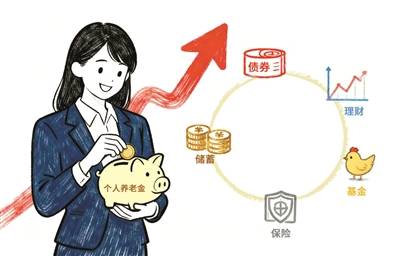
Core Insights - The personal pension system in China, recognized as the "third pillar" of retirement planning, is gaining significant attention as it approaches its third anniversary, with over 70 million investors participating [1][3][4] Group 1: Importance of the Third Pillar - The basic pension system only provides a minimal safety net, necessitating a stronger third pillar for maintaining living standards in retirement [3][20] - The personal pension system was officially launched in November 2022 across 36 pilot cities, marking a significant step in enhancing individual retirement planning [3][18] Group 2: Structure of the Pension System - China's pension system consists of three pillars: 1. Basic pension insurance, which covers essential living needs but has a replacement rate of about 45% for urban employees, insufficient for quality living [20] 2. Enterprise annuities, which are under 20% coverage and not universally accessible [20] 3. Personal pensions, which allow individuals to voluntarily save for retirement beyond basic guarantees [20] Group 3: Growth and Market Potential - As of November 25, 2025, there are 1,245 personal pension products available, with over 72.79 million accounts opened and total contributions reaching several hundred billion yuan [21][22] - The U.S. Individual Retirement Account (IRA) serves as a model, with a total asset size of $13.9 trillion by the end of 2021, highlighting the potential for growth in China's personal pension market [22] Group 4: Unique Value Proposition - The personal pension system offers three unique benefits: 1. Tax incentives, allowing up to 12,000 yuan in contributions to be deducted from taxable income, potentially saving taxpayers up to 5,400 yuan annually [24] 2. Long-term investment benefits through compounding, as funds are generally not accessible before retirement [24] 3. Professional management of funds, with investments in regulated financial products, enhancing the efficiency of wealth accumulation [24][25] Group 5: Practical Steps for Investors - Investors can initiate their personal pension journey in three steps: 1. Open a personal pension account through a bank's mobile app or physical branch [26] 2. Contribute up to 12,000 yuan annually, either as a lump sum or through regular investments [27] 3. Choose suitable financial products based on individual risk tolerance and investment knowledge [28]
求解14亿国人养老:如何共担?花费多少?
3 6 Ke· 2025-12-25 09:55
Core Viewpoint - The increasing attention on elderly care in China highlights the need for a dignified aging process as the population ages, necessitating a multi-tiered pension system to address the growing demands for elderly care and medical services [1][4]. Group 1: Roles in Pension System - The government is seen as the "safety net" and "navigator," responsible for ensuring basic pensions for all and gradually reducing the pension gap between urban and rural areas [3][4]. - The market is expected to act as the "provider" and "enabler," offering diverse financial products to meet varying income and risk preferences [5][6]. - Individuals must cultivate a proper understanding of retirement planning and actively participate in their pension investments [5][6]. Group 2: Pension System Structure - China's pension system consists of three pillars: the first pillar is the basic pension insurance initiated by the state, the second pillar includes enterprise and occupational annuities, and the third pillar comprises personal pensions and other commercial pension financial products [5][6]. - The second and third pillars serve as effective supplements to the first pillar, which is primarily government-funded [5]. Group 3: Market Demand and Service Innovation - The aging population and diverse needs are driving new demands for pension services, as evidenced by the success of integrated medical and elderly care facilities in urban areas [6]. - There is a prediction that the pension service market will undergo several iterations in the next 30 years to adapt to changing elderly consumer needs [6]. Group 4: Personal Pension Development - The personal pension system, launched in November 2022, is gradually expanding, with over 150 million accounts opened by June 2025 [7]. - However, the actual contribution levels remain low compared to the annual contribution limit of 12,000 yuan, indicating a need for improvement in participation [8]. Group 5: Tax Incentives and Policy Recommendations - Tax incentives play a crucial role in the development of the pension system, with suggestions to enhance tax support for the second and third pillars to encourage more savings [9][11]. - Recommendations include increasing the annual contribution limit for personal pensions to better meet long-term savings needs [11]. Group 6: Retirement Planning Strategies - Various strategies for retirement planning were discussed, including the "4% rule" for annual spending and the "25 times rule" for asset accumulation to cover retirement shortfalls [12][13]. - The importance of using scientific tools for retirement calculations and considering different living arrangements based on financial conditions was emphasized [12][13].


保险、理财、基金、存款1257只个人养老金产品挑花眼 究竟应该怎么选?
Mei Ri Jing Ji Xin Wen· 2025-12-24 14:03
Core Insights - The article emphasizes the growing interest in personal pension accounts as the deadline for tax refunds approaches, highlighting the potential for individuals to receive up to 5,400 yuan in tax refunds by contributing to their personal pensions before December 31, 2025 [1][12] - Despite the nationwide rollout of the personal pension system, many consumers remain unfamiliar with it, indicating a need for better education and understanding of the long-term benefits and tax incentives associated with these accounts [2][12] Product Types and Characteristics - The personal pension system has evolved from pilot programs to a nationwide initiative, with a diverse range of investment products now available, including funds, insurance, savings, and wealth management products [3] - As of December 24, the market features 1,257 personal pension products, with savings products being the most numerous at 466, followed by insurance products at 446, fund products at 308, and wealth management products at 37 [3] - Fund products exhibit the highest variability in returns, with mixed funds showing significant performance, while savings products offer stable but lower returns, typically between 1% and 1.8% [4] Investment Strategies and Consumer Preferences - Consumers are advised to follow "lifecycle" and "risk preference" principles when selecting personal pension products, with different demographics needing tailored investment strategies [9] - Young investors are encouraged to focus on funds for higher returns, while those nearing retirement should shift towards lower-risk products like savings and insurance [9][10] - The introduction of government bonds as an investment option for personal pensions provides a safer alternative for conservative investors seeking stable returns [10] Market Participation and Challenges - As of November 2024, only 7% of the basic pension insurance participants have opened personal pension accounts, with a low contribution rate of under 21%, highlighting a significant gap in engagement [12][13] - The lack of consumer enthusiasm for personal pensions is attributed to three main factors: a lack of understanding of the long-term benefits, liquidity constraints due to the long lock-in period, and insufficient differentiation in product offerings [13][14] - Experts suggest enhancing the attractiveness of personal pension products through improved investor education, optimized tax policies, and innovative financial solutions to stimulate public interest in retirement savings [14]
“十五五”养老新局开启,个人养老金全国运行一年成绩单如何?
Jin Rong Jie· 2025-12-23 03:53
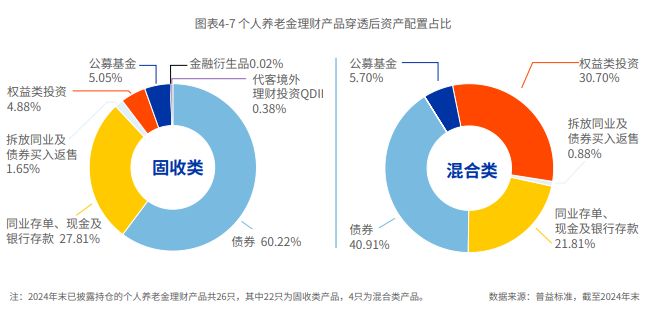
Group 1 - The personal pension system has shown positive changes in its first year of nationwide operation, with over 94% of Y-share funds achieving positive returns and an average return rate of 4.45% [1] - The Y-share funds have seen a significant growth, with their scale increasing by over 50% year-on-year, indicating a strong performance in the capital market [1] - The concentration of fund management in the Y-share fund market is high, with the top three managers holding 40% of the market share and the top ten managers accounting for 83% [1] Group 2 - The development of the personal pension market aligns with the national strategy to build a multi-tiered pension financial system, focusing on the third pillar of pensions based on personal accounts [2] - As of the end of 2024, the total number of investable personal pension products has increased to 946, reflecting a growth of over 25% compared to the previous year [2] - The report highlights challenges such as product homogeneity and the need for innovation in asset allocation to enhance the resilience of investment portfolios [2] Group 3 - Future development should focus on improving the actual experience of investors and exploring the integration of pension advisory services into product systems [3] - The emphasis is on creating an "economic sharing" pension financial system through continuous institutional optimization and asset management capability innovation [3] - The goal is to broaden the investment scope and diversification of pensions to effectively convert long-term funds into actual returns for the public [3]
基金忠言|个人养老金怎么管?多家公司成“活教材”
Sou Hu Cai Jing· 2025-12-22 01:33
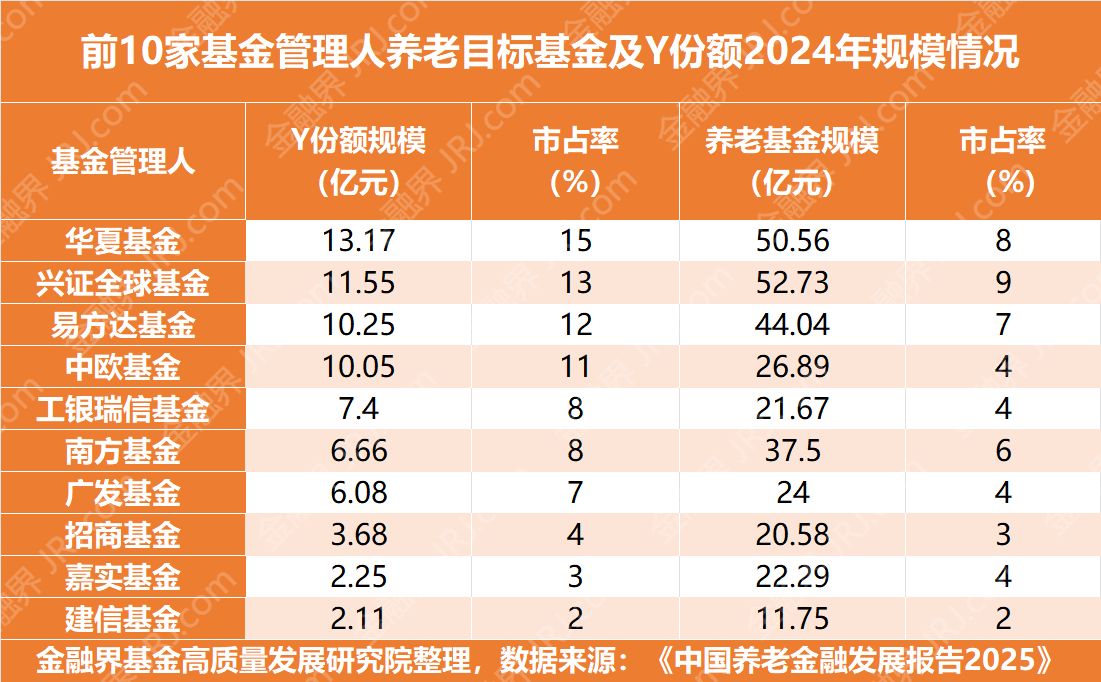
Core Insights - The personal pension system is set to be implemented nationwide starting December 15, 2024, following trials in 36 cities since November 25, 2022, with public funds launching Y-share funds to cater to this market [2] - Some fund companies have faced significant challenges, including fund liquidations, which can undermine investor confidence in long-term pension investments [2] - Conversely, certain companies have successfully navigated this space, with the total market size for personal pension Y-share funds reaching approximately 15.1 billion yuan by the end of Q3 2025, with leading firms like Huaxia and E Fund capturing over one-third of this market [3] Group 1: Challenges Faced by Fund Companies - Several fund companies, including Penghua and Chuangjin Hexin, have experienced fund liquidations, with Penghua's Longle Stable Pension Y-share fund being liquidated when its net value fell below 1 yuan [2] - The small scale of pension target funds from companies like Penghua (approximately 200 million yuan) and Yongying (only about 570,000 yuan) highlights the challenges in attracting substantial investment [2] Group 2: Successful Strategies and Experiences - As of Q3 2025, the leading Y-share fund, Xingquan Antai, has surpassed 1.2 billion yuan in scale, making it the only fund above 1 billion yuan [3] - Xingquan Global has emphasized early and significant investment in personal pension business, establishing a dedicated pension management department in 2018 with a diverse team of 22 members [5] - The company employs a research-driven, multi-asset allocation strategy, focusing on long-term investments and risk management, which has proven effective in generating profits for investors [6][7] - Xingquan Global has achieved a cumulative return of 80.44% for its Xingquan Antai Balanced Pension fund since its inception, ranking it first among all pension target funds [7] Group 3: Investor Education Initiatives - Xingquan Global prioritizes investor education, providing clear risk definitions and maintaining low tracking errors to enhance investor experience and mitigate losses from market volatility [7][8] - The company actively engages in educational initiatives, including publishing investment guides and hosting forums to foster a better understanding of pension investments among investors [8]

截至12月19日产品目录达1257只 个人养老金投资选择更加丰富
Jing Ji Ri Bao· 2025-12-20 02:24
Core Viewpoint - The personal pension system in China has been fully implemented nationwide after three years of pilot programs, providing diverse retirement security options for citizens [1][2]. Group 1: System Development - The personal pension system is a government-supported, voluntary, and market-operated supplementary pension insurance system, forming the third pillar of China's multi-tiered pension insurance framework [2]. - The system was officially launched in November 2022 in 36 cities, with nationwide implementation announced in December 2024 [2]. - The system aims to complement basic pension insurance and employer-sponsored pensions, creating a multi-layered structure of "basic security + employer supplement + personal savings" [3]. Group 2: Product Supply Optimization - Since the implementation of the personal pension system, the range of pension products has expanded, now including savings deposits, financial products, commercial pension insurance, public funds, government bonds, and specific pension savings [4]. - As of December 19, the personal pension product catalog includes 1,257 products, with 466 in savings, 446 in insurance, 308 in funds, and 37 in financial products [4]. - The inclusion of electronic government bonds enhances the investment options available, catering to various risk preferences and improving the system's inclusivity [5]. Group 3: Challenges and Recommendations - Despite over 72 million personal pension accounts opened, actual contributions and investments remain low, indicating a need for increased public awareness and motivation for long-term pension planning [6]. - Factors contributing to the low engagement include insufficient public understanding of the system, market volatility affecting product returns, and limited appeal of the tax incentives for higher-income individuals [6]. - Recommendations include optimizing tax incentives, enhancing liquidity options, and simplifying the investment process to encourage active participation in personal pension planning [7].
个人养老金投资选择更加丰富
Jing Ji Ri Bao· 2025-12-20 01:01
Core Viewpoint - The personal pension system in China has expanded its investment options and improved its structure over the past three years, providing a more diverse range of retirement security choices for the public [1][2][3]. Group 1: System Development - The personal pension system is a government-supported, voluntary, and market-operated supplementary pension insurance system, forming the third pillar of China's multi-level pension insurance framework [2]. - The system was officially implemented in November 2022 in 36 cities, with nationwide promotion starting in December 2024, and further regulations were established to enhance its operational framework [2][3]. - The system aims to alleviate the financial burden on public pensions and provide targeted retirement security for various employment groups, including flexible workers and those in new industries [3]. Group 2: Product Supply Optimization - Since the implementation of the personal pension system, the range of investment products has expanded significantly, now including savings bonds, specific pension savings, and index funds, in addition to existing options [4][5]. - As of December 19, 2024, there are 1,257 personal pension products available, categorized into savings (466), insurance (446), funds (308), and wealth management products (37) [4]. - The inclusion of electronic savings bonds enhances the investment choices available to pension account holders, providing low-risk options and improving the overall accessibility of the system [4][5]. Group 3: Challenges and Recommendations - Despite over 72 million personal pension accounts being opened, actual contributions and investment levels remain low, indicating a need for increased public awareness and motivation for long-term retirement planning [7]. - Factors contributing to the low engagement include insufficient public understanding of the system, market volatility affecting product returns, and limited appeal of the annual tax-advantaged contribution cap of 12,000 yuan for higher-income individuals [7][8]. - Recommendations for improvement include optimizing tax incentives, enhancing liquidity options, and creating a one-stop digital platform to streamline account management and investment processes [8].
截至12月19日 产品目录达1257只——个人养老金投资选择更加丰富
Jing Ji Ri Bao· 2025-12-19 22:25
Core Viewpoint - The personal pension system in China has been fully implemented nationwide after three years of pilot programs, providing a diversified retirement security option for citizens and addressing structural shortcomings in the pension insurance system [1][2]. System Development - The personal pension system is a government-supported, voluntary, market-operated supplementary pension insurance system, forming the third pillar of China's multi-tiered pension insurance framework [1]. - The framework was established in April 2022, with pilot programs starting in November 2022 across 36 cities, leading to nationwide implementation by December 2024 [1]. - By August 2025, rules for receiving personal pensions will be clarified, further enhancing the system's structure [1]. Product Supply Optimization - Since the implementation of the personal pension system, the range of products has expanded significantly, now including savings deposits, financial products, commercial pension insurance, public funds, government bonds, specific pension savings, and index funds [3]. - As of December 19, the product directory includes 1,257 items, with 466 savings products, 446 insurance products, 308 fund products, and 37 financial products [3]. - The inclusion of electronic government bonds enhances investment options, providing low-risk choices and improving the system's inclusivity [3][4]. Attractiveness and Challenges - Despite over 72 million personal pension accounts opened, actual contributions and investment levels remain low, with many accounts inactive [5]. - Factors contributing to this issue include public awareness of the system, market volatility affecting product returns, and limited appeal of the annual tax-advantaged contribution cap of 12,000 yuan for higher-income individuals [5]. - To address the "open but not funded" phenomenon, a multi-faceted approach is needed, including integrating personal pension accounts with tax declaration systems and creating a one-stop digital platform for account management [5][6]. Policy Recommendations - Suggestions for policy improvements include optimizing tax incentives based on income levels, increasing subsidies for low-income groups, and allowing flexible withdrawals under special circumstances [6]. - Strengthening policy stability and enhancing public education on the long-term value of retirement planning are also recommended to shift public participation from passive to active [6].
个人养老金怎么买更划算
Sou Hu Cai Jing· 2025-12-18 23:15
Core Insights - The personal pension system in China is entering a critical phase as it approaches the end of 2025, with a significant increase in the number of personal pension products available, reaching 1,256 by December 15, 2023, an increase of 196 from the end of Q2 2023 [2] - The personal pension system, which has been fully implemented for one year, is becoming an integral part of household retirement planning, offering tax benefits and a market-driven approach to supplementary retirement savings [2][3] Product Categories - The personal pension products are categorized into four main types: savings products (466), insurance products (446), fund products (307), and wealth management products (37) [2] - The market for personal pension funds has surpassed 15 billion yuan, reflecting a 65% growth compared to the end of 2024, with over 97% of public fund products achieving positive returns since inception [6] Tax Benefits and Withdrawal Conditions - Contributions to personal pension accounts are tax-deductible up to 12,000 yuan per year, and investment gains are not subject to personal income tax until withdrawal, where a flat rate of 3% applies [3][4] - New withdrawal conditions have been introduced, allowing individuals facing severe illness, long-term unemployment, or low-income status to access their funds earlier, enhancing the system's flexibility [4] Investment Strategy - Investment choices should be tailored to individual circumstances, with younger individuals encouraged to invest in higher-risk funds for long-term growth, while middle-aged individuals should balance growth and stability, and near-retirees should focus on preserving capital [6] - The expansion of investment options to include government bonds starting June 2026 is expected to provide safer investment avenues, appealing to those seeking capital preservation [7]
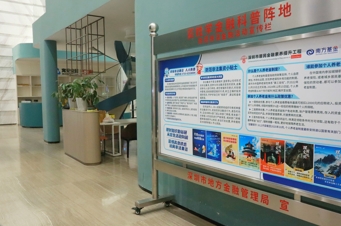
聚势筑就科普阵地 赋能普惠金融新篇——南方基金参建的“百姓学金融” 科普阵地正式落成
Quan Jing Wang· 2025-12-18 07:48
Core Viewpoint - The establishment of the "Common People Learn Finance" popular science base in Shenzhen aims to enhance financial education at the grassroots level, making financial knowledge accessible to the public in everyday settings [1][2]. Group 1: Project Overview - The project is guided by the China Fund Industry Association and supported by various financial institutions, officially launching in December 2025 [1]. - A total of 60 locations across 11 districts in Shenzhen will feature the "Common People Learn Finance" initiative, focusing on integrating financial education into daily life [1][2]. Group 2: Educational Focus - The initiative emphasizes a dual-dimensional popular science system focusing on "Preventing Fraud + Pension," which includes educating the public on identifying illegal fundraising and understanding personal pension systems [2]. - It aims to enhance the public's ability to discern risks and improve awareness of pension planning by combining traditional culture with investment concepts [2]. Group 3: Illegal Fundraising Awareness - Illegal fundraising is defined as the act of raising funds from unspecified individuals without legal permission, often promising high returns [5]. - Common tactics include high-interest temptations, false projects, and emotional manipulation to lure individuals into participating in illegal fundraising schemes [6][8]. Group 4: Personal Pension System - The personal pension system, launched in November 2022, is designed to supplement the existing pension insurance framework in China and will be expanded nationwide by December 2024 [8]. - Participants in the personal pension system can benefit from tax incentives, fee reductions, and dedicated fund management [9]. Group 5: Future Plans - The company plans to continuously optimize the educational content and explore more engaging methods to reach the public, contributing to a healthier financial ecosystem and improved pension financial services [9].