
个人养老金制度

Search documents
[3月16日]指数估值数据(港股反弹;攒多少钱才能提前退休,普通人能实现吗?)
银行螺丝钉· 2026-03-16 14:10
Market Overview - The market opened lower today but rebounded by the close, resulting in a slight decline, returning to a 3.9 star rating [1] - The Shanghai and Shenzhen 300 index saw a slight increase, while small and medium-cap stocks declined [2] - Value styles, including dividend stocks, experienced a downturn, whereas growth styles saw an increase [3][4] - Hong Kong stocks had a significant rise, particularly in the technology sector, which increased by over 2% [5][6] Investment Sentiment - Recent global market volatility has been noted, but the fluctuation of RMB assets has been significantly lower than the global market [8] - Following a recent pullback, A-shares and Hong Kong stocks have seen a decrease in valuation, with some stocks returning to undervalued status [8] - Domestic infrastructure and stable operating environments are not affected by conflicts in the Middle East; the country has abundant power and human resources, with reduced reliance on oil, minimizing the impact of oil price fluctuations [9] Capital Flow - Recently, some overseas investment institutions and wealth management firms from the Middle East have started to flow funds back into RMB assets [10] - The Hong Kong market is sensitive to liquidity, and concerns about rising oil prices leading to inflation have previously affected market sentiment [12][13] - Optimism has returned to international funds regarding Hong Kong stocks, particularly in technology, as analysts believe the recent declines were primarily driven by valuation and sentiment rather than fundamental issues [15] Investment Strategies - The article discusses the concept of FIRE (Financial Independence, Retire Early), emphasizing the importance of accumulating assets to generate passive income that covers living expenses [16][18] - It highlights two core strategies: reducing reliance on salary income by building assets that generate cash flow and allowing assets to work for the investor [20][25] - The gradual increase of passive income relative to expenses is encouraged, with even a small percentage increase being a positive step towards financial freedom [29][32] New Publications and Tools - A new book titled "Personal Pension Investment Guide" has been released, aimed at addressing common investor questions regarding personal pension systems [38] - The article mentions the weekly update of the "Golden Bull and Bear Signal Board" to help investors assess gold valuation [39]


[3月13日]指数估值数据(指数基金会失效吗;港股指数估值表更新;抽奖福利)
银行螺丝钉· 2026-03-13 13:48
Core Viewpoint - The article discusses the recent fluctuations in the stock market, particularly focusing on the impact of rising oil prices and the resilience of Chinese assets amidst global market volatility. It emphasizes the advantages of low-cost index funds and the enduring principles of value investing. Market Overview - The overall market experienced a decline, with large-cap stocks slightly down and small-cap stocks declining more significantly. Both value and growth styles saw decreases, while dividend and other value styles exhibited smaller fluctuations [3]. - Global markets have been volatile due to significant increases in oil prices, with the first wave of price hikes causing larger market reactions last week, followed by a smaller impact from the second wave this week [3]. - A-shares and Hong Kong stocks showed less volatility compared to overseas markets, indicating a strong competitive advantage for Chinese assets due to stable domestic infrastructure and reduced reliance on oil [3]. Index Fund Insights - The increasing popularity of index funds raises questions about their potential effectiveness as more investors adopt them. However, the fundamental principle of index funds is low cost, which allows them to outperform non-index fund investors when considering costs [10][11]. - The article highlights that all stocks are ultimately owned by shareholders, meaning that the average return for shareholders equals the market index return, barring costs. Index funds, being among the lowest-cost market participants, can provide better actual returns [10]. - Despite the growth of index funds, there is no need to worry about them completely dominating the market due to the complexity of human behavior and the challenges many investors face in maintaining patience and discipline [12][13]. Value Investing - Value investing has proven effective in the A-share market over the long term, but only a small portion of investors consistently practice it [14][15]. - Dividend and value index funds have been present in the A-share market for over 20 years, consistently outperforming the broader market. However, as of 2026, the total scale of dividend index funds is expected to be around 200 billion, a small fraction of the overall stock fund market [16][17]. Hong Kong Market Valuation - The article provides a summary of the valuation of various Hong Kong indices, indicating that the Hang Seng Index and other indices have specific price-to-earnings (P/E) and price-to-book (P/B) ratios, which can serve as a reference for investors [21][20]. - The valuation table includes metrics such as dividend yield and return on equity (ROE) for different indices, highlighting the investment landscape in Hong Kong [21]. Personal Pension Investment Guide - A new book titled "Personal Pension Investment Guide" has been released, aimed at helping investors navigate the personal pension system introduced in China. The book has gained popularity, ranking first in sales on major platforms [24][25]. - The guide is designed to be accessible and easy to read, providing practical insights for investors looking to enhance their retirement savings while benefiting from tax deferral [25].

[3月4日]指数估值数据(全球市场波动,该怎么办;主动优选、指数增强回低估了么;《个人养老金投资指南》新书预告)
银行螺丝钉· 2026-03-04 14:03
Core Viewpoint - The overall market has experienced a decline, with the A-share market dropping to 3.9 stars, indicating a bearish sentiment across large, medium, and small-cap stocks [1][2][3]. Market Performance - All market segments, including large, medium, and small-cap stocks, have seen declines, with large-cap stocks experiencing a more significant drop compared to small-cap stocks [2][3]. - Both value and growth styles have also faced downturns [4]. - The Hong Kong stock market has mirrored this downward trend [5]. Global Market Influences - Recent global market volatility has impacted both A-shares and Hong Kong stocks, primarily due to regional conflicts and the Federal Reserve's interest rate policies [6][8]. - Historical patterns show that regional conflicts often lead to investor panic, causing simultaneous fluctuations across various stock markets [11]. - Since the Fed's first rate cut in September 2024, a bull market has emerged globally, benefiting non-US stock markets due to declining dollar interest rates and exchange rates [12][13]. Market Valuation and Corrections - The A-share market has corrected by 4.1% from its peak, while the global non-US stock market has seen a 5.7% correction [22][23]. - Markets with high valuations have experienced more severe corrections, such as the South Korean market, which has dropped by 19%, and the Japanese market, which has fallen by 11% [25]. - Despite these corrections, the A-share market has not yet returned to undervalued levels, remaining around 3 stars [27]. Future Market Outlook - The volatility caused by regional conflicts is typically short-lived, with the more significant influence on global market fluctuations stemming from changes in US dollar interest rates and exchange rates [27]. - The Fed's interest rate decisions will be crucial in determining the future trajectory of the global stock market [27]. Investment Strategies - There is interest in investing in actively managed and index-enhanced funds during market downturns; however, these funds are currently in a paused subscription state [28][29]. - The active selection and index enhancement strategies have shown a 6% increase since the beginning of the year, indicating they are still at normal valuation levels [31][32]. - Investors are advised to remain patient and wait for better opportunities, as current market conditions do not yet warrant a return to undervalued status [33]. Upcoming Publications - A new book titled "Personal Pension Investment Guide" is set to be released, aimed at helping investors navigate the personal pension system introduced in November 2022 [37]. - This book is part of a series designed to simplify investment concepts for readers [38].

对话养老金融专家朱俊生:时间积累、投资纪律和专业化管理,是养老资金长期回报的基础
Xin Lang Cai Jing· 2026-02-13 01:36
Core Viewpoint - The personal pension system in China has transitioned from the "institutional startup phase" to the "quality inspection phase after expansion," highlighting the need for improved operational quality despite rapid account growth [6][22]. Group 1: Current Status of Personal Pension System - As of 2025, the number of personal pension accounts is approaching 200 million, indicating significant coverage and social recognition [6][23]. - However, only about 22% of accounts have actual contributions, with an average annual contribution of approximately 2000 yuan, reflecting low real participation and insufficient capital accumulation [6][23]. - Approximately 62% of the funds deposited are utilized for investment, leaving over one-third in cash or cash-like forms, indicating underutilization of long-term capital [6][23]. Group 2: Challenges in the Personal Pension System - The product supply has expanded rapidly, with 1275 personal pension products offered by 127 financial institutions, but there is a significant issue of homogeneity and unclear risk-return profiles [7][24]. - The overall yield of savings-type products is low, and the performance of public fund products has been weaker than the market average, undermining the motivation for continuous contributions [7][24]. Group 3: Factors Affecting Participation - Weak short-term performance has led to cautious behavior among participants, with many opting for "account opening without contributions" due to market volatility and low equity asset allocation [8][25]. - There is a mismatch between the long-term nature of pensions and the current operational arrangements, leading to unclear perceptions of long-term investment benefits [8][25]. - The high degree of personal investment responsibility limits the effectiveness of the system, as many individuals lack the necessary investment knowledge and risk management skills [8][25]. Group 4: Recommendations for Improvement - Strengthening professional asset allocation and diversifying investment tools can enhance the attractiveness of personal pensions, allowing participants to benefit from economic growth and innovation [10][28]. - Expanding cross-border asset allocation channels and improving the international diversification of investments can reduce reliance on single market cycles [10][28]. - Optimizing the investment and management system of personal pensions is essential, including exploring mechanisms for connecting different pillars of the pension system [10][28]. Group 5: Policy Implications - The development of a multi-tiered pension system is crucial, with a focus on enhancing the second pillar (enterprise annuities) and improving the participation and sustainability of the third pillar (personal pensions) [14][31]. - Current structural imbalances in the pension system necessitate a shift from relying solely on the first pillar to a more balanced approach that includes robust support from the second and third pillars [14][31]. - Tailoring incentives and product designs to accommodate the characteristics of new employment forms and income volatility is essential for increasing participation among diverse income groups [17][34].

这类保险产品,结算利率超4%
经济观察报· 2026-02-06 11:22
Core Viewpoint - The article highlights the rising interest in exclusive commercial pension insurance products due to their attractive settlement interest rates, with over 80% of the products showing rates above 3% and some reaching as high as 4.55% for aggressive accounts [4][6]. Group 1: Product Performance - Recent data shows that among 39 exclusive commercial pension insurance products, more than 80% have settlement interest rates above 3%, with some aggressive accounts achieving rates of 4.55% [4][6]. - The average settlement interest rate for these products has shown a downward trend over the past five years, but there is a slight recovery expected in 2025, with rates projected to rise to 3.4% from 3.30% in 2024 [9]. Group 2: Investment Structure - Exclusive commercial pension insurance products are designed to cater to diverse retirement needs, particularly for new economy workers and flexible employment individuals, featuring a dual-account model with stable and aggressive investment options [6][8]. - The stable account primarily invests in fixed-income assets, providing a higher guaranteed interest rate, while the aggressive account allocates a higher proportion to equity assets, offering greater potential returns [6][9]. Group 3: Market Trends - The article notes a "migration" of resident savings towards various financial products, including bank wealth management, insurance, index funds, and the stock market, driven by the expiration of large deposits and a declining interest rate environment [4][6]. - The exclusive commercial pension insurance products were first piloted in 2021 and expanded nationwide in March 2022, indicating a growing market presence and increasing product offerings [8][9]. Group 4: Consumer Insights - A case study of a consumer, Mr. Zhang, illustrates the appeal of these products, as he invested in a specific exclusive commercial pension insurance product with a settlement interest rate of 4.01% for the stable account [6][11]. - Despite the attractive rates, consumers like Mr. Zhang express concerns about the long-term commitment required for these products, balancing their investment with the need for liquidity due to other financial obligations [11][12].

金融课堂丨为自己存一笔养老钱——政策工具与理财选择
Xin Lang Cai Jing· 2026-02-05 12:25
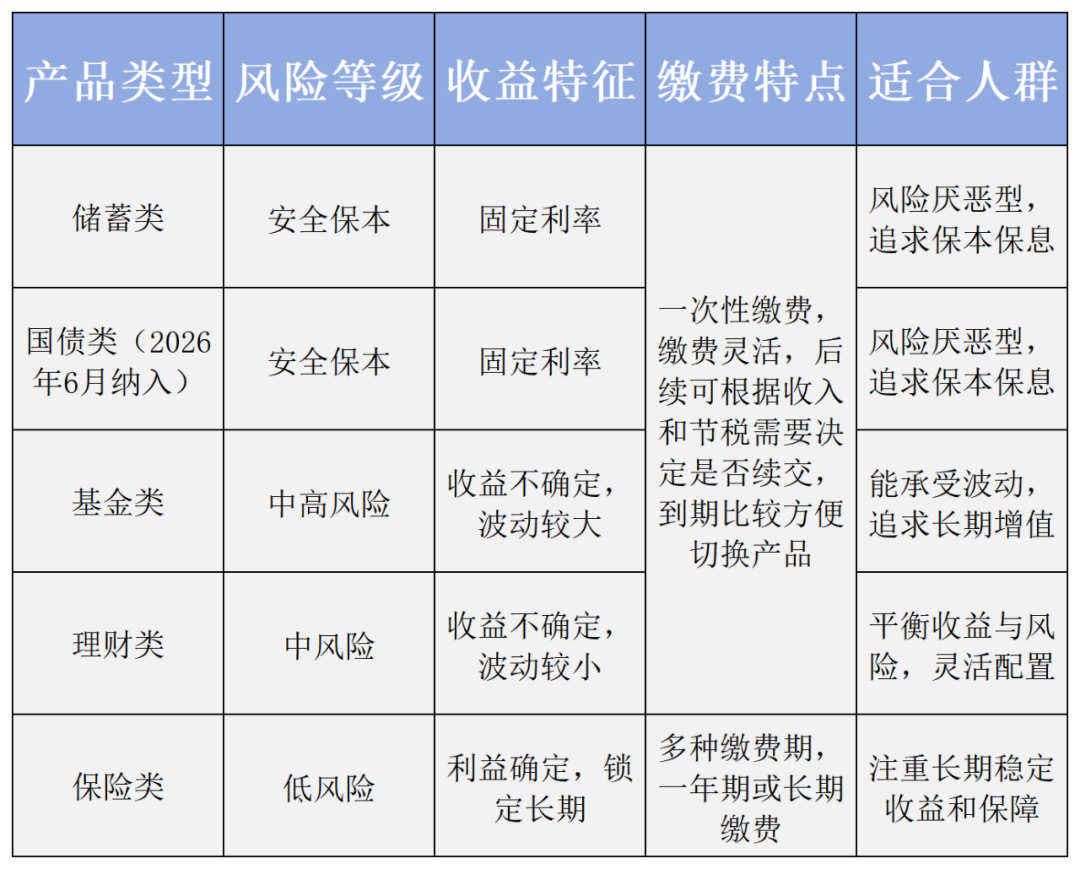
Group 1 - The importance of pension finance is highlighted due to the accelerating aging population in China, with over 310 million people aged 60 and above, accounting for 22% of the population, and projections indicating that this will exceed 400 million by 2035, representing over 30% [2][16] - Pension finance is defined as the totality of financial activities surrounding the various pension needs of social members, including pension service finance and pension industry finance, becoming a significant development direction in the financial sector [2][17] Group 2 - The pension security system in China consists of three pillars: the first pillar is the basic pension covering the entire population, the second pillar includes enterprise annuities and occupational annuities for supplementary protection, and the third pillar encompasses personal pension systems and various commercial pension financial services [3][18] Group 3 - The personal pension system, implemented on November 25, 2022, is a government-supported, voluntary participation, market-operated system designed to supplement pension insurance, allowing individuals to choose from various financial products with a contribution limit of 12,000 yuan per year [4][18] - Participants can open personal pension accounts through national online service platforms or designated commercial banks, with the ability to change their account bank twice a year [5][19] Group 4 - As of December 15, 2025, there are 1,256 personal pension products available, an increase of 196 from the previous quarter, categorized into four main types: savings products (466), insurance products (446), fund products (307), and wealth management products (37) [7][20] - The characteristics of these products vary, with savings products being low-risk and offering fixed interest rates, while fund products carry medium to high risk with uncertain returns [8][21] Group 5 - In addition to personal pensions, individuals can consider low-risk tools for retirement savings, such as government bonds, which are highly secure and typically offer higher returns than bank deposits, with current ten-year bond rates between 2.6% and 3% [9][22] - Bank deposits up to 500,000 yuan are protected under the Deposit Insurance Regulations, with interest rates for state-owned banks around 0.3% for five-year fixed deposits and up to 3.45% for private banks [11][23]
养老钱怎么存更划算?这类产品最高超4%
Jin Rong Shi Bao· 2026-01-21 11:50
Core Insights - The overall performance of exclusive commercial pension insurance products for 2025 is strong, with over 80% of stable accounts showing settlement rates exceeding 3%, and some products surpassing 4% [1][2] Group 1: Settlement Rate Performance - A total of 38 exclusive commercial pension insurance products have disclosed their 2025 settlement rates, with stable account rates ranging from 2% to 4.35% and progressive account rates from 2.5% to 4.55% [2] - Among stable accounts, 30 products have rates of 3% or higher, accounting for nearly 80% of the total, while only one progressive account product has a rate below 3% [2] Group 2: Company and Product Highlights - Three insurance companies have seven exclusive commercial pension insurance products with settlement rates reaching 4% or higher, including two products from Agricultural Bank of China Life Insurance with rates of 4.35% for stable accounts and 4.55% for progressive accounts [3] - National Pension's products "National Common Prosperity C01" and "C02" have stable account rates of 4.01% and 4.02%, respectively, while Xinhua Pension's products also exceed 4% for stable accounts [3] Group 3: Market Context and Trends - Exclusive commercial pension insurance products are designed for long-term pension security, with a dual-account structure to cater to different risk preferences, featuring a mix of fixed-income assets and equity investments [4] - As of January 17, there are 165 personal pension insurance products available, with 21 being exclusive commercial pension insurance products, indicating a growing market [5] - Despite a general decline in guaranteed rates for various insurance products, many exclusive commercial pension insurance products have still achieved considerable annual settlement returns, reflecting strong asset allocation and risk management capabilities [6]

个人养老金理财平均回报达2.54%,资产规模突破122亿元
2 1 Shi Ji Jing Ji Bao Dao· 2026-01-21 07:23
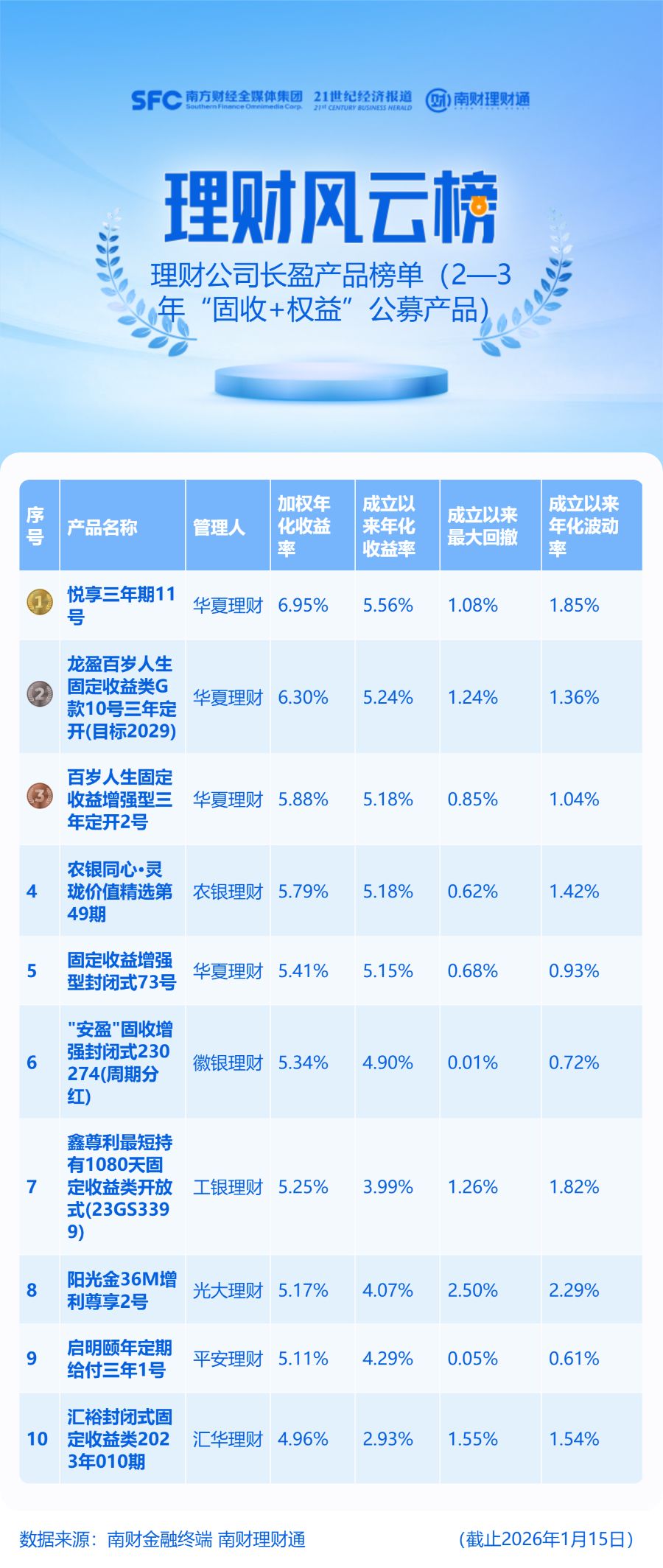
Core Insights - The article discusses the performance of various financial products, particularly focusing on "fixed income + equity" public offerings from wealth management companies, highlighting the top-performing products and their respective returns [4][5]. Group 1: Product Performance - As of January 15, in the long-term product rankings, seven wealth management companies had products listed, with Huaxia Wealth Management having the most products at four [4]. - The top five products all had annualized returns since inception exceeding 5%, with Huaxia Wealth Management's products taking the top three spots, including two products with weighted annualized returns over 6% [4]. - Risk indicators show that several products had maximum drawdowns and annualized volatility below 1%, with Huaiyin Wealth Management's product showing almost no drawdown [4]. Group 2: Personal Pension Products - A notable inclusion in the rankings is a personal pension product from Industrial Bank Wealth Management, which achieved a weighted annualized return of 5.25% and an annualized return since inception of 3.99% [5]. - The personal pension product is classified as a medium-risk "fixed income +" product, primarily investing in deposit-like assets and preferred stocks, with a significant portion allocated to public funds [5]. - As of September 2025, the total scale of personal pension funds reached 151.07 billion, marking a 65.32% increase from the end of 2024 [6]. Group 3: Market Trends - The A-share market showed mixed performance, with small-cap and growth sectors standing out, while the Hong Kong stock market strengthened, driven by technology stocks [3]. - The fixed income market saw the central bank increase liquidity through various measures, leading to a decline in short-term rates and a warming sentiment in the long-term segment [3]. Group 4: Personal Pension Product Analysis - In 2025, personal pension products demonstrated significant growth, with an average return of 2.54% for the remaining products after excluding those not meeting the one-year criteria [6][7]. - Among the wealth management companies, China Post Wealth Management had the highest average return of 3.88%, while the lowest was from Jianxin Wealth Management at 1.52% [8]. - The overall number of personal pension wealth management products remains low compared to other types, indicating potential for growth and the need for innovation in product offerings [8].
养老钱怎么存更划算? 专属商业养老保险交“高分卷”
Jin Rong Shi Bao· 2026-01-21 01:44
Core Insights - The overall performance of exclusive commercial pension insurance products for 2025 is strong, with over 80% of stable accounts showing settlement rates exceeding 3%, and some products surpassing 4% [1][2] Group 1: Settlement Rate Performance - A total of 38 exclusive commercial pension insurance products have disclosed their 2025 settlement rates, with stable account rates ranging from 2% to 4.35% and progressive account rates from 2.5% to 4.55% [2][3] - Among stable accounts, 30 products have rates of 3% or higher, accounting for nearly 80% of the total, while only one progressive account product has a rate below 3% [2] Group 2: Company and Product Highlights - Three insurance companies have seven exclusive commercial pension insurance products with settlement rates reaching 4% or higher, including two products from Agricultural Bank Life Insurance with rates of 4.35% for stable accounts and 4.55% for progressive accounts, which are the highest disclosed [3] - Other notable products include those from National Pension and Xinhua Pension, with rates also exceeding 4% for stable accounts [3] Group 3: Market Context and Development - Exclusive commercial pension insurance products are designed for long-term pension security, with funds locked in until the legal retirement age or 60 years old, featuring a "guaranteed rate + floating settlement" model [4] - As of January 17, there are 165 personal pension insurance products available, with 21 being exclusive commercial pension insurance products, indicating a growing market [5] - Despite a general decline in guaranteed rates for various insurance products, many exclusive commercial pension insurance products have still achieved considerable annual settlement returns, showcasing their robust asset allocation and risk management capabilities [5][6]
人社部部长王晓萍:将进一步扩大社会保险覆盖面,支持灵活就业人员、新就业形态人员参加职工养老保险
Jin Rong Jie· 2026-01-20 12:35
Core Viewpoint - The Ministry of Human Resources and Social Security emphasizes the importance of flexible employment and new employment forms as significant channels for job absorption, focusing on the rights protection of these groups [1] Group 1: Social Insurance Expansion - The Ministry plans to expand the coverage of social insurance, particularly for flexible and new employment forms, to ensure higher quality social security for these workers [1] - There will be a push to include more new employment form workers in occupational injury insurance and to expand unemployment and work injury insurance coverage [1] Group 2: Social Security Reform - Continuous deepening of key social security reforms is planned, including ensuring timely and full pension payments and improving the mechanism for determining and adjusting benefits [1] - There will be an emphasis on increasing support for low-income groups and expanding the coverage of enterprise annuities while implementing a personal pension system [1] - Strengthening fund regulatory systems and investment operation oversight is also a priority, along with establishing long-term assessment mechanisms and improving actuarial systems [1] Group 3: Service Management Optimization - The Ministry aims to create more convenient management services by optimizing national human resources and social security service platforms [1] - Initiatives will include promoting efficient processing of flexible employment insurance, social security card services, and retirement services, as well as enhancing policy communication and consultation services [1]