具身AI

Search documents
露笑科技入局具身机器人 2025年上半年营收、净利润双降
Xi Niu Cai Jing· 2025-09-22 09:05
Group 1 - The core point of the news is that Luxshare Technology has entered the embodied robotics sector by signing a strategic cooperation agreement with Shanghai Kepler Robotics and a leading domestic cross-border e-commerce company, aiming to sell no less than 1 million units in the US and European markets over the next three years [1][2] Group 2 - The strategic cooperation will focus on the supply chain of household embodied AI service robots, AI embodied model algorithms, and market expansion in the US and Europe [2] - Ningbo Junwu plans to procure Kepler's embodied AI models and hardware modules to enable robots to have VLA autonomous movement and Agent visual language interaction capabilities, facilitating natural communication and command execution in home scenarios [2] Group 3 - For the first half of 2025, Luxshare Technology reported a revenue of 1.752 billion yuan, a decrease of 7.73% year-on-year, and a net profit attributable to shareholders of 150 million yuan, down 16.68% year-on-year [3] - The net profit after deducting non-recurring gains and losses was 140 million yuan, reflecting a decrease of 10.10% compared to the previous year [3] - The company's foray into the household embodied AI service robot sector raises questions about its potential to develop new growth avenues [3]



A股公告精选 | 兄弟科技(002562.SZ)前三季度业绩同比预增207%-253%
智通财经网· 2025-09-16 12:13
Group 1 - Northern Huachuang announced that the National Integrated Circuit Fund's shareholding ratio has decreased to below 5% after reducing 2.5919 million shares, accounting for 0.357947% of the total share capital [1] - Brother Technology expects a net profit of 100 million to 115 million yuan for the first three quarters of 2025, representing a year-on-year increase of 207.32% to 253.42% due to rising prices of certain vitamin products and improved capacity utilization [1] Group 2 - Haon Automotive received a fixed-point letter for ADAS camera perception systems and AK2 radar systems from a global automotive brand, with an estimated total revenue of approximately 2.477 billion yuan over the product lifecycle, expected to start mass production in April 2026 [2] - Luxshare Technology's subsidiary plans to launch a household embodied AI service robot, aiming to sell at least 1 million units in the US and European markets from 2026 to 2028 [2] Group 3 - Hengwei Technology is planning to acquire 75% of Shanghai Shuhang Information Technology Co., Ltd., with its stock suspended from trading [3] - Hangke Technology's inquiry transfer price is set at 28.61 yuan per share, which is a 20% discount compared to the closing price of 35.66 yuan [4] Group 4 - A major shareholder of Huaihai Biological received an administrative penalty notice from the China Securities Regulatory Commission for insider trading, which does not affect the company's daily operations [5][6] - Fuchuang Precision announced that its shareholder plans to reduce its stake by no more than 3% of the company's total shares [7] Group 5 - Luxshare Precision's vice chairman completed a share buyback plan, acquiring 441.45 million yuan worth of shares, increasing his shareholding from 37.78% to 37.81% [8] - Digital Vision plans to sell up to 5% of its shares in Bohui Technology to improve asset operation efficiency [9]

9月16日晚间公告 | 露笑科技拟推出家庭具身AI服务机器人;兄弟科技三季报净利润预增逾200%
Xuan Gu Bao· 2025-09-16 11:55
Group 1: Suspension - Hengwei Technology plans to acquire 75% of Shanghai Shuhang Information Technology, leading to a stock suspension. The target company is a prominent provider of enterprise-level scenario-based AI solutions [1] Group 2: Private Placement - Defu Technology intends to raise no more than 1.93 billion yuan for the acquisition of 100% equity in Luxembourg Copper Foil and for electronic chemical projects related to copper foil additives [2] Group 3: Shareholding Increase - Luxshare Precision's actual controller and vice chairman Wang Laisheng has completed an increase in shareholding, with a total investment of 200 million yuan [3] Group 4: External Investment and Daily Operations - Luxiao Technology's subsidiary plans to launch a home-based AI service robot, aiming to sell no less than 1 million units of various products in the US and European markets by 2026-2028 [4] - Haon Automotive received approximately 2.477 billion yuan in designated contracts for global automotive brand ADAS perception systems and AK2 radar systems [5] - China Shipbuilding Technology signed a green methanol sales contract worth about 40 million USD per year, expected to commence supply after the company's wind power methanol project is operational [6] - Fuyuan Pharmaceutical's Pioglitazone Metformin tablets (15mg/850mg) have obtained a drug registration certificate [7] - Hendi Pharmaceutical received approval notification for the listing application of Methoxychloropramine hydrochloride chemical raw materials [8] - Vanke A received a loan of no more than 2.064 billion yuan from Shenzhen Metro Group [9] - An彩高科 plans to acquire 100% equity of Henan High Purity Minerals for 120,000 yuan [10] - Huajin Technology has submitted an application for the issuance and listing of overseas listed shares (H shares) to the Hong Kong Stock Exchange [11] - Digital Vision plans to sell no more than 5% of its shares in Bohui Technology [12] Group 5: Performance Changes - Brothers Technology expects a net profit of 100 million to 115 million yuan for the first three quarters, representing a year-on-year increase of 207.32% to 253.42%, driven by rising prices of certain vitamin products and increased capacity utilization and sales of the phenol project [13]
露笑科技子公司与头部跨境电商合作,拟推出家庭具身AI服务机器人
Ju Chao Zi Xun· 2025-09-16 09:14
Core Viewpoint - Lou Xiao Technology announced a strategic cooperation agreement between its subsidiary Ningbo Junwu and a leading domestic cross-border e-commerce company to launch a household embodied AI service robot [2] Group 1: Strategic Cooperation - Ningbo Junwu plans to procure embodied AI models and hardware modules from Shanghai Kepler Robotics Co., Ltd. to enable the robot to have VLA autonomous movement and Agent visual language interaction capabilities [2] - The collaboration aims to facilitate natural communication and command execution in household scenarios through the embodied hardware modules [2] Group 2: Market Potential - The domestic cross-border e-commerce partner has extensive experience in cleaning appliances and small home appliances, operating on platforms like Amazon, Walmart, eBay, Shopify, and independent sites [2] - Both parties are confident in achieving cumulative sales of no less than 1 million units in the U.S. and European markets by 2026-2028 [2] Group 3: Future Development - There are plans for joint research and development of upgraded versions of the household embodied AI service robot based on project progress [2] - Consideration will be given to establishing an independent brand through a joint venture model controlled by Ningbo Junwu [2] Group 4: Company Background - Ningbo Junwu was established in January 2023, with a registered capital of 4.3098 million yuan, and Lou Xiao Technology holds a 42.44% stake in the company [2]

露笑科技子公司宁波君屋签署家庭具身AI服务机器相关合作协议
Zhi Tong Cai Jing· 2025-09-16 08:30
Core Viewpoint - Lou Xiao Technology (002617.SZ) has signed a strategic cooperation agreement with a leading domestic cross-border e-commerce company through its subsidiary Ningbo Junwu Intelligent Technology Co., Ltd, focusing on the development of home embodied AI service robots [1][2] Group 1: Strategic Cooperation - The agreement involves collaboration among Ningbo Junwu (Party A), Shanghai Kepler Robotics Co., Ltd (Party B), and a leading domestic cross-border e-commerce company (Party C) to leverage Party A's product development capabilities, Party B's AI technology, and Party C's overseas operational strengths [1] - The parties aim to create a global collaborative ecosystem for home embodied AI service robots through resource sharing and strategic cooperation [1] Group 2: Market Expansion - Party A plans to actively expand into the US and European markets, leveraging Party C's established sales and after-sales service systems [2] - The collaboration will focus on supply chain optimization and joint brand promotion in the US and Europe, with a target of selling no less than 1 million units of various products by 2026-2028 [2] Group 3: Future Development - The parties will consider joint research and development for upgraded versions of the home embodied AI service robots based on project progress [2] - There is a potential plan to establish an independent brand through a joint venture controlled by Party A at an appropriate time [2]
露笑科技(002617.SZ)子公司宁波君屋签署家庭具身AI服务机器相关合作协议
智通财经网· 2025-09-16 08:28
Core Viewpoint - The strategic cooperation agreement signed between Ningbo Junwu Intelligent Technology Co., Ltd. and a leading domestic cross-border e-commerce company aims to leverage each party's strengths in developing and promoting household embodied AI service robots for global markets [1][2] Group 1: Strategic Cooperation - Ningbo Junwu, a subsidiary of Luxiao Technology, has entered into a strategic cooperation agreement with a leading domestic cross-border e-commerce company and Shanghai Kepler Robotics [1] - The collaboration focuses on resource sharing and building a synergistic development ecosystem for household embodied AI service robots [1] Group 2: Market Expansion - The parties aim to expand into the U.S. and European markets, leveraging the e-commerce company's established sales and after-sales service systems [2] - The goal is to achieve cumulative sales of no less than 1 million units of various products in the U.S. and Europe by 2026-2028 [2] Group 3: Product Development - There are plans for joint research and development of upgraded versions of household embodied AI service robots based on project progress [2] - Consideration will be given to establishing an independent brand through a joint venture controlled by Ningbo Junwu [2]
露笑科技(002617.SZ):控股子公司与某国内头部跨境电商签订《战略合作协议》
Ge Long Hui A P P· 2025-09-16 08:27
Core Insights - Loushow Technology (002617.SZ) has signed a strategic cooperation agreement with a leading domestic cross-border e-commerce company to launch a home embodiment AI service robot [1][2] - The company plans to procure embodied AI models and hardware modules to enable the robot to have autonomous movement and visual language interaction capabilities [1] - The partnership aims to optimize supply chain integration and jointly promote brand building in the US and European markets, targeting sales of at least 1 million units by 2026-2028 [2] Group 1 - Loushow Technology's subsidiary, Ningbo Junwu Intelligent Technology Co., Ltd., is collaborating with Shanghai Kepler Robotics Co., Ltd. and a leading cross-border e-commerce company [1] - The home embodiment AI service robot will facilitate natural communication and command execution in family settings [1] - The strategic partnership is focused on expanding into the US and European markets, leveraging the e-commerce partner's extensive operational experience [2] Group 2 - The sales strategy includes leveraging platforms like Amazon, Walmart, eBay, and Shopify to reach target customers [2] - Both parties are confident in achieving cumulative sales of no less than 1 million units in the US and European markets by 2026-2028 [2] - The collaboration emphasizes deep supply chain integration and brand promotion to enhance market presence [2]
露笑科技:控股子公司与某国内头部跨境电商签订《战略合作协议》
Ge Long Hui· 2025-09-16 08:22
Core Insights - Loushow Technology (002617.SZ) has signed a strategic cooperation agreement with a leading domestic cross-border e-commerce company to launch a home embodiment AI service robot [1][2] - The company plans to procure embodied AI models and hardware modules to enable the robot to have autonomous movement and visual language interaction capabilities [1] - The partnership aims to optimize supply chain integration and jointly promote brand building in the US and European markets, targeting sales of at least 1 million units by 2026-2028 [2] Group 1 - Loushow Technology's subsidiary, Ningbo Junwu Intelligent Technology Co., Ltd., is collaborating with Shanghai Kepler Robotics Co., Ltd. and a leading cross-border e-commerce company [1] - The home embodiment AI service robot will facilitate natural communication and command execution in home settings [1] - The strategic partnership focuses on leveraging the e-commerce company's extensive experience in selling cleaning appliances and small home appliances on platforms like Amazon and eBay [2] Group 2 - The collaboration will enhance the market presence in the US and Europe through deep supply chain integration and brand promotion [2] - Both parties are confident in achieving cumulative sales of no less than 1 million units in the US and European markets by 2026-2028 [2] - The embodied AI hardware modules will allow for broader application scenarios for the robots [1]
人形机器人热度再升温! OpenAI继续招兵买马 从ChatGPT迈向“会干活的AI”
Zhi Tong Cai Jing· 2025-09-16 01:32
Group 1: OpenAI's Developments - OpenAI is actively recruiting top AI application researchers to advance humanoid robotics and aims to become a leader in embodied AI [1][2] - The company is focusing on developing AI models that can handle complex physical tasks for humanoid robots [1][2] - OpenAI has recently posted job openings for senior engineers specializing in robotics, indicating a strategic push into this field [2][3] Group 2: Industry Trends and Predictions - The concept of "embodied AI" is gaining traction, with significant interest from industry leaders like NVIDIA and Tesla [2][3] - Tesla's Optimus humanoid robot is projected to contribute approximately 80% of the company's long-term value, highlighting the strategic importance of robotics for Tesla [3][4] - Morgan Stanley suggests that the humanoid robot market could surpass the total addressable market of the global automotive industry [4] Group 3: Market Growth Projections - The humanoid robot market is expected to grow from approximately $2 billion in 2024 to $15.26 billion by 2029, with a compound annual growth rate (CAGR) exceeding 39% [7] - Deutsche Bank forecasts that the humanoid robot market could reach $75 billion by 2035 and potentially $1 trillion by 2050, with global sales exceeding 70 million units [8] - The next few years are critical for the acceleration of humanoid robot production, with companies like Tesla and Figure AI setting ambitious mass production plans [8]


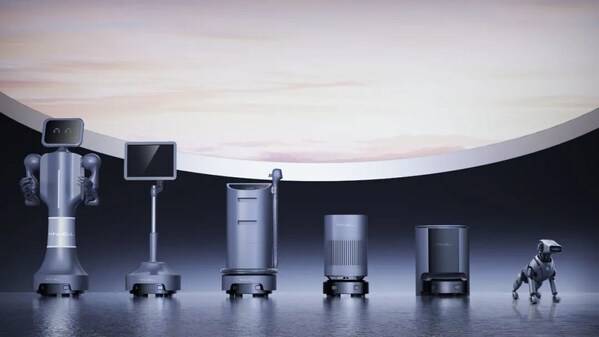
打造家庭具身AI服务机器人,启幕生活新次元
Quan Jing Wang· 2025-09-13 07:39
Core Insights - The collaboration among Shanghai Kepler Robotics, Luxshare Technology, Ningbo Junwu Intelligent Technology, and Hunan Granbo Technology aims to advance the development and commercialization of next-generation household AI embodied robots, targeting a sales goal of one million units within three years [1][3]. Group 1: Market Opportunity - The global AI embodied robot market is projected to grow from 2.2 billion yuan in 2022 to 5.9 billion yuan in 2024, and is expected to exceed 62.4 billion yuan by 2029, presenting significant growth opportunities [3]. - Kepler's initiative aligns with national strategies to integrate AI with the real economy, showcasing a model for industry collaboration [3]. Group 2: Technological Collaboration - The partnership leverages Kepler's VLA+ model, which excels in autonomous movement, multi-modal interaction, and semantic understanding, enhancing the robots' capabilities [4][6]. - Luxshare Technology contributes its expertise in mechatronics and large-scale production, facilitating rapid product deployment, while Hunan Granbo enhances user experience through its experience in household robot systems [4]. Group 3: Product Strategy - The product strategy involves a phased approach, starting with robots that possess autonomous movement and multi-modal interaction, evolving into multifunctional smart platforms, and eventually exploring humanoid robots for household use [8]. - This strategy ensures a balance between technological advancement and commercial viability [8]. Group 4: Future Outlook - Kepler aims to transform laboratory breakthroughs into accessible smart products for households, addressing challenges posed by an aging society and enhancing quality of life [10]. - The company is focused on building an open technological ecosystem centered around VLA+ and Agent, facilitating the transition of traditional manufacturers towards AI integration [10].