
农业社会化服务

Search documents
建设一批现代农事综合服务中心 为小农户等生产经营主体提供集成化、一站式服务(政策速递)
Ren Min Ri Bao· 2025-11-06 21:58
Core Insights - The article discusses the development of a modern agricultural service system in China, emphasizing the integration of smallholder farmers with modern agricultural practices [1][2][3] Group 1: Agricultural Service System - The "14th Five-Year Plan" suggests improving a convenient and efficient agricultural social service system to connect small farmers with modern agriculture [1] - The Ministry of Agriculture and Rural Affairs, along with five other departments, issued guidelines to strengthen the construction of modern agricultural service centers [1][2] - Agricultural social services include specialized services for various agricultural sectors, which are crucial for integrating small farmers with modern agricultural development [1][2] Group 2: Development Challenges - Despite rapid development, challenges remain, such as resource dispersion, gaps in pre- and post-production services, and weak comprehensive service capabilities [2] - The guidelines aim to provide integrated, one-stop services for small farmers and other production entities, enhancing service accessibility and convenience [2] Group 3: Infrastructure and Operations - The guidelines emphasize the need for planning to avoid redundant construction, suggesting a mix of new and expanded facilities based on local agricultural characteristics [3] - It encourages the establishment of various types of agricultural service centers, focusing on key infrastructure for pre- and post-production processes [3] - The operation of these centers should be market-driven, allowing professional entities to manage them, with potential separation of construction and operation [3] Group 4: Policy Support - The construction of modern agricultural service centers requires multi-faceted policy support, including local government bonds and infrastructure financing [4][5] - Financial institutions are encouraged to optimize products and credit models to support these construction projects [5] - Land policies will facilitate the participation of rural collective economic organizations in the construction of service centers [5]
“农机+农技”助力秋收秋种 特色种养殖变身增收致富“金钥匙”
Yang Shi Wang· 2025-11-05 07:53
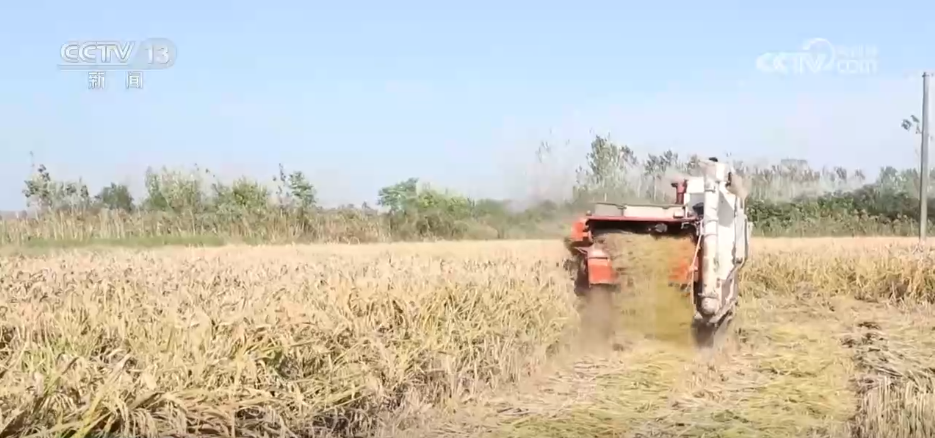
Group 1: Rice Harvesting and Agricultural Practices - The rice harvesting in Anhui Ma'anshan and He County is nearing completion, with 688,000 acres being harvested under favorable weather conditions [1] - In Xuqiao Village, the promotion of "good seeds + good methods" has ensured a bountiful autumn harvest, with rice being unaffected by previous rainy weather, resulting in full grain heads and strong root systems [2] - The newly installed high-capacity drying equipment at the Xuqiao Village Agricultural Service Center can meet national purchasing standards within 10 hours, facilitating immediate storage after harvesting [4] Group 2: Winter Wheat Planting - The winter wheat sowing in Linfen, Shanxi, has reached 67% completion, with 1.9719 million acres sown out of a total of 2.94 million acres, despite being delayed by over half a month due to prior rainfall [6][12] - Agricultural experts indicate that despite the late sowing, mature late-sowing techniques and favorable weather conditions before November 10 still make it a critical period for winter wheat planting [10] Group 3: Unique Agricultural Products - In Xunyang, Shaanxi, the unique agricultural product "guai zao" (a type of fruit) is in harvest season, with local farmers actively picking the fruit, which is known for its sweet flavor and medicinal properties [14] - The area dedicated to guai zao cultivation has surpassed 400,000 acres, with an annual fresh fruit production exceeding 120,000 tons [18] Group 4: Crab Market Dynamics - The crab market in Nanjing has seen a significant increase in supply, with crabs being in peak season and prices stabilizing, marking the "golden crab period" of the year [20] - The overall temperature and concentrated rainfall during the summer have delayed the molting and maturity of crabs by approximately 20 days compared to previous years, but the quality remains unaffected [22] - The shipment volume of crabs from Gaocun District has increased by 51% compared to the same period last year, with popular destinations including Guangdong, Fujian, Zhejiang, and within Jiangsu Province [24]

南农晨读丨汕尾风味 天下领“鲜”
Nan Fang Nong Cun Bao· 2025-10-24 02:36
Group 1 - The national autumn grain harvest has reached nearly 80% as of October 21, with specific crops showing significant progress: nearly 80% for mid-season rice, over 80% for corn, nearly 90% for soybeans, and over 20% for double-cropped late rice [4][5]. - In terms of regional performance, the Huang-Huai-Hai region has nearly 80% completion, while Northeast, Southwest, and Northwest regions also exceed 80%. The Yangtze River middle and lower reaches are at nearly 70%, and the South China region has surpassed 30% [5]. Group 2 - Six departments, including the Ministry of Agriculture and Rural Affairs, have jointly issued guidelines to strengthen the construction of modern agricultural service centers, aiming to enhance the quality and efficiency of agricultural social services [6][8]. - The focus is on improving the service capabilities across the entire production chain of grain and important agricultural products, with an emphasis on market orientation and local adaptation [9][10]. - The initiative aims to create a network of modern agricultural service centers that are scientifically organized, well-operated, and provide high-quality services to small farmers, thereby promoting the upgrading of agricultural social services [11][12]. Group 3 - The 2025 Global High-end Food and Quality Agricultural Products Expo opened in Shenzhen, showcasing nearly 50 featured enterprises from Shanwei with over 100 quality products, highlighting the unique flavors of Shanwei [15][16]. - The Shanwei exhibition attracted notable visitors, including representatives from the Guangdong Provincial People's Congress, who showed great interest in the quality agricultural products on display [19]. - The expo covers an area of 60,000 square meters, with participation from over 30 countries and regions, providing a platform for local enterprises to showcase their products and foster collaboration [22][25].

六部门联合发文!加强现代农事综合服务中心建设
Nan Fang Nong Cun Bao· 2025-10-23 04:04
Core Viewpoint - The article discusses the joint issuance of guidelines by six government departments to enhance the construction of modern agricultural comprehensive service centers, aiming to improve the quality and efficiency of agricultural social services [2][4][6]. Group 1: Objectives and Goals - The initiative aims to implement the "Accelerating the Construction of an Agricultural Powerhouse Plan (2024-2035)" and establish a convenient and efficient agricultural social service system [2][3]. - The focus is on enhancing the service capabilities across the entire production chain of grain and important agricultural products, with an emphasis on market orientation and local adaptation [5][10]. Group 2: Service Center Functions - Modern agricultural comprehensive service centers are designed to primarily serve small farmers, ensuring that services are accessible and convenient [9][11]. - The centers will integrate public service resources and collaborate closely with public service institutions to provide comprehensive support to small farmers and other production entities [11][12]. Group 3: Infrastructure Development - Key infrastructure will be developed in critical areas such as machinery storage, seedling cultivation, drying and storage, cold chain preservation, initial processing of agricultural products, and waste management [13][14]. - The approach emphasizes filling service gaps and preventing redundant construction by focusing on local agricultural leading industries and urgent market demands [15][12]. Group 4: Service Integration - The guidelines promote the combination of public and commercial services, including government procurement of services for agricultural technology promotion, product quality testing, and farmer training [16][17]. - There is an exploration of extending services to include brand development, marketing, and smart agriculture through partnerships and collaborations [18]. Group 5: Construction and Operation - The guidelines encourage the establishment of service centers by qualified cooperatives and social investment entities, utilizing idle agricultural land and facilities [20][21]. - Local governments are permitted to support the construction of these centers through bonds, and collective economic organizations can participate in the development process [24][25].
加强现代农事综合服务中心建设
Ren Min Wang· 2025-10-20 06:33
Core Viewpoint - The article discusses the joint issuance of guidelines by six government departments in China to strengthen the construction of modern agricultural service centers, aiming to enhance the agricultural social service system and support agricultural modernization efforts [1][2]. Group 1: Functions of Modern Agricultural Service Centers - The modern agricultural service centers will focus on addressing the shortcomings in operational services, particularly in building essential infrastructure that individual service providers struggle to manage [1]. - These centers will optimize the allocation of service resources by coordinating supply-side resources and concentrating on the service demands of small farmers and various production entities, utilizing modern information technology for precise matching [1][2]. Group 2: Construction and Operation Strategies - Local governments are encouraged to incorporate these service centers into land use and related special planning to ensure rational layout and planning guidance [2]. - The construction approach will combine renovation and new builds, primarily focusing on renovation while allowing for new constructions where necessary to avoid redundant projects [2]. - Various types of service centers can be established based on local needs, including those focused on grains, cash crops, livestock, aquaculture, and seed industries, with the potential for multifunctional centers and collaborative networks [2][3]. Group 3: Encouragement of Private Sector Involvement - The guidelines promote the involvement of private service providers in the construction and operation of these centers, linking their operational success to financial returns, thereby motivating them to enhance service quality [2][3]. - Private operators, being closer to the farmers, can adapt their strategies to better meet the needs of agricultural producers, maximizing the effectiveness of the service centers [3]. Group 4: Operational Management and Collaboration - The article emphasizes the need for modern agricultural service centers to establish robust operational management and profit-sharing systems, ensuring transparency in service standards and pricing [3]. - It encourages the development of information platforms that facilitate efficient service matching and the establishment of collaborative mechanisms with local service providers, family farms, and cooperatives to achieve shared benefits and risk management [3].
加强现代农事综合服务中心建设 推动健全便捷高效的农业社会化服务体系 ——农业农村部农村合作经济指导司负责人就《关于加强现代农事综合服务中心建设的指导意见》答记者问
Ren Min Wang· 2025-10-18 01:17
Core Viewpoint - The recent joint issuance of the "Guiding Opinions on Strengthening the Construction of Modern Agricultural Comprehensive Service Centers" aims to enhance agricultural modernization and support the construction of a strong agricultural nation through the establishment of well-structured, efficiently operated, and high-quality service centers [1]. Group 1: Functions of Modern Agricultural Comprehensive Service Centers - The centers will address the shortcomings in operational services by focusing on key infrastructure that individual service entities struggle to develop, thereby enhancing service capabilities in weak areas [1]. - They will optimize the allocation of operational service resources by coordinating various service resources on the supply side and concentrating the service demands of small farmers and other production entities on the demand side, utilizing modern information technology for precise matching [1][2]. Group 2: Construction and Operation Strategies - Local governments are encouraged to incorporate these service centers into land spatial planning and relevant special plans to ensure rational layout and planning guidance [2]. - The construction approach will combine renovation and new construction, primarily focusing on renovation while allowing for new builds where necessary to avoid redundant construction [2]. - Various types of service centers can be established based on local needs, including those focused on grain, economic crops, livestock, aquaculture, and seed industries, with the potential to expand service functions to meet diverse industry needs [2]. Group 3: Encouragement of Operational Entities - The guiding opinions promote the construction and operation of these centers by commercial service entities, linking their operational effectiveness and revenue to incentivize improved service quality and sustainability [3]. - These entities, being directly involved with farmers, can adapt their operational strategies to maximize the centers' effectiveness [3]. - A management mechanism separating construction and operation is encouraged for centers built by multiple stakeholders, utilizing methods such as equity investment and leasing to hand over operations to commercial service entities [3]. Group 4: Operational Management and Collaboration - The centers are advised to establish comprehensive operational management and profit distribution systems, publicly disclose service standards and prices, and build a service brand [3]. - An information platform should be developed to facilitate efficient service supply and demand matching, incorporating both online and offline methods [3]. - Collaboration with surrounding service providers, family farms, and cooperatives is encouraged to create a mechanism for shared benefits and risk-sharing, promoting complementary advantages and joint development [3].
六部门:加强现代农事综合服务中心建设
Xin Lang Cai Jing· 2025-10-17 10:30
Core Viewpoint - The document emphasizes the need to enhance the quality and efficiency of agricultural social services, focusing on improving the service capabilities across the entire production chain of grain and important agricultural products [1] Group 1: Objectives and Focus Areas - The guidance aims to establish modern agricultural service centers that are scientifically laid out, well-operated, and provide high-quality services, particularly targeting small farmers [1] - It highlights the importance of a market-oriented approach and adapting to local conditions while addressing key weak links in agricultural services [1] Group 2: Implementation Strategy - Local authorities are encouraged to actively explore and gradually build a network of modern agricultural service centers that enhance service accessibility and convenience [1] - The initiative is positioned as a crucial support mechanism for advancing agricultural modernization and accelerating the construction of a strong agricultural nation [1]
储备农资16.14万吨!德州市供销社全力护航秋收秋种
Qi Lu Wan Bao Wang· 2025-10-13 09:56
Core Insights - The Dezhou Supply and Marketing Cooperative is actively addressing challenges posed by continuous rainy weather during the autumn harvest and planting season by implementing a comprehensive service platform for agricultural support [1][3][5] Group 1: Harvest and Drying Operations - The cooperative has established a "Three Autumn" production support team to ensure the timely collection and drying of crops, focusing on "rapid harvesting, rapid drying, and supply assurance" [1] - A total of 620 corn harvesters, 280 tillage tractors, and 450 precision seeders have been deployed to facilitate the autumn harvest, with 42 tracked harvesters specifically mobilized to tackle muddy field conditions [1] - To mitigate the risk of grain spoilage, the cooperative employs a dual approach of "mechanical drying + traditional sun drying," activating 67 grain drying facilities to operate 24/7, achieving a daily drying capacity of over 10,000 tons [3] Group 2: Storage and Supply Chain Management - The cooperative has opened over 130,000 square meters of temporary drying space and cleared 230,000 tons of storage capacity to address the storage challenges of wet grain [3] - The cooperative has established a supply chain for agricultural materials, with a reserve of 161,400 tons of various agricultural supplies, and has formed 246 delivery teams to ensure timely distribution to farmers [5] - Future plans include enhancing drying and storage capabilities, promoting integrated services for harvesting, drying, and storage, and ensuring the supply of agricultural materials for autumn planting [5]
湖北当阳推广农业社会化服务,为农民送技术—— “咱这密植增穗技术真管用”(秋收进行时)
Ren Min Ri Bao· 2025-10-09 21:54
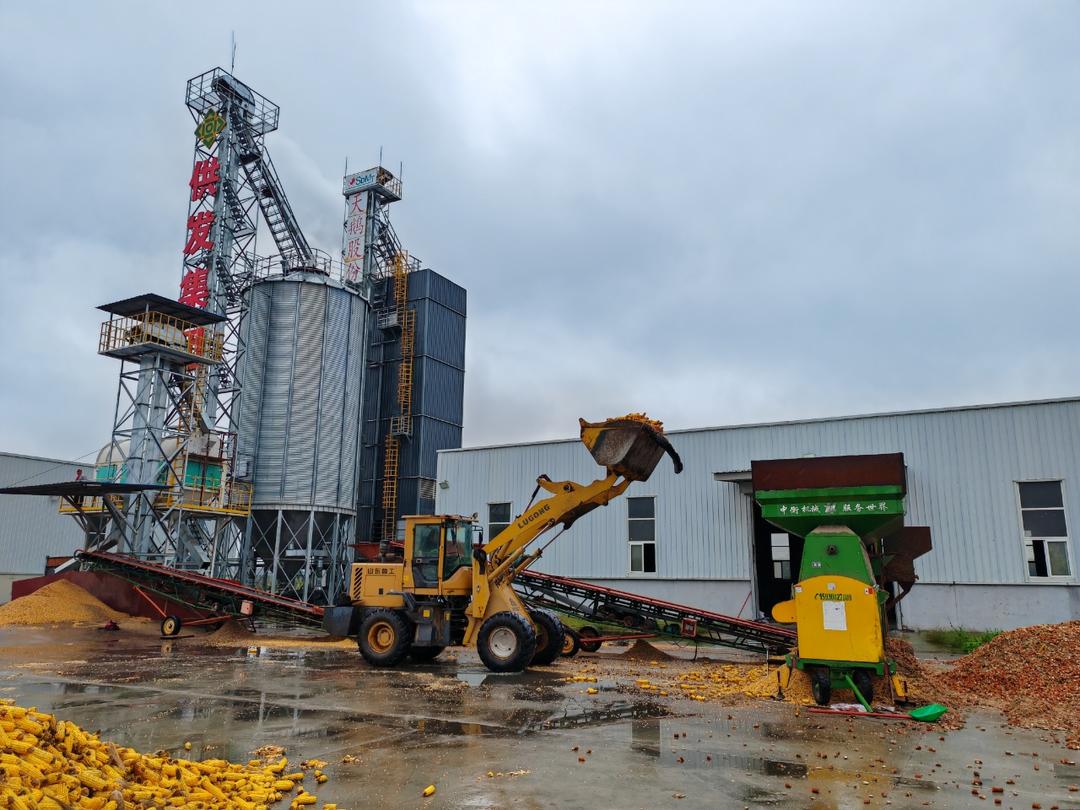
Core Insights - The article highlights the challenges faced by farmers in Hubei Yichang during the rice harvesting season due to adverse weather conditions, including high temperatures and continuous rain [1][4] - The implementation of dense planting technology has been promoted to increase rice yield, demonstrating significant improvements in crop performance and efficiency [4][5] Group 1: Weather Challenges - Farmers experienced prolonged high temperatures and low rainfall during the critical growth period of rice, leading to concerns about crop quality and yield [1] - The subsequent rainy weather before harvest added to the difficulties, causing delays in the drying process of the rice [1] Group 2: Agricultural Innovations - The introduction of dense planting technology aims to enhance rice production by increasing plant density and utilizing drought-resistant varieties [4][5] - Farmers reported an increase in yield, with one farmer noting an average production of over 1200 pounds per acre, which is 300 pounds more than the previous year [5][6] Group 3: Technological Integration - The use of the Beidou navigation system in agricultural machinery has improved operational efficiency, allowing for precise planting and harvesting [5][6] - The cooperative has invested in advanced machinery, including high-speed transplanters, to optimize planting density and ensure better crop outcomes [5][6] Group 4: Economic Impact - The farmer anticipates a gross income of over 300,000 yuan from 175 acres, with a net income of around 160,000 yuan after expenses [6] - The local government has been actively promoting mechanized harvesting services across 500,000 acres of rice fields, enhancing productivity and efficiency in the region [6]
发挥供销合作社功能稳产增收
Jing Ji Ri Bao· 2025-10-07 22:07
Core Insights - The article highlights the efforts of agricultural cooperatives in China to enhance the efficiency of agricultural production and sales, ensuring farmers can convert their harvests into income effectively [1][2][3][4][5]. Group 1: Agricultural Services and Innovations - Agricultural cooperatives are leveraging technology and innovative farming techniques to improve crop yields, such as the "corn dense planting precision control high-yield technology," which has resulted in an average yield of 1200 kg per mu despite adverse weather conditions [1]. - The "three-party co-farming" model promoted by cooperatives in Chongqing has revitalized abandoned land by ensuring shared management and risk among cooperatives, village collectives, and farmers [2]. - The integration of digital tools and mechanization in agricultural services is reducing costs and enhancing productivity for small farmers, addressing the challenge of labor shortages [2]. Group 2: Supply Chain and Market Access - The establishment of a modern circulation service network by the All-China Federation of Supply and Marketing Cooperatives aims to streamline the flow of agricultural products and better meet urban consumer demands [3]. - Mobile service vehicles launched in Hunan province are improving market access for farmers in remote areas, facilitating the sale of products like kiwifruit that previously faced distribution challenges [3]. - E-commerce platforms are becoming vital for agricultural product sales, with initiatives like the "Celebrating Harvest Supply and Marketing Cooperative Helping Farmers Increase Income" online activity showcasing nearly 2800 quality agricultural products [4]. Group 3: Community Engagement and Events - Various local events and festivals are being organized to celebrate the harvest season, promoting regional agricultural products and enhancing community engagement through cultural activities [5]. - The integration of agricultural markets with local events, such as cycling competitions, is creating new consumer experiences and boosting sales for local farmers [5]. - The overall trend indicates a growing synergy between agriculture, culture, and tourism, contributing to rural revitalization and economic development [5].