
减税降费

Search documents
阶段性提高地方财政留用比例,新增1100亿全部留给县级,减免出租车“份子钱”……国务院再出大招
Mei Ri Jing Ji Xin Wen· 2025-11-24 08:07
Core Points - The State Council meeting, chaired by Premier Li Keqiang, focused on enhancing the "six stability" work coordination mechanism to effectively respond to the pandemic's impact and promote stable economic and social operations [1] - Measures were determined to support the transportation and logistics industries, including tax reductions and financial support for local governments to ensure basic livelihoods and operational capabilities [1][5] Group 1: Support for Taxi Drivers - The meeting emphasized the need to assist taxi drivers who have faced significant income reductions due to decreased passenger numbers during the pandemic [3] - As of the end of 2018, there were 1.39 million taxis in China, completing 35.2 billion passenger trips, which accounted for 28% of the national urban passenger transport volume [3] - The government encouraged local authorities to implement temporary reductions in the "commission fees" that taxi drivers must pay to taxi companies, alleviating financial pressure on drivers [3][4] Group 2: Financial and Tax Relief Measures - The meeting proposed to increase the local fiscal retention ratio by 5 percentage points from March 1 to June 30, resulting in an additional 110 billion yuan allocated for county-level use [1] - Insurance companies are encouraged to provide relief by extending insurance periods and allowing deductions for insurance fees for vehicles, ships, and aircraft that were not in operation during the pandemic [4] - A series of tax reductions and fee exemptions were announced, including a 50% reduction in land use tax for warehouse land and the exemption of port construction fees for import and export goods until June 30 [10][11]

上市公司贡献全国两成多税收,平均综合税负约5.6%
Di Yi Cai Jing· 2025-11-15 10:16
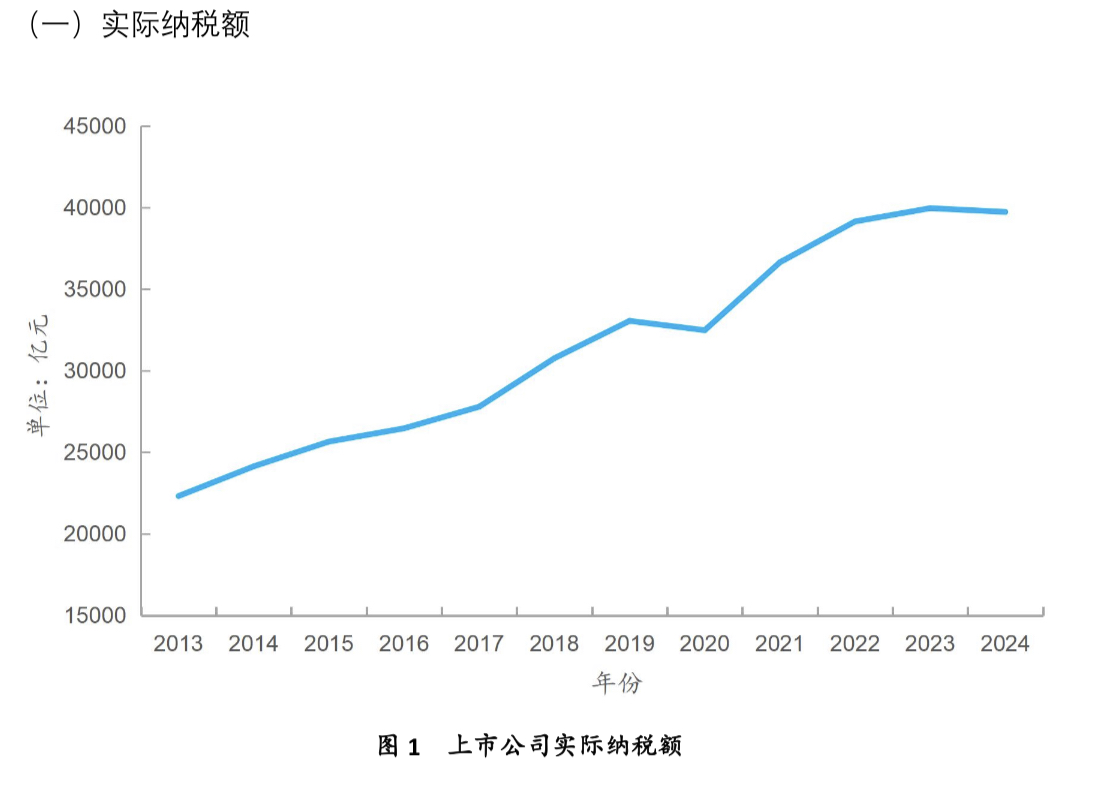
Core Insights - The report reveals that in 2024, 5,091 listed companies in China contributed approximately 39,727 billion yuan in actual tax payments, remaining stable compared to 2023, accounting for about 22.7% of the national tax revenue [1][2] Group 1: Tax Contributions and Distribution - The top 100 listed companies contributed around 73% of the total tax payments, indicating a significant concentration of tax contributions among a small percentage of companies [3] - Major contributors include China National Petroleum (3,961 billion yuan) and Sinopec (3,313 billion yuan), followed by major banks and companies like Agricultural Bank of China and China Mobile, each exceeding 1,000 billion yuan in tax payments [3] - The average tax payment per listed company was 7.8 million yuan, with a median of 0.53 million yuan [4] Group 2: Industry Contributions - The mining, financial, and manufacturing sectors accounted for nearly 77% of the total tax contributions from listed companies, with the mining sector alone contributing about 1 trillion yuan [4][9] - The manufacturing sector saw the highest growth in tax contributions, increasing by approximately 226 million yuan, while the real estate sector experienced the largest decline at -28% [9] Group 3: Ownership Structure and Tax Burden - State-owned enterprises represented about 30% of listed companies but contributed nearly 80% of the total tax payments, highlighting the dominance of state-owned firms in tax contributions [9] - The average tax burden for listed companies has decreased to approximately 5.6% in 2024, down from 8.9 yuan per 100 yuan of revenue in 2015, reflecting the impact of tax reduction policies [10] - The mining and financial sectors had the highest tax burden per 100 yuan of revenue, at around 12 yuan, while the manufacturing sector had a lower burden of about 4 yuan [10] Group 4: Emerging Sectors - Companies related to digital currency and digital government concepts had relatively low tax contributions, indicating potential for growth in tax contributions from these sectors [11]



政策“红包”精准直达 重庆样本让市场主体轻装前行
Zhong Guo Jing Ying Bao· 2025-11-06 15:34
Core Viewpoint - The article highlights the improvements in tax administration and services in Chongqing, particularly focusing on the convenience of cross-regional tax handling and the introduction of intelligent self-checking for tax declarations, which significantly benefit businesses and enhance operational efficiency [1][2][3]. Group 1: Cross-Regional Tax Handling - Chongqing's tax authorities have implemented measures to facilitate cross-regional tax matters, including the launch of a "remote virtual window" for online interactions between tax officials and taxpayers, enhancing service efficiency [2][3]. - From January to September 2023, Chongqing's tax department handled 33,900 cross-regional service interactions and processed 94,600 cross-regional tax transactions through the "remote virtual window" [3]. - The average processing time for tax matters related to cross-provincial migration has been reduced by 5 to 10 days, with 310 taxpayers successfully completing their cross-provincial migration during the same period [3]. Group 2: Intelligent Self-Checking for Tax Declarations - The introduction of intelligent self-checking for tax declarations aims to improve accuracy and reduce the burden on small and medium-sized enterprises, allowing them to identify and correct errors before submission [4][5]. - As of September 2023, the pilot program for intelligent self-checking in Chongqing has assisted 12,047 taxpayers, with 646 cases identified for correction, demonstrating its effectiveness in enhancing compliance [4][5]. - This system replaces traditional manual checks, reducing the risk of errors and potential penalties for taxpayers, while also alleviating the workload of tax officials [5].
“花儿临夏”经济社会发展背后的国库力量 中国人民银行临夏州分行经理国库40周年发展纪实
Jin Rong Shi Bao· 2025-11-06 03:33
Core Viewpoint - The article highlights the significant progress and achievements of the Linxia Prefecture Treasury in improving financial services, supporting local economic development, and enhancing the well-being of its residents over the past 40 years. Group 1: Historical Development - The treasury's operations began with manual bookkeeping and have evolved to a highly efficient electronic system, achieving over 99.5% electronic processing rate for non-tax revenue and refund transactions [2] - The implementation of the TIPS system in 2006 enabled 100% coverage of financial and tax connections across all 8 counties in Linxia Prefecture [2] Group 2: Poverty Alleviation and Social Welfare - Linxia Prefecture was once a deeply impoverished area, with a poverty rate of 32.5% in 2013. Collaborative efforts led to the successful eradication of absolute poverty in the region [3] - Since 2021, the treasury has facilitated the disbursement of 16.0584 million yuan in livelihood funds to support rural revitalization efforts [3] Group 3: Financial Services and Economic Support - The treasury has actively promoted savings bonds as a tool for rural revitalization, achieving sales of 16.0306 million yuan in 2024, a 51.7% increase year-on-year [4] - In 2022, the treasury processed a total of 652 million yuan in tax refunds, including 462 million yuan in VAT refunds, benefiting 696 enterprises [5] Group 4: Risk Management and Regulatory Oversight - The treasury has established a multi-faceted analysis system to enhance its role in macroeconomic decision-making, providing regular reports on treasury fund operations to local governments [7] - A proactive risk monitoring system has been implemented to track key financial indicators, aiding in the prevention of local fiscal and financial risks [7] Group 5: Future Outlook - The Linxia Prefecture Treasury aims to continue its commitment to serving the public and supporting local economic development, focusing on innovation and responsibility in its operations [8]
大国五年丨国家账本,见证“民生为大”
Xin Hua She· 2025-10-28 03:23
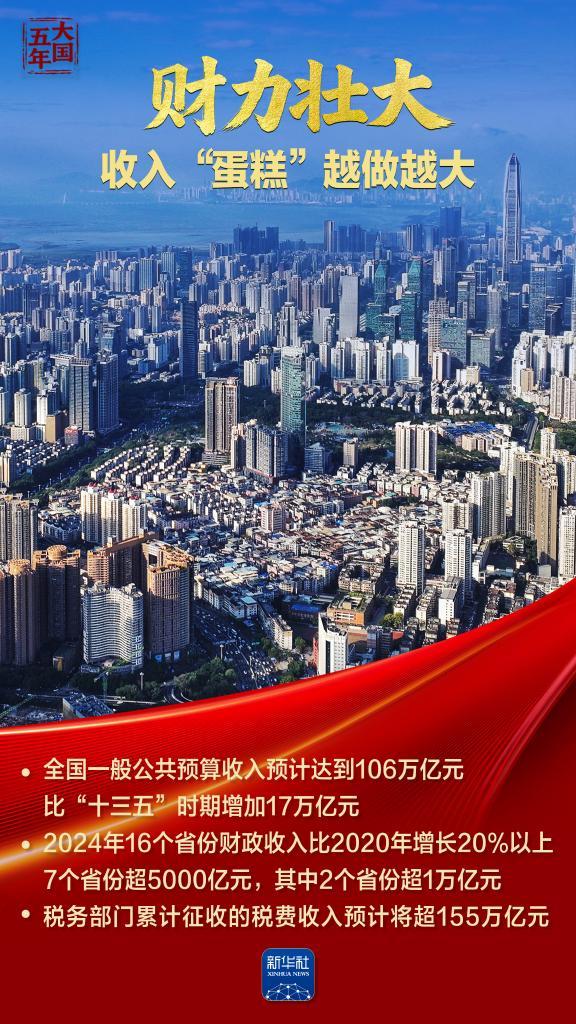
Core Insights - The article highlights the significant achievements of China's "14th Five-Year Plan" in building extensive public service systems, including education, social security, and healthcare, emphasizing the focus on people's well-being and shared development outcomes. Financial Overview - The national general public budget revenue is expected to reach 106 trillion yuan, an increase of 17 trillion yuan compared to the "13th Five-Year Plan" period [3] - Tax revenue collected by tax authorities is projected to exceed 155 trillion yuan [4] Expenditure Allocation - The national general public budget allocates 20.5 trillion yuan for education, 19.6 trillion yuan for social security and employment, 10.6 trillion yuan for health services, and 4 trillion yuan for housing security [6] - Total public budget expenditure over five years is expected to exceed 136 trillion yuan, an increase of 26 trillion yuan compared to the "13th Five-Year Plan" [8] - Over 70% of fiscal spending during the "14th Five-Year Plan" period is directed towards people's livelihoods, with nearly 100 trillion yuan allocated for this purpose [8] Education Investment - National fiscal education funding is projected to exceed 25 trillion yuan during the "14th Five-Year Plan" [10] - The proportion of national fiscal education funding to GDP has remained above 4% for over a decade [10] - Approximately 1.5 billion students benefit from national scholarships and grants, with around 130 billion yuan allocated annually [10] Healthcare System - The number of individuals participating in basic medical insurance has reached 1.327 billion, with a stable coverage rate of around 95% [12] - There are 1.09 million medical institutions, with over 90% of residents able to access medical services within 15 minutes [12] - The annual financial subsidy for residents' medical insurance has increased from 580 yuan to 700 yuan [12] Social Security Framework - The total revenue and expenditure scale of the three social insurance funds is 69.27 trillion yuan [16] - Over 1.07 billion people are enrolled in basic pension insurance, and more than 45 million people receive basic living assistance [16] - The minimum living standards for both rural and urban residents have increased by approximately 20% [16] Tax and Fee Reductions - Cumulative tax and fee reductions during the "14th Five-Year Plan" are expected to reach 10.5 trillion yuan [18] - New tax and fee reductions focused on supporting technological innovation and advanced manufacturing amount to 3.6 trillion yuan [18] - Over 1 billion taxpayers applied for tax refunds totaling more than 130 billion yuan [18] Employment Support - Central government employment support funding is set at 318.6 billion yuan, a 29% increase from the "13th Five-Year Plan" [19] - By the end of August, approximately 420 billion yuan was allocated to stimulate sales of various goods, exceeding 2.9 trillion yuan [19]
减税降费为高质量发展注入强动力
Jing Ji Ri Bao· 2025-10-27 22:45
Group 1: Tax Policies and Economic Impact - The total tax reductions and refunds supporting technological innovation reached 1.3336 trillion yuan, while those supporting manufacturing amounted to 1.2925 trillion yuan from January to August this year, indicating a strong focus on key areas for high-quality development [1] - The cumulative new tax reductions and refunds during the "14th Five-Year Plan" period are expected to reach 10.5 trillion yuan, with export tax refunds exceeding 900 billion yuan, significantly promoting economic and social improvement [3] - Manufacturing sales revenue increased by 4.7% year-on-year in the first three quarters, accounting for 29.8% of total enterprise sales revenue, demonstrating the sector's vital role in economic growth [3] Group 2: Technological and Industrial Development - The sales revenue of the research and technology service industry grew by 22.3% year-on-year, while high-tech industries and equipment manufacturing saw revenue increases of 15.2% and 9%, respectively, indicating rapid growth in new productive forces [4] - The average processing time for tax-related services has been reduced to 2 minutes, showcasing the efficiency improvements in tax administration through data integration and targeted policy delivery [2] Group 3: Personal Income Tax Reforms - From 2021 to 2024, tax reductions in areas such as pension, childcare, healthcare, and education are expected to grow by 11.7% annually, contributing to improved living standards [5] - The number of individuals benefiting from special deductions in personal income tax increased by 55%, with the total tax reduction amount rising from 116 billion yuan in 2020 to nearly 300 billion yuan this year [5] Group 4: Green Development Initiatives - The green tax system has been enhanced, with specialized taxes generating 2.5 trillion yuan in revenue from 2021 to June this year, and tax reductions for green development policies amounting to 1.5 trillion yuan [8] - The sales revenue of high-energy-consuming manufacturing sectors decreased by 1.4 percentage points year-on-year, while spending on energy-saving and environmental protection services increased by 34%, reflecting a shift towards greener practices [11]
9月核心CPI回到1%,央行开展6000亿逆回购 | 财经日日评
吴晓波频道· 2025-10-16 00:30
Economic Indicators - In September, China's CPI showed a slight year-on-year increase of -0.3%, with the core CPI rising to 1.0%, marking the first time in 19 months it has reached this level [2] - The PPI decreased by 2.3% year-on-year, but the decline was less severe than in previous months, indicating a potential stabilization in industrial prices [3] Monetary Policy - The central bank conducted a 600 billion yuan reverse repurchase operation to maintain liquidity in the banking system, with a total of 4 trillion yuan in reverse repos planned for October [4] - The need for fiscal stimulus is increasing as macroeconomic recovery shows signs of slowing, with expectations for potential interest rate cuts or reserve requirement ratio reductions in the fourth quarter [5] Global Economic Outlook - The IMF has raised its global economic growth forecast to 3.2% for 2025, citing reduced trade uncertainties due to new agreements, particularly between the US and other countries [6] - Global inflation is expected to decline, with the IMF projecting a drop to 4.2% by 2025, although disparities exist between different regions [7] Smartphone Market - Global smartphone shipments grew by 3% in Q3 2025, driven primarily by leading manufacturers like Samsung and Apple, with Apple achieving a 4% increase in iPhone sales [8] - The demand for smartphones is being supported by new product launches, although overall market recovery remains limited [9] Manufacturing Sector - The Chinese government has implemented tax reductions and refunds totaling approximately 1.3 trillion yuan to support the manufacturing sector, which has seen a 4.7% increase in sales revenue year-on-year [10] - Despite short-term impacts on tax revenue, these measures are expected to enhance the resilience and vitality of economic growth in the long run [11] Automotive Industry - JD.com is set to launch a new car in collaboration with GAC Group and CATL, with a price range of 100,000 to 120,000 yuan, aiming to leverage its e-commerce platform for sales [12] - The automotive market remains challenging for online sales, as previous attempts by JD.com have not yielded significant success [13] Retail Innovations - Walmart is partnering with OpenAI to allow customers to shop directly through ChatGPT, indicating a shift towards integrating AI in retail [14] - This collaboration may pave the way for broader applications of AI across various sectors, although the effectiveness of this model remains to be validated [15] Stock Market Performance - On October 15, the Shanghai Composite Index rose by 1.22%, reflecting a recovery in the market driven by policies aimed at boosting domestic demand [16] - The automotive sector has shown significant growth, with various economic indicators indicating a positive trend in the industry [16]





前三季度全国制造业销售收入同比增长4.7%
Xin Hua She· 2025-10-15 04:07
Core Insights - The manufacturing sector in China has shown a year-on-year sales revenue growth of 4.7% in the first three quarters, contributing significantly to the national economic growth [1] - The transition towards high-end manufacturing is accelerating, with equipment manufacturing sales revenue increasing by 9%, and specific sectors like computer communication equipment and industrial mother machines seeing growth rates of 13.5% and 11.8% respectively [1] - The intelligent transformation of the manufacturing industry is evident, with a 10.6% increase in digital technology procurement, and smart device manufacturing, including robots and drones, growing by 23.6% [1] - The green transformation in manufacturing is progressing, with high-energy-consuming manufacturing's revenue share decreasing by 1.4 percentage points, and a 34% increase in procurement of energy-saving and environmental protection services [1] - Tax reduction and fee exemption policies have provided substantial financial relief to manufacturing enterprises, amounting to 12,925 billion yuan in the first eight months of the year [2] Group 1 - Manufacturing sales revenue accounted for 29.8% of total national enterprise sales, highlighting its importance in economic support [1] - Key sectors such as aircraft, high-speed trains, and deep-sea oil drilling equipment have seen significant sales revenue growth of 12.5%, 16.1%, and 20.8% respectively [1] - The implementation of tax policies has resulted in a total of 4,857 billion yuan in tax benefits from R&D expense deductions and reduced corporate income tax rates for high-tech enterprises [2] Group 2 - The manufacturing sector's investment in digital technologies is a crucial factor in its ongoing transformation and modernization [1] - The reduction in the share of high-energy-consuming manufacturing indicates a shift towards more sustainable practices within the industry [1] - The overall support from tax policies is seen as a vital element in promoting the high-quality development of the manufacturing sector, which is essential for the broader economic growth [2]
减税降费释放动能:前三季度制造业销售收入增长4.7%
Zheng Quan Shi Bao Wang· 2025-10-15 02:50
Core Insights - The manufacturing sector in China is experiencing positive growth, with sales revenue increasing by 4.7% year-on-year in the first three quarters, accounting for 29.8% of total enterprise sales revenue [1][2] Group 1: Manufacturing Sector Performance - In the first three quarters, the sales revenue of the equipment manufacturing industry grew by 9%, representing 46.9% of the manufacturing sector [1] - Key industries such as computer communication equipment and industrial mother machines saw sales revenue growth of 13.5% and 11.8% respectively [1] - Significant growth was observed in major equipment sectors, with sales revenue for aircraft, high-speed trains, and deep-sea oil drilling equipment increasing by 12.5%, 16.1%, and 20.8% respectively [1] Group 2: Technological and Green Transformation - The investment in digital technology by manufacturing enterprises increased by 10.6% year-on-year, facilitating the upgrade of smart manufacturing sectors [1] - The smart equipment manufacturing sector, including robots and drones, experienced a substantial growth of 23.6% [1] - The share of high-energy-consuming manufacturing industries decreased by 1.4 percentage points to 28.9%, while spending on energy-saving and environmental protection services rose by 34% [1] Group 3: Tax Revenue and Financial Support - Tax reductions and refunds amounting to 1,292.5 billion yuan have alleviated the financial burden on enterprises, supporting high-quality development in the manufacturing sector [2] - Manufacturing tax revenue grew by 5.8% year-on-year in the first three quarters, with high-end manufacturing sectors like new energy vehicles and aerospace seeing tax revenue increases of 49.7% and 31.4% respectively [2] - The profitability of industries such as steel and non-ferrous metals improved, leading to corporate income tax growth of 11.7% and 32.2% respectively [2]
X @外汇交易员
外汇交易员· 2025-10-15 02:22
Tax Reduction and Fee Reduction - The State Taxation Administration data shows that the main policies supporting manufacturing development in the current policy reduced taxes and fees by 1292.5 billion yuan in the first eight months [1] Manufacturing Sales Revenue - In the first three quarters of this year, manufacturing sales revenue increased by 4.7% year-on-year [1] - Manufacturing sales revenue accounted for 29.8% of the country's enterprise sales revenue [1]