微短剧精品化

Search documents
微短剧何以精微致远
Bei Jing Qing Nian Bao· 2025-07-10 23:33
Core Insights - The micro-short drama industry is experiencing unprecedented policy and market opportunities, as evidenced by the high-profile "Chasing Light Plan" international competition and government support initiatives [1] - However, creators are facing challenges such as content homogenization leading to viewer fatigue and declining willingness to pay, indicating a shift from a growth phase to a more mature stage [1][2] - The industry is transitioning from a focus on rapid content consumption to a balance between artistic quality and commercial viability, emphasizing the importance of meaningful storytelling [1][3] Development Status - The supply of micro-short dramas has surged, with platforms like Red Fruit and "iQIYI" having a total inventory of 40,000 dramas, but effective viewership growth has slowed from 44% in February to 4.7% in June [2] - The industry is moving towards a new ecosystem where both long and short dramas coexist, with annual investments exceeding 300 billion yuan for long dramas and over 120 billion yuan for short dramas [2] - The focus has shifted from mere traffic to content that resonates emotionally with audiences, as highlighted by industry leaders [2] Creative Challenges - The phenomenon of "viewer fatigue" is emerging as a significant issue, with many viewers losing interest in the previously engaging fast-paced content [3] - The traditional model of content creation is being abandoned, with platforms reporting low script acceptance rates of 2-3% despite receiving over a thousand scripts weekly [3] - The industry is evolving towards a narrative structure that emphasizes character development over plot-driven storytelling, as seen in successful works like "Good Girl" [4] Platform Support - Platforms like iQIYI are categorizing micro-short dramas into vertical and horizontal formats, adapting their content strategies to prioritize quality over quantity [5] - iQIYI is focusing on IP adaptations to combat content homogenization, integrating nearly 30,000 novel IPs into their offerings [5] - Tencent Video is promoting a brand called "Ten-Minute Short Dramas," emphasizing high-quality content and user-centric emotional expression [6] Policy Support - Beijing's government is implementing strategies to promote high-quality micro-short dramas, with 120 dramas selected for national awards in 2024 [7] - The city is also fostering the development of a network audiovisual industry park, aiming for a production value exceeding 1 billion yuan by 2024 [8] - New policies are encouraging international outreach for micro-short dramas, with financial incentives for translation and copyright export [8] National Market Overview - The micro-short drama market in China is projected to reach 50.44 billion yuan in 2024, with a year-on-year growth of 34.9%, surpassing total box office revenues for films [11] - Beijing accounts for approximately 66% of the national market, with a production value of about 33.62 billion yuan [11] - The user demographic in Beijing shows a predominance of female viewers, with a significant portion of the audience aged 25-34 [11] Technological Innovation - The integration of AIGC (Artificial Intelligence Generated Content) is transforming the production process, reducing costs by over 30% and enabling new content forms [12] - The industry is witnessing a rise in creators utilizing AI for scriptwriting and production, indicating a shift towards democratized content creation [9] - Future developments may include AI-generated characters and personalized content tailored to individual viewers [10]


短剧大咖:当单部成本破200万,为“产品”找买家不丢人
第一财经· 2025-06-28 06:15
Core Viewpoint - The short drama industry is undergoing a transformation towards premiumization and commercialization, driven by user demands and innovative revenue models such as e-commerce integration [1][3]. Group 1: Industry Trends - The micro-short drama market in China is projected to exceed 500 billion yuan by 2024 and surpass 1 trillion yuan by 2027, indicating rapid growth and increasing competition [3]. - Platforms like Xiaohongshu are entering the short drama space, with successful launches such as the hit short drama "The Fool's Love," which garnered nearly 80 million views [3][4]. - The industry is shifting from amateur to professional production teams, emphasizing quality and content upgrade as key factors for success [4][5]. Group 2: Premiumization and Content Quality - Premiumization is not merely about increasing production budgets but involves enhancing all aspects of content creation, including scriptwriting, filming, and post-production [4][6]. - Industry leaders believe that the future of micro-short dramas lies in building original IPs rather than relying on adaptations of existing long dramas [5][10]. Group 3: Revenue Models and Profitability - The profitability of successful short dramas can reach 30 to 40 times their production costs, but there is a stark contrast between hit and non-hit dramas in terms of profitability [8][9]. - The industry is exploring replicable models for creating hits, focusing on unique storytelling and value propositions rather than mere imitation [9]. - E-commerce integration within short dramas is emerging as a significant revenue stream, allowing for direct sales through content, which could substantially increase income for production teams [10][11].


微而不弱 短而益精
Ren Min Ri Bao· 2025-06-11 08:18
Core Viewpoint - The micro-drama "Lion City Mountains and Seas" has successfully concluded, showcasing the struggles and achievements of the Chinese community in Southeast Asia, while emphasizing the enduring spirit of Chinese culture in the region [1] Group 1: Production Quality - "Lion City Mountains and Seas" has been produced with a significant investment exceeding 100 million, aiming for high-quality production that aligns with long-form dramas and films [1] - The drama was filmed entirely overseas, with 95 days of shooting in Malaysia and the creation of over 24,000 square meters of historical cultural streets, enhancing the authenticity of the Southeast Asian setting [1] Group 2: Narrative and Themes - The series reflects the arduous journey of the first Chinese immigrants to Southeast Asia, portraying their struggles and the realities of that time, ultimately narrating a passionate history of overseas Chinese perseverance [1] - The concluding message of the series emphasizes the enduring spirit of hard work, unity, courage, and resilience among the Chinese community, which serves as a foundational ethos for their global presence [1] Group 3: Industry Context - The micro-drama format has rapidly developed in recent years but has faced criticism, leading to new regulations aimed at enhancing quality and guiding the industry towards a more refined direction [1][2] - "Lion City Mountains and Seas" stands out as a valuable exploration of quality in the micro-drama genre, combining the fast-paced nature of micro-dramas with a more substantial viewing experience akin to long-form series [2] Group 4: Challenges and Opportunities - Despite its successes, "Lion City Mountains and Seas" faces challenges such as insufficient character motivation development and pacing issues in the latter half of the narrative [2] - The micro-drama industry must navigate the balance between storytelling efficiency and audience engagement, striving to create a new narrative framework that resonates with viewers [2]

从三座城市看微短剧精品化(大数据观察)
Ren Min Ri Bao· 2025-05-14 22:41
Core Viewpoint - The micro-short drama industry is rapidly evolving, facing challenges such as content quality and growth management, prompting regulatory bodies to promote professional and high-quality development [2] Group 1: Industry Trends - Micro-short dramas are characterized by their small size, fast pace, and dense plots, making them a vibrant and promising new form of online art [2] - In Xi'an, 60 out of every 100 micro-short dramas in China are produced, with a growing trend towards focusing on realistic themes that resonate with audiences [3] - The micro-short drama industry in Xi'an generated revenue of 160 million yuan last year, supported by a complete industrial chain and continuous content innovation [4] Group 2: Regional Developments - In Zhengzhou, the local government has implemented policies to accelerate the high-quality development of the micro-short drama industry, resulting in an average daily output of 4.3 micro-short dramas [6][7] - The establishment of filming bases in Zhengzhou has led to increased local participation, with many villagers becoming actors and contributing to the local economy [8] - In Dongyang, the transformation of the Hengdian Film and Television City into a micro-short drama filming base has attracted numerous production teams, with over 780 teams visiting in the first quarter of this year [10] Group 3: Technological Innovations - Companies like Yunxiang Technology are utilizing AI to enhance scriptwriting and production efficiency, significantly reducing post-production time from three days to five hours [7] - The integration of technology in micro-short drama production is helping to improve content quality and production speed, making the industry more competitive [10] Group 4: Government Support - The Shaanxi Provincial Broadcasting and Television Bureau has established funding to support the micro-short drama industry, aiming to produce over 200 high-quality dramas in the next two years [5] - Zhengzhou's government has introduced financial subsidies and expedited approval processes to bolster local micro-short drama enterprises [6]
陕西西安、河南郑州、浙江东阳挖掘各自优势 从三座城市看微短剧精品化(大数据观察)
Ren Min Ri Bao· 2025-05-14 21:53
Core Viewpoint - The micro-short drama industry is rapidly developing in China, facing challenges such as content quality and the need for professionalization, prompting government support for high-quality production and industry growth [1][2]. Group 1: Industry Development - Micro-short dramas are characterized by their small size, fast pace, and dense plots, becoming a vibrant and potential new form of online art [1]. - The National Radio and Television Administration has issued a notice to promote the professionalization and quality development of the micro-short drama industry [1]. - In 2022, the micro-short drama industry in Xi'an generated revenue of 160 million yuan [3]. Group 2: Regional Highlights - Xi'an is a major production hub, with 60 out of every 100 micro-short dramas produced there, focusing increasingly on realistic themes [2]. - In Zhengzhou, the local government has implemented supportive policies, resulting in an average daily output of 4.3 micro-short dramas [5]. - In Zhejiang, the Hengdian Film and Television City has transformed into a micro-short drama shooting base, accommodating over 780 drama crews in the first quarter of this year [8][9]. Group 3: Technological Innovation - Companies like Yunxiang Technology are utilizing AI to enhance scriptwriting and production efficiency, with 24 micro-short dramas released in the first quarter of this year, five of which exceeded 100 million views [2][3]. - Zhengzhou's AI editing system has reduced post-production time from three days to five hours, significantly improving production efficiency [6]. Group 4: Community Engagement - In Zhengzhou, local villagers are participating as actors in micro-short dramas, contributing to their income and community engagement [4][7]. - The filming of micro-short dramas has increased local tourism, with a 30% rise in visitors to scenic spots like the Songshan area due to related productions [6]. Group 5: Government Initiatives - The Shaanxi Provincial Radio and Television Bureau has established funding to support the micro-short drama industry, aiming to produce over 200 quality dramas in two years [3]. - Zhejiang plans to create around 40 excellent cultural tourism micro-short dramas this year, integrating micro-short dramas with tourism [10].
微短剧投资过亿意味着什么(艺海观澜)
Ren Min Ri Bao· 2025-05-08 21:53
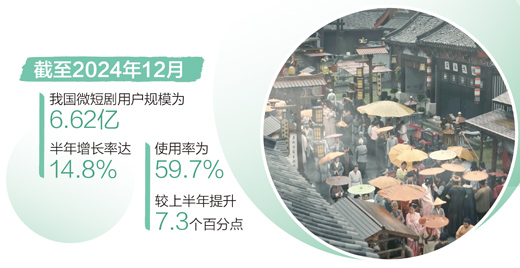
Core Insights - The production scale of micro-short dramas in China has significantly increased, with the recent release of the over 100 million yuan drama "Lion City Mountain Sea" marking a new milestone in investment levels [1][2] - The micro-short drama industry has surpassed a market scale of 50 billion yuan in the previous year, with expectations for continued growth [2] - The user base for micro-short dramas is projected to reach 662 million by the end of 2024, indicating a robust demand for this format [2] Group 1 - The rapid development of micro-short dramas is likened to a "quantum leap," reflecting a transformative change in the industry [1][2] - There is a growing consensus in the industry that transforming popular products into high-quality works is essential for long-term success [2][3] - The relationship between market growth and production investment is described as a positive feedback loop, where increased viewership attracts more funding and talent [2] Group 2 - The film industry is characterized as a "heavy industry" requiring substantial investment to ensure content quality, with historical examples of successful high-budget productions [3] - While there is excitement around high investment, creators are cautioned against focusing solely on investment figures and should prioritize quality in their work [3] - The diversity in production costs and styles is seen as a strength of the micro-short drama format, emphasizing that artistic value should not be solely determined by budget [3]
爱奇艺举办“精品微短剧创作论坛”,探索提质创新之道
Bei Ke Cai Jing· 2025-03-31 09:13
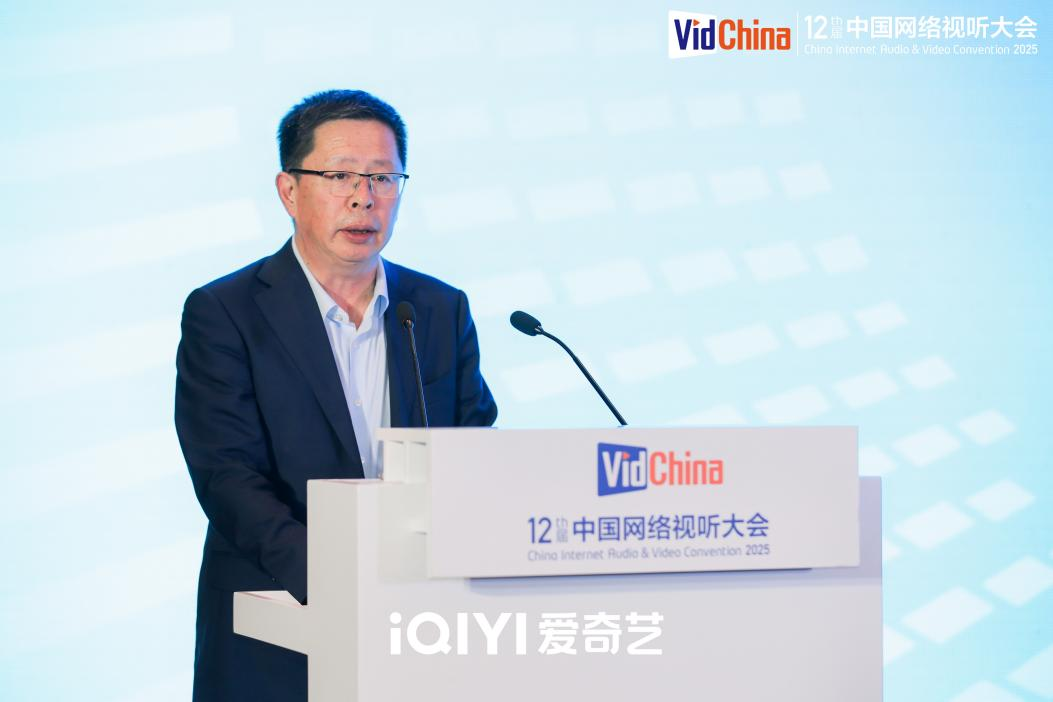
3月27日,爱奇艺主办的"精品微短剧创作论坛"在第十二届中国网络视听大会期间举行。国家广播电视总局网络视听节目管理司副司长杨铮,中国网络视听 协会副会长罗建辉,北京市广电局党组成员、副局长、一级巡视员张苏,中共北京市通州区委常委、宣传部部长侯健美,国家广播电视总局网络视听司内容 管理处处长曹云霞,爱奇艺高级副总裁杨海涛,爱奇艺影视文学研发中心总经理张晓媚,百度百家号内容运营负责人于轲,中国广视索福瑞媒介研究 (CSM)副总经理肖建兵,爱奇艺戏剧中心总经理李莉,长信传媒董事长、创始人郭靖宇,太合影业创始人、制片人娃娃,爱奇艺微剧业务总经理孙晨 阳,编剧酱油,欢乐时光影业剧集工作室总经理姚梦西,新媒体《影视独舌》总编辑李星文等各界嘉宾齐聚一堂,围绕微短剧内容创作的精品化路径带来各 自的见解。论坛现场气氛热烈,座无虚席,门口和过道均挤满听众,可见行业探求微短剧内容提质升级之道的迫切。 罗建辉认为,微短剧要实现"精耕细作",首先要坚持价值引领,深耕现实主义创作;其次要在叙事结构、视听语言和题材开发上强化创新驱动,打造差异化 精品;最后,构建良性生态,推动产业可持续发展。他说:"微短剧虽'微',但格局不能小;虽'短', ...
爱奇艺的微短剧创作方法论
Zhong Guo Jing Ying Bao· 2025-03-29 10:34
Core Viewpoint - iQIYI is significantly investing in micro-short dramas, positioning them as a key growth driver alongside traditional content formats [2][4]. Group 1: Micro-Short Dramas - iQIYI has categorized micro-short dramas into two types: micro-dramas (1-5 minutes) and short dramas (5-20 minutes) [2]. - The CEO of iQIYI, Gong Yu, highlighted that micro-dramas have become the third-largest channel on mobile platforms, following long dramas and movies [2]. - The company aims to enhance the quality and narrative structure of micro-short dramas, moving away from simplistic storytelling to more complex character development [3][5]. Group 2: Audience and Market Insights - The primary audience for micro-dramas consists of middle-aged individuals (31-40 years) and seniors (51+), with a significant presence in lower-tier markets [4]. - Viewers prefer mobile vertical viewing and seek emotional engagement through straightforward narratives, often reflecting cultural values [4]. - Over 90% of micro-drama viewers also watch short videos, indicating a strong overlap in viewing habits [5]. Group 3: Production and Creative Strategy - The production costs for micro-dramas have increased, with a focus on quality upgrades in various aspects such as lighting and direction [6]. - The narrative structure of micro-dramas is designed to be concise, focusing on a single core conflict to maintain viewer engagement [5][7]. - Short dramas, with a length of 5-20 minutes, are aimed at younger audiences (90s and 00s), providing quick emotional relief and social conversation topics [6][8]. Group 4: Commercial Model and Industry Trends - The commercial model for micro-short dramas is evolving, with a shift towards user-driven content and a focus on innovative storytelling [9]. - The integration of micro-short dramas with other sectors, such as tourism and branding, has shown promising results, enhancing their role as a connector in the industry [10]. - iQIYI is committed to developing long-term IPs and series to sustain viewer engagement and expand monetization opportunities [9][10].