环保化

Search documents
趋势研判!2025年中国儿童床垫行业发展背景、产需情况、市场规模及前景展望:随着消费升级和育儿观念革新,儿童床垫规模增长至179亿元[图]
Chan Ye Xin Xi Wang· 2025-07-19 02:36
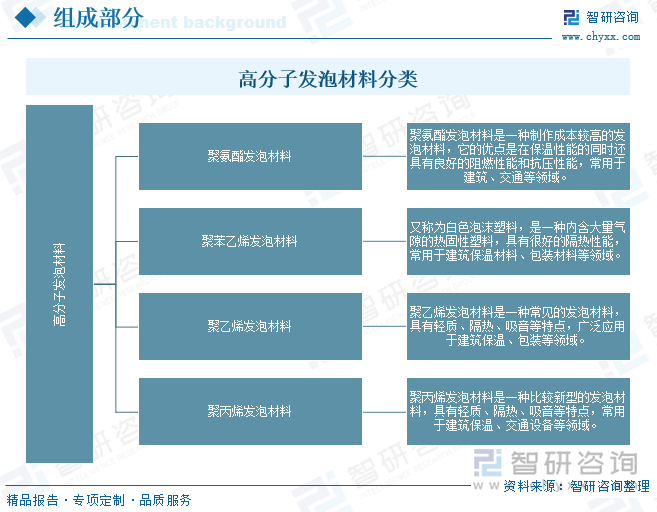
Core Insights - The children's mattress market in China is experiencing rapid growth, driven by rising income levels and evolving parenting concepts, with market size projected to increase from 9.216 billion yuan in 2015 to 17.908 billion yuan in 2024, representing a compound annual growth rate (CAGR) of 7.66% [1][17] - The demand for high-quality, functional, and safe products is expected to continue driving market expansion, particularly as younger generations of parents become the primary consumers [1][17] Industry Overview - Children's mattresses are designed to support the unique skeletal development of children, categorized into four growth stages: 1-5 years, 8-10 years, 11-13 years, and 14-18 years [3][5] - The industry includes various types of mattresses, such as spring, latex, palm, memory foam, and 3D material mattresses [3] Market Demand and Population Statistics - The total population of children aged 0-14 in China is projected to be 223 million in 2024, providing a solid foundation for the children's mattress market despite a slight decline from 2023 [7] - The demand for natural latex has been increasing, with production expected to reach approximately 371,400 tons in 2024, while demand is projected to grow from 700,800 tons in 2015 to 1,026,400 tons in 2024 [14] Policy Support - The Chinese government has implemented various policies to promote the replacement of old home furnishings, benefiting the children's mattress sector as part of the broader home improvement market [9][11] - Key policies include the "2025 Home Renovation 'Renewal' Work" and the "Consumption Promotion Special Action Plan," which aim to support green and intelligent home products [9][11] Industry Structure - The children's mattress industry has a well-established supply chain, including upstream raw material suppliers, midstream manufacturers, and downstream sales channels [12] - The rise of e-commerce has made online sales a significant channel for children's mattress distribution [12] Competitive Landscape - The industry consists of numerous manufacturers, with around 20 major companies producing over 200,000 mattresses annually [20] - Major brands include Xilinmen, Mousse, Mengbaihe, and others, with many companies focusing on mid-range products [20][21] Development Trends - The industry is moving towards smart technology integration, with future mattresses expected to incorporate sensors and AI for real-time monitoring and adjustment of sleep quality [27] - Environmental sustainability is becoming a fundamental requirement, with a shift towards using natural materials and reducing chemical additives in production [28] - There is a growing trend towards personalized products, with designs tailored to different age groups and preferences, enhancing consumer engagement [29]


研判2025!中国码垛机器人行业发展背景、市场规模、竞争格局及发展趋势:制造业转型升级,推动行业规模上涨16.78%[图]
Chan Ye Xin Xi Wang· 2025-07-17 01:18
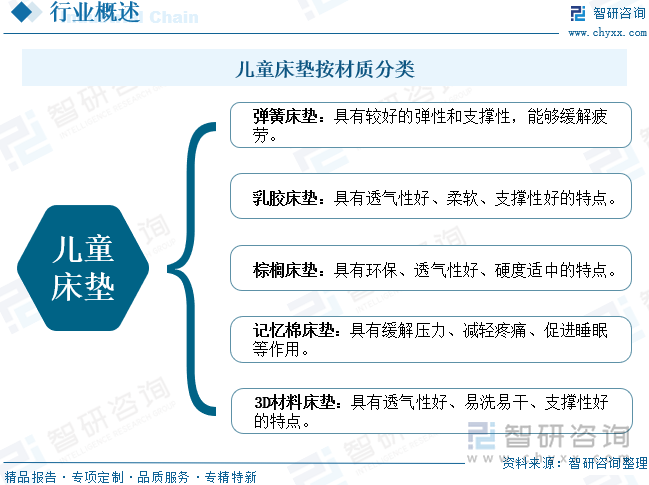
Core Viewpoint - The traditional manual stacking methods in industrial manufacturing are increasingly inadequate, leading to a shift towards automation in the stacking process, with palletizing robots becoming essential for enhancing production efficiency and safety [1][13]. Industry Overview - The palletizing robot is an automated device that mimics human arm movements for grabbing, transporting, and stacking items, integrating multiple technologies such as mechanics, electronics, and artificial intelligence [3]. - The working principle of palletizing robots involves three stages: perception, decision-making, and execution, utilizing various sensors to gather environmental data, process it to formulate optimal strategies, and execute tasks through mechanical arms [3]. Market Size and Growth - The market size of China's palletizing robot industry is projected to reach 31.52 billion yuan in 2024, representing a year-on-year increase of 16.78% [1][13]. - The rapid growth of the palletizing robot market is expected to continue as its applications expand across various sectors [1]. Industry Chain - The upstream of the palletizing robot industry includes the development and production of key components such as precision reducers, servo motors, and sensors, which are crucial for the robots' performance [9]. - The midstream consists of manufacturers that integrate these components into complete palletizing systems tailored to customer needs [9]. - The downstream encompasses various application fields, including food and beverage, chemicals, construction materials, and logistics, where palletizing robots play a vital role in material handling and storage [9]. Competitive Landscape - The palletizing robot market is experiencing a new wave of technological iteration and restructuring, with leading companies consolidating resources while emerging firms exploit market gaps through differentiated strategies [15]. - High-precision 3D vision systems and flexible gripping algorithms are becoming critical competitive differentiators [15]. Industry Trends 1. **Intelligent Development**: The industry is moving towards greater intelligence, enhancing human-machine interaction capabilities [20]. 2. **Integration**: There is a growing demand for multifunctional and versatile palletizing robots, necessitating a shift towards modular and integrated designs [21]. 3. **Environmental Responsibility**: The industry is increasingly focusing on environmental issues, with a trend towards eco-friendly technologies in palletizing robots [23].


2025年中国空调滤纸行业发展历程、市场规模、主要企业经营情况及发展前景展望:空调产业持续发展和消费者环保意识提升,空调滤纸行业规模超百亿元[图]
Chan Ye Xin Xi Wang· 2025-07-15 01:27
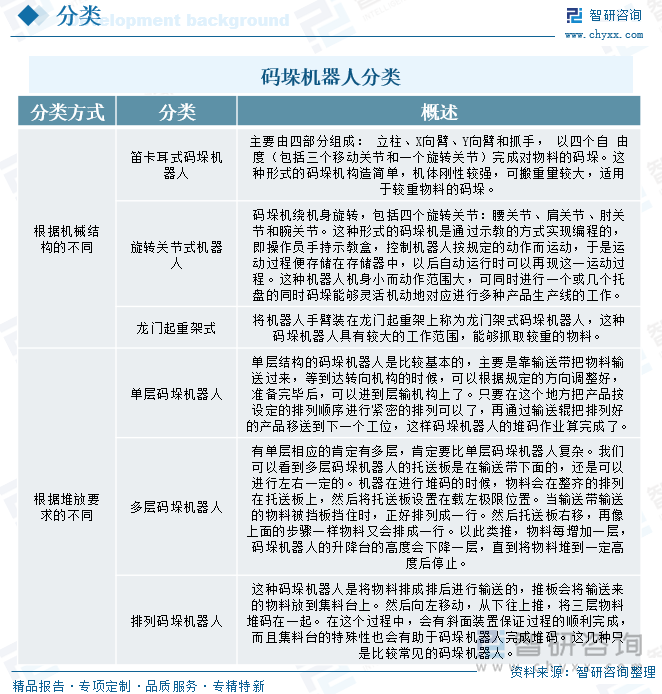
Core Insights - The air conditioning filter paper market in China is experiencing steady growth driven by urbanization and rising living standards, with market size expected to reach 10.355 billion yuan by 2024 [1][13] - The industry faced a decline in 2020 due to the COVID-19 pandemic, but has since rebounded significantly, surpassing 8 billion yuan in 2022 [1][13] - The market is characterized by technological innovation in filter materials and manufacturing processes, enhancing product performance and expanding application areas [1][9] Industry Overview - Air conditioning filter paper is essential for air filtration systems, effectively removing pollutants such as PM2.5 and harmful gases [3][10] - The industry has evolved through three stages: a nascent phase before 2000, rapid growth from 2000 to 2015, and a high-quality development phase from 2016 to present [5] - The current phase is marked by material innovation, functional integration, and smart technology applications [5][21] Market Dynamics - The air conditioning filter paper market is projected to grow from 8 billion yuan in 2022 to 10.355 billion yuan by 2024, driven by increased health awareness and consumption upgrades [1][13] - The production of air conditioning units in China is expected to rise from 178.6153 million units in 2017 to 265.984 million units by 2024, with a compound annual growth rate of 5.85% [10] Industry Structure - The industry features a diverse competitive landscape, with leading companies focusing on high-efficiency filter materials and forming strategic partnerships with major air conditioning manufacturers [15] - Key players include Chongqing Zaiseng Technology Co., Ltd., Hangzhou Special Paper Co., Ltd., and Shenyang Great Wall Filter Paperboard Co., Ltd., among others [15][16] Technological Barriers - The industry faces significant technological barriers in material research and production processes, requiring high levels of investment and expertise [21][24] - Environmental regulations are increasingly stringent, necessitating continuous improvements in production methods to reduce emissions [23][24] Future Trends - The industry is expected to focus on high-performance materials, smart technology integration, and environmentally friendly practices [25][26][27] - Innovations such as nanofiber materials and real-time monitoring capabilities are anticipated to enhance product efficiency and user experience [25][26]





2025年中国高分子防水卷材行业发展历程、产量、市场规模、重点企业及发展趋势研判:高分子防水卷材规模超200亿元,需求推动下市场前景可观[图]
Chan Ye Xin Xi Wang· 2025-07-05 23:44
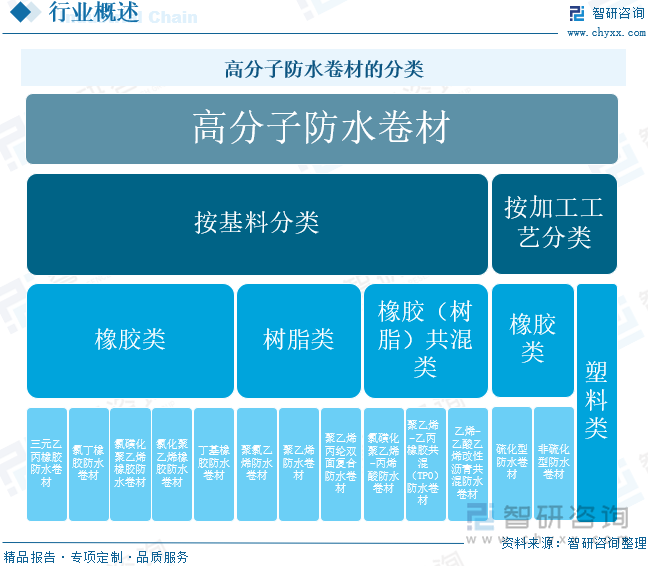
Industry Overview - Waterproof membranes are essential functional materials in the construction industry, comprising a significant part of the building materials industry. They mainly include SBS/APP modified bitumen waterproof membranes, self-adhesive membranes, and polymer waterproof membranes. Among these, polymer waterproof membranes are rapidly increasing their market share due to their durability, corrosion resistance, environmental friendliness, and ease of construction [1][18] - The market demand for polymer waterproof membranes has seen explosive growth due to accelerated urbanization and continuous investment in infrastructure. The market size for polymer waterproof membranes in China is projected to reach approximately 21.808 billion yuan in 2024 [1][18] Market Dynamics - The production of waterproof materials in China has maintained a steady growth rate of around 10% since 2015, with a significant increase in 2020 due to heightened demand. In 2023, the production of waterproof materials reached 5.81 billion square meters, a year-on-year increase of 19.16%. The production is expected to further increase to approximately 6.525 billion square meters in 2024 [14][15] - The polymer waterproof membrane market is expected to continue growing, supported by government policies favoring green building materials and increasing environmental regulations [1][18] Competitive Landscape - The market for polymer waterproof membranes in China is characterized by low concentration and a large number of companies. Major domestic players include Oriental Yuhong, Beixin Waterproof, and Kairun Building Materials, among others. There are also many small and medium-sized enterprises with varying product quality [21][22] - The competitive landscape is evolving, with larger companies expanding and smaller firms facing pressure, potentially leading to increased market concentration in the future [21] Industry Development Trends - The polymer waterproof membrane industry is expected to accelerate its focus on environmental sustainability, emphasizing the development and application of solvent-free and low-VOC materials. Traditional materials will gradually be replaced by recyclable high polymer materials [27] - Future advancements will focus on enhancing performance, including weather resistance, puncture resistance, and lifespan. Innovations such as self-healing materials and specialized membranes for unique applications will drive the industry towards high-end and professional development [28] - The integration of smart technologies in production and application processes is anticipated, with IoT and AI optimizing quality control and enabling real-time monitoring of material performance [29] - The industry will also prioritize ease of construction, developing products that reduce reliance on skilled labor and streamline installation processes [30]

一致魔芋(839273) - 关于投资者关系活动记录表的公告
2025-07-04 11:05
Group 1: Investor Relations Activities - The company conducted investor relations activities including specific object research and on-site visits [3] - The activities took place from July 2 to July 3, 2025, at the company meeting room and via Tencent online meeting [3] - Attendees included major financial institutions such as JP Morgan, Goldman Sachs, and UBS Global Asset Management [3] Group 2: Product and Supply Chain Insights - Konjac (魔芋) is primarily grown in specific regions of China, thriving at altitudes between 250-2500 meters, and is sensitive to various environmental conditions [4] - The company ensures raw material supply through equipment leasing, technical support, and order locking with reputable cooperatives and processing plants [5] - The company also imports konjac raw materials from Southeast Asia to supplement local supply [5] Group 3: Market Demand and Product Development - The demand for konjac powder surged in 2024, driven by the growth in leisure food products, tea beverage markets, and deeper applications in food processing [6] - The shelf life of konjac powder is 18 months, while konjac gel can last up to 24 months [7] - Konjac balls offer advantages over traditional tapioca pearls, including lower calories and easier preparation, appealing to younger consumers [8] Group 4: Future Market Potential - The tea beverage market is seen as having significant potential, particularly among young consumers with high coverage and repurchase rates [9] - Future product development plans include ready-to-eat frozen products and new ingredients for beverages and dairy products, aligning with consumer health trends [9] - The konjac industry is expected to explore markets focused on health, functionality, and sustainability, including low-calorie meal replacements and biodegradable materials [11]
研判2025!中国开关插座行业概述、产业链、市场规模、竞争企业及发展趋势分析:装修翻新需求增加,带动开关插座规模增长[图]
Chan Ye Xin Xi Wang· 2025-06-30 01:22
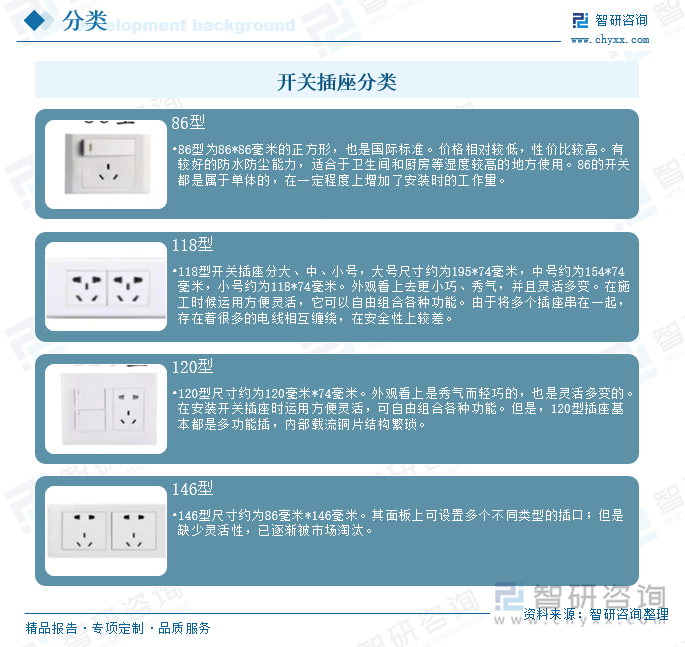
Industry Overview - The switch socket industry is experiencing growth due to the shift from selling bare houses to selling fully furnished homes, leading to an increase in the number of fully decorated residential openings [1][11] - The demand for renovation is rising as the durability of long-term accumulated stock housing is reaching its end, and the frequency of office and commercial space replacements is accelerating [1][11] - The market size of China's switch socket industry is projected to reach 27.724 billion yuan in 2024, reflecting a year-on-year increase of 4.57% [1][11] Market Dynamics - The switch socket market is influenced by the increasing disposable income and consumption levels of residents, which have been on a continuous rise since 2020 [3][11] - The e-commerce sector is rapidly growing, with the transaction volume expected to reach 46.41 trillion yuan in 2024, up by 3.90% year-on-year, facilitating the online sales of switch sockets [9][11] Competitive Landscape - The industry features a diverse and international competitive landscape, with domestic brands like Bull Group, Xiaomi, and Chint Electric showing strong competitiveness [13][14] - Foreign brands such as Siemens and Schneider also hold a significant share in the high-end market segment [13] Industry Trends - The industry is moving towards increased smart technology integration, with smart sockets expected to gain market share through features like remote control and energy monitoring [18] - Environmental sustainability is becoming a mainstream trend, with a focus on energy-saving and eco-friendly products [19] - There is a growing emphasis on personalization and differentiation in product offerings to meet consumer demands [20][21] - The internationalization of the industry is expected to strengthen, with domestic companies seeking collaborations with global brands [22]



分子筛活化粉市场发展趋势分析:行业将向高效化、环保化、多功能化等方向发展
Sou Hu Cai Jing· 2025-06-24 03:08
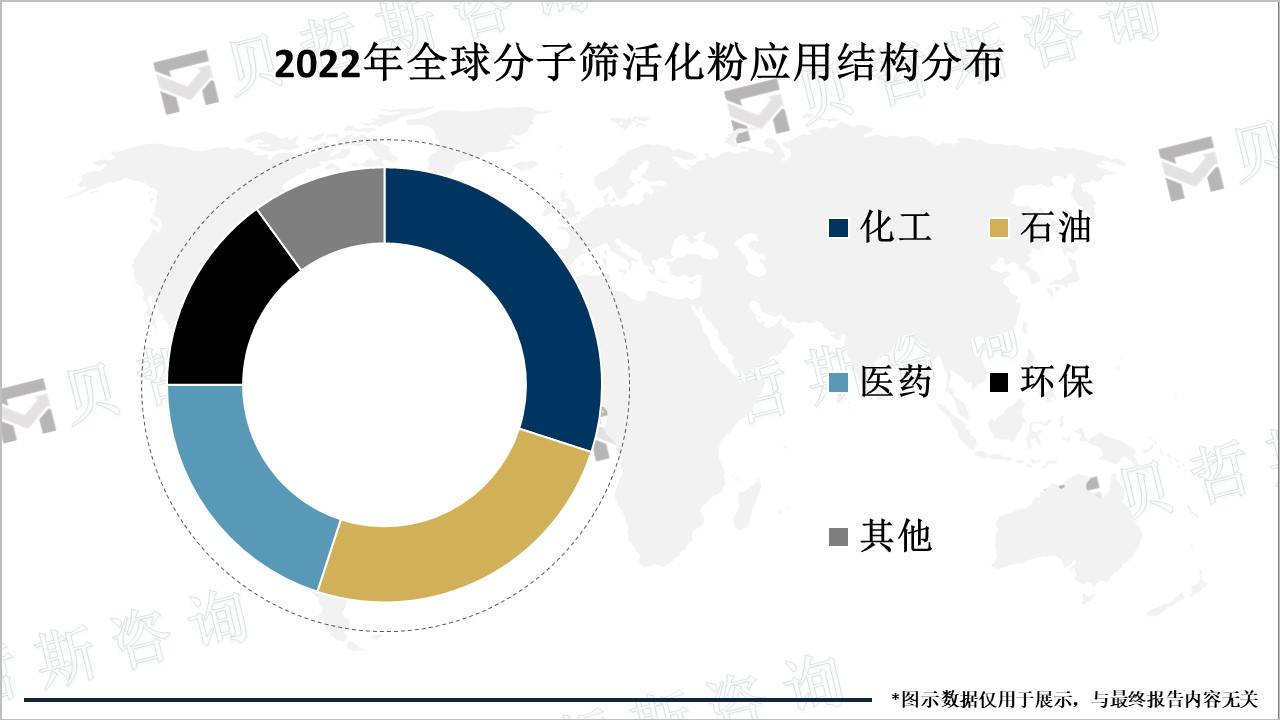
Core Insights - Molecular sieve activated powder is a highly porous powder material primarily composed of molecular sieves and carriers, used as catalysts or adsorbents to enhance reaction rates and efficiencies [1] - The market for molecular sieve activated powder is expected to grow steadily, reaching several billion dollars by 2025 due to increasing demand across various sectors [4][6] Application and Market Overview - Molecular sieve activated powder is widely used in chemical, petroleum, pharmaceutical, and environmental sectors due to its high adsorption and catalytic properties [2][4] - In the chemical industry, it serves as a catalyst to improve reaction rates; in the petroleum sector, it is utilized in oil processing and catalytic cracking; in pharmaceuticals, it aids in drug separation and purification; and in environmental applications, it is used for waste gas and water treatment [4] - The global market for molecular sieve activated powder is projected to maintain stable growth, driven by the ongoing development and demand in these industries [4] Emerging Opportunities - The market for molecular sieve activated powder is expected to expand into emerging fields such as new energy and new materials, reflecting the evolving industrial landscape [6] Regulatory Environment - The production and use of molecular sieve activated powder must comply with environmental regulations, safety standards, quality certifications, and intellectual property protections [7] - Government support for high-tech products like molecular sieve activated powder is increasing, providing more opportunities and favorable policies for production and application [7] Development Trends - Key trends in the molecular sieve activated powder market include a focus on efficiency, environmental sustainability, and multifunctionality [9]
研判2025!中国转移胶带行业相关概述、产业链、发展现状、企业格局及未来前景分析:电子信息行业的持续恢复,驱动行业市场规模增长至383亿元[图]
Chan Ye Xin Xi Wang· 2025-06-12 01:24
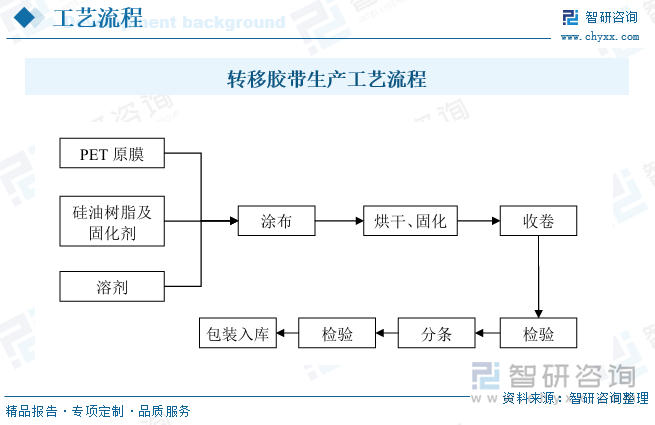
Core Viewpoint - The demand for transfer tape is rapidly increasing due to the growth of industries such as electronics, optics, and automotive, indicating significant market potential. The market size of China's transfer tape industry is projected to grow from 24.583 billion yuan in 2017 to 38.257 billion yuan in 2024, with a compound annual growth rate (CAGR) of 6.52% [1][10]. Industry Overview - Transfer tape is a specialized adhesive tape used to transfer materials or patterns from one surface to another, featuring properties such as adhesion, durability, and ease of use. It is composed of a substrate and adhesive material, making it suitable for various applications in both daily life and industrial production [2]. - The production process of transfer tape includes raw material procurement, coating, drying and curing, slitting, inspection, and packaging [2]. Industry Chain - The upstream raw materials for the transfer tape industry include substrates like polyester film and polyethylene film, and adhesives such as acrylic and rubber, which determine the tape's key performance characteristics [4]. - The downstream applications of transfer tape span across electronics, automotive, optics, and medical sectors, where it is used for tasks such as component fixation, protection, and ensuring product quality [4]. Market Size and Growth - The market size of the polyester film industry, a key component in transfer tape, is expected to grow from 32.15 billion yuan in 2021 to 50.17 billion yuan in 2024, with a CAGR of 7.7%, supporting the growth of the transfer tape industry [6]. - The electronic information manufacturing sector in China is projected to see a significant increase, with a year-on-year growth of 11.80% in 2024, further driving the demand for transfer tape [8]. Competitive Landscape - The transfer tape industry in China exhibits a concentrated market structure, with leading companies like Jiemai Technology and Leike Co., Ltd. dominating the market through innovation and product development [12]. Development Trends - The industry is moving towards environmentally friendly products, focusing on recyclable materials and reducing harmful emissions to meet regulatory requirements and consumer demand for green products [17]. - High performance is becoming a critical trend, with increasing demands for stronger adhesion, better insulation, and durability in various applications [18]. - Globalization is influencing the industry, with production shifting towards emerging markets like Southeast Asia and India, while companies adapt their strategies to meet local market needs [20].



2025年婴儿床品牌推荐:安全焦虑和价格内卷下的品牌突围之道
Tou Bao Yan Jiu Yuan· 2025-05-20 12:15
Investment Rating - The report does not explicitly provide an investment rating for the baby crib industry Core Insights - The baby crib industry is experiencing growth driven by rising consumer awareness of safety and quality, despite a decline in newborn numbers impacting demand [5][8] - The market is expected to recover with a projected increase in newborns due to policy incentives, leading to a gradual market size growth from 5.58 billion to 6.78 billion by 2029 [8] - The industry is shifting towards smart, eco-friendly, and high-quality products to meet evolving consumer demands [5][31] Market Background - The baby crib industry is a significant part of the global baby products market, influenced by consumer upgrades and safety awareness [5] - The market has evolved from traditional wooden cribs to modern smart cribs, with a focus on diverse and high-end designs [5][7] - China is a major production base for baby cribs, benefiting from a complete supply chain and lower production costs [5] Market Status - The market size decreased from 6.41 billion in 2019 to 4.8 billion in 2023 due to declining newborn numbers, but is expected to stabilize and grow in the coming years [8] - The average price range for baby cribs is between 300 to 5000 yuan, with a gross margin of 40%-50% for midstream manufacturers [9] Market Competition - The competition in the baby crib market is fragmented, with leading brands like Goodbaby and Cool Baby holding significant market shares [11][17] - The evaluation of brands is based on innovation, product quality, brand image, and customer service [11][14] - The report highlights ten recommended brands, emphasizing their unique selling propositions and market strategies [18][19][21] Development Trends - The market is expected to expand due to structural growth driven by consumption upgrades and policy support [30] - Technological advancements are leading to the introduction of smart features in baby cribs, enhancing safety and user experience [31] - The integration of online and offline channels is reshaping consumer engagement, with a notable increase in online sales [33]
研判2025!中国高分子发泡材料行业发展历程、产业链、发展现状、竞争格局和发展趋势分析:环保政策趋严,高分子发泡材料积极推动绿色转型[图]
Chan Ye Xin Xi Wang· 2025-05-11 00:08
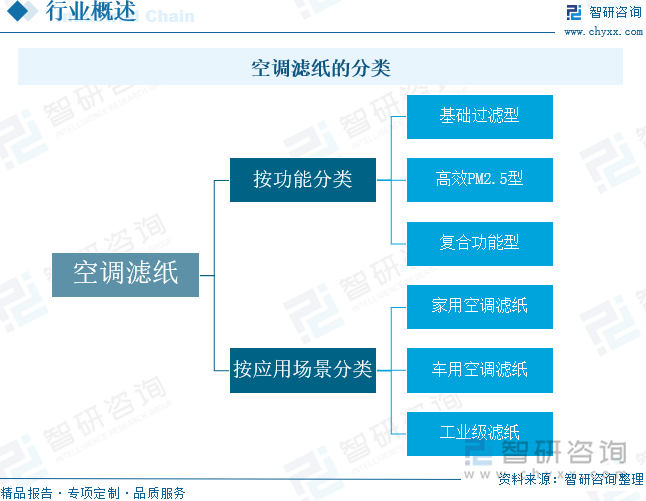
Core Viewpoint - The demand for polymer foam materials is increasing due to rising living standards and the need for comfort, safety, and environmental protection. The market size of China's polymer foam materials industry is projected to grow from 1.2 trillion yuan in 2019 to 2.3 trillion yuan in 2024, with a compound annual growth rate of 13.9% [1][14]. Industry Overview - Polymer foam materials are characterized by a porous structure, low density, and excellent thermal insulation, sound absorption, and fire resistance properties. They can be categorized into various types, including polyurethane, polystyrene, polyethylene, and polypropylene foams [3][5]. - The industry has evolved through four stages: initiation (1980-1992), development (1993-2005), rapid development (2006-2015), and transformation (2015-present) [5]. Industry Chain - The upstream of the polymer foam materials industry includes raw materials such as plastics, rubber, catalysts, and foaming agents, primarily sourced from the petrochemical industry. The midstream involves the production of polymer foam materials, while the downstream encompasses applications in construction, packaging, consumer electronics, and transportation [8]. Market Demand and Applications - Polymer foam materials are widely used in construction for insulation, soundproofing, and fire protection, in the automotive industry to reduce weight and enhance safety, and in packaging to protect products and reduce costs. The packaging market in China is expected to reach approximately 1.2 trillion yuan in 2024, reflecting a year-on-year increase of 3.99% [12][14]. Competitive Landscape - The industry is becoming increasingly competitive, with numerous companies entering the market. Key players include Changzhou Tiangsheng New Materials Group Co., Ltd., Hubei Xiangyuan New Materials Technology Co., Ltd., and others. Companies must enhance their technology, product quality, and cost efficiency to remain competitive [18][20]. Development Trends 1. **Environmental Focus**: The industry is moving towards environmentally friendly practices, including the reduction or elimination of harmful substances in production processes [24]. 2. **Multifunctionality**: Future developments will focus on enhancing the functionalities of polymer foam materials, such as adding flame retardant, anti-static, and antibacterial properties [25]. 3. **Intelligent Manufacturing**: The industry is transitioning towards smart and automated manufacturing processes, integrating information technology with production techniques to drive sustainable development [27].