
税收优惠政策

Search documents
家庭住房套次,如何认定?
蓝色柳林财税室· 2025-12-14 01:32
欢迎扫描下方二维码关注: 目 专 中 中 字 文 关 机 内 内 。 。 上 与 。 对于调产安置取得的住房 该住房也属于家庭住房的范围,得要 纱内 \ 住房套数中。 对于个人婚前购买的住房 婚后购买其他住房时,由于购房人及配偶均 属于家庭成员,因此个人婚前购买取得的住房也 属于家庭住房,需要纳入住房套数中 @浙江税务 办件资料 √ 家庭成员信息证明 √ 家庭住房情况书面查询结果 √ 购入房产的购房合同、购房发票的 原件及复即件 其中家庭成员信息证明和家 庭住房情况书面查询结果可实行 告知承诺制。税务机关将根据承 诺内容与大数据进行对比核实。 @浙江税务 政策法规 对个人购买家庭唯一住房 ≤140平方米 ✓ 减按1%的税率征收契税 > 140平方米 REAL 减按1.5%的税率征收契税 (家庭成员范围包括购房人、配偶 以及未成年子女, 下 同) 对个人购买家庭第二套改善性住房 ≤140平方米 ✓ 减按1%的税率征收契税 > 140平方米 √ 减按2%的税率征收契税 家庭第二套改善性住房是指 已拥有一套住房的家庭购买的家 庭第二套住房。 纳税人申请享受税收优惠的 根据纳税人的申请或授权 由购房所在地的房地产主管 ...


【轻松办税】电子税务局中如何查看精准推送的实用功能
蓝色柳林财税室· 2025-12-13 01:43
Group 1 - The article discusses the "Precise Push" feature by tax authorities, which helps small businesses identify applicable tax incentives [2][4][5][7] - It outlines various methods for accessing tax incentive information, including the electronic tax bureau, the tax bureau app, and SMS notifications [2][4][5][7] Group 2 - Small-scale taxpayers with monthly sales not exceeding 100,000 (or quarterly sales not exceeding 300,000) are eligible for VAT exemption according to the announcement by the Ministry of Finance and the State Taxation Administration [14][15] - The VAT exemption policy for small-scale taxpayers is effective until December 31, 2027 [14]

无视政策逆风,美国Q3太阳能装机大涨20%:开发商抢在税收优惠退坡前“囤积”项目
Hua Er Jie Jian Wen· 2025-12-12 08:00
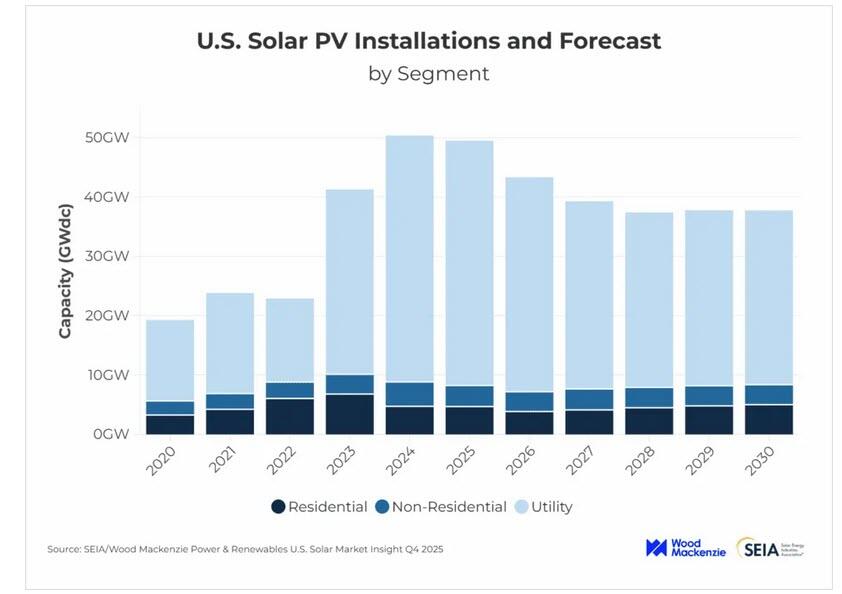
Core Insights - The U.S. solar market experienced significant growth in Q3, with developers accelerating project completions to take advantage of tax incentives before they decline [1][3] - The third quarter saw a record installation of 11.7 gigawatts (DC) of solar capacity, marking a 20% year-over-year increase and a substantial 49% quarter-over-quarter increase, making it the third-largest quarterly deployment in industry history [1][3] Group 1: Tax Incentives and Project Deployment - The strong performance in Q3 is attributed to the completion of large utility-scale solar projects, many of which were nearly finished in Q2 and entered the final deployment phase in Q3 [3] - Utility-scale solar installations reached record levels in Q3, driven by developers' urgency to complete projects before the policy deadline [3] - Wood Mackenzie predicts a rush to execute quality projects to meet the legal requirement of starting construction by July 4, 2026, to qualify for investment tax credits (ITC) or production tax credits (PTC) [3] Group 2: Policy Uncertainty and Challenges - Despite the strong Q3 performance, federal permitting freezes pose uncertainties and risks for the industry's future development [5] - The CEO of SEIA highlighted that unless the current government changes its direction, the future of clean, affordable, and reliable solar and storage will remain uncertain, leading to rising energy bills for Americans [5] - The strong recovery in Q3 following the tumultuous OBBBA legislation indicates market resilience, but strict timelines and policy adjustments still cast a shadow over long-term prospects [5] Group 3: Regional Deployment Trends - The geographical distribution of installations reveals a political-economic pattern, with states that voted for Trump leading in solar deployment, indicating a positive attitude towards clean energy infrastructure in these regions [6] - Traditional energy states like Texas, Indiana, and Florida are among the top in new solar installations, reflecting the increasing importance of renewable energy in the U.S. energy landscape, transcending traditional political divides [6]

康达新材料(集团)股份有限公司关于泰国子公司收到税收优惠政策公文的公告
Shang Hai Zheng Quan Bao· 2025-12-09 19:50
1、泰国子公司可免除不超过实际投资总额100%的企业所得税,其中不包括土地费和营运资金,为期4 年,从开始有营业收入之日起计算。若在免税期内发生亏损,允许将年度亏损额从免税期结束后的净利 润中扣除,扣除期限不超过5年,可选择在一年或多年中扣除。 2、在企业所得税免税期内,免除受促进业务红利的所得税。 3、免除用于生产出口产品的进口原材料和必要物资以及为复出口而进口的物品的进口关税,期限为1 年,自首次进口之日起计算。 登录新浪财经APP 搜索【信披】查看更多考评等级 证券代码:002669 证券简称:康达新材 公告编号:2025-129 康达新材料(集团)股份有限公司 关于泰国子公司收到税收优惠政策公文的公告 本公司及董事会全体成员保证信息披露内容的真实、准确和完整,没有虚假记载、误导性陈述或重大遗 漏。 近日,康达新材料(集团)股份有限公司(以下简称"公司")控股子公司康达新材(泰国)有限公司 (以下简称"泰国子公司")收到泰国投资促进委员会(BOI)下发的《投资促进委员会批复函》(编 号:Nor Ror 1310/4308)。依照条款,泰国子公司将获得如下优惠和权益: 为获取以上权益,泰国子公司必须满足投 ...

【涨知识】再生资源回收行业常见涉税误区
蓝色柳林财税室· 2025-12-04 01:16
欢迎扫描下方二维码关注: 正解 (1)纳税人在境内收购的再生资源,应按规定 从销售方取得增值税发票 ;适用免税政策的,应按规定 从销售方取得增值税普通发 票 。销售方为依法依规无法申领发票的单位或者从事小额零星经营业务的自然人,应取得销售方开具的收款凭证及收购方内部凭证,或 者税务机关代开的发票。本款所称小额零星经营业务是指自然人从事应税项目经营业务的销售额不超过增值税按次起征点的业务。 (2)纳税人从境外收购的再生资源,应按规定取得 海关进口增值税专用缴款书 ,或者从销售方取得 具有发票性质的收款凭证、相 关税费缴纳凭证 。 上述 "从销售方取得的发票",包括通过 " 反向开票 "方式取得的 增值税发票 。 注意 纳税人应当取得上述发票或凭证而未取得的,该部分再生资源对应产品的销售收入不得适用《财政部 税务总局关于完善资源综合利 用增值税政策的公告》( 财政部 税务总局公告2021年第40号) 的即征即退规定 。 正解 纳税人选择适用简易计税方法,应符合下列条件之一: 01 从事危险废物收集的纳税人 应符合国家《危险废物经营许可证管理办法》的要求,取得危险废物经营许可证。 02 从事报废机动车回收的纳税人 ...

促进农产品流通税收优惠(二)
蓝色柳林财税室· 2025-12-03 13:26
Core Viewpoint - The article discusses various tax incentives aimed at supporting agricultural markets and logistics enterprises, emphasizing their role in promoting rural revitalization and enhancing agricultural product circulation. Group 1: Tax Incentives for Agricultural Markets - Agricultural wholesale markets and farmer's markets are exempt from urban land use tax until December 31, 2027, for land specifically used for agricultural product operations [7][31] - The exemption applies to both owned and leased land, with a proportional tax assessment for land used for other products alongside agricultural products [7][32] - Eligible agricultural products include grains, oils, meats, vegetables, fruits, and other edible items as defined by local tax authorities [8] Group 2: Tax Incentives for Logistics Enterprises - From January 1, 2023, to December 31, 2027, logistics companies are subject to a 50% reduction in urban land use tax for land used for bulk commodity storage [11][12] - The definition of logistics enterprises includes those providing warehousing and transportation services, registered as such with relevant authorities [13] - The exemption applies only to land directly used for storage of specified bulk commodities, excluding administrative and non-storage areas [13] Group 3: Tax Exemptions for E-commerce - Individuals entering into electronic contracts with e-commerce operators are exempt from stamp duty on electronic orders [15] Group 4: Tax Exemptions for Vegetable and Meat Products - Tax exemptions are provided for the sale of vegetables and certain fresh meat and egg products by wholesalers and retailers [21][27] - The definition of vegetables includes various edible plants and processed forms, while fresh meat and egg products are specified to include certain types of meat and eggs [22][28] Group 5: Overall Significance - The tax incentives are part of a broader strategy to address rural development challenges, stimulate local economies, and support the agricultural sector [19]

一问一答|海洋经济税收优惠政策问答,请查收!
蓝色柳林财税室· 2025-12-02 08:47
Group 1 - The article discusses tax incentives introduced by the government to support the steady development of the marine economy [2] - Agricultural producers selling self-produced agricultural products are exempt from value-added tax [2] - Enterprises engaged in deep-sea fishing can enjoy exemption from corporate income tax if they hold the necessary licenses from the Ministry of Agriculture [3] Group 2 - Income from marine aquaculture projects is subject to a reduced corporate income tax rate, not exempt [4] - Crew members on deep-sea fishing vessels can benefit from personal income tax reductions based on their time spent at sea, effective until December 31, 2027 [4] - Fishing and aquaculture vessels are exempt from vehicle and vessel tax [5]

贵州56.59万人享子女教育专项附加扣除
Sou Hu Cai Jing· 2025-11-23 06:07
国家税务总局贵州省税务局个人所得税处负责人介绍,为切实发挥税收对生育支持的保障作用,贵州税 务部门重点推进三项工作:一是全面精准落实3岁以下婴幼儿照护和子女教育专项附加扣除政策,确保 政策红利应享尽享;二是持续优化申报流程,简化个人所得税APP填报操作,让纳税人"懂政策、会操 作、快享受";三是创新宣传服务模式,通过多渠道、广覆盖的宣传推广,提升政策知晓度,推动政策 主动"找上门",打通政策落地"最后一公里"。 近年来,贵州税务部门紧扣国家生育政策导向,以精准落实税收优惠为抓手,切实降低家庭生育养育教 育成本,为生育友好型社会建设注入税务力量。数据显示,2025年1至10月,贵州省在个人所得税预扣 预缴阶段,已有56.59万人享受子女教育专项附加扣除,累计扣除金额81.78亿元,减税4.63亿元;13.01 万人享受3岁以下婴幼儿照护专项附加扣除,累计扣除金额12.85亿元,减税0.68亿元,政策红利持续精 准释放。 "这些税收政策真是给家庭送来了'及时雨'!"六盘水市第二十中学的张老师深有感触地说。起初,学校对 税务部门联合宣传个人所得税专项附加扣除政策的提议还心存抵触,"但经过税务人员的细致讲解,我 们发 ...
收藏!你最关心的契税热点问题都在这里→
蓝色柳林财税室· 2025-11-21 00:57
Core Viewpoint - The article discusses the new tax policy regarding deed tax, emphasizing that taxpayers cannot receive refunds for deed tax paid before December 1, 2024, unless specific legal conditions are met [3][4]. Summary by Sections Deed Tax Refund Conditions - The article outlines the legal conditions under which deed tax can be refunded, including: 1. If the property transfer contract is deemed invalid or revoked before the registration of property rights [4]. 2. If a court ruling or arbitration decision invalidates the property transfer, allowing the original owner to apply for a refund [4]. 3. Refunds applicable when the actual area of land or property delivered is less than what was agreed upon in the contract [4]. 4. Refunds for overpaid deed tax when the actual area of a newly built property is less than the contracted area [4]. Policy Basis - The article cites the legal framework supporting the deed tax policy, including: 1. The "Deed Tax Law of the People's Republic of China" [5]. 2. The announcement by the Ministry of Finance and the State Administration of Taxation regarding the implementation of the deed tax law [5]. Special Cases - The article clarifies that in cases of divorce, where property is transferred to one party, no deed tax is required [5]. - It also states that if a couple purchased a first home under 140 square meters in 2023 and has not yet declared the deed tax, they can still benefit from the new tax policy starting December 1, 2024 [5].

票上“藏猫腻”,你能辨别吗?
蓝色柳林财税室· 2025-11-20 08:16
Core Viewpoint - The article discusses the implementation and verification of digital electronic invoices in China, emphasizing the importance of understanding the invoice number structure and the methods available for verifying the authenticity of these invoices [4][6][8]. Invoice Structure - The digital invoice number consists of 20 digits, where the first two represent the last two digits of the year, the next two indicate the provincial tax bureau code, the fifth digit represents the issuing channel, and the remaining digits are a sequential code [4]. Verification Methods - Method 1: Individuals and businesses can verify invoices through the National Taxation Administration's national VAT invoice verification platform by entering the invoice number, date, and amount [6]. - Method 2: The unified electronic tax bureau allows businesses to log in and verify invoices either individually or in bulk, with options for manual entry or file uploads [8]. - Method 3: The electronic tax bureau app provides a mobile solution for invoice verification by scanning QR codes or entering details manually [8]. Tax Credit and Rating - Businesses with a D-level rating due to previous associations can apply for credit repair under certain conditions, such as maintaining a clean tax record for six months [15][16]. - The article highlights that credit repair does not guarantee an immediate upgrade to an A-level rating, emphasizing the importance of maintaining good tax practices [16]. Tax Incentives for Specific Groups - Individual businesses established by key groups, such as veterans, can enjoy tax incentives for up to three years, but these benefits cease upon transitioning to a different business type [19][20]. - If the business meets the criteria for hiring from key groups after the transition, it may still qualify for certain tax incentives [22].
