
纳米技术

Search documents
以科技力量筑牢全球粮食安全基石 多国专家学者高度评价中国农业成就
Yang Shi Wang· 2025-10-16 10:41
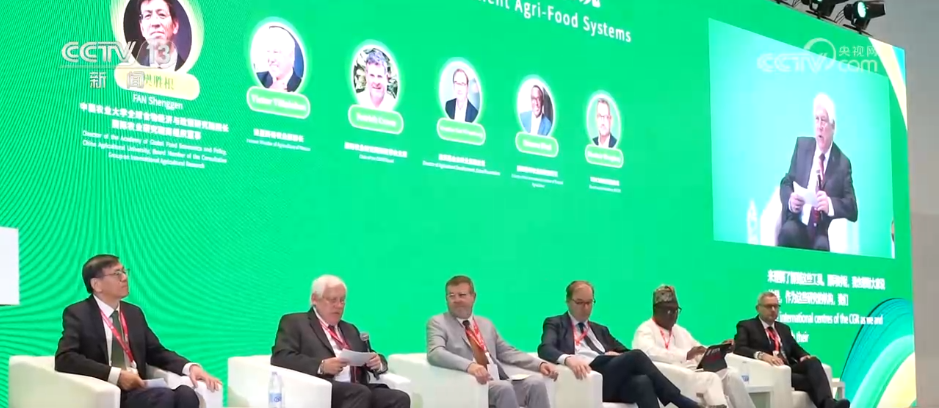
Core Insights - The 45th World Food Day emphasizes the theme of collaboration for diverse food systems and a better future, highlighting China's contributions to agricultural innovation [1] - The World Agricultural Technology Innovation Conference showcased global experts discussing the pressures on food systems due to climate change and population growth, stressing the need for resilient food supply systems [3] - China's agricultural innovations, including the application of nanotechnology, artificial intelligence, and robotics, are recognized as leading examples for sustainable development [3] Group 1 - Global agricultural experts praised China's ongoing research and innovation efforts, contributing significantly to global agricultural technology [1][3] - The conference highlighted the importance of food security and peace, with agricultural innovation being a key area for China to showcase its capabilities [3] - Developing countries are looking to China for collaboration and learning to address their own food security challenges [3][4] Group 2 - Egypt is exploring deeper cooperation with China in agricultural practices and solar energy utilization, aiming to expand the adoption of Chinese crop varieties [4] - The International Rice Research Institute acknowledged China's achievements in transforming food systems, serving as a model for other nations [4]

东方材料拟对外投资4,800万元并设立合资公司
Sou Hu Cai Jing· 2025-10-16 02:57
Group 1 - The company New Oriental New Materials Co., Ltd. plans to invest 18 million yuan in Suzhou First Element Nanotechnology Co., Ltd. through convertible bonds [2] - The investment aims to expand the production capacity of First Element's CNTP (nano carbon fiber) and ensure the supply of raw materials for the joint venture [2] - The registered capital of the joint venture, Carbon Nest Technology (Tengzhou) Co., Ltd., is set at 100 million yuan, with New Oriental contributing 30 million yuan for a 30% stake [2] Group 2 - The company reported projected revenues of 436 million yuan, 81.83 million yuan, and 174 million yuan for the years 2024 to Q2 2025, reflecting year-on-year growth rates of 10.81%, -7.50%, and -5.06% respectively [3] - The net profit attributable to the parent company for the same period is expected to be 13.96 million yuan, 2.95 million yuan, and 654,400 yuan, with year-on-year changes of -73.17%, 13.27%, and -88.48% respectively [3] - The company's asset-liability ratios for the same periods are 19.58%, 15.97%, and 15.35% [3]


东方材料(603110.SH):拟1800万元专项投资第一元素 并设立合资公司扩充第一元素CNTP(纳米碳纤维)的产能
Ge Long Hui A P P· 2025-10-15 09:50
Core Viewpoint - The company, Dongfang Materials (603110.SH), plans to invest 18 million RMB in Suzhou First Element Nanotechnology Co., Ltd. through a convertible debt arrangement, aiming to eventually acquire equity in the company [1] Investment Details - The investment will be made in the form of a convertible debt, with the goal of converting to equity upon meeting specified conditions [1] - The company will also enter into a capital and shareholder agreement to establish a joint venture with a registered capital of 100 million RMB, where Dongfang Materials will contribute 30 million RMB for a 30% stake [1] - The joint venture, tentatively named Carbon Nest Technology (Tengzhou) Co., Ltd., aims to expand the production capacity of First Element's CNTP (nano carbon fiber) [1] Funding and Security Measures - Before the conversion conditions are met, First Element is required to disclose the detailed use of the special funds to the company [2] - The company has the right to require First Element to pledge equipment or raw materials purchased with the special funds as collateral, which will be released upon conversion [2]
第十五届纳博会10月22日至24日在苏州国际博览中心举行
Su Zhou Ri Bao· 2025-10-15 00:21
Core Insights - The 15th China International Nanotechnology Industry Expo will be held from October 22 to 24 in Suzhou, featuring over 150 national talents and more than 500 top global scientists and industry experts [1][2] - The event will include one main report, 15 sub-forums, and 605 industry reports, focusing on technological breakthroughs and industry trends [1] - The exhibition area will cover 25,000 square meters, showcasing the entire global nanotechnology industry chain [1] Group 1 - The expo will focus on cutting-edge areas such as micro-nano manufacturing, third-generation semiconductors, flexible printed electronics, nano-imprinting, and fiber/gel materials [1][2] - New thematic conferences will be introduced, including advanced materials and devices atomic-level manufacturing, semiconductor heterogeneous integration, and micro-nano technology innovation [2] - The number of reports has increased by approximately 26% compared to last year, with 440 standard exhibition booths established, expanding the exhibition area by 4% [1][2] Group 2 - The event aims to promote the practical application of nanotechnology and connect the entire industry chain [3] - A supply-demand matching meeting will be held, focusing on new materials, embodied robots, and consumer products, facilitating efficient connections between technology providers and industry demand [3] - International participation has increased, with companies from the US and Germany joining for the first time, enhancing the expo's global presence [2]
Cell系列综述:深圳大学黄鹏/林静团队总结并展望用于肿瘤铁死亡的纳米技术
生物世界· 2025-10-11 10:00
Core Insights - Ferroptosis is a regulated form of cell death characterized by iron-dependent lipid peroxidation, gaining attention for its potential in cancer therapy [2][6] - Despite extensive research on the biological mechanisms of ferroptosis, its anti-tumor effects are significantly limited due to challenges in the precise delivery of ferroptosis inducers to tumor tissues [2][4] Group 1: Biological Mechanisms and Challenges - Cancer remains a major global health challenge and a leading cause of death, with traditional therapies like chemotherapy and radiotherapy facing inherent limitations such as drug resistance and reduced efficacy in hypoxic tumor microenvironments [6] - Ferroptosis, first reported in 2012, offers a promising opportunity to overcome clinical bottlenecks faced by traditional cancer therapies, with its therapeutic effects validated in various cancer types including pancreatic ductal adenocarcinoma, hepatocellular carcinoma, renal cell carcinoma, and triple-negative breast cancer [6][7] - The need to enhance the delivery efficiency of ferroptosis inducers to tumor tissues is a critical theme, as several inducers have shown effectiveness in preclinical models but failed to improve patient survival in clinical trials [7][9] Group 2: Nanotechnology and Delivery Systems - Recent advancements in nanotechnology provide new perspectives for the innovation of tumor ferroptosis, particularly through the development of nanodrug delivery systems (NDDS) that can regulate multiple molecular pathways and enhance tumor-specific delivery [4][8] - Multifunctional nanomaterials can serve as nanocarriers for the synergistic delivery of various therapeutic agents, overcoming ferroptosis resistance in cancer cells and effectively targeting multiple molecular pathways [8][9] - NDDS can be designed to respond to tumor-specific stimuli, allowing for spatiotemporal controlled release of ferroptosis inducers, thereby minimizing off-target damage and enhancing therapeutic efficacy [8][9] Group 3: Future Directions - The review establishes a connection between the biology of ferroptosis and nanomaterial science, elucidating how functional nanoplatforms can enhance ferroptosis by modulating dysfunctional organelles and improving the delivery efficiency of inducers [9][27] - The current limitations of ferroptosis in clinical applications and the future development directions based on nanotechnology are summarized, indicating a significant potential for improving clinical outcomes and patient quality of life through enhanced ferroptosis cancer therapies [9][27]

兰石中科纳米稀土催化剂助推行业增效 年新增经济效益达88.4亿元
Jing Ji Wang· 2025-09-30 08:21
Core Viewpoint - The company is addressing the challenge of underutilized light rare earth resources in China by adopting a "nanomaterial" strategy to enhance the quality and application of these resources, transitioning from quantity-based to quality-driven utilization [1][6]. Group 1: Technological Breakthroughs - The company has developed a "continuous multi-phase interface reaction technology" that overcomes traditional production bottlenecks, enabling stable mass production of various nanomaterials [1][2]. - A thousand-ton production line for nanoreactor catalyst materials has been established, producing materials with high specific surface area and excellent stability, significantly outperforming traditional materials [2][4]. Group 2: Economic Impact - In the petroleum refining sector, the use of nanolant carbonate as a key component in heavy oil cracking catalysts can increase conversion rates by 4.42 percentage points and total liquid yield by 2.59 percentage points, resulting in an estimated annual economic benefit of 8.84 billion yuan based on projected crude oil processing volumes [2]. - In the ammonia synthesis sector, the company’s catalysts can save energy costs of 120 million yuan annually and reduce carbon dioxide emissions by 300,000 tons, contributing to national energy security and carbon neutrality goals [2]. Group 3: R&D and Industrialization System - The company has established a comprehensive R&D and industrialization system, creating an efficient closed-loop from research and development to application and feedback, which supports continuous technological innovation [4][6]. - The collaboration with a high-level academic team and experienced industrialization personnel has laid a solid foundation for leading industry technology iterations and building an open platform for nanomaterials [4]. Group 4: Strategic Contribution - The company is contributing to the high-quality development of China's rare earth industry through technological innovation, enhancing the core value chain from resources to materials and products [6]. - By precisely reshaping the genetic makeup of rare earth materials using nanotechnology, the company is strengthening national strategic resource security and contributing to the establishment of a high-end rare earth industry [6].
Nano Today:李文扬/常凌乾/牟玮系统总结纳米技术在特发性肺纤维化诊疗中的前沿进展与未来展望
生物世界· 2025-09-23 08:30
Core Viewpoint - The article discusses the challenges in the diagnosis and treatment of Idiopathic Pulmonary Fibrosis (IPF) and highlights recent advancements in nanotechnology for improving these aspects [2][4][14]. Diagnosis Challenges - Current diagnostic methods for IPF are limited by low accuracy, high invasiveness, and time consumption, leading to delays in diagnosis and missed treatment opportunities [2][11]. - Nanoparticle biosensor platforms show great potential for non-invasive early screening by detecting biomarkers like miRNA in serum with high sensitivity and efficiency [11]. Treatment Challenges - Existing IPF treatments have limited efficacy, often accompanied by adverse effects due to low bioavailability and off-target effects [2]. - Inhalation drug delivery systems using nanocarriers can achieve higher drug concentrations in the lungs while reducing systemic side effects, thus enhancing therapeutic efficacy [13]. Nanotechnology Applications - The article outlines the use of functionalized nanoparticles for imaging, which can significantly improve the contrast in MRI, allowing for clearer visualization of early lesions [11]. - Various innovative nanocarriers, such as lipid nanoparticles, mesoporous nanoparticles, and nano-metal-organic frameworks, are introduced to enhance drug delivery efficiency [13]. Integrated Diagnosis and Treatment - The integration of treatment delivery and real-time monitoring through unified nanoplatforms is crucial for personalized medicine in IPF [13]. - The use of nanotechnology for tracking transplanted mesenchymal stem cells (MSCs) via in vivo imaging can optimize treatment outcomes by allowing real-time monitoring of cell survival and distribution [13]. Future Directions - The article discusses the challenges and translational barriers faced by cutting-edge technologies in clinical applications and provides insights for future research directions in developing more effective IPF diagnostic and therapeutic strategies [14].

研判2025!中国纳米级蒙脱土行业产业链、市场规模及重点企业分析:高分子改性与环境治理的理想功能材料,行业正稳步发展[图]
Chan Ye Xin Xi Wang· 2025-09-11 01:38
Core Viewpoint - The nano-grade montmorillonite industry in China is experiencing steady growth driven by technological breakthroughs and market demand, with a projected demand of 288,000 tons in 2024, representing a year-on-year increase of 5.49% [1][5]. Industry Overview - Nano-grade montmorillonite is a layered clay mineral composed of nanoscale silicate sheets, primarily derived from bentonite, characterized by a typical 2:1 layered silicate structure [2]. - The industry is categorized into inorganic and organic modified montmorillonite based on modification methods [3]. Industry Chain - The upstream of the nano-grade montmorillonite industry includes bentonite and various chemical reagents, while the midstream involves the production and manufacturing of nano-grade montmorillonite [4]. - Downstream applications span rubber, plastics, paper, environmental protection, and pharmaceuticals [4]. - China is rich in bentonite resources, with a production of 2.1 million tons in 2023, remaining stable compared to the previous year, which supports the production of nano-grade montmorillonite [4]. Market Size - The unique properties of nano-grade montmorillonite make it suitable for various applications, leading to a steady growth in the industry, with a projected demand of 288,000 tons in 2024, marking a 5.49% increase year-on-year [5][6]. Key Enterprises - The market concentration in the nano-grade montmorillonite industry is relatively low, but leading companies like Fenghong Co. and Sanding Technology are emerging with significant market shares due to their advantages in technology, product quality, and market expansion [6]. - Fenghong New Materials Co. specializes in high-tech research and production of bentonite and has made significant advancements in the dispersion technology of nano-grade montmorillonite [7]. - Hubei Sanding Technology Co. is a major manufacturer focusing on the application of modified montmorillonite in the livestock sector, with products exported to various countries [9]. Industry Development Trends 1. **Technological Innovation and Functional Development** - The industry will focus on optimizing preparation processes and enhancing the dispersion and stability of nano-grade montmorillonite to meet diverse application needs [10]. - Innovations such as smart responsive nano-grade montmorillonite will drive applications in controlled release and smart packaging [10]. 2. **Expansion of Application Fields and Market Demand Growth** - The demand for nano-grade montmorillonite in rubber applications is expected to grow, driven by its ability to enhance performance characteristics [10]. - Its applications are also expanding into plastics, paper, and coatings, further boosting market demand [10]. 3. **Industry Integration and Market Concentration Increase** - The industry is expected to see increased integration and market concentration, with leading companies expanding their market shares through technological advancements and quality improvements [11]. - Collaboration and resource integration among companies will enhance production efficiency and competitiveness [11].

研判2025!中国气体扩散层行业产业链、产量、需求量、竞争格局及发展趋势分析:政策力推燃料电池车发展,气体扩散层行业市场规模达到10亿元以上[图]
Chan Ye Xin Xi Wang· 2025-09-11 01:20
Core Viewpoint - The gas diffusion layer (GDL) industry is closely related to the demand for fuel cells, with significant growth driven by government policies promoting hydrogen fuel cell vehicles in China. The market size of the GDL industry is expected to reach 1.258 billion yuan in 2024, reflecting a year-on-year increase of 52.4% [1][10]. Industry Overview - The gas diffusion layer is a critical component in fuel cells, providing uniform diffusion channels for gaseous reactants and managing water flow [3][4]. - The GDL is primarily composed of materials such as carbon fiber paper and carbon fiber woven fabric, each with distinct performance characteristics under varying humidity conditions [4][6]. Market Size and Growth - The GDL industry in China is projected to grow significantly, with a market size of 1.258 billion yuan in 2024, up 52.4% year-on-year [1][10]. - The carbon fiber production in China is expected to reach 59,044 tons in 2024, marking an 8.2% increase, while the carbon fiber paper market size is anticipated to be 620 million yuan, up 6.9% [6][7]. Competitive Landscape - The GDL market has been historically dominated by foreign companies, with domestic production rates currently below 10%. However, this is expected to improve in the coming years [10][11]. - Key domestic companies in the GDL sector include Carbon Energy Technology Co., Ltd., Shandong Renfeng Special Materials Co., Ltd., and Hunan Jinbo Carbon Co., Ltd. [10][11]. Development Trends - Technological innovation is expected to lead to performance breakthroughs in GDL materials, with advancements in nanotechnology and new low-cost materials enhancing efficiency [15]. - Cost reduction is a critical focus for the GDL industry, with efforts to optimize production processes and supply chains to lower overall costs [15][16]. - The market is anticipated to become more competitive and diversified as new entrants leverage technological advancements and cost control strategies [16].


研判2025!中国工业滤纸行业发展历程、产业链、市场规模、企业分析及发展趋势分析:随着环保要求的提高,工业过滤纸行业市场规模增长至180亿元[图]
Chan Ye Xin Xi Wang· 2025-09-05 01:18
Core Insights - The industrial filter paper industry in China is experiencing rapid growth, with the market size projected to increase from 10 billion yuan in 2020 to 18 billion yuan by 2024, representing a compound annual growth rate (CAGR) of 15.8% [1][8] - This growth is driven by advancements in industrial automation, food processing, and healthcare, as well as the enforcement of environmental regulations and rising consumer health awareness [1][8] - The industry is expected to face more opportunities for development as environmental requirements increase and new sectors emerge [1] Industry Overview - Industrial filter paper serves as a crucial filtering medium across various industrial applications, primarily designed to remove solid particles from liquids, ensuring liquid purification and separation [3] - The classification of industrial filter paper includes non-woven filter paper, glass fiber filter paper, synthetic fiber filter paper, and paper filter paper, based on the materials used [3] Industry Development History - The industrial filter paper industry in China began in the 1950s, evolving from small-scale production with limited technology to a more diversified and technologically advanced sector [4] - The industry saw significant growth post-reform and opening up, driven by increasing demand from chemical, petroleum, and food industries [4] - Since the 21st century, the industry has entered a high-speed development phase, with technological advancements leading to high-performance and environmentally friendly products [4] Industry Chain - The upstream raw materials for industrial filter paper include wood fiber, cotton fiber, polypropylene (PP), nylon (PA), polyester (PET), and glass fiber, which are essential for determining the filter paper's performance [6] - The midstream involves the production and processing of industrial filter paper, while the downstream encompasses various application sectors such as chemicals, environmental protection, healthcare, and food [6] Competitive Landscape - The industrial filter paper market is characterized by high concentration, dominated by a few leading companies that leverage technological barriers, brand advantages, and channel strategies [8] - Smaller companies focus on niche markets, employing differentiated competition strategies to meet specific customer needs [8] Industry Trends - The industrial filter paper industry has significant growth potential, driven by increasing environmental regulations and demands for product quality and production efficiency [11] - The trend towards green and sustainable development is becoming essential, with a focus on biodegradable and recyclable filter paper products [13] - Technological innovation is crucial for enhancing product performance, with advancements in materials and production processes, including the integration of nanotechnology and automation [14]

